Socorro Landing (Lonnie Zamora)
This case file covers what witnesses reported, the official narrative, and a two-pass assessment with its evidence tier.
What did witnesses see at Socorro?
What is the official explanation?
This is one of the very small number of cases the United States Air Force, after a full official investigation, formally logged as UNIDENTIFIED and never reclassified. The response was immediate and multi-agency. FBI Special Agent D. Arthur Byrnes Jr., who happened to be at the Socorro State Police office on other business that afternoon, was on site within roughly fifteen minutes of the object's departure. His memorandum, written on Albuquerque FBI letterhead and dated May 8, 1964 (released under FOIA and held at The Black Vault), is the cleanest contemporaneous primary document in the file. Byrnes wrote that he had known Zamora "intimately for approximately five years" and that the officer "is well regarded as a sober, industrious, and conscientious officer and not given to fantasy," and that on the night in question Zamora "was noted to be perfectly sober and somewhat agitated over his experience."
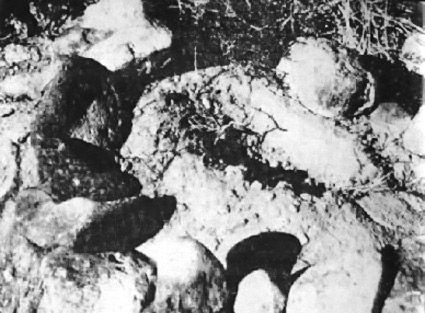
Byrnes recorded his own measurements of the ground. He noted "four indentations in the rough ground," each "approximately sixteen by six inches rectangular," each about "two inches deep," and each appearing "to have been made by an object going into the earth at an angle from a center line," pushing earth to the far side. Inside the four depressions were "three burned patches of clumps of grass," while other grass clumps nearby were undisturbed, plus one burned area outside the four. He also noted "three circular marks in the earth which were smooth, approximately four inches in diameter," pressed about an eighth of an inch into the sand "as if a jar lid had gently been pushed into the sand." He found no other person in the area, no inhabited dwelling in sight, and nothing else to connect the scene to an ordinary cause.
Army Captain Richard T. Holder of the nearby White Sands Missile Range took charge of the military side and filed a report describing the same trapezoidal pattern of imprints. Major William Connor and Sergeant David Moody came from Kirtland Air Force Base, and Dr. J. Allen Hynek, the Air Force's astronomical consultant to Project Blue Book, flew out to Socorro to investigate personally. Hynek interviewed Zamora and examined the traces, and the case made a lasting impression on him. He wrote that there was "much more evidence to indicate that we are dealing with a most real phenomenon of undetermined origin."
The strongest official statement survives in a formerly classified CIA in-house journal, Studies in Intelligence, in an article by Major Hector Quintanilla Jr., the head of Project Blue Book, published in the fall of 1966 and approved for public release on January 2, 1981 under FOIA. Quintanilla wrote: "There is no doubt that Lonnie Zamora saw an object which left quite an impression on him. There is also no question about Zamora's reliability. He is a serious police officer, a pillar of his church, and a man well versed in recognizing airborne vehicles in his area. He is puzzled by what he saw, and frankly, so are we. This is the best-documented case on record, and still we have been unable, in spite of thorough investigation, to find the vehicle or other stimulus that scared Zamora to the point of panic." That admission, written by the Blue Book chief himself in an internal intelligence publication never meant for public consumption, is about as close to an official acknowledgment of an unexplained landing as the American UFO record contains. Civilian groups documented the site independently: NICAP fielded investigator Ray Stanford, who arrived within days, and APRO sent Jim and Coral Lorenzen.
What did the witnesses think it was?
Lonnie Zamora was not a man chasing publicity. He was a uniformed, churchgoing town policeman who, by every account including the FBI's, found the experience frightening rather than thrilling, and who within an hour of it had gone to the Catholic church to pray before he could even file his report. That detail comes from Polo Pineda, the acting police chief, who relayed it the next day to staff at Socorro's First State Bank, an account preserved decades later in correspondence the Landoll family sent to skeptic Dave Thomas. Zamora believed he had seen a real, solid, machined craft on legs with two small occupants, and he held to that account, unchanged in its essentials, for the rest of his life. He grew so tired of the attention that he eventually stopped talking about it altogether. He gave no interviews in his final years and died on November 2, 2009, having, as Robert Sheaffer put it, "already said everything he had to say about the incident."
Sergeant Sam Chavez of the New Mexico State Police is the key corroborating witness. He did not see the object, but he arrived within minutes, found Zamora genuinely shaken, and saw the physical traces while the brush was still smoldering. Captain Holder, Agent Byrnes, and Dr. Hynek all examined the same fresh marks. There are also fainter secondary reports. A traveling couple, Paul Kies and Larry Kratzer of Dubuque, Iowa, later said they had seen an object rise and depart over the Socorro area that day with a marking on it, and a tourist passing through reportedly remarked on a "funny-looking helicopter" near town, although skeptic Philip Klass argued the tourist's geometry could not have allowed a clean view of both the craft and Zamora's car.
The most thorough civilian witness to the aftermath was Ray Stanford, the NICAP investigator who reached Socorro within four days and spent years on the case. Stanford documented the site, interviewed Zamora repeatedly, and wrote the book that remains the definitive long-form treatment, "Socorro Saucer in a Pentagon Pantry" (1976). His central physical claim is striking: Zamora had pointed out to him a rock sitting in one of the leg impressions that bore fresh metallic scrape marks, as if a landing pad had dragged across it. Stanford says he recovered that rock and had scrapings from it analyzed, and that the analysis indicated a metal alloy not matching anything in the immediate environment, before, he alleges, the intelligence community intervened to suppress the results. The full analytical reports have never been publicly released, which Stanford treats as evidence of a cover-up and which skeptics treat as a reason to set the claim aside. Researcher Chris Lambright, who corresponded with Zamora directly, also documented the long-running confusion over the exact shape of the red insignia, noting that there is real support for the idea that investigators circulated a decoy version of the symbol early on so that any copycat hoaxer would give himself away by drawing the wrong one. Zamora later redrew the symbol he actually remembered on a sketch sheet Lambright sent him.
The dispute
The dispute over the 1964 Socorro landing is not a single counter-explanation but a cluster of four competing prosaic candidates, and by this archive's own account every one of them is a hypothesis, a piece of hearsay, or an admittedly unproven assertion rather than a demonstrated debunk. The first is a lunar-lander test: skeptics Dave Thomas and Bernard "Duke" Gildenberg pointed to a NASA Surveyor lunar-probe mockup being trialed at nearby White Sands, arguing Officer Lonnie Zamora mistook it for a craft. The page documents the method that sinks this claim rather than supports it: Major Hector Quintanilla Jr., the Project Blue Book chief, investigated and found no operational lunar-lander prototypes existed at that date, and the range log recorded morning tests, not the late-afternoon timing of the sighting. Quintanilla never reclassified the case and conceded it was the best-documented on record with no stimulus ever found.
The second candidate is a hot-air balloon: engineer Larry Robinson proposed that a propane burner could reproduce the frequency shift Zamora described in the object's roar. As the page lays it out, this is an acoustic analogy only, and it does nothing to account for the solid, legged, machined craft with two small occupants that Zamora reported observing at 150 to 200 yards, nor its silent, level, high-speed departure. The third is a town hoax: skeptic Philip Klass concluded that Socorro leaders fabricated the event to draw tourism. The archive flags this bluntly as never demonstrated, an assertion with no supporting mechanism shown.
The fourth and most-cited candidate is a student prank from New Mexico Tech. Anthony Bragalia rests it on a 1968 note from Tech president Stirling Colgate to chemist Linus Pauling saying he had "a good indication of the student who engineered the hoax," but Colgate never explained specifics, named no one, and produced no evidence; Kevin Ashley's 2017 letter proposing mining students with dynamite under a metal barrel is, as the page notes, third-hand hearsay with no supporting evidence. The archive observes that even on the hoax theory it is difficult to see how the supposed pranksters cleared the scene before Sergeant Sam Chavez arrived minutes later and found Zamora genuinely shaken with brush still smoldering.
None of these closes the case. The Air Force logged it as UNIDENTIFIED and never reclassified it, and FBI Special Agent D. Arthur Byrnes Jr. documented the four rectangular ground indentations and burned grass as physical traces. Per this archive's method, an official or skeptical assertion with no civilian method shown is a claim, not a verdict, and the page states the bar for discrediting, an independent civilian demonstration that the imagery or trace evidence is false, has not been met. Each prosaic explanation is described as having "a real hole," leaving them as unproven candidates that no one has managed to close, which is why the case stands as Disputed rather than discredited.
Is the Socorro Landing (Lonnie Zamora) real? The two-pass assessment
Pass one, how this could be entirely ordinary. The Socorro case has attracted more named counter-explanations than almost any landing report, and they deserve a fair hearing. The leading prosaic candidate is a lunar lander test. Researcher Dave Thomas of New Mexicans for Science and Reason, building on work by balloon engineer Bernard "Duke" Gildenberg, points to a White Sands Missile Range range log obtained by Air Force Roswell investigator James McAndrew showing that on April 24, 1964 a helicopter was carrying a NASA Surveyor lunar-probe mockup for tests at the north end of the range. The argument is seductive on its face: Surveyor had three slanted legs that roughly match the imprints, it was aluminum-white, its vernier engines and attitude jets could explain flame and burn marks, its soil scoop could explain a rectangular trough photographed at the site, and a test crew of a helicopter pilot and a Hughes engineer would have been "two persons in white coveralls." A second candidate is a manned hot-air balloon, proposed by engineer Larry Robinson, whose propane burner roar shifting in pitch could mimic the high-to-low frequency change Zamora described. A third is a deliberate hoax. Skeptic Philip Klass concluded after a 1966 visit that the whole thing was cooked up by town leaders to put Socorro on the tourist map. Anthony Bragalia and others have pushed a New Mexico Tech student-prank theory, resting principally on a 1968 note from Tech president and physicist Stirling Colgate, scrawled in reply to a letter from chemist Linus Pauling, reading: "I have a good indication of the student who engineered the hoax. Student has left. Cheers, Stirling." A 2017 letter to Thomas from alumnus Kevin Ashley adds a fourth, gentler version: that two mining students in white coveralls were setting off dynamite under an overturned metal barrel, and that the flaming, airborne barrel is what Zamora glimpsed without his glasses.
Each of these has a real hole. The Surveyor range log calls for morning tests, not a late-afternoon sighting, a timing mismatch Thomas himself flags. Quintanilla, the Blue Book chief, specifically investigated the lunar-lander hypothesis at the time and found that no lunar-lander prototypes were operational in April 1964. The hot-air balloon does not account for the solid, legged, occupied craft Zamora described at 150 to 200 yards, nor its silent level departure at speed. The town-hoax and student-hoax theories have never been demonstrated: Colgate, pressed for decades, said only that he still "knows" it was a hoax but would never explain how it was done or name anyone, and Sheaffer, surveying the skeptical case in the Skeptical Inquirer, admits the hoax "has, unfortunately, never been fully explained" and that even if two students made marks and floated a balloon, "it is difficult to see how they removed themselves from the scene before Officer Chavez arrived minutes later." The dynamite-barrel account is third-hand hearsay about an unnamed "Bruno," with no barrel, no fuse residue, and no way to reconcile a tumbling oil drum with a smooth, windowless, legged craft and a controlled vertical ascent and silent horizontal getaway.
Pass two, if real, what is it. If Zamora reported honestly, and the FBI, the Air Force, and every investigator who met him concluded that he did, then the site evidence is the hard part to dismiss. A second police officer reached burning brush within minutes. An FBI agent measured four angled, identical impressions and mapped burned grass clumps inside a pattern that undisturbed grass outside the pattern did not share. A civilian investigator reported metallic scrape marks on a rock in one of the impressions. The object behaved like a controlled vehicle: vertical takeoff, hover, silent level flight, acceleration. There is no natural phenomenon that lands on legs, leaves a geometric imprint, and flies away.
Verdict. Socorro is not discredited and the bar for that, an independent civilian demonstration that the imagery or trace evidence is false, has not been met. Every debunk here is a hypothesis, hearsay, or an admittedly unproven assertion, and the one official apparatus that examined it, Project Blue Book, closed it as unidentified rather than explained, which under our method counts as evidence the case was real enough to need closing, not against it. But the counter-explanations are also serious, named, and partly documented (the genuine Surveyor test on the range that day is a real fact, not an invention), and they prevent a clean Verified Unexplained tier. This is the textbook contested case: a witness of unusually high credibility, physical traces logged by federal investigators, an official UNIDENTIFIED stamp, and a stack of unproven but non-trivial prosaic candidates that no one has ever managed to close. Tier: Disputed.
Sources
- www.ufoevidence.org/cases/case90.htm
- documents2.theblackvault.com/documents/fbifiles/paranormal/FBI-UFO-Socorro-fbi1.pdf
- www.theblackvault.com/casefiles/the-vault-files-the-socorro-ufo-landing-incident-april-24-1964/
- www.theblackvault.com/casefiles/desks-project-blue-book-socorro-new-mexico-ufo-landing-24-april-1964/
- skepticalinquirer.org/wp-content/uploads/sites/29/2010/03/p25.pdf
- ufologie.patrickgross.org/htm/zamora.htm
- kevinrandle.blogspot.com/2025/12/ray-stanfords-socorro-photograph.html
More cases from this region: UFO sightings in United States