The Antônio Villas Boas Abduction

In October 1957 a 23 year old Brazilian farmer said he was seized from his tractor by small grey suited beings, taken aboard an egg shaped craft, sampled for blood, and made to mate with a fair haired woman. A physician documented his lesions months later. It is the earliest fully formed modern abduction account, and it remains disputed.
What did witnesses see at Farm near São Francisco de Sales?
Everything in this section is the testimony of Antônio Villas Boas as he gave it to the journalist João Martins and the physician Dr. Olavo Fontes in Rio de Janeiro in early 1958, later translated into English by Gordon Creighton for Flying Saucer Review. The central event has no second witness. Where a widely repeated detail cannot be traced to that testimony, this file says so.
Villas Boas, then twenty three, worked his family farm near São Francisco de Sales, in the Triângulo Mineiro region of Minas Gerais, and ploughed at night to escape the daytime heat. Two earlier nights set the stage. On 5 October 1957, around one in the morning, Antônio and his brother João saw a silvery fluorescent light flood the farmyard from above with no visible source, and watched it through the shutters until it faded. On 14 October, out on the tractor with a brother, both saw a brilliant light at the far end of the field, high overhead. Antônio drove toward it and it repeatedly darted away and reappeared, he later said no fewer than twenty times, before it vanished.
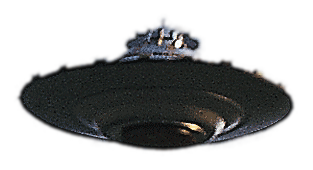
The central event was the night of 15 to 16 October 1957. Around one in the morning, alone on the tractor, Antônio saw a red star that grew into an egg shaped craft descending toward him, with a red light at the front and a flattened dish shaped cupola on top that rotated. It came down on metal supports, roughly two metres tall, in the field. The tractor engine died and the headlights cut out as the object closed in. He tried to run.
By his account a short figure, reaching only to his shoulder, seized him. He shoved it away, but three more beings took him by the arms and legs and carried him, struggling and shouting, up a metal ladder and through a door. They wore tight grey coveralls of a thick soft fabric and helmets with two round eye windows and tubes running from the head, and they communicated in sounds he likened to barks or growls rather than speech.
Inside, he passed through a small square anteroom into a larger semi oval chamber with smooth polished light grey walls, a glareless ceiling light, and a central column running floor to ceiling. He was stripped, and two operators sponged a clear, thick, odourless liquid over his whole body. In another room they took two blood samples from his chin with a device of cup shaped suction nozzles and a tube, leaving the two small marks that Fontes would later document. He was then left alone, and a grey smoke or gas admitted through wall tubes made him violently nauseous, and he vomited.
A naked woman then entered. He described her as small, with very fair, nearly white hair on her head but reddish underarm and pubic hair, large blue eyes slanting outward, high cheekbones, a triangular face, and very thin lips. He said he became uncontrollably aroused, which he attributed to the liquid rubbed on his skin, and that they had intercourse twice. She did not kiss him but bit him on the chin, and made growling sounds. Before leaving she pointed to her own belly, then to him, then upward to the sky, which he took to mean she would raise their child elsewhere.
He was given his clothes and shown around the craft. He tried to take a box with a glass top resembling a clock face, with a single hand that never moved and markings where three, six, nine and twelve would sit, but it was taken from him. He watched the cupola spin up with a sound like a vacuum cleaner drawing air, the supports retract, and the craft shoot away. He climbed down the ladder at roughly half past five in the morning, having been aboard about four hours and fifteen minutes, and found the tractor battery leads unscrewed.
What is the official explanation?
There was, in any meaningful sense, no government investigation of this case. No Brazilian Air Force or civil inquiry of record was opened, no official file was published, and the event left no state documentation that has surfaced. The case was handled from start to finish by the Brazilian press and by civilian UFO investigators. The nearest thing to an official examination was a private medical one, conducted by a physician acting in his civilian capacity. A claim repeated in some popular retellings, that a military intelligence agent sat in on the 1958 medical interview, traces only to later secondary accounts and cannot be anchored to a primary document; it is treated here as unverified.
What did the witnesses think it was?
The story reached print through two men. João Martins was a Brazilian journalist who had run a UFO series for the magazine O Cruzeiro and placed a press appeal for witnesses. Villas Boas wrote to him. Judging the story too extreme to print without medical backing, Martins brought in a doctor. The earliest firm reference to the case dates to February 1958, when Martins and the physician met Antônio; it then circulated only slowly.
The physician was Dr. Olavo T. Fontes, a Rio de Janeiro gastroenterologist on the faculty of the National School of Medicine and the Brazilian representative of the American civilian group APRO, the Aerial Phenomena Research Organization. On 22 February 1958 Fontes and Martins interviewed Villas Boas at length, and Fontes examined him. He documented two small darkened marks on the chin, consistent with where Antônio said blood was drawn; small reddish nodular lesions on the arms and legs that appeared in the following days and weeks, each hard, painful, with a small central orifice exuding a thin yellowish fluid and ringed by a violet zone; pale patches at the sides of the nose; and a cluster of systemic symptoms over the following month, including weakness, nausea, headache, loss of appetite, persistently burning eyes, and excessive sleepiness.
Fontes read this constellation as consistent with exposure to radiation, comparing it to a mild radiation sickness. The crucial caveat, which Fontes himself acknowledged, is that no blood work or dosimetry was ever done, so the radiation reading is a clinical impression, not a laboratory finding. Fontes and APRO judged the case too wild to publish and sat on it for years, hoping a comparable second case would appear for comparison; in an April 1966 letter to Gordon Creighton, Fontes regretted that none ever did.
The English speaking world received the case mainly through Creighton, who translated and serialized it in Flying Saucer Review from 1965, and through The Humanoids, the 1966 FSR special issue edited by Charles Bowen and later issued as a book. Further sketches were obtained from Villas Boas in 1961 by the Brazilian investigators Walter Bühler and Dr. Mário Prudente de Aquino.
Villas Boas withdrew from publicity, studied, and became a lawyer, practising in Formosa, Goiás. He married and raised several children, generally refused to discuss the event, but stood by his account in a 1978 Brazilian television appearance and never recanted. He died in January 1991; the date 1992 is also widely repeated and the literature does not resolve it to a single primary document.
What gives this single witness account unusual weight is that Antônio was a working farmer who sought no money and shunned attention, that the physical and medical findings were recorded contemporaneously by a credentialed physician rather than asserted decades later under hypnosis, and that he held to the same story for more than thirty years. What weakens it is that the central event rests on one man alone, the medical findings are non specific and were never confirmed in a laboratory, and its most extraordinary elements are by their nature unprovable.
Is the Antônio Villas Boas Abduction real? The two-pass assessment
Pass one, the mundane and skeptical reading. The abduction itself has no corroborating witness; only the precursor lights of 5 and 14 October were seen by a brother. There is no craft trace, no recovered artifact, no photograph of the object, and no laboratory confirmation of radiation. Fontes documented real lesions, but small nodules with a central orifice and a yellowish exudate have ordinary dermatological explanations, including folliculitis, insect bites, and contact reactions, and the chin marks are equally consistent with mundane causes. The cultural context is striking: Sputnik 1 launched on 4 October 1957, eleven days before the central event, at the height of saucer fever in a Brazilian press that Martins himself was stoking, and skeptics note that Antônio own sketch of the craft, with protruding spurs, resembles contemporary press depictions of the satellite with its antennas. The sexual narrative maps onto older incubus and succubus folklore and onto the psychology of an isolated young man, so hallucination, a vivid waking dream alone in a field at night, or deliberate fabrication for a credulous and paying press market are all live hypotheses. Jacques Vallée pointedly placed the case not in an extraterrestrial frame but in continuity with the European fairy abduction and demon lover tradition, beings who take humans at night, breed with them, and operate in a realm where a clock has no working hand and time does not pass normally, which he read as evidence against a literal spacecraft.
Pass two, if it is genuine. It would be the earliest fully developed modern abduction narrative, predating the Betty and Barney Hill case of September 1961 by four years and anticipating nearly the entire later template: the disabled vehicle, the small grey suited operators, forced boarding, biological sampling, and a reproductive purpose. That a Brazilian farmer with little plausible access to a developed abduction mythology produced that schema in 1957, before it became a cultural script, is the single most remarkable feature of the case. The medical documentation, recorded within months rather than recovered later under hypnosis, is unusual, and if the radiation consistent picture were real it would point to a genuine physical agent. His internal consistency over more than three decades, including the 1978 reaffirmation and his refusal to sensationalize or profit, is hard to square with a casual hoax.
The case cannot honestly be called proven, since it has no corroboration, no hard evidence, and unconfirmed medical findings, nor can it honestly be called discredited, since there is no recantation, no exposed mechanism of hoax, contemporaneous physician documentation, and lifelong consistency. It is filed as Disputed.
Sources
- www.thinkanomalous.com/vilas-boas-abduction.html
- www.thinkaboutitdocs.com/1957-abduction-of-antonio-villas-boas/
- ufoexperiences.blogspot.com/2005/10/antonio-villas-boas-case.html
- anomalien.com/alien-abduction-the-antonio-boas-story/
- www.wikidata.org/wiki/Q2857500
- www.livescience.com/20250-alien-abductions-origins.html
More cases from this region: UFO sightings in Brazil