The Andersson Photograph
The case rests on a single 35mm photograph said to have been taken by a man named Barry Andersson. This case file covers what witnesses reported, the official narrative, and a two-pass assessment with its evidence tier.
What did witnesses see at Russian River near Cooper Landing?
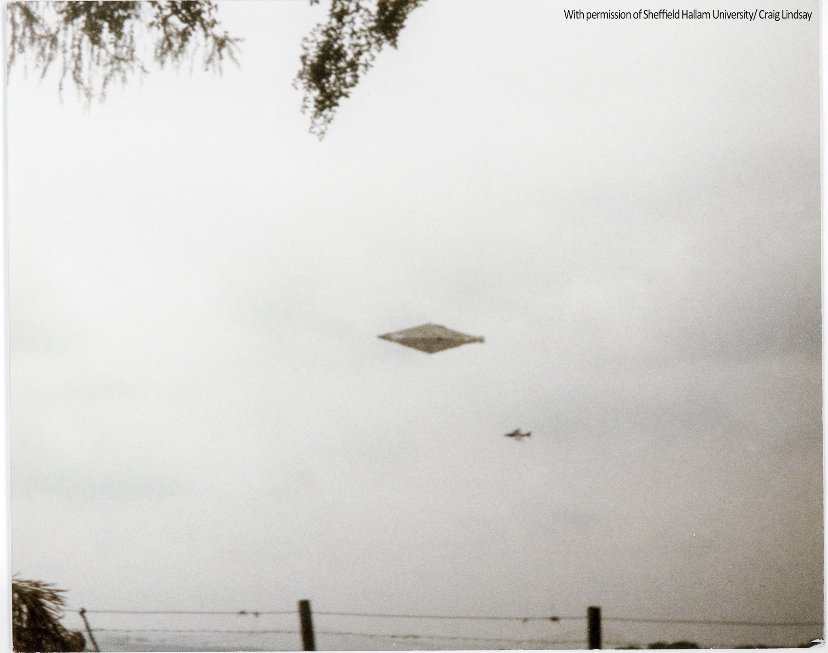
The case rests on a single 35mm photograph said to have been taken by a man named Barry Andersson. According to the only published account, the analyst Adrian Vance's 1977 book "UFOs, the Eye and the Camera," the picture was made on 5 July 1965 at 6 AM along the Russian River near Anchorage, Alaska, with a 35mm camera fitted with a focal-plane shutter. Andersson reportedly described a disc-shaped craft that he estimated at about 30 feet in diameter.
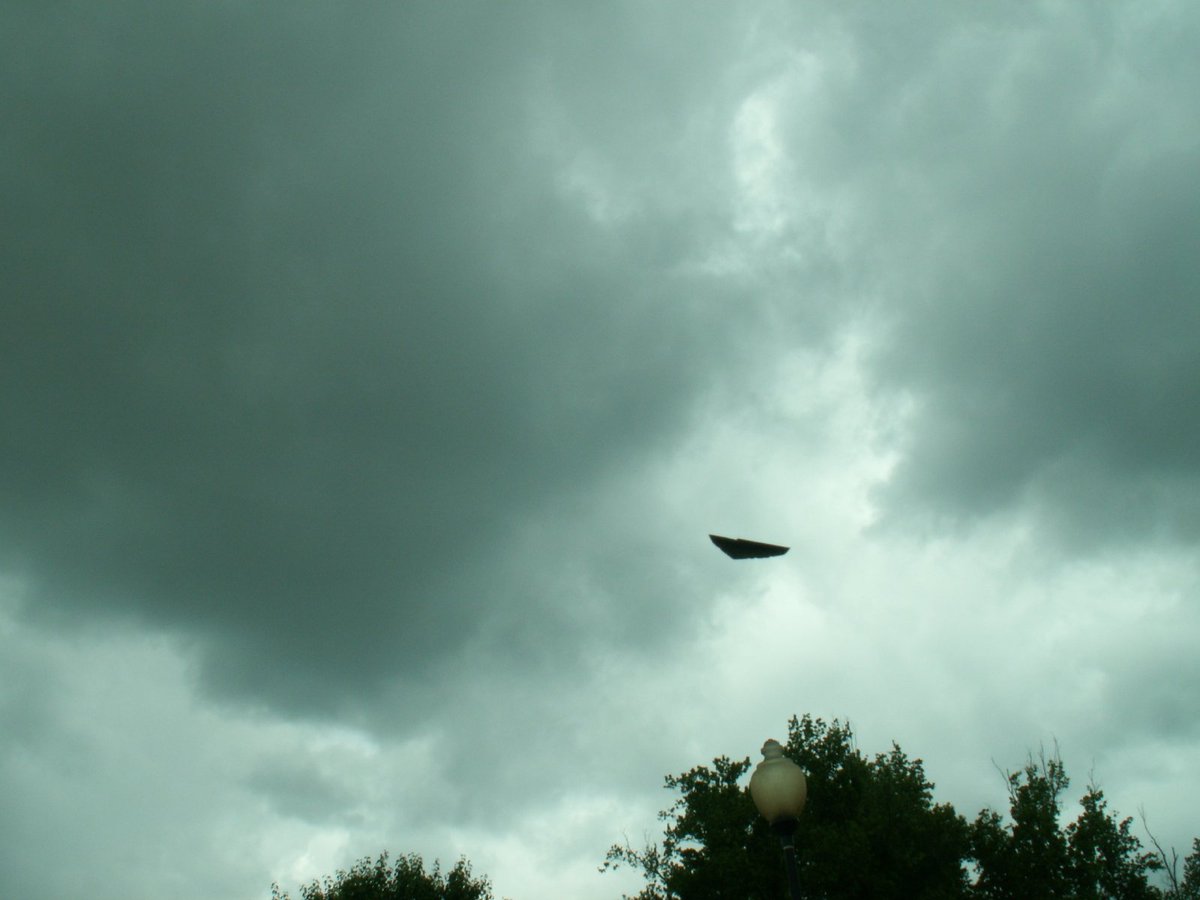
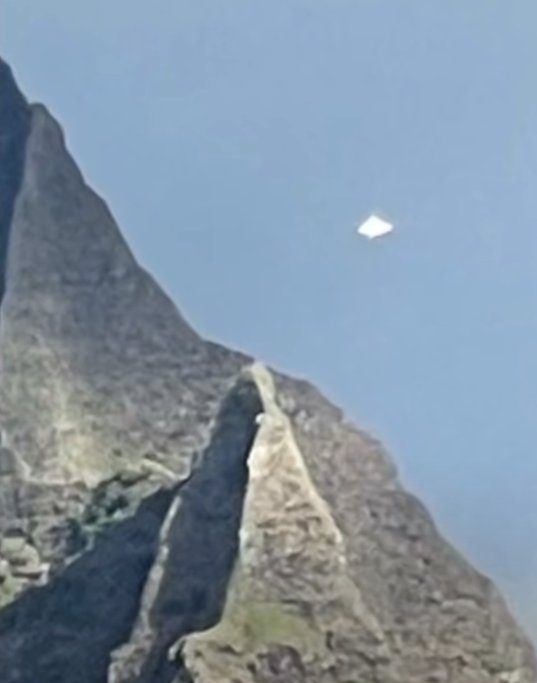
The striking and load-bearing feature of the photograph is not a clean saucer but a strange multiplication. Instead of one solid disc, the frame shows the object smeared or repeated across several positions, as if the same craft were present in more than one place at the same instant. It is this duplication, not any structural detail of a hull, that made the picture notable and that Vance built his entire analysis around. In his words the photograph shows "that the device can be in several places at one moment, i.e. part in one spot, part in another and so on."
The factual core that can actually be verified is thin and must be stated plainly. There is no contemporary 1965 newspaper report, no named time-stamped witness statement beyond Andersson himself, no second observer, and no recovered original negative in any public archive. Everything known about what was "seen" comes secondhand, more than a decade after the fact, through Vance's book. The Russian River where it was supposedly taken is a salmon stream that meets the Kenai River at Cooper Landing on the Kenai Peninsula, roughly a hundred road miles south of Anchorage, which is why the often-repeated phrase "near Anchorage" is geographically loose.
What is the official explanation?
There is no official narrative for this case, and that absence is itself the most important official-record fact about it. A search of the standard investigative trails turns up nothing. The United States Air Force's Project Blue Book, which was still running in 1965 and which logged photographic cases for technical analysis at Wright-Patterson Air Force Base, has no surfaced file matching an Andersson photograph from the Russian River. The National Investigations Committee on Aerial Phenomena (NICAP) and the Aerial Phenomena Research Organization (APRO), the two leading civilian investigative bodies of the period, do not appear to carry the case in their catalogued files or bulletins. No chain of custody for the negative was ever established by any organization.
The only "investigation" on record is the private analysis published by Adrian Vance, described on his own book cover as the West Coast Editor of Popular Photography. His book "UFOs, the Eye and the Camera" was issued by Barlenmir House in New York in 1977 (ISBN 0879290463, 150 pages). Vance was not an official investigator and his work was not a forensic report. It was a self-styled theoretical treatment built on what he called the "Two Channel Information Theory of Vision and Photography," in which he compared what the eye sees to what the camera records in order to argue for exotic conclusions about the objects in UFO photographs.
Vance's reading of the Andersson frame is quoted directly from the book. On page 41 he writes, "This picture, with a focal-plane shutter, shows that the disappearance-reappearance mechanism is one that takes place in stages, and that the object begins to appear in the new location while it is still dissolving in the old location or locations. We use the word 'locations' since the Andersson photograph also shows that the device can be in several places at one moment, i.e. part in one spot, part in another and so on." On page 49 he goes further: "The fact that this machine can dissolve in space and spread itself over several locations indicates that its operators have a very high degree of technology. This picture demonstrates that the process proceeds from one side of the object to the other, and that in the interval of the Anderson photograph, 1/125 second, the object was in six places. The fact that they have picked operating cycles that are just beyond human vision indicates that they understand the process in a way, and in terms, that I have not read about before this writing." That is the entire official footprint of the case: one man's interpretation, in one book, presented without a recovered negative, without corroborating witnesses, and without any institutional review.
What did the witnesses think it was?
The named witness is Barry Andersson, identified only as the photographer who took the picture on the Russian River. Beyond the name and the act of taking the photograph, almost nothing about him is documented in any traceable source: no age, occupation, residence, or background that can be confirmed from a primary record. He does not appear to have given a quoted, contemporaneous account of his own. What he is said to have believed, that he had photographed a disc-shaped craft roughly 30 feet across, comes to us only through Vance's later retelling, not through Andersson's own published words.
There are no corroborating witnesses on record. No second person is named as having seen the object, no other camera captured it, and no local report from July 1965 has surfaced to place anyone else at the scene. This matters because, by 1965, genuine Alaskan UFO reports that involved credible observers did tend to generate press coverage and investigative attention. The Andersson event left no such trail, which is unusual for a case later promoted as some of the more convincing photographic evidence on offer.
The strongest "believer" voice in the case is therefore not the witness but the analyst. Adrian Vance treated the photograph as authentic and read its anomalies as proof of a craft that could occupy several positions at once, operated by beings with technology "just beyond human vision." His conviction is genuine and clearly stated, but it is an interpreter's belief layered on top of an image whose provenance he did not establish, rather than a chain of independent human observers who watched the same thing in the sky.
The dispute
The dispute is straightforward and it goes to the heart of the photograph. The only thing that makes the Andersson image interesting is that the object appears smeared or repeated across several positions in a single frame, and Adrian Vance, the analyst who published it in 1977, interpreted that multiplication as a craft physically occupying "several places at one moment." But Vance also stated the camera used a focal-plane shutter, and a focal-plane shutter is precisely the kind of mechanism that produces apparent multiplication and distortion of fast or near-lens objects. The counter-explanation, then, is not invented to dismiss the case; it is handed to us by the very feature the case is built on.
Focal-plane shutters expose the frame through a slit that travels across the film, so different parts of the frame are recorded at slightly different moments. Photographic sources describe the result on moving subjects as stretching, warping, and "surreal proportions," the classic rolling-shutter effect. Separately, a malfunctioning or stuck film-advance with a motor drive can lay multiple exposures of the same object onto one frame, a documented failure that makes a single subject appear several times in one picture. Either mechanism, acting on a bird, an insect, or any small object crossing near the lens at 6 AM, reproduces the "in six places in 1/125 second" pattern that Vance attributed to alien propulsion. The mundane reading explains the single distinctive feature of the photograph cleanly and without special pleading.
What stops this dispute short of closing the case is the same thing that weakens the case itself: there is no original negative in any public archive, no investigative chain of custody, and no independent forensic analyst who has examined this specific frame to show that the duplication follows the geometry of a shutter slit rather than a real object. The shutter explanation is a strong, well-established general mechanism, but it has been argued from the physics and from Vance's own description, not demonstrated on the actual image. Nobody has produced a confession, recovered a hoax prop, or positively identified the exact object that crossed the lens. For that reason the dispute is rated as barely rather than strongly: the counter-explanation deflates the extraordinary interpretation and is the overwhelmingly likely answer, but it remains a reconstruction applied to a photograph that no longer exists in any examinable form, rather than a proven fabrication of this particular frame.
Is the Andersson Photograph real? The two-pass assessment
two-pass assessment included in the assessment field above
Sources
- web.archive.org/web/20231129021732/https://www.ufocasebook.com/alaskavance.html
- www.abebooks.com/9780879290467/UfoS-Eye-Camera-Vance-Adrian-0879290463/plp
- www.amazon.com/UfoS-Eye-Camera-Adrian-Vance/dp/0879290463
- petapixel.com/camera-shutter-designs/
- www.photrio.com/forum/threads/focal-plane-shutter-effect.143486/
More cases from this region: UFO sightings in United States