The Vicksburg, Michigan Disc
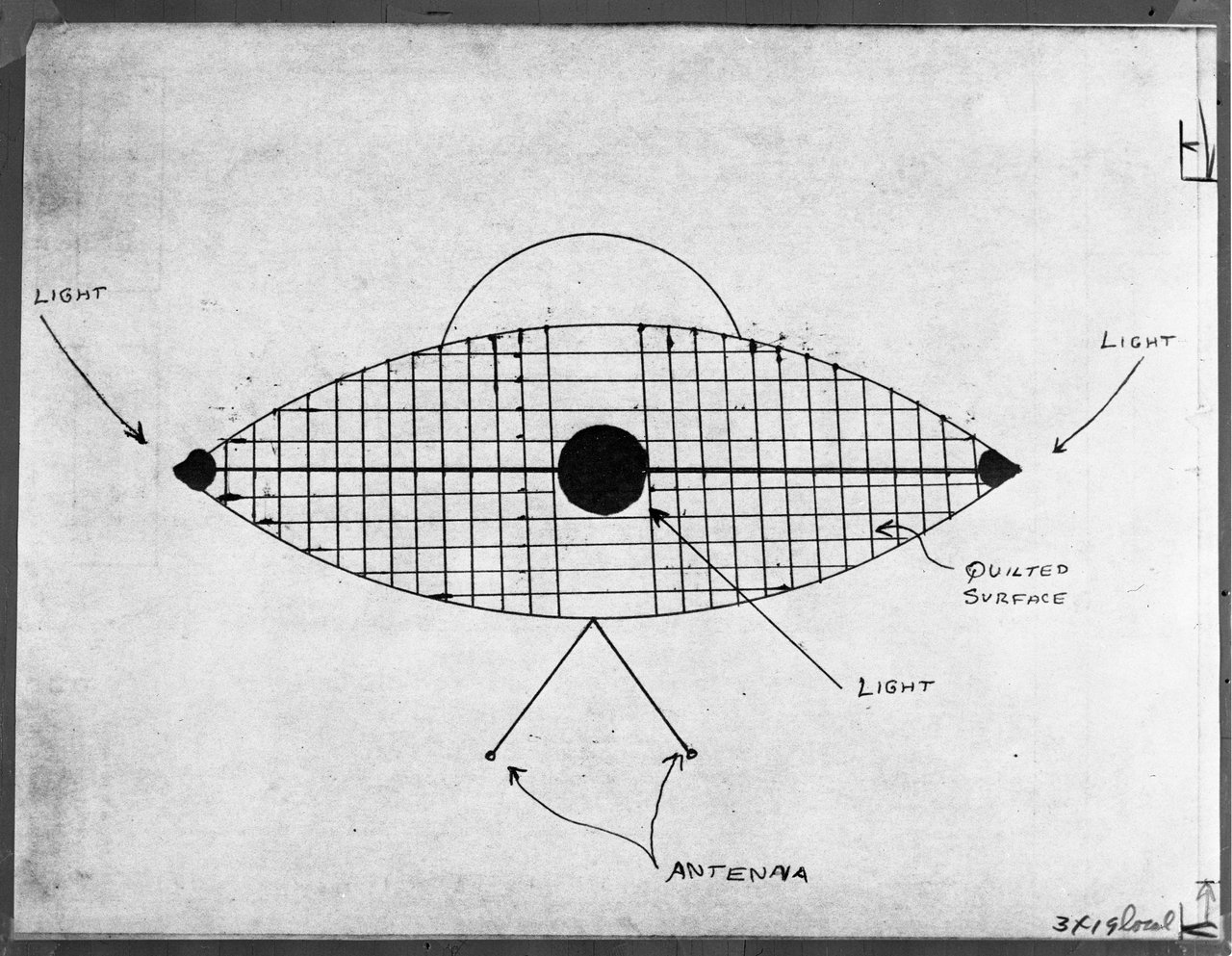
In the early hours of 31 March 1966, Jeno Udvardy, a machinist and 1956 Hungarian refugee, was driving home from a late work shift on a road near Vicksburg in Kalamazoo County, Michigan. This case file covers what witnesses reported, the official narrative, and a two-pass assessment with its evidence tier.
What did witnesses see at Near Vicksburg?
In the early hours of 31 March 1966, Jeno Udvardy, a machinist and 1956 Hungarian refugee, was driving home from a late work shift on a road near Vicksburg in Kalamazoo County, Michigan. The NICAP chronology fixes the time at about 2:00 a.m. As he came over the crest of a hill he saw a cluster of lights on the road ahead. His first read was ordinary: he assumed it was an ambulance stopped at an accident and slowed down expecting to find a wreck.
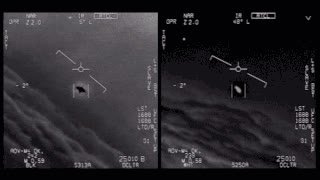
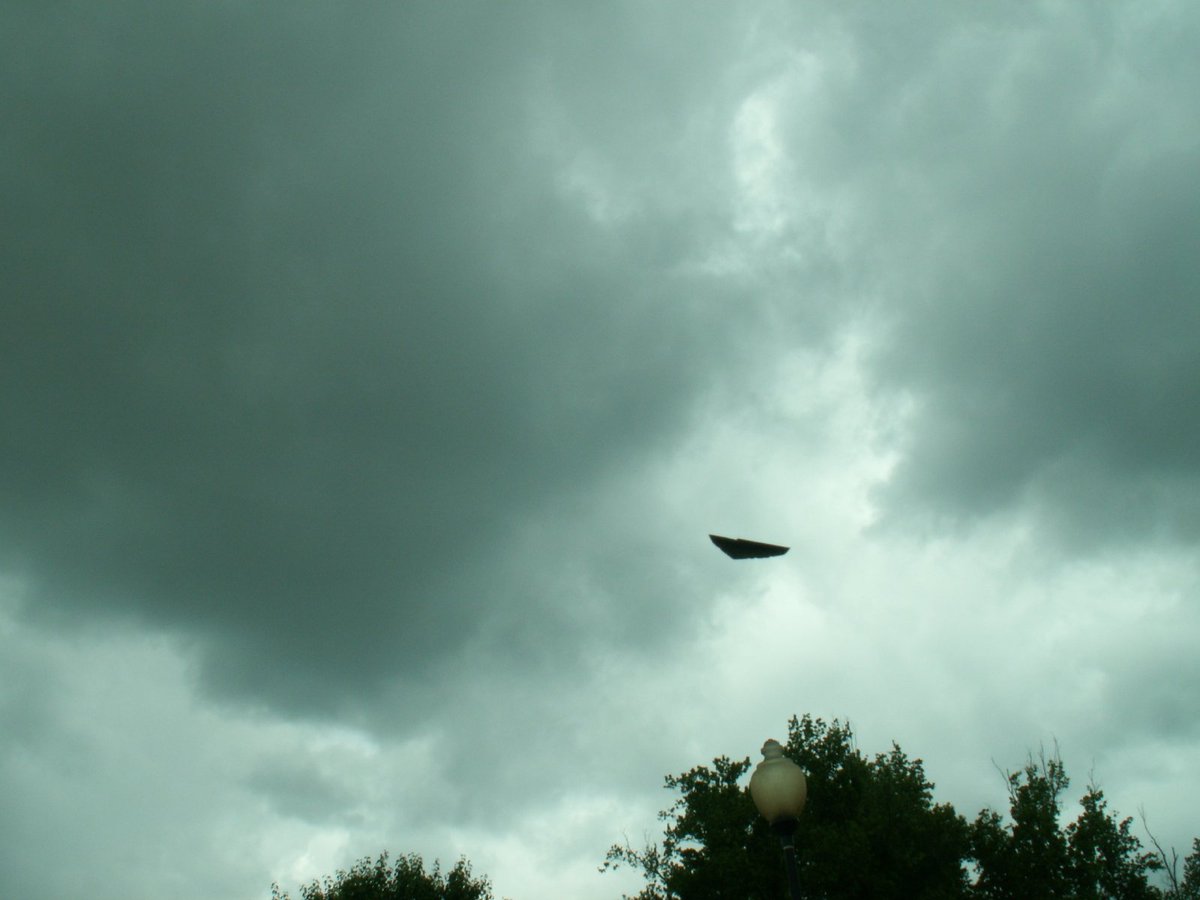
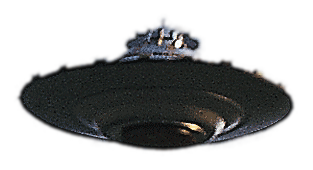
When he had closed to roughly ten feet, the lights resolved into something that did not belong on any vehicle he knew. NICAP's narrative describes it as a disc-shaped object hovering a few feet above the road surface, brightly lighted, grayish in color, carrying various body lights, some steady and some blinking. It sat across the road and blocked his way through.
Udvardy tried to back out. As he did, his car was, in the words of the NICAP report, "buffeted violently as if by strong gusts of wind," while the object darted around "from point to point." Looking behind him he believed he saw a second disc-shaped object, then realized the thing had repositioned itself, moving from in front of the car to over and behind it. His engine stalled and would not restart. He rolled down the window and heard a low humming sound that he compared to a swarm of bees. A few seconds later the object rose abruptly and sped away at a steep angle, disappearing into the eastern sky. The NICAP chronology puts the whole encounter at well under a minute.
The verbatim NICAP chronology entry reads: "2:00 a.m. CST. A motorist encountered a brightly lighted disc-like object, grayish with various body lights, hovering just off the road surface, blocking the roadway. The car was violently buffeted as the object darted around from point to point, emitting a hum like a swarm of bees. The object finally rose and sped away at a steep angle."
What is the official explanation?
There is no dedicated official finding for the Vicksburg encounter. This is one of the central facts of the case. The famous official narrative of the spring 1966 Michigan wave, the United States Air Force Project Blue Book "swamp gas" explanation, was aimed at two specific events: the Dexter sighting at the Frank Mannor farm on 20 March 1966 and the Hillsdale College sighting on 21 March 1966. Project Blue Book's scientific consultant, Northwestern University astronomer Dr. J. Allen Hynek, arrived in Washtenaw County on 23 March and held a press conference at the Detroit Press Club on 25 March 1966 at which he attributed the Dexter and Hillsdale lights to "marsh gas" from rotting vegetation in lowland areas released during the spring thaw. His own line at that conference, recorded in the Bentley Historical Library account, was "A dismal swamp is a most unlikely place for a visit from outer space." He dismissed the widely circulated Fitzpatrick photograph as time-exposure trails of the rising crescent moon and the planet Venus.
The Vicksburg encounter of 31 March happened six days after that press conference, in a different county roughly seventy miles to the west, and the swamp gas statement never addressed it. It was not a swamp sighting, it had no marsh, and the reported effects, a car violently buffeted, an engine that stalled and would not restart, an audible hum, are not produced by methane combustion. The Air Force closing of the wave simply did not reach this case.
What did reach it was NICAP, the civilian National Investigations Committee on Aerial Phenomena, then the most prominent independent investigative body in the United States. NICAP recorded the Udvardy encounter in its 1966 chronology and carried the narrative account in the section VI landing and physical-effects material of its "New Look" compilation. The case was later catalogued in NICAP's 1969 Special Report "Strange Effects from UFOs," directed by Major Donald E. Keyhoe, USMC (Ret.), with Gordon I. R. Lore Jr. as assistant director, at page 23, a report whose entire purpose was to gather roughly ninety-five cases from thirty states and ten countries in which UFOs were associated with physical effects, including engine stalls, electrical interference and vehicle disturbance. The Vicksburg encounter sits there as a vehicle-interference case, not as a solved one.
The broader official record around the wave is worth logging in pass two below, because the apparatus reaction was real. Public anger at the swamp gas verdict was immediate. Washtenaw County Sheriff Douglas Harvey, who had called in the original reports, told reporters, "With all due respect to Dr. Hynek, I'm not ready to accept this weak excuse of gas from marshes." On 28 March 1966, Michigan Congressman and House minority leader Gerald R. Ford called for a full Congressional investigation of "the rash of reported sightings of unidentified flying objects in southern Michigan," issuing a second statement on 3 April. The House Armed Services Committee hearing that followed, and the public pressure behind it, fed directly into the Air Force decision to fund the University of Colorado (Condon) study, which in turn led to the closure of Project Blue Book in 1969.
What did the witnesses think it was?
The single direct witness was Jeno Udvardy. He had fled Hungary as a refugee in 1956, after the Soviet crushing of the Hungarian uprising, and was working night shifts in the Vicksburg area a decade later. He did not court the encounter and did not at first interpret it as a UFO; he thought he was driving up on a road accident. By every account he was badly shaken by what happened.
He did not stay quiet. On reaching home he told his wife, and at her urging he drove to the office of the Kalamazoo County Sheriff to report what he had seen. The reception was, in the language of the surviving accounts, ridicule and skepticism, and no one made a serious effort to get to the bottom of the report at the local level. That is consistent with the climate of late March 1966 in Michigan, when sheriff's departments across the southern part of the state were buried in UFO reports and the Air Force had just publicly written the whole thing off as swamp gas. Udvardy's account survived because NICAP, not the local authorities, took it down and logged it.
His believed interpretation is plain from the report: he described a structured, lighted, disc-shaped craft that physically interfered with his car and his immediate environment, not a light in the sky and not a misperceived planet. The physical specifics he reported, the violent buffeting, the stalled engine that would not restart, the hum like bees, the steep silent departure, are the standard signature of what investigators of the period called electromagnetic or "EM" cases, and it is exactly that feature that put him into the NICAP physical-effects catalogue rather than a simple lights log.
The corroboration here is contextual rather than a second name on the same roadside. Udvardy was not an isolated crank in a quiet month. He reported during the most intense and most heavily witnessed UFO wave in Michigan history. Within the same two-week span, more than forty observers including a dozen police officers watched the object over the Mannor swamp near Dexter on 20 March, and seventeen to eighty-seven Hillsdale College students plus the county civil defense director watched the Hillsdale lights on 21 March. Hillsdale civil defense director William "Bud" Van Horn rejected the swamp gas verdict outright, published a fifteen-point rebuttal, and had soil from the Hillsdale site tested, reporting unusually high boron and radiation readings and dead microscopic life at the spot. Frank Mannor of Dexter never recanted; decades later Sheriff Harvey summarized the witnesses' position as "They did see something. I'll believe this to the day I die." Udvardy's report is one strand of that wave, with the distinguishing feature that his involved direct physical contact with a vehicle.
Is the Vicksburg, Michigan Disc real? The two-pass assessment
Pass one, the ordinary readings. A lone motorist on a dark rural road at 2:00 a.m. after a night shift is the textbook setting for misperception, and Udvardy himself first read the lights as an ambulance, which shows how an ordinary expectation can be projected onto an unfamiliar light source. A stationary cluster of lights that "resolved" only at close range could in principle be farm equipment, a stopped vehicle with auxiliary lamps, or another driver. The car being "buffeted" could be wind on an exposed crest; a stalled engine on a 1960s car can have a dozen mundane causes and might have nothing to do with the object; a frightened man's idea of a "hum like a swarm of bees" is hard to test after the fact. The wider wave it belongs to was officially explained as swamp gas by Project Blue Book, and skeptics extend that mood to every Michigan report of the period. Hoax is also a live ordinary possibility in any single-witness case with no recovered trace and no second observer at the same spot.
Those readings are weaker here than the setting suggests, for concrete reasons. The swamp gas explanation, the one piece of official debunking that exists for this wave, does not actually touch the Vicksburg event. It was authored for Dexter and Hillsdale, it concerns luminous marsh gas from lowland vegetation, and Hynek himself hedged it ("I cannot prove in a court of law that marsh gas is the full explanation"). Vicksburg had no swamp in the report, and methane does not buffet a moving car, stall an engine, hover and block a roadway, then climb away at a steep angle. The ambulance and stopped-vehicle readings collapse once the lights are described as a hovering disc a few feet off the road that then repositions itself from front to rear of the car. Wind does not normally come in the form of localized violent buffeting that starts and stops with an object darting "from point to point." No discrediting evidence specific to Udvardy exists at all: no confession, no recovered props, no second witness who recanted, no identified mundane object, no method-shown reconstruction of this encounter by any independent analyst. The local sheriff's "ridicule" was a brush-off, not an investigation, and an official apparatus dismissal of the neighboring cases is logged here as evidence the wave was real enough to need closing, not as a mark against this case.
Pass two, if real, what is it. As recorded, this is a classic 1966 close encounter with vehicle interference: a structured, self-luminous, disc-shaped object operating a few feet above a road, capable of physically buffeting a car, stalling its engine, generating an audible hum, and accelerating away silently at a steep angle. NICAP, the leading civilian body of the day, treated it exactly that way, placing it in its physical-effects catalogue "Strange Effects from UFOs" alongside other engine-stall and electromagnetic cases. It is one node in the single most consequential UFO wave in American history, the Michigan flap that produced the swamp gas debacle, a sheriff's public revolt, a Congressman's call for hearings, and ultimately the Condon study and the end of Project Blue Book.
Tier: Unknown. There is no official narrative for this specific event; the swamp gas verdict explicitly covered Dexter and Hillsdale and never reached Vicksburg, and no independent, method-shown analysis has identified the object or shown a fabrication. The case rests on a single, motivated-to-stay-quiet witness who reported promptly and on the contemporaneous NICAP investigation that recorded him. With one direct witness and no physical trace recovered, it cannot be promoted to Verified Unexplained, but with no real counter-explanation on the table it is not a disputed case either. It stands, unexplained, on its witness and the NICAP file.
Sources
- www.nicap.org/chronos/1966fullrep.htm
- www.nicap.org/newlook/section_VI.htm
- www.mysterywire.com/documents/strange-effects-from-ufos-a-nicap-special-report-1969/
More cases from this region: UFO sightings in United States