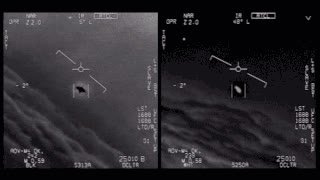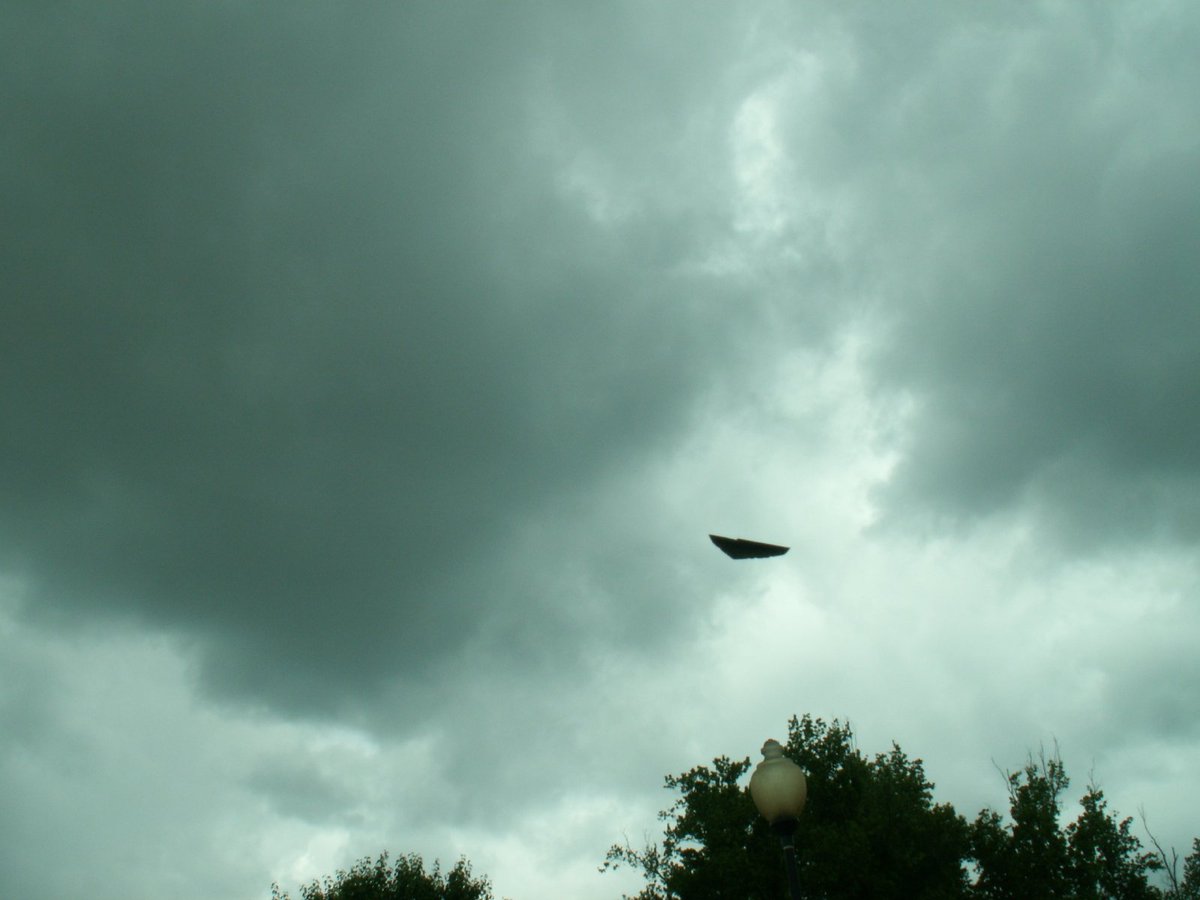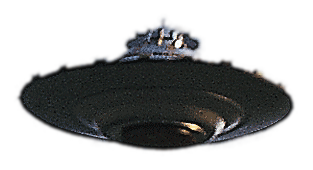
A NASA Fire Technician on the Apollo 15 Hadley Rille Object
The account comes from an anonymous man who says he worked at NASA's Manned Spacecraft Center in Houston from 1958 to his retirement in 1979, starting as a security guard "on Wayside in Houston Texas" before the center at Clear Lake was even built, transferring to the Fire Department at the new MSC in 1961, training as a Fire and Safety Technician under the Houston Fire and Safety contract and then under Wackenhut Corporation after Wackenhut won the combined fire, safety and security contract in 1966, and eventually being promoted to Crew Chief and then Training Officer at Area 2000 at Ellington. This case file covers what witnesses reported, the official narrative, and a two-pass assessment with its evidence tier.
What did witnesses see at Mission Operations Control Room viewing room?
The account comes from an anonymous man who says he worked at NASA's Manned Spacecraft Center in Houston from 1958 to his retirement in 1979, starting as a security guard "on Wayside in Houston Texas" before the center at Clear Lake was even built, transferring to the Fire Department at the new MSC in 1961, training as a Fire and Safety Technician under the Houston Fire and Safety contract and then under Wackenhut Corporation after Wackenhut won the combined fire, safety and security contract in 1966, and eventually being promoted to Crew Chief and then Training Officer at Area 2000 at Ellington. He says he passed a rigid security clearance investigation and that men who failed it were quietly laid off.
The central event happened during a manned lunar mission while he and his partner Jim Baker were on a routine safety patrol of Building 30, the Mission Operations Control Center, known as IMCC. He describes the layout in close detail: a windowless square structure next to the Southwestern Bell building, two Mission Operations Control Rooms (MOCRs) on the second and third floors, a huge wall screen that served as the mission map, a big television screen fed by a bank of hot cameras kept in a dark, cold room behind it, and a viewing room separated from the MOCR by glass windows, with about eight rows of comfortable theater seats, phone booths, and two large color TVs mounted above the windows carrying the air-to-ground audio. At the back of the viewing room was the minor fire alarm panel that the safety team had to monitor during missions. He says he and Baker, both pipe smokers, regularly stopped there to check the panel and take a smoke break.
On the day in question they had been in the viewing room about fifteen minutes when they noticed the technicians in the MOCR get up and leave, which Baker joked about ("Looks as if everyone got a bee in their bonnet at the same time, don't it?"). Then at least five senior administrators walked in, one of whom the witness positively identifies as Dr. Gilruth, whom the firemen irreverently nicknamed "Chrome Dome." The men went to the center of the room, talked excitedly, and pointed at the big screen to the right of the main MOCR map. Looking at the screen, the witness saw an object hovering above the spot where the astronauts were supposed to be in Hadley's Rille. He is emphatic about it being a solid object: "it was round, it had a shiny side with a shadow side, with the shadow side matching the shadows on the moon."
He says the object made a slow move from screen left to screen right, and the left-front camera on the Lunar Rover tracked it. It then became clear the object was not moving sideways but circling the Rover. As it came around, the right-rear Rover camera picked it up and continued tracking it, then handed back to the left-front camera, which followed it back to the point above the rille where the astronauts were. The astronauts themselves could not be seen because they were down over the edge in the rille, but their voices were audible. Then, he says, the object "took off straight up and went out of sight in less than a second," which made him blurt out "What the crap is that?" and drew the administrators' attention to the two firemen they had not realized were in the room.
When the men asked what the firemen were doing there, the witness said they were inspecting the fire alarm panel and taking a smoke break, and asked his own question back: "What in hell was that about?" He says they told him it was a drop of oil on the lens of the camera on the Moon. He objected that the temperature would freeze such a drop solid; the man holding his clearance badge then changed the explanation to a drop of oil on the camera lens at the back of the viewing-room screen, which the witness again rejected, saying the heat back there would set an oil drop on fire. The man holding his badge told him, "If you want to keep your job, you'll get out of here and keep your mouth shut about what occurred here."
On leaving, the firemen found security guards Dick Nieber and Loring E. Williams posted on the viewing-room doors, with a man named Andrado and two others on the rear doors, all pulled off vehicular patrol and ordered to admit nobody but Gilruth and his party. The guards had heard a rumor circulating that the astronauts had been killed. That same evening the witness says he typed up a full report of the incident with the time, date, place, mission, and names, had Jim Baker read and sign it, and made six copies, giving Baker one. Back at the fire station, Sergeant Thomas Walsh took them into the dispatcher's office, told them he had received a call from Everette Shafer of NASA Security, and warned that whatever they had seen or heard could not be discussed with anyone, ever, because it was a matter of National Security. The witness's reaction: "National Security over a drop of oil on a camera lens? I think not!"
What is the official explanation?
There is no official NASA report, Project Blue Book file, or contemporaneous document about this episode, because the account did not surface until 2005, decades after the fact, from an anonymous source. The only "official" voices in the story are the ones the witness himself quotes from memory: the unnamed administrator who first called the object a drop of oil on the lunar camera lens, then a drop of oil on the viewing-room screen camera lens, and the security warning relayed through Sergeant Thomas Walsh on behalf of Everette Shafer of NASA Security (a name the witness flags he may be misspelling as Sheaffer or Sheafer). Within the framing of this case those quoted explanations function as an in-narrative debunk, not an independent finding, and per the evidence rules an official brush-off is logged here in the official record rather than counted against the witness.
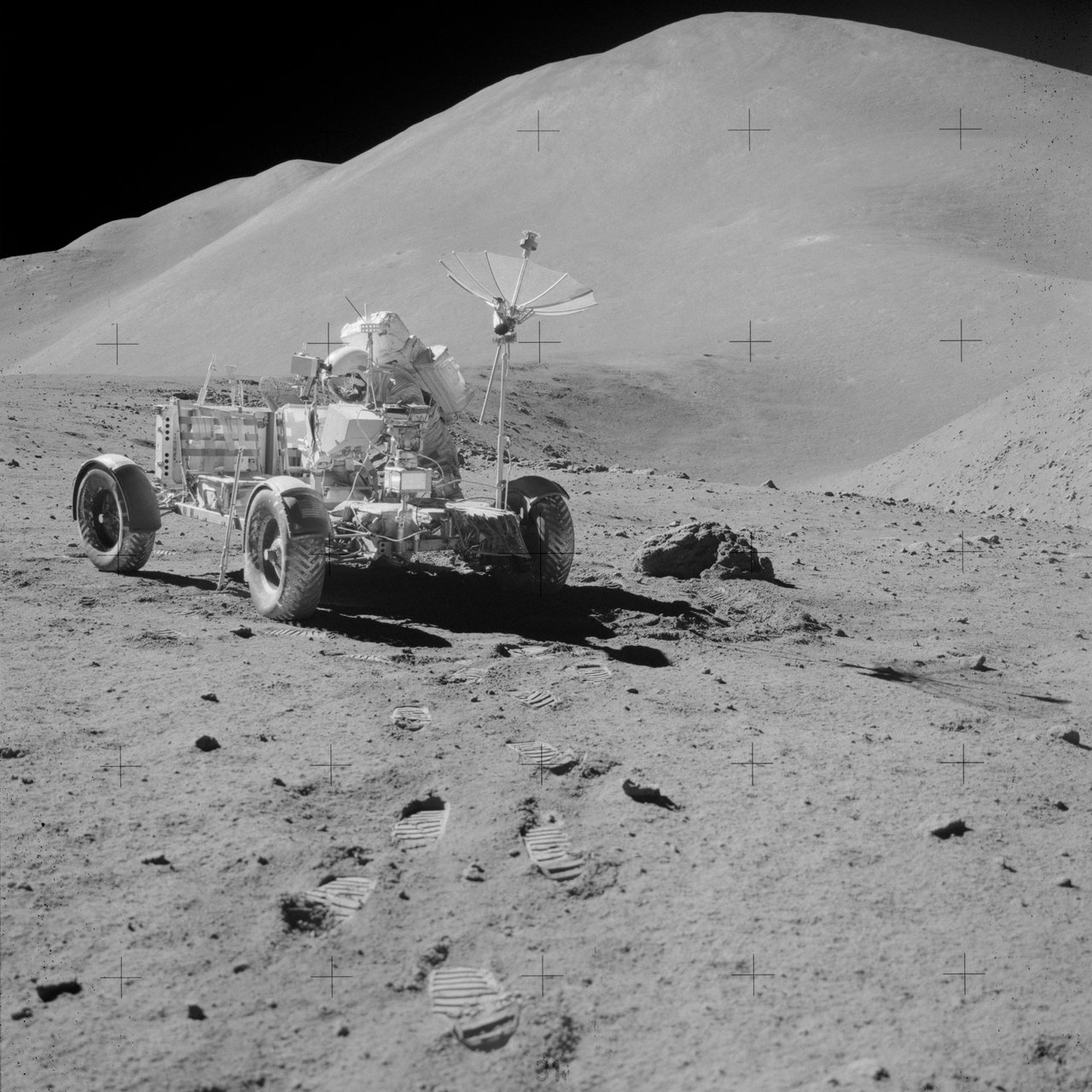
What the documented NASA record does confirm is the stage on which the story is set, and it matches the witness's geography with surprising precision. Apollo 15 (launched 26 July 1971, surface operations 30 July to 2 August 1971, crew David Scott, James Irwin, and Alfred Worden) was the first J-series mission and the first to carry the Lunar Roving Vehicle. It was also the first mission to carry the RCA Ground-Commanded Television Assembly (GCTA), a color TV camera mounted on the Rover that was operated remotely from Houston by flight controller Edward I. "Ed" Fendell, later nicknamed "Captain Video." NASA's own history pages and the Apollo Lunar Surface Journal record that during the third moonwalk Scott and Irwin drove west to Station 9A on the rim of Hadley Rille, a canyon roughly 1.3 km wide and 400 m deep, where they could look down over the edge into the rille while the Rover and its camera stayed up on the rim. That detail, astronauts out of sight "over the edge in the Rille" while the Rover camera remained above, is exactly the configuration the witness describes, and it is verifiable from the public mission record.
The chronology of the senior figure named also checks out. Dr. Robert R. Gilruth was director of the Manned Spacecraft Center through Apollo 15; it was the last manned landing he oversaw as director before moving to a new NASA post in January 1972. Gilruth was famously bald, which fits the "Chrome Dome" nickname. So the man the witness places in the building during Apollo 15 was in fact the sitting MSC director at that moment, not an anachronism.
One named detail does not survive scrutiny and points to the account being reconstructed memory rather than a contemporaneous record. The witness says the administrative side of Building 30 "housed the office of James Oberg." James Oberg, the NASA mission controller who later became the best-known skeptical analyst of Apollo UFO claims, did not join NASA until 1975, four years after Apollo 15, and he worked in Building 30 during the Space Shuttle era. His office could not have been a 1971 landmark. That anachronism, together with the witness's own 2005 addendum admitting "I looked it up recently and it was Apollo 15" and that he had lost his original typed notes, shows the document is a memory assembled in 2005 with later knowledge folded in, not the signed 1971 report he describes writing.
What did the witnesses think it was?
The witness is anonymous. He never gives his name in the account, identifying himself only by his career: a NASA contract fireman and safety man at the Manned Spacecraft Center from 1958 to 1979 who rose to Training Officer, and who after retiring became a security dispatcher for the LBJ Presidential Library in Austin. He plainly believed he saw a real, structured craft, not an artifact: he insists repeatedly that it was an object, round, with a lit side and a shadow side that matched the lunar shadows, that it deliberately circled the Rover under tracking by both Rover cameras, and that it shot straight up out of sight in under a second. He treats the "drop of oil" explanation with open contempt and reads the security clampdown, guards posted on the doors and a National Security warning, as proof the object was real and important enough to need silencing.
His one named corroborating witness is his patrol partner Jim Baker, whom he says read and signed the report the same evening. Baker cannot confirm anything: the witness states Baker died of a sudden heart attack in 1983 at age forty-six, and that the last time they spoke Baker said he had burned his own copy of the report but had given a copy to a friend from West Virginia. The witness adds that Baker's parting words were, "You sure raised hell over that drop of oil, but you were right, they were full of shit and you knew it." He names other people present or involved, Dr. Gilruth, security guards Dick Nieber and Loring E. Williams, a guard named Andrado, Sergeant Thomas Walsh, and Everette Shafer of NASA Security, but none has ever come forward to corroborate the episode, and the witness himself never resurfaced under a name. The supporting physical evidence he describes, six typed copies of a signed 1971 report, has all been lost or destroyed by his own account.
The account reached the public through UFO researcher B.J. Booth, who runs UFO Casebook, with investigator Eileen Nesbitt assisting. Booth's editorial note says he contacted the man, questioned him about his employment dates and which mission it was, and that the witness confirmed it was Apollo 15. Booth, then, is the chain of custody, and his note makes clear it was Booth who first proposed Apollo 15 as the mission, after which the witness agreed.
The dispute
The dispute is not that anyone has identified the object. It is that the entire case rests on one anonymous, uncorroborated recollection set down in 2005 about a 1971 event, with no surviving physical evidence and no public footage to back it. The man is unnamed, his only named corroborator (patrol partner Jim Baker) died in 1983, and the six typed copies of the report he says he made in 1971 are all, by his own account, burned or lost. There is therefore nothing to examine except the memory itself, and the memory carries clear marks of being reconstructed rather than recorded.
The most concrete problems are internal to the witness's own document. He concedes in his addendum, dated 03-13-05, that he "looked it up recently and it was Apollo 15," and the researcher who published him, B.J. Booth of UFO Casebook, states in his editorial note that it was Booth who first proposed Apollo 15 as the mission, after which the witness agreed. So the headline fact of the case, which mission this was, is a 2005 inference, not something the witness carried from 1971. On top of that, the account places "the office of James Oberg" in Building 30 at the time of the event, but Oberg did not join NASA until 1975, four years after Apollo 15. That anachronism shows later knowledge bleeding into the recollection. These are not hostile inventions; they are the witness's and the publisher's own words, and they undercut the claim that this is a faithful contemporaneous record.
The competing ordinary explanation, advanced in the story itself by the unnamed administrator and consistent with how skeptics read this class of report, is that what appeared on the screen was an artifact in the imaging chain rather than a craft over the Moon: a drop of oil, a reflection, a flare, or a bloom on the hot camera bank behind the display, the kind of transient that drifts and then vanishes when its source moves. That fits the described behavior, a round bright body that circles and then shoots straight up out of frame in under a second, at least as well as a maneuvering object does. It is reinforced by the fact that the public Apollo 15 lunar TV record, controlled from Houston by Ed Fendell and scrutinized for fifty years, contains no clip of an object circling the Rover at Hadley Rille. If both Rover cameras really tracked such an object in real time in front of the MSC director, its total absence from the archive is hard to reconcile with the literal account.
What keeps this at barely disputed rather than strongly disputed is that no one has done the work that would close it. There is no confession, no recantation, no recovered hoax prop, and no positive identification of a specific real-world cause; the "drop of oil" line is an unproven in-room assertion, not a demonstrated identification of this particular image. The setting the witness describes is also genuinely accurate in its checkable details (the first remote color Rover camera, the EVA-3 trip to the rim of Hadley Rille with the astronauts going down over the edge, Gilruth as the sitting director). So the case is not refuted; it is unverifiable, anchored to a single anonymous source whose own text reveals the mission label was supplied after the fact.
Is the A NASA Fire Technician on the Apollo 15 Hadley Rille Object real? The two-pass assessment
Pass one, how this could be entirely ordinary. The strongest mundane reading is the one the case offers on its own face: this is a single anonymous recollection committed to writing in 2005 about something said to have happened in 1971, with no film, no photograph, no surviving document, and no second witness who can be questioned. The named partner Jim Baker died in 1983, and every copy of the supposed signed report is, by the witness's own telling, burned or lost. That leaves nothing to test but one man's memory thirty-plus years on. The internal evidence shows that memory is reconstructed rather than recorded: the witness admits in his 03-13-05 addendum that he "looked it up recently and it was Apollo 15," researcher B.J. Booth's own note says it was Booth who first suggested Apollo 15 and the witness who agreed, and the account anachronistically places James Oberg's office in Building 30 in 1971 when Oberg did not join NASA until 1975. Those are the fingerprints of a story assembled later, with details borrowed from public knowledge of the mission. The object's described behavior, a body that circles the Rover under perfect camera tracking and then shoots vertically out of frame in under a second, is also exactly what a transient optical artifact on a TV system looks like: a lens flare, a reflection, a bright fleck, or a bloom on the heated camera bank behind the screen that drifts and then vanishes when the source moves. The administrator's "drop of oil on the lens" line, which the witness rejects, is a clumsy way of saying the same thing, an artifact in the imaging chain, and it is at least as good an explanation as a craft. Crucially, the public Apollo 15 TV record, which Ed Fendell drove from Houston with the GCTA color camera and which has been pored over frame by frame for half a century, contains no surviving footage of an object circling the Rover at Hadley Rille. If both Rover cameras tracked a craft for the better part of a minute in real time in front of the MSC director, the absence of any such clip in the archive is a serious problem for the literal reading.
Pass two, if the core of it is real. The case is not weightless. The witness gets hard, checkable specifics right that a casual fabricator would likely miss. Apollo 15 genuinely was the first mission with a remotely commanded color TV camera on the Rover, and during EVA-3 Scott and Irwin genuinely did drive to Station 9A on the rim of Hadley Rille and go down "over the edge" into a 400 m deep canyon while the Rover and its camera stayed up on the rim, which is precisely the staging the witness describes. Robert Gilruth genuinely was the sitting MSC director during Apollo 15, his "Chrome Dome" baldness fits, and the bank of hot cameras behind the MOCR display screen is a real feature of that room. A man inventing a tale from nothing in 2005 could have looked some of this up, but the texture of it, the contract history of Houston Fire and Safety losing out to Wackenhut in 1966, the layout of the viewing room, the named coworkers, reads like someone who really worked there. If something genuine sits under the story, the most defensible version is not necessarily a structured craft but an anomaly on the downlink that briefly spooked the room, was hushed under a generic security oath of the kind Apollo personnel really did sign, and grew in the retelling. The witness's certainty that it was solid and intelligently maneuvering is exactly the certainty that decades of memory and a strong personal conviction produce.
On balance this is a single, anonymous, decades-late, uncorroborated testimony with no physical evidence, no surviving document, and no supporting footage, set against a real and well-matched mission backdrop. The quoted "drop of oil" explanation is an in-narrative official brush-off and counts as evidence the firemen saw something on the screen worth explaining away, not as a verdict; it does not close the case. But there is also no method-shown, independent, civilian analysis that identifies the specific real-world object, no confession, and no recovered prop, so nothing pushes this toward strongly disputed either. What weakens it are the structural problems intrinsic to the testimony itself, the retroactive mission attribution, the Oberg anachronism, the lost evidence, the lone unconfirmable corroborator. That is a real but partial counter-weight rather than a positive identification, which places it squarely in Barely Disputed: a vivid, internally detailed witness account that largely stands as testimony while resting on a single unverifiable source whose own document shows it was reconstructed years later.
Sources
- www.nasa.gov/history/50-years-ago-apollo-15-on-the-moon-at-hadley-apennine/
- web.archive.org/web/20050317022608/http://www.ufocasebook.com/formernasa.html
- web.archive.org/web/20050320054558/http://www.ufocasebook.com/formernasa.html
- roundupreads.jsc.nasa.gov/roundup/1482/20YearsAgoRememberingRobertGilruth
- archive.org/details/AS15-82-11121
- www.bonhams.com/auction/30739/lot/372/apollo-15-david-scott-at-the-lunar-rover-in-front-of-hadley-canyon-and-mount-hadley-delta-station-9a-james-irwin-26-july-7-august-1971-eva-3/
More cases from this region: UFO sightings in United States