The Atlantic "Floating Brain" Range Fouler
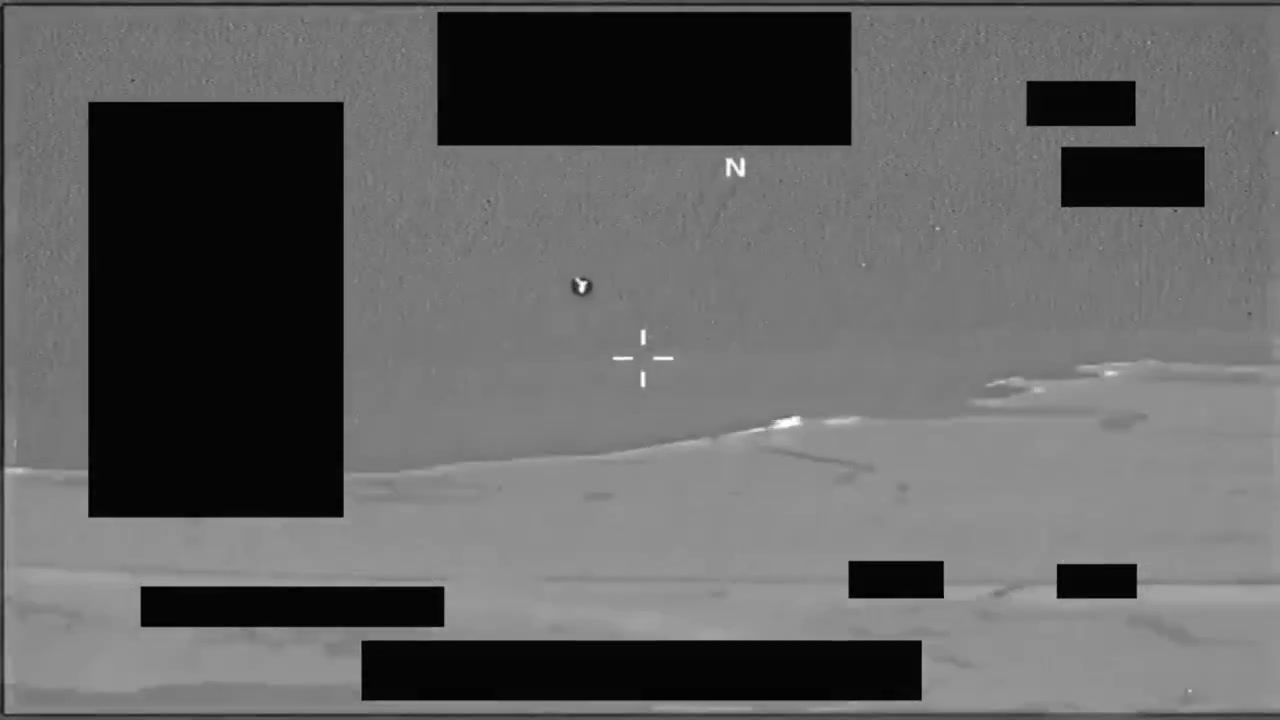
On 1 January 2020 an infrared sensor aboard a U.S. military platform over the open Atlantic locked onto a slow, darker, roughly maroon shape that the aircrew logged as an unresolved range fouler, an unauthorized intrusion into active military airspace. The 32 second clip sat inside government files for more than six years before the U.S. Department of War published it on 10 July 2026 as part of the fourth PURSUE tranche, the Presidential Unsealing and Reporting System for UAP Encounters, hosted at war.gov/UFO. The footage, designated DOW-UAP-PR116 and paired with a Range Fouler Debrief filed as DOW-UAP-D091, went viral within a day under the nicknames the "floating brain" and the "jellyfish." The object's layered, lobed morphology on thermal imagery, combined with its refusal to maneuver, made it a Rorschach test: to some a drifting cluster of balloons, to others an unexplained anomaly the government still classifies as unresolved. What is not in dispute is that AARO logged it as a case it could not close.
What did witnesses see at Atlantic Ocean?
The clip runs 32 seconds and is drawn from an infrared targeting sensor on a U.S. military platform. Through the entire sequence the sensor zooms and pans to keep the object, described in the imagery metadata as "an area of contrast," generally centered in the frame, which is why the surrounding sea and sky provide almost no fixed reference for scale or range. On the thermal display the object presents as a compact, irregular mass rather than a disc or sphere.
The accompanying Range Fouler Debrief describes the phenomenon in the observers' own words as a "darker, maroonish color, approximately 12-15 feet in height," with "an odd, kind of layered look, with smaller pieces extending sideways and from the bottom." That lumpy, multi lobed profile, a central body with protrusions budding off the sides and underside, is the source of the "floating brain" and "jellyfish" nicknames that spread online after release. In the roughly 3.6 to 4.5 meter size estimate and its stacked, cauliflower like structure, the shape reads less like a vehicle and more like an object of soft, uneven volume.
Crucially, the debrief records that the object "didn't maneuver or change direction" and that it "traveled with the wind." There is no reported acceleration, no abrupt turn, no departure at speed in the primary military account. That passivity is the single most important behavioral fact in the file, and it stands in sharp contrast to the more dramatic "shape-shifts and performs a sharp high-speed maneuver" claims that circulated in AI-enhanced reposts of the video, which are not part of the official footage.
What is the official explanation?
The report was submitted by U.S. Northern Command (USNORTHCOM) to the All-domain Anomaly Resolution Office (AARO), and the Department of War released it publicly under PURSUE as file DOW-UAP-PR116, with the debrief carried as DOW-UAP-D091 (imagery released as public domain via DVIDS). The framing is that of a "range fouler," the standardized category for an object that intrudes on active military airspace or a training range without authorization, which is why the encounter generated a formal debrief in the first place rather than being dismissed at the source.
The government's own prosaic candidate is explicit in the paperwork. The debrief likens the object to a "large, somewhat deformed balloon," and the assessment that accompanied the release pointed to "an unusually shaped balloon or clump of deflated balloons squashed together" as the most plausible identity, resting that reading on the two behavioral facts that the object drifted with the wind and never maneuvered. Notably, however, the case was published within the "unresolved" set rather than as a closed, positively identified balloon, meaning AARO offered the balloon as a candidate explanation, not a confirmed determination.
What did the witnesses think it was?
For the military observers, the operative frame was not "alien craft" but airspace security: a range fouler is by definition an uninvited object in space reserved for U.S. operations, and the debrief exists because someone had to document an unidentified intruder that the crew could not immediately name. That institutional lens matters, because it means the object was taken seriously enough to file a formal report while the assessment simultaneously reached for the most mundane physical explanation available.
Public and analyst reaction after the 10 July 2026 release split along familiar lines. The clip's lobed silhouette made it instantly memeable, and social media responses ranged from the dismissive to the fantastical, with an AI-enhanced reupload falsely dramatizing a high speed getaway. Harvard astrophysicist Avi Loeb, reviewing the fourth tranche in his Medium write-up "Highlights from the Fourth UAP Data Release," treated PR116 soberly, noting the object's maroon color, its 12 to 15 foot size, its drift with the wind and its resemblance to a large deformed balloon, and elsewhere in the same release cautioned that some striking on-screen shapes are optical artifacts rather than the true shape of the source. His measured handling is a useful counterweight to the viral framing: the interesting question is not the nickname but why a wind-drifting blob was logged as unresolved.
Is the Atlantic "Floating Brain" Range Fouler real? The two-pass assessment
Pass one, the mundane reading, is strong and comes straight from the file. An object that holds a "darker, maroonish" thermal signature, presents a soft, layered, protrusion-laden shape, sits in the 12 to 15 foot range, drifts with the prevailing wind and never once maneuvers or changes heading is a near-textbook match for a balloon or a tangled cluster of partially deflated balloons. Errant weather balloons, cluster and party balloons, and research or novelty balloons routinely reach open ocean airspace, and their irregular, lobed forms photograph strangely on infrared, where warm and cool patches exaggerate the "brain" texture. The absence of any propulsion signature or controlled flight is exactly what the balloon hypothesis predicts, and the government's own debrief lands there.
Pass two, what remains open. Despite the strength of the balloon candidate, USNORTHCOM and AARO did not close the case as a confirmed balloon; they released it within the unresolved set, which means the evidence available was not sufficient to positively identify the object, only to suggest a likely identity. The footage gives no independent range, altitude, or true size, so the 12 to 15 foot estimate is an eyeball figure from a sensor that was actively panning to track a contrast blob against empty sky and sea, and the unusual morphology on IR was distinctive enough that trained observers logged it as an intrusion rather than waving it off. The honest verdict is Unknown: the deformed-balloon reading is the leading explanation and probably the correct one, but with no recovered object, no confirmed trajectory data, and an official file that stops short of a positive identification, the case stays genuinely unresolved rather than solved.
Sources
- www.dvidshub.net/video/1014124/dow-uap-pr116-unresolved-uap-report-atlantic-ocean-2020
- earthsky.org/human-world/pentagon-uap-files-4th-batch-ufos/
- avi-loeb.medium.com/highlights-from-the-fourth-uap-data-release-by-the-u-s-government-105a9b2561c7
- thehill.com/homenews/administration/5962825-pentagon-releases-fourth-batch-of-ufo-files/
- www.war.gov/News/Releases/Release/Article/4539898/
More cases from this region: UFO sightings in United States