The Fort Itaipu Heat Encounter
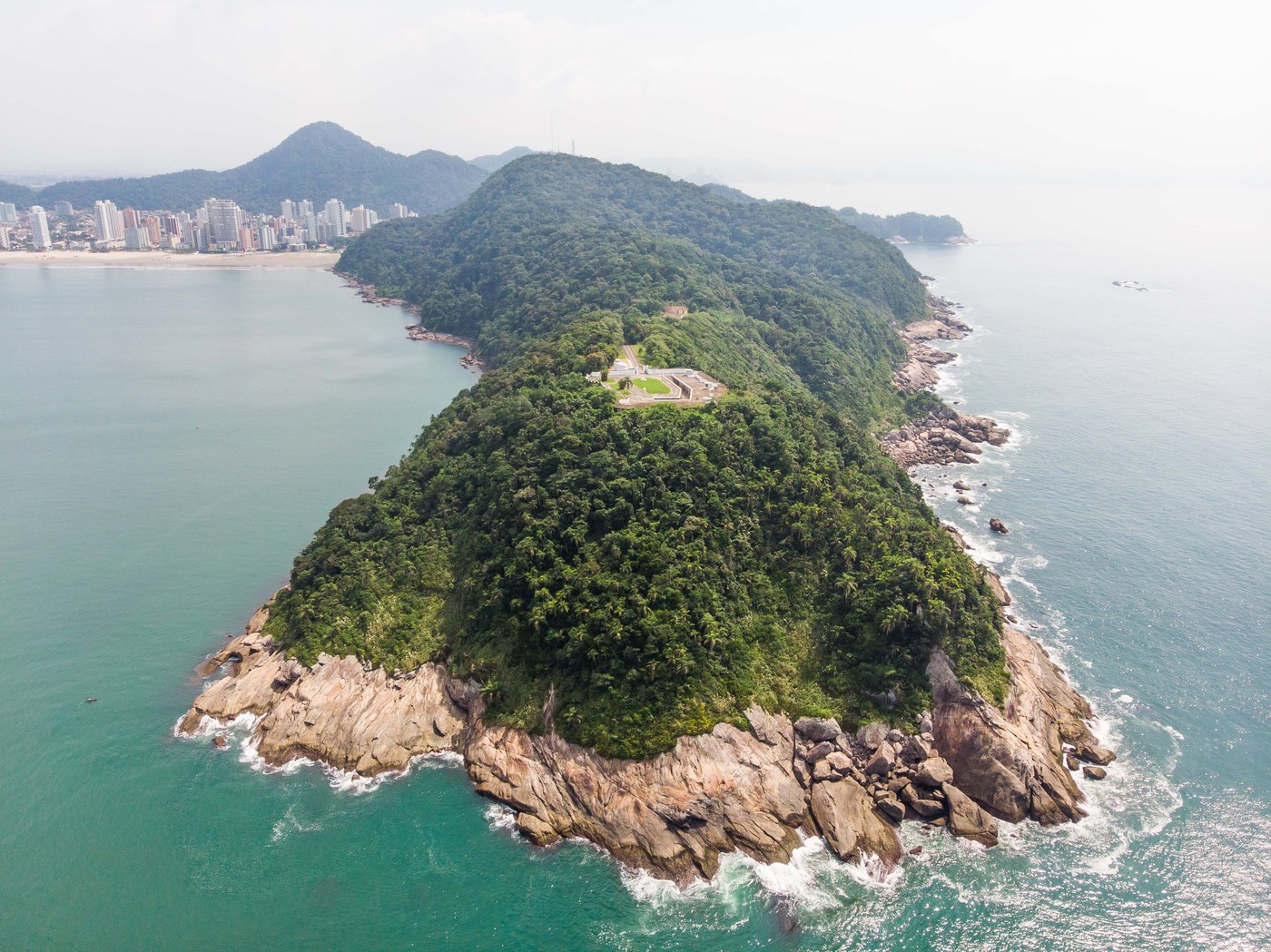
On the moonless night of 3 to 4 November 1957, two sentries stood watch on top of the coastal fortress at Itaipu, on the Ponta de Itaipu headland at Praia Grande, guarding the sea approaches to Santos and São Vicente in São Paulo state, Brazil. This case file covers what witnesses reported, the official narrative, and a two-pass assessment with its evidence tier.
What did witnesses see at Forte de Itaipu?
On the moonless night of 3 to 4 November 1957, two sentries stood watch on top of the coastal fortress at Itaipu, on the Ponta de Itaipu headland at Praia Grande, guarding the sea approaches to Santos and São Vicente in São Paulo state, Brazil. In the account that reached investigators, a new point of light appeared out over the Atlantic and closed on the fort at great speed, far too fast for an aircraft.
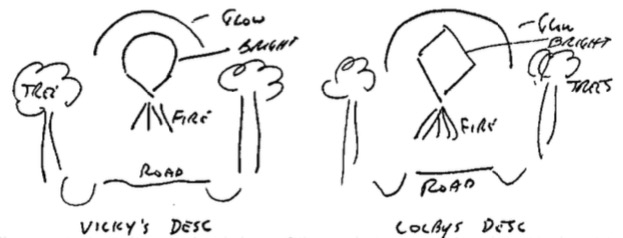
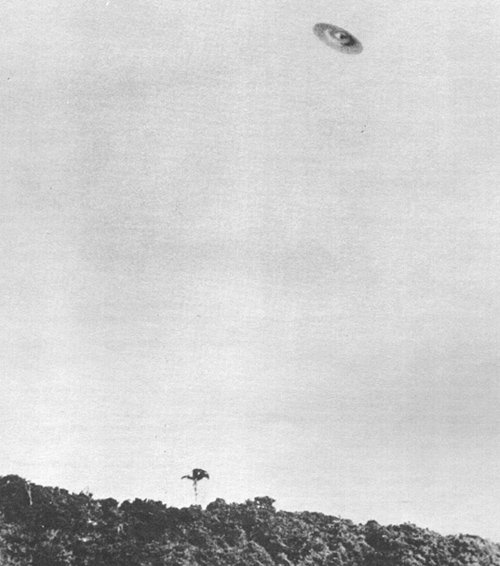
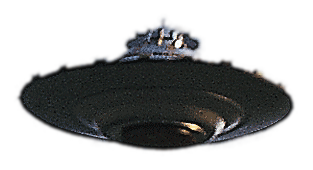
Within seconds, the story goes, the object was over the fortification. It stopped abruptly and drifted downward, a large disc shaped mass ringed by a strong orange glow, hovering somewhere between 120 and 180 feet above the highest turret. The men said they could hear a distinct humming from it. Coral Lorenzen, who published the case from Dr Olavo Fontes' report, wrote that the glow was bright enough to etch each man's shadow onto the concrete.
Then came the part that made the case famous. A wave of heat struck the two soldiers. One later said it felt like fire burning all over his clothes before he blacked out and collapsed; the other, feeling as though his own clothes were alight, screamed and stumbled into shelter beneath the heavy guns, and his cries woke the garrison. As this happened the fort's power failed: the electrical systems that turned the turrets and worked the elevators went dead, the intercom fell silent, and the emergency circuits would not start. The clocks set to ring reveille at 5 am jammed and rang at 2:03. When the lights finally came back, some of the men reached the ramparts in time to see an orange light climbing vertically away and then racing off across the sky. The whole episode was said to have lasted about three minutes.
What is the official explanation?
The two sentries were never named. In the primary source itself they are anonymous, and neither man was ever interviewed by the investigator who documented the case. What is known comes through Dr Olavo T Fontes, a respected Rio de Janeiro physician and the Brazilian representative of the American research group APRO. By his account Fontes was contacted about three weeks after the incident by an army officer who had been at the fort that night; he tried to reach the two burned soldiers, said to have been flown to the Army's Central Hospital in Rio and kept isolated, but could not get to them.
Fontes reported that on 4 November the fort commander forbade the garrison to discuss what had happened, even with relatives, that intelligence officers took charge, and that officers from the United States military mission and the Brazilian Air Force came to question witnesses. He wrote the case up in a paper titled UFO Weapons, arguing that the phenomenon could interfere at will with electrical circuits. It reached the wider public through the APRO Bulletin of September 1959 and then Coral Lorenzen's 1962 book The Great Flying Saucer Hoax, reissued in 1966, from where it passed into the standard UFO literature through Jacques Vallée and Donald Keyhoe. After a year of work Fontes said he could not corroborate the incident beyond establishing that two burned soldiers had been at Central Hospital; in May 1959, some twenty months later, he said he located three other officers who had been present, whose accounts matched his first informant's in every detail. All of them, like the sentries, remain anonymous.
What did the witnesses think it was?
Fontes and the Lorenzens treated Itaipu as one of the strongest physical effects cases of the era, and deliberately placed it inside the great worldwide UFO wave of early November 1957, the same week as the Levelland, Texas car stalling reports of 2 to 3 November and other Southwest cases, all set against the launch of Sputnik 2 on 3 November. Lorenzen's own chapter moves straight from a Brazilian cargo plane report to the immobilized fort to a near simultaneous glowing disc over an army camp in Texas.
Brazilian and American researchers who returned to the case later were far more cautious. The US researcher Kevin Randle traced every published version and found that all of them lead back to Fontes, with no independent information and no named witnesses; he judged the documentation so thin that, in his words, it should be erased from the UFO literature. The Brazilian investigator Edison Boaventura Junior spent years on it and, as reported by Randle, interviewed roughly two hundred former Itaipu soldiers without finding one who confirmed the burns at first hand, and obtained testimony from a son of the fort's commander who said his father acknowledged a UFO sighting but never spoke of any soldiers being burned. A rifle said to have been twisted by the object and kept in an army museum in Rio could not be located. Other Brazilian researchers, quoted by Randle, granted that a sighting of some kind likely occurred but regarded the burns and the blackout as unverified, and one went as far as to allege that Fontes had embellished the story. Contemporary Brazilian press was thin and hedged: the magazine O Cruzeiro, in February 1958, referred to an incident that could not be described in detail because it had not been officially confirmed.
The dispute
The dispute is not about whether the fortress or the November 1957 UFO wave were real, both are well established, but about whether the injuries and the blackout at Itaipu happened as described. The entire physical effects account rests on Dr Olavo Fontes relaying anonymous army officers; neither burned sentry was ever named or interviewed, no military record has been found, and the twisted rifle said to prove the encounter has never been located. Decades later the Brazilian researcher Edison Boaventura Junior, as reported by Kevin Randle, interviewed around two hundred former Itaipu soldiers without a single first hand confirmation of the burns, and a son of the fort's commander said his father spoke of a sighting but never of injured men. Randle, tracing the citation chain back to Fontes' single paper, judged the case too poorly documented to trust. This archive logs that as a serious challenge to the injury claims, which is why the case sits at Disputed rather than Unknown, while noting that even these critics allow that a sighting of some kind probably occurred and that no one has shown the account to be a deliberate hoax.
Is the Fort Itaipu Heat Encounter real? The two-pass assessment
Pass one, the case against. The documentation problem here is severe, and researchers on every side admit it. Every specific detail, the burns, the humming disc, the failed emergency circuits, the jammed clocks, flows through a single channel: Dr Fontes, relaying officers he would not or could not name, neither of the two injured men among them. No contemporaneous military record has ever surfaced, no victim has been identified, and the one piece of family testimony that did emerge affirms a sighting but denies the burns. The physical evidence, the twisted rifle, cannot be found. The story also grew in the retelling: Lorenzen wrote of first and deep second degree burns, which later summaries inflated to third degree, and some derivative accounts mutate the event into a daytime encounter with two objects. A sober reading is that a real fortress had a real UFO sighting during the November 1957 flap, and that the dramatic injury narrative was assembled from second hand officer rumor and then hardened by decades of book to book citation without fresh verification.
Pass two, the case for. If the core account is even roughly true, Itaipu is one of the most serious early physical effects cases on record. Two men suffering first and second degree burns over more than a tenth of their bodies, concentrated on skin that was under their clothing, is a strange and specific detail that points to penetrating radiant heat rather than any ordinary flame, and it is not the sort of thing a garrison invents about itself. A total electrical failure that defeats even the backup circuits, coincident with a hovering luminous object, matches the electromagnetic signature reported that same week at Levelland, where car engines and headlights died as a glowing object approached and recovered as it left. Even the skeptics who dismiss the burns tend to grant that something was seen. Set against the sourcing problems, this is a contested case, not a closed one. No official narrative confirms it, and its most dramatic claims have failed sixty years of attempted corroboration, but no one has produced positive proof that it was fabricated either. It stays Disputed.
Sources
- archive.org/stream/1966CoralLorenzenFlyingSaucersTheStartlingEvidenceOfTheInvasionFromOuterSpacenotOCR/(1966)%20Coral%20Lorenzen%20-%20Flying%20Saucers,%20The%20Startling%20Evidence%20of%20the%20Invasion%20From%20Outer%20Space%20(not%20OCR)_djvu.txt
- kevinrandle.blogspot.com/2016/06/fort-itaipu-and-olavo-fontes-revisited.html
- kevinrandle.blogspot.com/2014/10/fort-itaipu-and-footnotes.html
- nicap.org/571103itaipu_dir.htm
- turismo.praiagrande.sp.gov.br/2021/04/16/fortaleza-de-itaipu/
- commons.wikimedia.org/wiki/File:ROGERIO_CASSIMIRO_fortaleza_de_itaipu_PraiaGrande_SP_(26033265137).jpg
More cases from this region: UFO sightings in Brazil