The California Airline Pilot Sighting (2004)
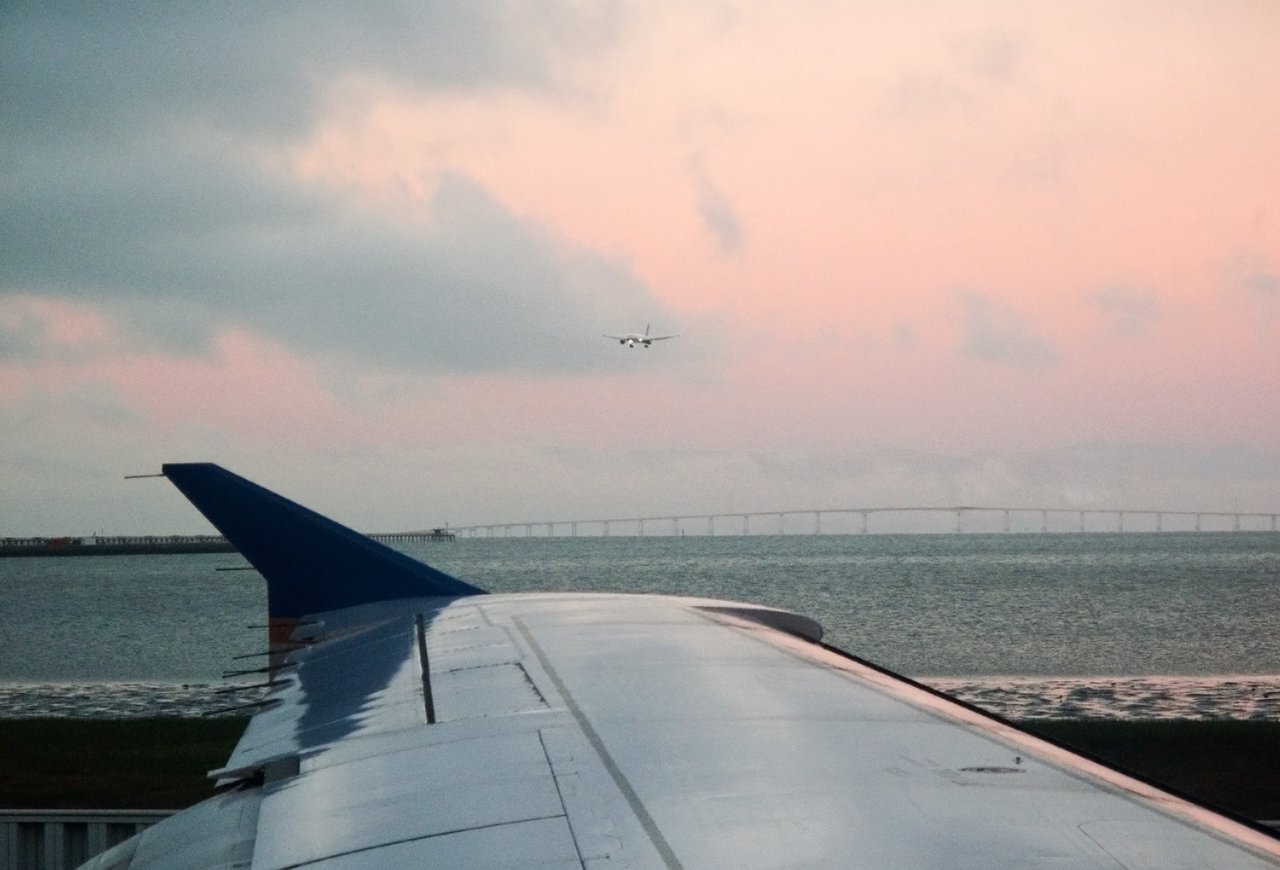
At about 11 p.m. on 3 November 2004 a jetliner was making its approach into San Francisco International Airport, coming in from the east and passing just north of Stockton, California, in the Central Valley. This case file covers what witnesses reported, the official narrative, and a two-pass assessment with its evidence tier.
What did witnesses see at North of Stockton?
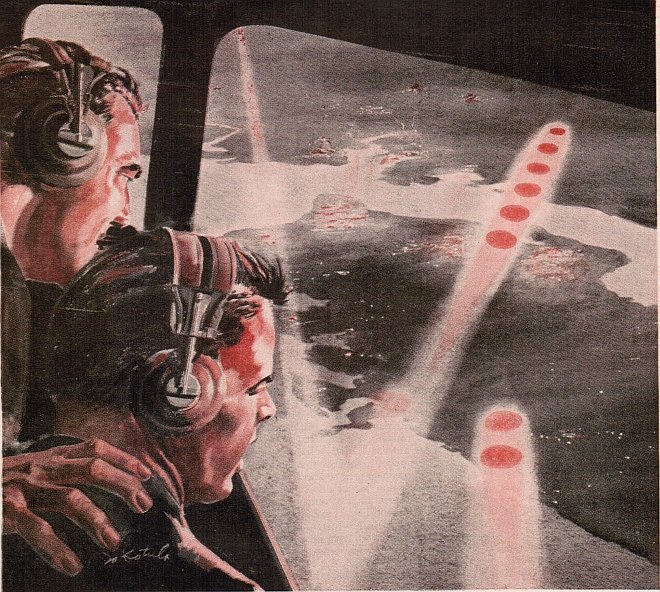
At about 11 p.m. on 3 November 2004 a jetliner was making its approach into San Francisco International Airport, coming in from the east and passing just north of Stockton, California, in the Central Valley. The captain was an airline transport pilot with fourteen years of commercial aviation experience. As the aircraft was working its descent, the crew received instructions from the tower to come down from 35,000 feet to 24,000 feet. It was during this descent that the captain's attention was drawn to something off to the west.
In his own words, "an orange dot began to glow and seemed to flash higher up" and sat roughly 30 degrees above the horizon to the west of the aircraft. He then watched it "change color from orange to white." He was careful about ruling out a fixed star or a planet. He wrote, "I found a handful of stars to serve as a reference point and verified that the object was slowly moving north." Against those fixed reference stars the point of light was clearly travelling.
The motion he described is the strangest part of the account. The object "began to move in a northeasterly direction" and the captain tracked it as a series of deliberate, segmented legs. "It moved about 30 degrees and then stopped. Then it made a slight tangent to the right and continued moving for about 20 more degrees. It stopped and turned again to the right and continued for 10 degrees, then stopped again and disappeared." The editor of the source, Joseph Trainor, inserted his own bracketed notes estimating the right-hand course changes at roughly 10 degrees each. The object behaved less like a meteor or a steadily drifting satellite and more like a light making angular jumps and pauses, then simply going out.
The whole event was short. The captain put it at "about two minutes or so from start to finish." He was not alone. "There were two of us in the cockpit, and we both witnessed the same thing." The second crew member, the co-pilot or first officer, saw the same point of light perform the same maneuvers. Conditions described around the sighting were clear above the cloud deck, with a moon in the sky and weather at the destination that was partly cloudy with light rain. The captain reported the light as a star-like or planet-like point, not a structured craft, and he closed his account with the line that has become the signature of the case: "As I am an airline pilot, I'm hesitant to say something about what I can't explain."
What is the official explanation?
There is no official narrative for this event, and that absence is the defining feature of the case. No FAA investigation, no NTSB file, no Air Force or government inquiry, and no airline incident report has ever surfaced in connection with it. The tower's only documented role was routine, the instruction to descend from 35,000 to 24,000 feet, which is ordinary approach sequencing into San Francisco and not a response to anything unusual. The crew did not declare an emergency, did not file a near-miss, and nothing in the account suggests the object painted on the aircraft's weather radar or on air traffic control radar.
The case has no investigating body in the way that, say, a NUFORC field investigation or a Blue Book docket would constitute one. The single point of entry into the public record is UFO Roundup, the weekly email digest compiled by Joseph Trainor, specifically Volume 9, Number 45, dated 10 November 2004, which credited itself at the foot of the item as the source ("Thanks to UFO ROUNDUP Volume 9, Number 45 November 10, 2004. Editor: Joseph Trainor, www.ufoinfo.com/roundup"). Trainor's Roundup routinely aggregated reports from the National UFO Reporting Center, from the UFO UpDates mailing list, and from witnesses who wrote in directly, and he interleaved his own editorial annotations, which is why the published text carries bracketed degree estimates that are Trainor's and not the pilot's.
A search of the National UFO Reporting Center's public database for November 2004 returns the California sightings from that month, Riverside, Malibu, Santa Ana, Dublin, San Diego and others, but no Stockton or San Francisco-approach pilot report dated 3 November 2004 appears in the index. That does not prove the report was never filed with NUFORC, since the digest may have drawn on a submission that was never posted online or was logged under a different city or date, but it does mean the account cannot currently be traced back to an archived NUFORC case file. In practical terms the chain of custody for this story runs to one weekly newsletter item and stops there. No counter-explanation was ever issued by any authority, because no authority ever took up the case.
What did the witnesses think it was?
The captain believed he had seen something he could not account for, and he was professionally cautious about saying so. His framing, "As I am an airline pilot, I'm hesitant to say something about what I can't explain," is the statement of a working aviator who understands that reporting a UFO carries a reputational cost and who reported anyway. He took specific steps to defeat the obvious mundane reading: he located fixed stars and used them as a reference grid, then confirmed the light was moving north relative to those stars rather than being a stationary star or planet his own aircraft's motion was sliding past. He did not claim a metallic craft, lights in formation, or a close approach. He described a single point of light that changed color and made angular, segmented movements before vanishing.
The corroboration here is internal to the cockpit and genuine as far as it goes. A second crew member was present and, by the captain's account, "we both witnessed the same thing." Two trained aircrew watching the same light perform the same maneuvers is stronger than a single startled observer on the ground, because pilots are practiced at judging motion, distance and the behavior of other traffic and of celestial objects at night. Neither witness is named in the published account, which is the norm for pilots who report through informal channels and want to avoid scrutiny from employers or the regulator.
What the witnesses did not provide is anything beyond their own narrative. There is no photograph, no video, no gun-camera frame, no radar trace, no transcript of the tower exchange, and no second aircraft confirming the light. The case rests entirely on the testimony of the captain, supported by his unnamed colleague, as relayed once through a weekly newsletter. The witnesses are not discredited in any way, no estranged party, rival, or debunker has come forward to recast the story, but their honest account is also the entire evidentiary footprint of the event.
Is the California Airline Pilot Sighting (2004) real? The two-pass assessment
Pass one, the ordinary readings. A single star-like point of light seen at night from a cockpit, changing color and appearing to move, is one of the most explanation-prone categories in all of UFO reporting, and several conventional candidates fit parts of this account. Color flicker from orange to white is exactly what atmospheric scintillation does to a bright star or planet low in the sky, where the light passes through a long slant path of turbulent air, and the witness was looking at an object only about 30 degrees up to the west. A satellite or piece of orbital debris catching sunlight can drift slowly against the star field and then "disappear" abruptly as it enters Earth's shadow, which matches the slow northward motion and the clean vanishing. The harder feature to reconcile mundanely is the segmented, stop-and-turn motion, 30 degrees, pause, a tangent right, 20 more degrees, another right, 10 degrees, stop, gone, which does not match a satellite's smooth arc and which a meteor would cover in a second or two rather than two minutes. That angular, jerky path is, however, a textbook description of the autokinetic effect, the well-documented illusion in which a fixed point of light viewed against a featureless dark background appears to wander and jump because the eye lacks a stable frame of reference. The captain tried to guard against exactly this by picking out reference stars, which is to his credit, but autokinesis and small involuntary eye and head movements in a moving cockpit can still produce apparent displacement even with nearby references. One detail actively undercuts the witness's astronomical recall: the account mentions a crescent moon, yet on the night of 3 November 2004 the moon was a waning gibbous at roughly 64 to 66 percent illumination, about twenty days past new, per standard lunar ephemerides. That mismatch suggests the sky description is loose paraphrase, which in turn cautions against over-trusting the precise degree figures, several of which were in any case Trainor's editorial estimates rather than the pilot's measurements. No hoax method is shown and none is alleged.
Pass two, if the report is an accurate record of a real object. Then two trained aircrew watched a self-luminous source change color and execute a series of discrete, controlled-looking course changes over two minutes before extinguishing, behavior that does not map onto any single conventional object: not a star, which does not translate across the sky in two minutes; not a satellite, which does not stop and dogleg; not an aircraft, since the crew, who fly for a living, did not read it as one and reported no nav lights, strobes, or structure. A genuinely maneuvering point-source that pauses and turns at sharp angles is the kind of kinematic signature that recurs across credible pilot reports and that remains unexplained where it is well attested.
Weighing the two passes, the evidence base is the decisive factor. This case has no photograph, no video, no radar, no recovered tower tape, and no archived investigation. It is a single newsletter item carrying one captain's account, supported by an unnamed second crew member, with an internal error about the moon and with some of its key numbers supplied by an editor rather than the witness. There is no official narrative to dispute and no method-shown debunk to weigh, so the case does not belong in Disputed, and the testimony alone, however sincere, is not authenticated material that could carry Verified Unexplained. It stands or falls on the word of two people relayed once, with strong mundane candidates available for most of what was described and a documented factual slip in the witness's own sky report. That places it squarely in the Unknown tier: no official explanation exists, the account is unresolved on its own terms, and the thin, second-hand evidentiary footprint is not enough to push it in either direction.
Sources
- ufologie.patrickgross.org/htm/2004nov.htm
- worldufophotosandnews.org/?p=11701
- nuforc.org/subndx/?id=e200411
- lunaf.com/lunar-calendar/2004/11/03/
- web.archive.org/web/20240530092040/https://www.ufocasebook.com/californiaairlinepilot.html
More cases from this region: UFO sightings in United States