An Ohio Pilot Eludes a UFO (1968)
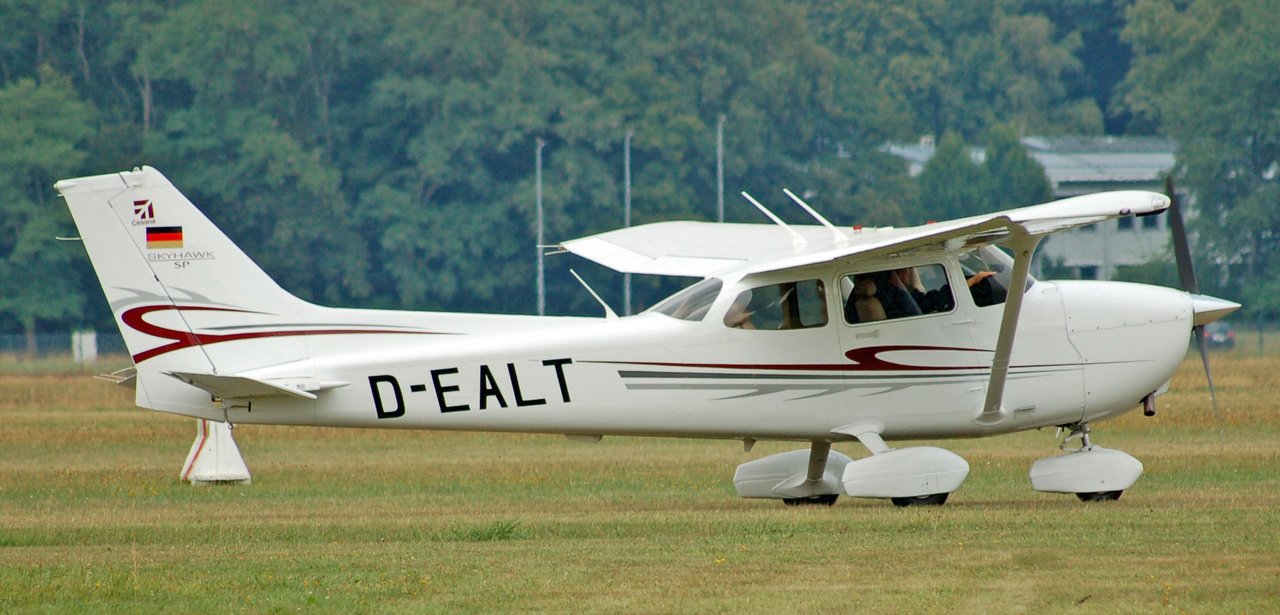
On the night of 8 July 1968, at about 10:20 p.m., four people were aloft in a Cessna 172 Skyhawk over Warren, Ohio, a town in the Mahoning Valley a short hop west of Youngstown. This case file covers what witnesses reported, the official narrative, and a two-pass assessment with its evidence tier.
What did witnesses see at Warren?
On the night of 8 July 1968, at about 10:20 p.m., four people were aloft in a Cessna 172 Skyhawk over Warren, Ohio, a town in the Mahoning Valley a short hop west of Youngstown. Brothers Richard and Ken Montgomery were in the aircraft with two passengers, Elizabeth Soverns and Rosalind Rians. Richard Montgomery was at the controls, flying at roughly 4,000 feet.
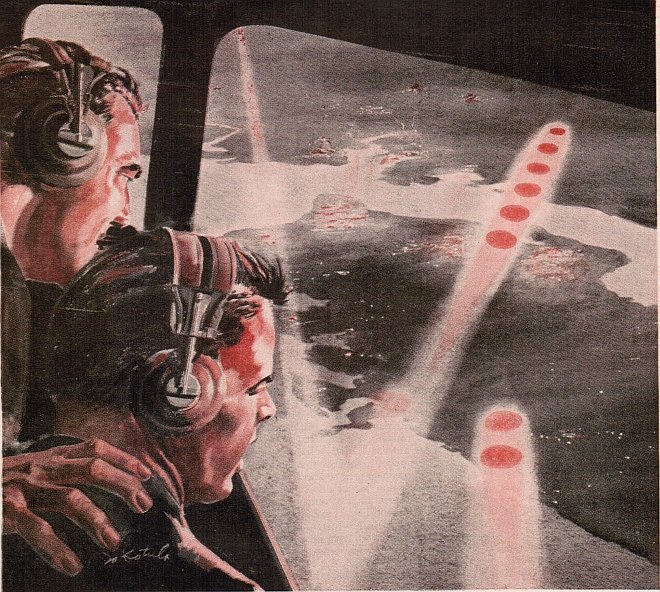
In his own words, recorded by NICAP, Montgomery described the start of the encounter like this: "I noticed an object coming toward us from the direction of Youngstown to the southeast. I swung over to get a closer look when the object headed directly toward our airplane. It stopped and hung motionless in the air momentarily, and as our aircraft came closer, it moved swiftly upward and came back at us from another angle." That last detail is the heart of the case. This was not a distant light that sat still while the witnesses talked themselves into it. Montgomery says he deliberately turned the Cessna toward the thing to investigate, and the thing reacted to him, breaking off, climbing, and re-approaching from a new bearing.
Montgomery reported that the object looked metallic and had a light beaming from its underside. He put its size at six to ten feet in diameter and sixteen to twenty feet tall, a vertical, upright profile closer to a pill or a standing cylinder than the flat saucer of popular imagery. As he kept maneuvering, trying to shake it or close on it, the object held station at a distance he estimated at 150 to 200 yards, pacing the aircraft through several turns. Then, by his account, it "suddenly sped in an easterly direction at amazing speed and was quickly out of sight."
The aerial back-and-forth did not go unnoticed from the ground. While the Cessna was being shadowed, the control tower at Youngstown Municipal Airport took telephone calls from area residents who were watching lights weave over Warren and reporting what they took to be "a dogfight between two aircraft in the skies over Warren." So there is a second, independent vantage point on the event: people on the ground saw two distinct moving lights performing what looked like combat maneuvers, at the same time the Montgomerys say they were being chased by one.
What is the official explanation?
There is no Air Force narrative on this case and no Project Blue Book record card for it. By the summer of 1968 the Air Force's official UFO project at Wright-Patterson was a dying operation. The University of Colorado study under Edward Condon was already drafting the conclusions that would shut Blue Book down the following year, and the project had largely stopped chasing civilian-investigated reports of this kind. The Warren encounter was logged not by the government but by the civilian National Investigations Committee on Aerial Phenomena, NICAP, which was the most disciplined UFO investigative body of the era and a frequent critic of Air Force secrecy.
The case sits in NICAP's compendium "The UFO Evidence," in the section titled "Vehicle Pacings and Encounters," which gathers airline-crew and private-pilot reports of objects that paced, approached, or maneuvered around aircraft. NICAP placed the Warren account directly alongside other 1968 pilot reports, opening that stretch of the document with the line, "Reports of airline and private pilots encountering UFOs have continued in 1968," and then giving the Montgomery encounter as a worked example. This is the same NICAP pilot-sighting tradition that Richard Hall edited in the original 1964 "UFO Evidence" and that Richard F. Haines later carried into the Volume II thirty-year report, treating cockpit testimony from trained or semi-trained observers as a distinct and serious evidence class rather than as casual eyewitness noise.
NICAP's separate 1968 chronology carries the event independently with the terse entry, "July 8, 1968; Warren, OH; Object darted back and forth near Cessna 172," confirming the date, the location, and the aircraft type from a second NICAP listing. The contemporaneous ground element, the Youngstown Municipal Airport tower fielding "dogfight" calls from residents, functions as the closest thing this case has to an official touchpoint. It is not an investigation, but it is a record that the airport's own controllers received multiple public reports of anomalous air traffic over Warren at the time of the sighting. No identified aircraft, no scheduled traffic, and no balloon, drone, or experimental flight has ever been named as the object. The aviation safety researcher Richard Haines later cataloged dozens of professional-pilot cases in his NARCAP technical reports, but his commercial-crew catalog does not include this private-pilot incident, so it has never been worked over by a formal aviation-safety analysis either.
What did the witnesses think it was?
The witnesses were ordinary civilians out for a night flight, not researchers, not chronic UFO claimants, and not people who built a career on the story. Richard Montgomery, the pilot, gave a first-person account that NICAP quoted directly, and his brother Ken and the two passengers, Elizabeth Soverns and Rosalind Rians, were aboard the same small cabin and in a position to see whatever Montgomery saw. Four sets of eyes in one Cessna is meaningful: a single startled pilot can misread a planet or a reflection, but four people in close quarters, one of them actively flying the airplane and turning it to chase the object, is a harder thing to wave away.
What Montgomery clearly believed is that the object was under control and was reacting to him. His description is not of a passive light but of an intelligence keeping its distance: he turns toward it, it comes at him, it stops dead in the air, it climbs when he closes, it re-approaches from a fresh angle, it holds a fixed 150 to 200 yard gap through his maneuvers, and then it leaves on its own terms at a speed he could not match. He did not claim it was extraterrestrial. He claimed it was solid, metallic, lit from below, upright in shape, and that it flew in a way his aircraft could not.
The strongest corroboration is that the witnesses inside the plane were not the only people watching. Residents around Warren were on the phone to the Youngstown airport tower describing two lights maneuvering against each other like fighters in a dogfight. Those callers had no contact with the Montgomerys and no way to coordinate a story, yet their independent reports match the geometry of what the cockpit described: one aircraft and one other object, weaving, over Warren, at that hour. The witnesses' belief, that something real and maneuverable shared the sky with them, is therefore supported by a separate body of ground observers who reached the same picture from below.
Is the An Ohio Pilot Eludes a UFO (1968) real? The two-pass assessment
Pass one, the ordinary explanations. A night sighting from a light aircraft is fertile ground for misperception. The classic candidates are an autokinetic star or planet that seems to dart when the observer's own aircraft banks and turns, a ground or beacon light, a second aircraft whose navigation and landing lights were mistaken for a structured craft, or a meteor or re-entry for the final high-speed departure. The "dogfight" framing from the ground is itself a tell that two light sources were involved, which would fit a second airplane in the area. But each ordinary reading runs into the specifics. A star or planet does not stop dead, climb, and re-approach from a new bearing while the pilot is deliberately steering toward it, and it does not hold a constant 150 to 200 yard offset through several maneuvers. A conventional second aircraft would carry standard red and green position lights and a recognizable airframe to a pilot looking at it from 150 yards, not a metallic upright body lit only from underneath. No balloon, drone, experimental aircraft, or scheduled flight was ever identified, and in 1968 there were no civilian quad drones to invoke. Nothing here has been positively matched to a specific real-world object, so no ordinary cause has actually been demonstrated, only proposed in the abstract.
Pass two, if it was real. Then what the Montgomerys met was a compact metallic object, upright and roughly the height of a small truck, capable of station-keeping alongside a maneuvering Cessna, of stopping and reversing in the vertical, and of accelerating out of sight far faster than the airplane could follow. That performance envelope, paired with the deliberate reaction to the pilot's attempts to close, is consistent with the broader NICAP "vehicle pacing" pattern that Richard Hall and later Richard Haines documented across decades of cockpit reports: an object that appears to register the aircraft, controls the distance, and decides when the encounter ends.
This case has real strengths. It is a multiple-witness pilot report, logged by a serious civilian investigative body in its own publication, with the pilot's words on the record and with independent ground witnesses calling an airport tower at the same moment. It also has real limits. There is no photograph, no radar trace produced in evidence, no recovered material, and no contemporary newspaper page that I could pull up and read directly, so the documentation chain runs through NICAP rather than through a primary news clipping or an official file. There is no official narrative on either side. The Air Force never engaged it, no debunker ever solved it, and no analyst has shown a method that turns the object into a known thing. With no authenticated physical evidence to push it to Verified Unexplained, and no shown counter-explanation to dispute it, the honest placement is Unknown: a documented, multiply-witnessed pilot encounter that stands on its testimony and its ground corroboration, and that remains unidentified.
Sources
- www.nicap.org/newlook/section_III.htm
- www.nicap.org/chronos/1968fullrep.htm
- www.thinkaboutitdocs.com/1968-plane-paced-by-ufo-warren-ohio/
- web.archive.org/web/20250130155217/https://www.ufocasebook.com/1968warrenohio.html
More cases from this region: UFO sightings in United States