The Corydon, Indiana Video (1987)
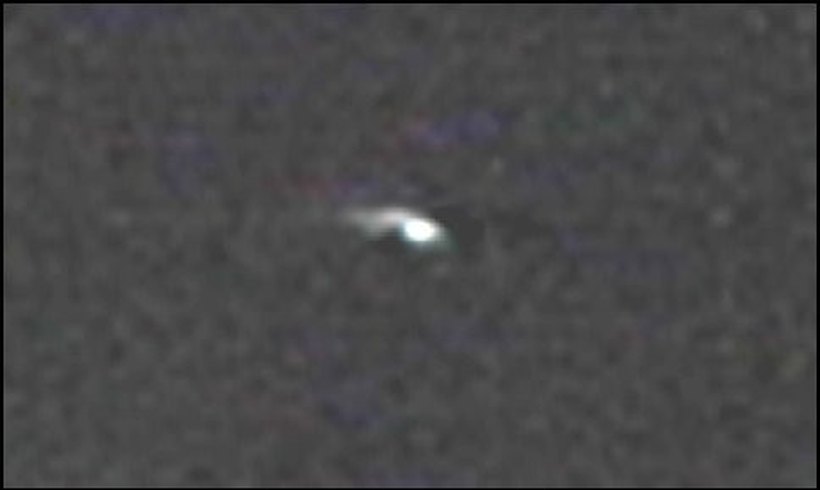
During the night of 23 August 1987 a team of Mutual UFO Network field investigators had gathered near Corydon in Harrison County, southern Indiana, specifically to watch the sky after weeks of reports of orange lights appearing and vanishing over the county. This case file covers what witnesses reported, the official narrative, and a two-pass assessment with its evidence tier.
What did witnesses see at Near Corydon?
During the night of 23 August 1987 a team of Mutual UFO Network field investigators had gathered near Corydon in Harrison County, southern Indiana, specifically to watch the sky after weeks of reports of orange lights appearing and vanishing over the county. They were not casual observers. According to the MUFON Indiana field report written by State Director Francis Ridge, at least twelve to fifteen people watched the main event and five of them were qualified MUFON field investigators on duty that night, with around fifty area witnesses interviewed across the wider flap.
At roughly 10:20 PM Eastern the report says a brilliant orange light "suddenly materialized" low in the south-southeast at an elevation of about 20 to 25 degrees. It did not arrive from the horizon and did not streak in like a meteor. It simply appeared. Over the next several minutes the object "winked out" and reappeared, dropped lower, and then settled into a flat west-to-east drift at an elevation of only about 10 to 15 degrees, moving slowly and without any audible sound reaching the observers.
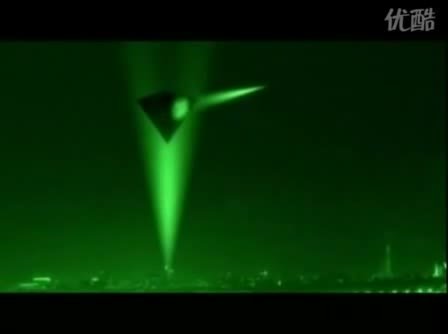
Scott Wilkerson, one of the field investigators, was running a camcorder and captured roughly a minute and a half of the object, filming at 6x on the zoom. The most discussed moment on that tape is an aircraft encounter. A small aircraft, described in the report as a private or small commercial plane rather than a jumbo jet, crossed the frame from east to west on what looked like a collision course with the orange object. Several seconds of the videotape show the plane appearing to pass very near the light, and the observers judged the aircraft to be travelling at least twice as fast as the unknown. Harold Hartig, a former US Air Force radar operator and Ground Observer Corps spotter, watched through 10x50 binoculars and reported a separate red light trailing the orange object. Later that night, around 12:15 AM, a second orange target was reported at low altitude near Elberfeld.
What is the official explanation?
There is no federal government file on the Corydon video. Project Blue Book had closed in 1969, so by 1987 the only investigating body was civilian. The "official" record here is the MUFON Indiana investigation itself, and it is unusually formal because the people who filmed the object were the investigators.
The case was handled directly by Francis L. Ridge, who at the time was Indiana State Director for MUFON and ran the UFO Filter Center he had established in 1973 in the Mount Vernon area, a monitoring network wired into local police, sheriff, state police, airport towers and Civil Defense. Ridge's standing as a long-running Indiana investigator is documented in his NICAP biography. He coordinated a field team that included Scott Wilkerson as the camera operator, Jerry Sievers as Assistant State Director, Harold Hartig as the radar-trained observer, and David Cook, a member who later ran a computer analysis of the footage.
The written field report walks through an elimination process. Natural sources were, in the report's words, "completely ruled out." Among manmade explanations, balloons, fixed structures, hoax, missiles and satellites were "immediately ruled out." Aircraft was considered at length and rejected for the main object because the light showed none of the FAA-required navigation and anti-collision lighting expected on a plane, moved too slowly, and produced no sound, while the genuine aircraft that crossed the frame behaved completely differently and moved much faster. David Cook's computer analysis, dated 4 August 1990, returned a verdict the report records as the object being "considered unidentified," described as borderline in significance. The final position of the investigation was plain: in the team's opinion the object was unidentified.
Beyond Corydon, the contemporary record shows how seriously local MUFON treated 1987. In a 1988 interview with the Evansville Press, Ridge stated that 67 of 130 national sightings logged that year were in Indiana, and he showed the videotape of the moving light approaching the airplane as part of his account of the Corydon-area phenomenon.
What did the witnesses think it was?
The witnesses here were not a startled family but a prepared investigative team, which is what makes the case distinctive. Francis Ridge, who had been logging Indiana sightings since the 1973 wave, treated the orange lights over Harrison County as a genuine flap worth a coordinated stakeout. He and his colleagues believed they had filmed an object that behaved like nothing in the normal traffic over southern Indiana.
Scott Wilkerson, the camcorder operator, is the man whose tape became the centerpiece. Harold Hartig brought specific relevant training as a former Air Force radar operator and Ground Observer Corps spotter, the kind of background built precisely to tell aircraft and known lights apart from something anomalous, and it was Hartig who, watching through binoculars, reported the trailing red light behind the orange object. Jerry Sievers, the Assistant State Director, had been a public voice for Indiana MUFON before this, cited in mid-1980s reporting describing close to a hundred area sightings over a decade or more, so the Corydon event fell into a pattern he had already been tracking.
The team's shared conclusion was that the main orange object was unidentified. They were careful about what they did not claim. They documented the aircraft near-pass as evidence of how an ordinary plane looked and moved by comparison, not as proof of a collision. They flagged David Cook's later analysis as only borderline in significance rather than overselling it. Across roughly fifty area interviews the recurring description stayed consistent: orange lights that appeared and disappeared in place, low in the sky, silent, sometimes with a companion light. The investigators believed, and stated in writing, that natural and obvious manmade causes had been excluded and that what remained was genuinely unexplained.
Is the Corydon, Indiana Video (1987) real? The two-pass assessment
Pass one, the ordinary explanations. Slow-moving orange lights that appear, wink out and reappear low on the horizon are the classic signature of several mundane things. Distant aircraft landing lights, helicopters, hot-air balloons with burners, and night flares can all read as a hovering orange glow, and an object low at 10 to 25 degrees elevation sits exactly where atmospheric haze and distance make speed and range hard to judge. A camcorder zoomed to 6x on a point source in 1987 produces a soft, dancing blob with little usable detail, so the footage alone cannot fix size or distance. The strongest single ordinary candidate is something the team itself filmed: an aircraft did cross the frame, and a skeptic could argue the witnesses anchored on one anomalous-looking light while a string of conventional lights drifted nearby. Against that, the investigators were experienced observers, one radar-trained, who specifically noted the object lacked navigation and strobe lighting, made no sound, and moved at a fraction of the speed of the real plane that passed it. The case has no confession, no recovered prop, and no identified specific aircraft, balloon launch or flare drop tied to that night and place.
Pass two, if real. If the footage shows what the team described, it is a silent, self-illuminated orange object that materialized in place, changed brightness, descended, and drifted slowly across the sky while a normal aircraft overtook it, with a second red light in attendance and further orange targets reported the same night nearby. That is a structured aerial phenomenon, not a single misperceived plane.
What we can verify is solid. A coordinated MUFON Indiana team, named and including a radar-trained observer, filmed roughly ninety seconds of an unidentified light near Corydon on 23 August 1987, produced a written field report that excluded natural causes and the obvious manmade ones, and obtained a 1990 computer analysis that also returned "unidentified." The lead investigator showed the tape and described the wider Indiana wave on the record to the Evansville Press in 1988. No independent, civilian, method-shown analysis has ever identified the object or demonstrated a hoax. There is an authenticated, contemporaneously documented video of a craft that the trained witnesses and a later analysis both classed as unidentified, with no shown counter-explanation. That places this case at Verified Unexplained.
Sources
- web.archive.org/web/20240303000909/https://www.ufocasebook.com/corydon1987.html
- townepost.com/indiana/lakes-region/it-came-from-outer-space-to-indiana-ufos/
- nicap.org/bios/NICAP-Bios/Ridge_F_detailed%20_bio.htm
More cases from this region: UFO sightings in United States