The Cosford and Shawbury RAF Sightings
Across the late evening of 30 March and the early hours of 31 March 1993, police forces and military bases across western Britain logged a wave of sightings now called the Cosford incident. This case file covers what witnesses reported, the official narrative, and a two-pass assessment with its evidence tier.
What did witnesses see at RAF Cosford and RAF Shawbury?
Across the late evening of 30 March and the early hours of 31 March 1993, police forces and military bases across western Britain logged a wave of sightings now called the Cosford incident. The MoD case file DEFE 24/2086, opened by UFO desk officer Nick Pope and held at The National Archives at Kew, records reports from Devon and Cornwall, through Wales and the West Midlands, into Shropshire, with corroboration in Ireland and on the continent.
The report that named the flap came from a patrol of MoD police at RAF Cosford, near Wolverhampton, in the small hours of 31 March. Their account, marked "Police In Confidence" and preserved in the file, states that an object passed over the station "at great velocity" at an altitude of about 1000 feet, showing two white lights with "a faint red glow at the rear," with no engine noise. It crossed the base heading south-east.
The most detailed account came from the meteorological observer on duty at RAF Shawbury, named in the released file and in Dr David Clarke's research as Wayne Elliott. A trained weather observer, Elliott reported an object moving slowly across the countryside at low level, estimating it was very large, on the order of a big transport aircraft, with the often-repeated comparison that it looked between a C-130 Hercules and a Boeing 747. He described a narrow beam that "swept the countryside from left to right, as if looking for something," an unpleasant low-frequency hum he felt as much as heard, and a sudden acceleration away. His sighting was about 2:40 am BST, over an hour after the 1:10 to 1:15 am cluster reported elsewhere.
On the evening of 30 March, police across the south-west had logged a large unknown object, with one description likened to "two Concordes flying side by side and joined together," low passes, and unsettled animals. More than a hundred witnesses, including police officers and serving RAF personnel, fed reports in across the two nights. The recurring threads were brightness, apparent silence, and a sense the object was moving far too slowly for anything conventional.
What is the official explanation?
The Ministry of Defence file DEFE 24/2086, released by The National Archives in August 2009 under the declassification programme curated by Dr David Clarke, is the primary record. It is catalogued as reports and analysis of the West Midlands and south-west England sightings of 30 and 31 March 1993, "popularly known as the Cosford incident" because one report came from an RAF police unit at RAF Cosford near Wolverhampton.
The desk officer Nick Pope handled the case. In a loose minute to his superiors he wrote: "It seems that an unidentified object of unknown origin was operating in the UK Air Defence Region without being detected on radar; this would appear to be of considerable defence significance, and I recommend that we investigate further, within MOD or with the US authorities." Earlier in the file he had framed the radar gap as itself of considerable defence significance if a sizeable object had penetrated UK airspace undetected.
The MoD checked RAF Fylingdales, the missile-warning station that tracks re-entries, which reported a Russian rocket re-entry around the period with a loose time estimate. Pope's intermediate notes show he was not immediately satisfied: he observed that the decay might explain some high-altitude sightings but not the low-level ones, meaning chiefly the Shawbury beam. As analysis firmed up his position moved, and his final assessment in the file concluded: "I think it is clear that most of the UFO sightings that occurred on the night in question can be attributed to this event." The record thus holds both halves openly. Per UAP Globe practice, an official body documenting an object operating undetected by air-defence radar is logged as evidence the event was taken seriously, not as a mark against the case.
What did the witnesses think it was?
The witnesses were not casual observers. The Cosford report came from MoD police on patrol, trained to log incidents accurately, who recorded an object passing at about 1000 feet "at great velocity" with two white lights, a faint red glow and no engine noise. Wayne Elliott at Shawbury was a professional meteorological observer, the category of witness whose job is watching the sky, which is why his account carried weight inside the MoD and why Pope singled out the low-level Shawbury sighting as the part the re-entry did not cleanly cover.
At the time the witnesses believed they had seen something solid, large, low and silent, behaving unlike any aircraft they knew. Elliott's beam that swept the ground "as if looking for something," the hum he felt in his body, and the sudden acceleration read to him as a controlled craft, not burning debris.
Crucially, Elliott did not dig in. Once the police-helicopter explanation was put to him he conceded on the record. In words quoted by Clarke from the witness, Elliott said: "I'm convinced that what I saw has been explained. I have to accept that the noise like a humming and the beam of light are very similar to what you would expect of a police helicopter." Under UAP Globe rules that concession is a strength of his testimony, not a defeat: the most professionally credible witness walked his own account back once shown a specific, checkable mundane source.
Corroboration for the wider wave is unusually strong. Independent witnesses in west Wales, including writers familiar with aircraft, reported lights they first took for fast jets until they realised the objects were silent. Devon and Cornwall police logged "two very bright lights" appearing to hover at low level. Irish observers reported the phenomenon first and then sightings moved progressively east, the signature of a single fast-moving object crossing the islands.
The dispute
The dispute holds that nearly everything seen over the West Midlands on the night of 30-31 March 1993 was a Russian rocket re-entry seen alongside a police helicopter, not an unknown craft. The substantive, method-shown half of this case came from a civilian: Gary Anthony, the consultant astronomer for the British UFO Research Association, who obtained the US Space Command and NASA catalogue of orbiting objects and matched the early-hours fireball to the spent stage of Cosmos 2238 (NORAD 22585, designation 1993-018B), launched from Baikonur on 30 March and decaying over Britain in the early hours of 31 March. This is a real identification with a real object behind it, not an assertion, and it plausibly accounts for the long, slow, fragmenting fireball that many of the hundred-plus witnesses described.
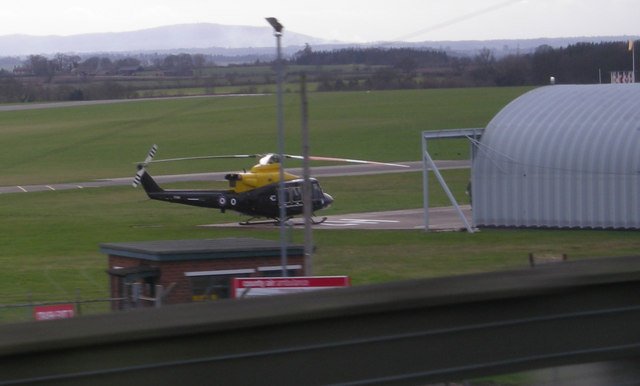
The second strand is a witness recantation. Wayne Elliott, the meteorological observer at RAF Shawbury who reported a large object playing a narrow beam across the countryside accompanied by an unpleasant low-frequency hum, later conceded the point himself, telling researcher Dr David Clarke, "I'm convinced that what I saw has been explained. I have to accept that the noise like a humming and the beam of light are very similar to what you would expect of a police helicopter." A primary witness withdrawing his own anomalous claim is strong material, and the page attributes the Shawbury beam to a Dyfed-Powys police helicopter with a searchlight, which fits Elliott's revised description.
Two things keep this from settling the case. First, the helicopter attribution and the re-entry match are civilian conclusions, not an official ruling. The MoD's own desk officer, Nick Pope, both noted that an unidentified object appeared to be operating in the UK Air Defence Region without radar detection and later pivoted to say "most of the UFO sightings that occurred on the night in question can be attributed to this event." That final line is an apparatus assessment, and per this archive's method an apparatus debunk is a claim, not a verdict; it is also hedged by its own "most." Second, and more concretely, the explanation has a documented timing gap. The MoD police at RAF Cosford reported a low-level object moving at great velocity at roughly 1,000 feet with two white lights and a faint red glow and no engine noise, and the page records that the re-entry did not explain the low-level sightings and that the 30 March cluster occurred the night before the re-entry timed to early 31 March.
So the dispute resolves the spectacular fireball reports convincingly and reclaims at least one named witness, which is more than most cases offer. But the strong terrestrial explanation is bolted onto a residue it admits it does not cover: a low, fast, silent object reported before the rocket came down, left standing by both the civilian analysis and the official file. The case largely turns on that unexplained low-level cluster, and on the archive's terms it is not closed.
Is the Cosford and Shawbury RAF Sightings real? The two-pass assessment
Pass one, the entirely ordinary reading. A specific, method-shown terrestrial explanation exists for most of this wave and it holds up. The civilian British UFO Research Association investigated at the time, and its consultant astronomer Gary Anthony obtained the US Space Command and NASA catalogue of orbiting objects and matched the early-hours fireball to a re-entering Russian rocket stage. The launch identity checks out against primary catalogue data: Cosmos 2238 was NORAD number 22585, international designator 1993-018A, launched on 30 March 1993 from the Tyuratam complex (Baikonur). That satellite did not re-enter on 31 March; catalogue records show it stayed in orbit and decayed on 8 December 1994. What came down over Britain in the early hours of 31 March was the spent rocket body from the same launch, catalogued as 1993-018B, decaying within roughly a day. Anthony placed the decay at about 1:15 am local time, and a witness map plotting reports from Ireland eastward across England matched the trajectory of a single object disintegrating on re-entry, which explains the silence, the apparent slowness, the multiple-light effect, and the triangular impressions. The separate Shawbury beam over an hour later was attributed to a Dyfed-Powys police helicopter following a stolen car down the A5 near the A49 junction, its NiteSun searchlight sweeping the ground. The witness accepted that account. Dr David Clarke, the file's own curator, has stated the case is solved and called it a classic of misinterpretation compounded by a believer's enthusiasm.
Pass two, if something genuinely anomalous occurred. The honest residue is in the official file. Pope's note that the decay did not explain the low-level sightings was not idle: a re-entry happens at very high altitude and does not project a steerable searchlight beam, and the Cosford and Shawbury observers described low, slow, controlled behaviour, not a falling fireball. The police-helicopter solution covers Shawbury but relies on a separate explanation for a separate report, and the 30 March cluster the night before sits awkwardly against a re-entry timed to the early hours of 31 March. The file records, in the MoD's own words, an object operating in UK airspace without radar detection, treated at the time as a real defence matter.
Weighing both passes, the terrestrial case is strong but not total. A re-entering rocket stage, verified against primary catalogue data, plus a searchlight-equipped police helicopter, plausibly accounts for the great majority of the wave, and the headline witness conceded. That denies this a clean unexplained tier. But it is a partial, civilian-assembled reconstruction rather than one closure mapping every report, and the official narrative is itself split between a defence-significance minute and a later re-entry attribution. The case sits as Disputed. A serious counter-explanation exists and probably covers most of it, yet does not fully close the file, which is what contested is for.
Sources
- drclarke.substack.com/p/case-closed-30th-anniversary-of-the
- discovery.nationalarchives.gov.uk/details/r/C10340428
- drdavidclarke.co.uk/2023/03/31/case-closed-30th-anniversary-of-the-cosford-ufo-flap/
- www.n2yo.com/satellite/?s=22585
- www.shropshirestar.com/news/2013/03/30/20-years-since-cosford-ufo-mystery/
- www.uk-ufo.org/condign/secfilcosf1.htm
- www.mithrand.karoo.net/index.htm/cosford.htm
More cases from this region: UFO sightings in United Kingdom