The Big Sur Vandenberg Film
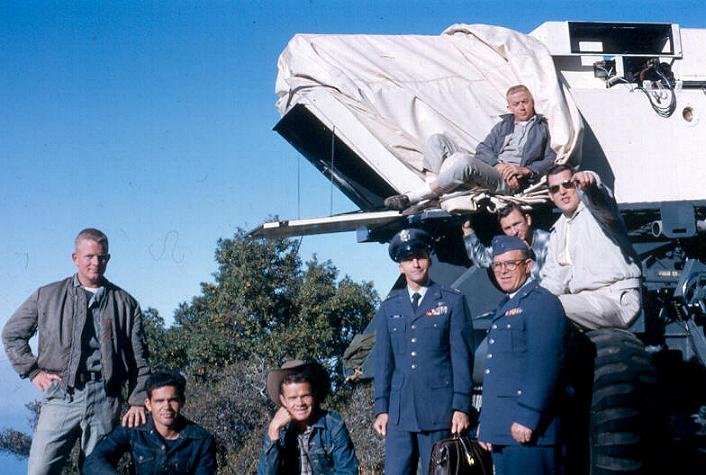
In late summer 1964 a small United States Air Force photo-optical team from the 1369th Photographic Squadron was deployed to a mountaintop site near Big Sur, California, on Anderson Peak in the Los Padres National Forest, at roughly 3,400 feet, about 120 to 124 miles up the coast from Vandenberg Air Force Base. This case file covers what witnesses reported, the official narrative, and a two-pass assessment with its evidence tier.
What did witnesses see at Anderson Peak?
In late summer 1964 a small United States Air Force photo-optical team from the 1369th Photographic Squadron was deployed to a mountaintop site near Big Sur, California, on Anderson Peak in the Los Padres National Forest, at roughly 3,400 feet, about 120 to 124 miles up the coast from Vandenberg Air Force Base. Their job was low-light tracking photography of Atlas intercontinental ballistic missiles launched out over the Pacific along the Western Test Range. The instrument was a light-sensitive tracking telescope on loan from Boston University, a folded Gregorian system that contemporary accounts describe as having a 24-inch diameter objective mirror and a 240-inch focal length, feeding an image-orthicon low-light television and film camera.
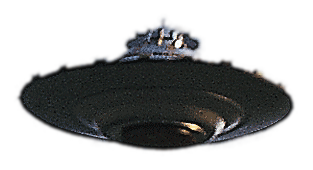
The officer in charge on the mountain was First Lieutenant Robert M. Jacobs. After one launch in September 1964 the team's film was processed and a print sent to Vandenberg. According to Jacobs, the morning after, he was summoned by Major Florenz J. Mansmann, the First Strategic Aerospace Division representative, to a screening room where the developed footage was run in slow motion. On the film, Jacobs said, the Atlas climbed into space and the dummy reentry vehicle separated and coasted downrange. Then a disc-shaped object entered the frame, an object he later described as looking like two saucers placed rim to rim with a "ping pong ball" dome on top. The object closed on the warhead, flew around it, and fired four distinct beams or flashes of light at it from different positions, after which the reentry vehicle tumbled out of its trajectory and fell into the ocean short of its target. The object then departed at high speed in the direction it had come from.
Jacobs said that present at that screening, besides himself and Mansmann, were two men in civilian clothes. After the lights came up, Mansmann told him the matter was not to be discussed, that as far as he was concerned it had "never happened," and warned him of consequences if he talked. The reel was cut: the segment showing the object was physically snipped out with scissors, placed on a separate reel, and carried off by the civilian men, while the remainder was returned. Jacobs heard nothing further and, by his account, did not realize for years that the event had been formally classified.
What is the official explanation?
There is no open, named government report that confirms or denies an unknown object on the Big Sur film, and the film segment Jacobs describes has never been publicly released. The case lived for nearly two decades only inside the chain of command that handled it. Jacobs first went public in 1982, after concluding he had never actually been read into any secrecy oath, by writing up the episode and circulating it. OMNI magazine declined the piece and a version eventually ran in the popular press before Jacobs developed it in detail in the Mutual UFO Journal, issue 249, in 1989, in an article he titled "Deliberate Deception: A Critical Analysis of the Curious Events at Vandenberg Air Force Base in September, 1964."
The most substantial official-adjacent rebuttal came not from a government press office but from inside the original project. Kingston A. George, the operations analyst and project engineer for the Big Sur telescope experiment, published "The Big Sur 'UFO': An Identified Flying Object" in Skeptical Inquirer, volume 17, number 2, in the winter of 1993, and returned to the subject in the same magazine in 2009 with "'Buzzing Bee' Missile Mythology Flies Again." George's position is that the team filmed a routine, highly classified penetration-aid test: an Atlas mission he names "Buzzing Bee," in which the reentry vehicle deployed decoys and chaff designed to confuse Soviet missile defenses. In his telling the film shows the sustainer tank, the reentry vehicle on its own trajectory, then two small puffs and two groups of three objects becoming distinct, which is decoy separation rather than an attacking craft. He argues the optics could not resolve fine structure on objects at that range, that "nothing circled any of the images," and that the directed-energy reading is physically wrong, since "a laser beam is invisible in the vacuum of outer space" and "a laser beam damages a target not with momentum, but by heating and melting it." George's further claim is that Jacobs, as the camera officer, simply lacked the clearance to be told what the penetration-aid hardware was, so he read an ordinary decoy event as an extraterrestrial attack. The upgrade of the material's classification from Secret to Top Secret, in George's account, protected the decoy technology, not a UFO.
What did the witnesses think it was?
The case rests on two named, credentialed military witnesses who held to it for decades. Robert Jacobs went on to a long academic career, teaching film and broadcasting at the university level, including at Bradley University, and he has repeated and defended the account in print, in interviews, and in the book "Confession: Our Hidden Alien Encounters Revealed," co-authored with researcher Robert Hastings. As recently as 2025 he publicly rejected the decoy explanation and insisted the all-domain anomaly office had mishandled the matter, stating flatly that the "Buzzing Bee" launch "was NOT the event that I filmed" and that, "as Major Mansmann testified in writing, that film was snipped from the reel with a pair of scissors and taken back East that very day by the CIA."
The corroborating witness is the more striking one, because he is the officer who actually studied the film. Major Florenz J. Mansmann, later Dr. Mansmann, confirmed Jacobs's service and the screening in a series of private letters across the 1980s and 1990s, and he was the man who examined the footage frame by frame. In a letter dated 8 March 1983 he described the object as a "classic disc, the center seemed to be a raised bubble," and wrote that "at the point of beam release the object turned like an object required to be in a position to fire from a platform." In a 10 March 1983 letter he stated that "the original 35mm film was rushed East on a special aircraft when we released it" to the civilian officers. In a 6 May 1987 letter he tied the long secrecy to directed-energy weapons interest, and in a 15 November 1995 letter he called Jacobs's account "all true as presented." Mansmann did not treat the object as a missile malfunction or a decoy. He treated it, in his own word, as "extraterrestrial." A handful of other crew members, including chief master sergeant Ike N. Davis and others named in Jacobs's writings, were present at the Big Sur site, though they did not all attend the screening. The hostile testimony, Kingston George's, is itself a witness account, that of the project engineer who built the experiment, and it is weighed below on its merits rather than dismissed.
The dispute
The dispute is squarely a natural-explanation reconstruction advanced by Kingston A. George, who was the operations analyst and project engineer for the Big Sur telescope experiment, in Skeptical Inquirer in 1993 and again in 2009. George argues that the team filmed a classified penetration-aid test on an Atlas mission he nicknames "Buzzing Bee," in which the reentry vehicle deployed decoys and chaff to defeat Soviet missile defenses. In his account the sequence on the film is a sustainer tank, a reentry vehicle on its own path, two small puffs, then two groups of three objects becoming distinct, which is ordinary decoy separation rather than a craft. He maintains that the telescope could not resolve fine detail at that range, that "nothing circled any of the images," that a laser "is invisible in the vacuum of outer space," and that a directed-energy beam "damages a target not with momentum, but by heating and melting it," so the "beams knocking the warhead down" reading is physically unsound. He attributes Jacobs's interpretation to a clearance gap: the camera officer was not told what the decoy package was, so he read it as extraterrestrial interference.
This is a strong, specific, method-shown counter-explanation, which is why the case is disputed rather than verified unexplained. But several things keep it from closing the case, which is why it lands at barely disputed rather than strongly. First, George never saw the disputed footage. By both his account and Mansmann's, the segment showing the object had already been cut from the reel and flown east before any later review, so George is reconstructing what such a launch ought to look like, not analyzing the actual frames Jacobs and Mansmann describe. Second, George dates the event to 22 September 1964, while both eyewitnesses date it to 15 September 1964 and Jacobs explicitly states the "Buzzing Bee" launch "was NOT the event that I filmed." If George is analyzing a different launch, his decoy frames are not the contested frames. Third, the corroborating witness is not a bystander but Major Mansmann, the officer who examined the film frame by frame with magnification and who, in private letters across the 1980s and 1990s, described a "classic disc" with a "raised bubble" center that "turned like an object required to be in a position to fire from a platform," and who called Jacobs's account "all true as presented." For George to be right, the senior officer who studied the footage closely must have mistaken decoys for a maneuvering disc and then defended that mistake privately for the rest of his life with nothing to gain.
Because the central film has never been released, neither side can settle it by showing the artifact. What exists is a credible decoy reconstruction by an insider who did not view the footage, set against two named officers, one of whom scrutinized it, who held to a structured-craft account for decades. That is a genuine, evidence-backed dispute that weakens the case without recantation, confession, recovered hoax props, or a positive identification of the specific object on the specific film, which is exactly the threshold for barely disputed.
Is the Big Sur Vandenberg Film real? The two-pass assessment
Pass one, the entirely ordinary reading. The strongest mundane explanation is the one offered from inside the project by its own engineer. Kingston George says the Big Sur telescope caught a penetration-aid test, a reentry vehicle shedding decoys and chaff, on the 22 September 1964 "Buzzing Bee" Atlas mission, and that the camera officer, not cleared for the hardware, misread it as an attacking craft. This is a serious, specific, method-shown counter-explanation: it names the launch, identifies the technology, explains the secrecy upgrade as protecting classified decoys, and points out real physics problems with the directed-energy story, since a laser is not visible in vacuum and would burn rather than knock a warhead off course. George also argues the optics could not have resolved a structured saucer at that distance and that nothing on the film actually circled the warhead. If the film shows decoy separation, the whole case dissolves into a clearance gap and an honest misinterpretation.
Pass two, if the object is real. Then a structured craft overtook a dummy nuclear reentry vehicle in near-space, maneuvered around it, fired four discrete beams, and sent it tumbling, all recorded on Air Force tracking film that was then physically excised and removed. That reading rests on two named officers, one of whom, Mansmann, studied the footage frame by frame and called it a disc that "turned like an object required to be in a position to fire from a platform." Mansmann is not a casual witness; he is the man George's theory most needs to be wrong, and he was the one looking closely at the actual frames.
Weighing them. George's reconstruction is the best skeptical case any 1960s missile UFO claim has, and it keeps this from sitting in a clean unexplained tier. But it stops short of closing the case for concrete reasons. George, by his own and Mansmann's accounts, never saw the segment in question, which had already been cut out and flown east, so his decoy reading is inference from what such a launch should look like, not analysis of the film itself. He and the witnesses do not even agree on which launch this was, his 22 September versus their 15 September, which matters because if it is a different mission his decoy frames are not the disputed frames at all. And his explanation requires both the camera officer and the senior officer who scrutinized the film to have misread ordinary decoys, with Mansmann maintaining the disc account in private correspondence for the rest of his life with nothing to gain. A decoy reconstruction by a credible engineer who did not view the actual footage, and who dates it to a different launch than the witnesses, is a strong counter-explanation but not a confession, a recantation, or a positive identification of the specific object on the specific film. That is the definition of a case that is contested but still standing. Tier: Barely Disputed.
Sources
- www.astronomyufo.com/UFO/bigsur.htm
- skepticalinquirer.org/1993/01/the-big-sur-ufo-an-identified-hying-object/
- www.theufochronicles.com/2025/05/big-sur-ufo-disclosures-revealing.html
- www.theufochronicles.com/2025/09/fmr-lt-robert-m-jacobs-who-captured-ufo.html
- www.theufochronicles.com/2024/02/big-sur-ufo-film-government_19.html
- www.theufochronicles.com/2024/02/big-sur-ufo-film-government.html
- enigmalabs.io/library/97213748-296c-429d-93e5-31131ec02202
- www.thinkaboutitdocs.com/1964-the-big-sur-ufo-filming/
More cases from this region: UFO sightings in United States