The Solway Firth Spaceman
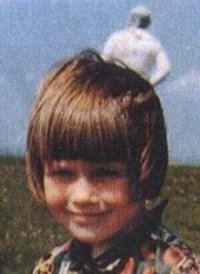
On 23 May 1964 Jim Templeton, a Carlisle firefighter and keen amateur photographer, took his family for a day out on Burgh Marsh, a stretch of flat saltmarsh near Burgh by Sands that looks across the Solway Firth toward Scotland. This case file covers what witnesses reported, the official narrative, and a two-pass assessment with its evidence tier.
What did witnesses see at Burgh Marsh?
On 23 May 1964 Jim Templeton, a Carlisle firefighter and keen amateur photographer, took his family for a day out on Burgh Marsh, a stretch of flat saltmarsh near Burgh by Sands that looks across the Solway Firth toward Scotland. He had a Pentacon F 35mm single-lens reflex camera loaded with Kodacolor-X, the new colour film Kodak had introduced in 1963, and he set out to photograph his five-year-old daughter Elizabeth, who was holding a posy of sea pinks picked off the marsh.
Templeton said the only other people about were his wife Annie, who was standing behind him, and two elderly women sitting in a parked car a few hundred yards off, knitting. He noticed that the cattle and sheep on the marsh seemed oddly clustered to one side. He took three frames of Elizabeth in much the same pose, crouched and standing in the grass, then drove the family home. He saw nothing unusual through the viewfinder and no one standing behind his daughter when he pressed the shutter.
When the film came back from Kodak, the middle frame of the three showed a figure rising up behind and above Elizabeth's head. It reads as the head and upper torso of a person in what looks like a white space suit or coverall with a dark visor or helmet, apparently facing away across the firth, one arm bent. In his 2002 letter to the Daily Mail Templeton wrote: "I took three pictures of my daughter Elizabeth in a similar pose and was shocked when the middle picture came back from Kodak displaying what looks like a spaceman in the background." The chemist's assistant who handed the prints over reportedly remarked that it was a shame the best shot had been spoiled by "the big fellow" in the background. The first and third frames of the sequence showed nothing of the kind.
What is the official explanation?
Templeton took the negative to Carlisle police. He later wrote: "I took the picture to the police in Carlisle who, after many doubts, examined it and stated there was nothing suspicious about it." Kodak examined the film and found no sign of double exposure, pre-exposed stock, or darkroom tampering, and the company is widely said to have offered a free year's supply of film to anyone who could prove the picture was faked, a reward that was never claimed. None of these findings declared the figure to be anything paranormal; they established only that the negative had not been doctored in processing.
The story broke locally in the Cumberland News on 12 June 1964 under the headline "Solway 'spaceman' poses picture puzzle for police experts," and was carried the next day by national papers including the Daily Mirror and Daily Express. That summer Templeton said two men in dark suits arrived at the Carlisle fire station in a new black Jaguar, claiming to be from "the Ministry," refusing to give names and referring to each other only as "nine" and "eleven." He said they drove him out to the marsh, asked whether this was where he had seen "the large man," and when he answered that he had seen no one, left him to walk back. When the press asked Detective Chief Inspector Stanley Armstrong about the visit in September 1964, he replied: "I know nothing whatsoever about this meeting. I don't know who the men were and I have told Mr Templeton that he should have taken the number of the car." At the time Templeton himself told the Cumberland News: "It all looks like a leg-pull to me. I'm sure the men were not security agents and I have no idea why they should want to pass themselves off as such," though by 2001 he had come to believe the visitors were genuinely sent by the government.
A second strand of officialdom grew up around the Woomera rocket range in South Australia. The claim, repeated for decades, was that staff at Woomera aborted a Blue Streak missile countdown the day after Templeton's photograph because two large figures were seen on the firing range, and that when they later saw the Solway picture they said the figures matched. Journalist David Clarke, working with Andy Roberts and Australian researcher Bill Chalker, traced this against the actual launch record. Blue Streak attempts in this period were halted on 25 May 1964 (weather) and 2 June 1964 (a fault in the safety systems), and a successful firing was filmed on 5 June 1964. The "object" people pointed to in that footage was identified by British Pathé staff as an internal lens reflection: "it's quite clear to us looking at it that it's an internal camera fault, like a reflection in the lens." The Ministry of Defence UFO desk found the supposedly missing film was simply the British Pathé newsreel "Woomera, Blue Streak, Two, One, Zero" (canister 64/48, issued 11 June 1964), held openly and not secret at all; the relevant MoD paperwork sits in file DEFE 24/1983/1. Chalker's verdict was that "there would appear to be no links between the Solway photograph and the 5 June 1964 Woomera footage," and the Disclosure Australia project found no contemporary Australian report of any "spacemen" on the range.
What did the witnesses think it was?
Jim Templeton (1920 to 2011) maintained for the rest of his life that the photograph was genuine and that no one had been standing where the figure appears. "The picture is certainly not a fake, and I am as bemused as anyone else as to how this figure appeared in the background," he said. He was a fire brigade man, a local historian and an enthusiastic amateur photographer who liked a joke (weeks before the marsh trip he had made a gag photographic copy of a five pound note to show off his darkroom skill), yet everyone who dealt with him, including the sceptics, came away convinced he believed his own story and was not running a hoax.
His daughter Elizabeth, the little girl in the picture, and his wife Annie both stood by his account. When the explanation was put to them that the figure was Annie herself, caught in the background, Templeton and his wife "remained adamant that she could not have been the figure in the photograph." The supporting witnesses he named were the two knitting women in the distant car and the huddled animals, none of whom were ever traced or interviewed. There were no other photographers present, so the entire case rests on the single surviving frame and on Templeton's own consistent testimony across nearly fifty years.
The dispute
The dispute is a specific, named, partly-evidenced counter-explanation rather than an official assertion. Dr David Clarke, the folklorist and journalist who interviewed Jim Templeton repeatedly and obtained the relevant Ministry of Defence files, argues that the figure is Templeton's own wife, Annie, caught unnoticed in the background of the frame. Two technical points carry it. First, analyst Gordon Hudson and Clarke point out that other exposures from the same roll of film show Annie Templeton out on Burgh Marsh that day, wearing a pale blue dress, so a second adult was demonstrably present and moving around. Second, the camera was a Pentacon F, whose optical viewfinder did not show the full area the lens recorded, so a person standing close behind and slightly to the side of five-year-old Elizabeth could be photographed without Templeton ever seeing them in the finder. In strong sunlight at a small aperture a light blue dress over-exposes toward white, and a dark-haired head seen from behind reads as a helmet, producing exactly the "white spaceman with a dark visor" the picture shows.
What the dispute does not contain is proof tied to this exact frame. No one has published the specific negative from that roll showing Annie standing in the precise position the figure occupies, so the wife explanation remains a reconstruction of how the image could have formed, not a demonstration that it did. Crucially, both Jim and Annie Templeton rejected this explanation outright and insisted she could not have been the figure, and they were the only two adults who knew where Annie was standing when the shutter fired. Hostile or motivated testimony is absent here; the witnesses are simply maintaining their account against a plausible but unproven model.
The collapse of the surrounding mythology strengthens the sceptical case without closing it. The famous Woomera connection, that a Blue Streak countdown was aborted because two "spacemen" walked onto the range and that staff said they matched the Solway figure, was traced by Clarke, Andy Roberts and Australian researcher Bill Chalker to the actual launch record (attempts on 25 May and 2 June 1964, a successful firing on 5 June 1964) and to the British Pathé newsreel "Woomera, Blue Streak, Two, One, Zero" (canister 64/48, 11 June 1964), where the supposed UFO is an internal lens reflection and the supposedly secret film was never secret. The MoD file DEFE 24/1983/1 documents this, and Chalker concluded there is no link between the Solway photograph and the Woomera footage.
Because the explanation is a named, technically reasoned reconstruction that is partly evidenced but not proven on this specific frame, and because the principal witnesses denied it and no confession or recovered prop exists, the case is Barely Disputed rather than Strongly Disputed. The mundane reading is the more likely one, but it has not been nailed to this image.
Is the Solway Firth Spaceman real? The two-pass assessment
Pass one, how this could be entirely ordinary. The leading mundane reconstruction comes from David Clarke, who interviewed Templeton many times. Clarke and analyst Gordon Hudson noted that other frames from the same roll show Templeton's wife Annie out on the marsh in a pale blue patterned dress. The Pentacon F is an SLR whose optical viewfinder did not show the full frame, roughly the outer third of what the lens recorded fell outside what Templeton saw, so a person standing just behind and to one side of Elizabeth could be captured on film without the photographer registering them. Bright sun at a small aperture would bloom a light blue dress toward white, and a figure seen from behind with dark hair reads convincingly as a helmet over a white suit. On this account the "spaceman" is simply Annie Templeton, momentarily in shot, over-exposed and cropped out of conscious view. The Kodak finding does not contradict this: confirming the negative was not tampered with is fully consistent with an ordinary person being in the frame. The Woomera link, the missing film and the men in black, the parts that made this feel like a cover-up, dissolve on inspection, since the Blue Streak "UFO" is a documented lens flare in an openly held Pathé newsreel and no Australian record of range "spacemen" exists.
Pass two, if it is real. Taken at face value, a solid, suited, helmeted figure stood behind a child on an empty marsh, was invisible to the photographer and to a mother standing a few feet away, registered on only one of three near-identical frames, and left no footprints, no second witness and no follow-up. The romantic reading folds in the Woomera "matching spacemen" and the numbered Ministry men into a story of contact and concealment. But every external prop of that version has failed verification, leaving the extraordinary claim resting entirely on one ambiguous shape in one frame.
This sits as Barely Disputed. The counter-explanation is reasonable, partly evidenced (Annie really is on the roll, the viewfinder really did crop) and advanced by the researcher closest to the case, which is why it does not stay Unknown. But it is a reconstruction, not a closure: no one has published a frame from the actual roll that shows Annie occupying that exact spot, there is no confession, no recovered prop, and the two people best placed to know, Templeton and his wife, rejected it to the end. That keeps it short of Strongly Disputed, where a confession, a recantation, or a positive identification of the literal object would be required. The official-apparatus threads (police, Kodak, the MoD file) are logged as evidence the case was taken seriously, not as marks against it. On the balance of method-shown evidence the picture most likely shows Annie Templeton, but the case is not yet definitively put to bed, so it lands at Barely Disputed.
Sources
- drdavidclarke.co.uk/secret-files/the-solway-spaceman-photograph/
- web.archive.org/web/20250125210951/https://drdavidclarke.co.uk/2014/05/23/solway-spaceman-mystery-is-50-years-old/
- jamesaconrad.com/media/Solway-Spaceman-photo.html
- ufos-scientificresearch.blogspot.com/2010/12/1964-woomera-ufo-movie-solved-cold-case.html
- www.timesandstar.co.uk/news/25845899.story-behind-unsolved-solway-spaceman-mystery/
- www.futilitycloset.com/2013/10/21/the-solway-firth-spaceman/
- thinkaboutitdocs.com/1964-cumberland-spaceman-solway-firth-photograph/
More cases from this region: UFO sightings in United Kingdom