The Warminster Thing
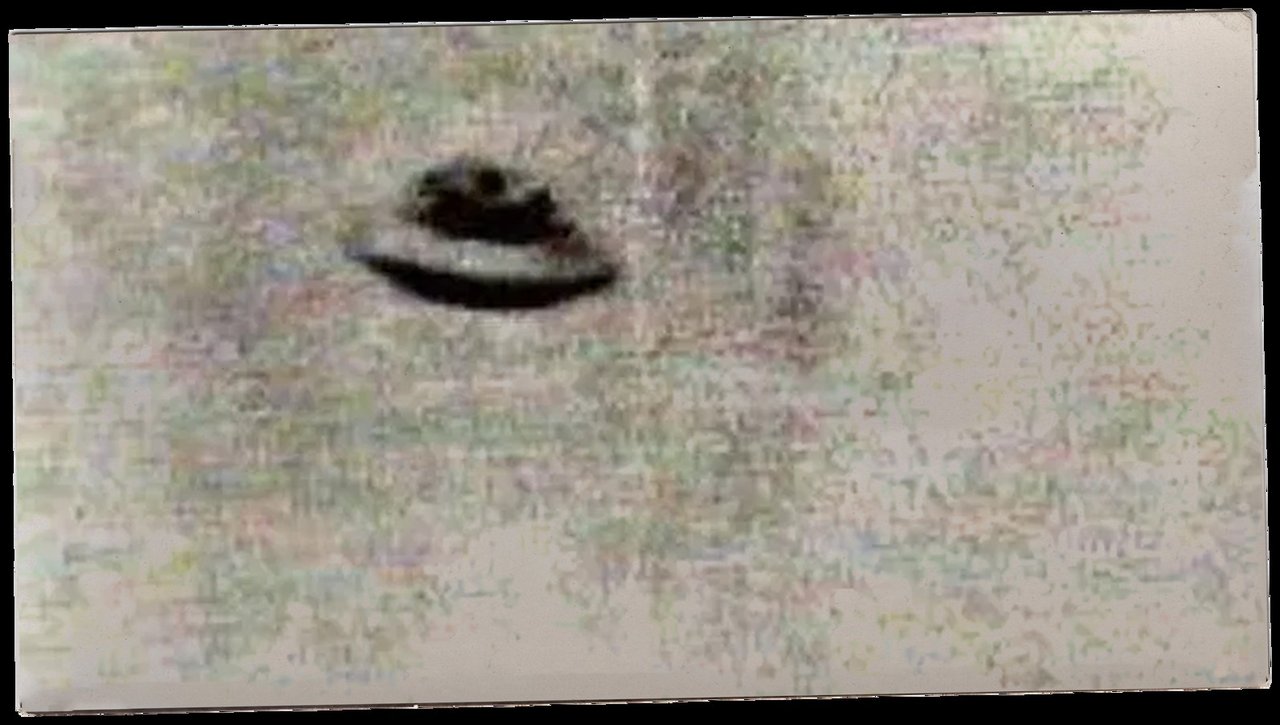
The first event came before dawn on Christmas morning, 25 December 1964. This case file covers what witnesses reported, the official narrative, and a two-pass assessment with its evidence tier.
What did witnesses see at Warminster?
The first event came before dawn on Christmas morning, 25 December 1964. Mrs Marjorie Bye, a housewife from Bradley Road, was walking to Holy Communion at Christ Church around 6:30am when she heard a crackling noise coming from the direction of Bell Hill. The contemporary "Strange Noise At Warminster" clipping records that "at first she thought it was a lorry sounding grit on the hill. But the noise grew louder, came over her head and passed on across Ludlow Close." She described it as branches being pulled along the road, but coming from above, while the sky overhead was clear and starry. She reached church shaken.
She was not alone. More than 30 people in the town reported strange sounds that same morning. Mildred Head said, "Our ceiling came alive with strange sounds that lashed our roof, as if twigs were brushing the tiles, ended up with a noise like giant hailstones." The town's head postmaster, Roger Rump, heard the same thing simultaneously and described "a terrific clatter, as though the roof tiles were being rattled about and plucked off by some unseen force." A persistent humming accompanied the sounds and always seemed to come from above, though nothing could be seen. Four miles away at Knook Camp, more than 30 soldiers were woken by what sounded like a large chimney stack being ripped from a roof and thrown across the camp. No damage was found, and the soldiers and their sergeant said it was not a military sound they recognised.
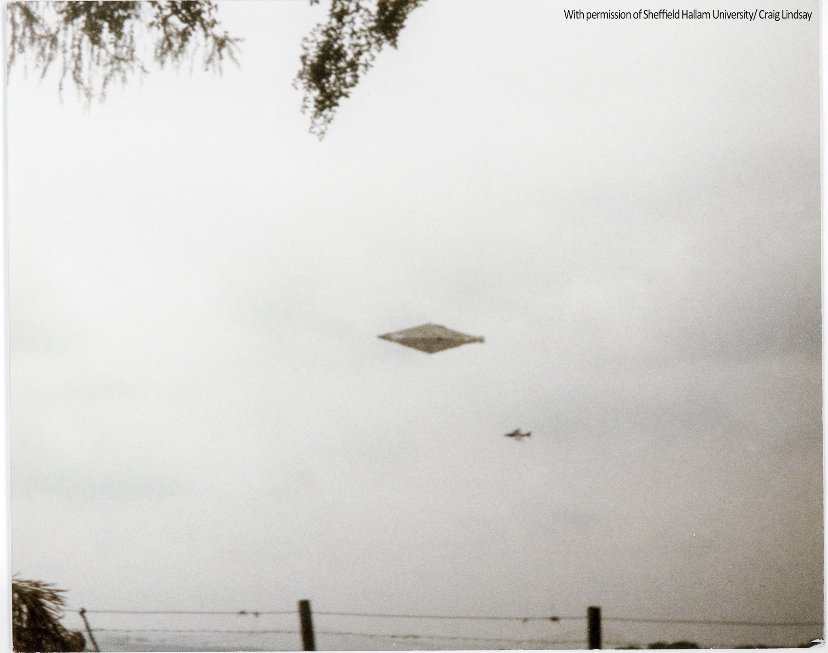
The sounds went on for months and then turned visual. In June 1965 Mrs Marsden told Shuttlewood she heard a loud humming followed by bumping noises and a brilliant light that lit her bedroom like daytime. Soon after, Patricia Philips, the wife of the Heytesbury vicar, became the first to report a definite shape: a brightly glowing, cigar-shaped object, vertical, black underneath with glowing orange lights, that hung in the sky for around twenty-five minutes before rotating and vanishing. Her son and other witnesses corroborated it. On 17 August 1965 residents of the Boreham Field estate reported a huge blast that shook the ground, a "monstrous orange flame in the sky" that seemed to rise from the Iron Age earthwork at Battlesbury, and a crackling ball of smoke with a yellow core that drifted over the houses. Witness David Pinnell said, "It takes a lot to frighten me. This shook me solid." On 29 August Gordon Faulkner photographed a domed disc moving fast and low over the south of the town, the image that became the face of the whole affair. Reports of orange balls of light, spinning discs, red and green orbs, and cigar shapes piled up across 1965 and 1966, logged in the hundreds.
What is the official explanation?
There was no single official investigation in the sense of a government report, but the apparatus of the day did engage. Warminster sits in an Army town next to the Salisbury Plain training area and the Land Warfare Centre, so the obvious first suspect was the military. When Shuttlewood interviewed the local barracks and airfields about the August 1965 events, the soldiers at one barracks were on leave, and the airfields denied responsibility, some laughing that they had no equipment capable of causing it. The military pointedly did not attend the public meeting.
That public meeting is the closest thing to an official accounting. On the Friday evening before the August bank holiday in 1965, the Warminster Urban District Council chairman, the Reverend L. Inge, called a meeting in the Town Hall assembly room to discuss "the thing from outer space." Over 200 people packed inside and another 300 stood on the steps outside. The contemporary "Town calls meeting on outer space" report records Inge saying that, of about 25 per cent of object sightings relayed to research stations, the events were unexplainable. John Cleary-Baker, who evaluated evidence for the British UFO Research Association, said things like these had been reported to the BUFORA "111 years ago" and that it was not something unique to Warminster. The explanations floated at the meeting ran the full conventional list: satellites, rockets burning up, helicopter noise, hallucinations and military operations. One government official conceded that while most reports were explainable, 25 per cent were not. Dr E. R. Dawn of the National UFO Association said his organisation was struggling to find any explanation that would satisfy people that these were not from outer space.
The British UFO Research Association and other groups took a sustained interest across the following years, running their own skywatches and producing bulletins, but none produced a closing verdict. Decades later, in the year 2000, the former Ministry of Defence UFO desk officer Nick Pope re-examined the case and concluded it "could all be explained," pointing at low-flying military aircraft dropping flares and meteorological activity. Asked again on the 60th anniversary, in the Warminster Journal, Pope walked the door back open: he stressed that an entire community had experienced the events, creating a "critical mass," and concluded that "nobody at any point turned around and said to the people of Warminster, this is what you saw. We still don't know what really happened, it's not case closed."
What did the witnesses think it was?
Arthur Shuttlewood, the features editor of the Warminster Journal, is the man at the centre of the story. He was, by the accounts of those who knew him, charismatic and well-liked, and at the start he kept his records, in his own phrase, "on a bedrock of integrity." He did not believe at first. He wrote that despite interviewing a high calibre of witnesses he was not convinced the Thing was real until he saw it himself. That came on 25 September 1965, when from an upstairs room in his home he watched a cigar shape with a yellow or amber hump glide silently across the sky. He grabbed his cine camera, and by his account the camera jumped in his hands while he felt sharp pricking sensations down one side of his body, and his eyes watered for two months afterwards. He got no footage. He became the 199th witness in his own log, then a committed skywatcher, and he wrote three books, beginning with The Warminster Mystery in 1967, which was published by Neville Spearman and became one of the most cited books in British UFO history. He died in 1996.
The witness pool was genuinely large and varied: housewives, a postmaster, a vicar's wife, soldiers, lorry drivers, factory workers. Over the August 1965 bank holiday weekend an estimated 7,000 people descended on the town to look for themselves, and through the late 1960s the hills around Warminster, Cradle Hill and Cley Hill, filled nightly with skywatchers. What the core witnesses believed varied. Many simply could not explain what they had heard or seen and said so. David C. Holton, a surgical chiropodist, naturalist and amateur geologist who came forward in February 1965 and appeared in the press and on television, pushed the strongest claim, that the Thing was connected to spaceships preparing to land in Wiltshire, and reported a flock of pigeons struck dead in flight by its sound waves near Crockerton. Other witnesses reported pets and farm animals made sick or panicked by the vibrations. Shuttlewood himself never claimed certainty about origin, only that something real was happening, and he conceded plainly that recounting every similar report would "simply bore the reader."
The dispute
The dispute is broad but, crucially, partial. The strongest documented strand is embellishment by the chief chronicler. The researcher Patrick Gross, in his URECAT catalog entry for 25 December 1964, lays the cautious contemporary January 1965 Warminster Journal account of Marjorie Bye beside Arthur Shuttlewood's far more lurid 1967 book version of the same incident and shows that the menace and physical violence in the later telling were not in the original. That is a method-shown demonstration that Shuttlewood dramatized at least one foundational account, and it licenses suspicion that he did the same elsewhere. Steve Dewey and John Ries in In Alien Heat (2005), and the journalism academic Dr David Clarke, broadly read the whole episode as a media-driven social phenomenon, fed by Shuttlewood's prominent and self-interested reporting in a town next to a major military training area.
Two outright hoaxes inside the flap are confirmed. David C. Holton, the chiropodist who in 1965 publicised the claim that the Thing's sound waves had killed a flock of pigeons in flight near Crockerton, admitted in 2005 that he had fabricated the pigeon story as a personal psychological test on the town. Separately, a contemporary Daily Mirror item headlined "One of those saucers in the sky was a fake" carried an amateur photographer's confession that he had hung a model "Thing" on a tree and photographed it. These prove that fakery was present in Warminster; they do not prove it was the whole of Warminster.
The most famous single piece of evidence, Gordon Faulkner's 29 August 1965 photograph published by the Daily Mirror on 10 September 1965, is contested but not resolved. In the early 1990s a man named Roger Hooten claimed that he and Faulkner had staged the picture together. Faulkner, however, said he had never heard of Hooten and denied to the end of his life that the photograph was faked. No prop, negative, or independent corroboration of Hooten's account has been produced, so this is an unproven accusation against a photographer's standing denial, not a confession with a shown method. Under the project's rules a contested accusation like this is barely-disputing, not strongly-disputing.
Why it does not close the case: the founding event, the Christmas morning 1964 sounds, was reported by more than 30 townspeople simultaneously and by 30-plus soldiers four miles away, all before any photograph or book existed, so neither the Faulkner image nor Holton's pigeons nor the model-on-a-tree hoaxer can account for it. The official voices at the 1965 Town Hall meeting conceded that roughly 25 per cent of reports were unexplained, and the former MoD investigator Nick Pope, who once said the case "could all be explained," later stated plainly that "we still don't know what really happened, it's not case closed." The counter-explanations chip at the edges and discredit some participants, but no single named, identified cause has been shown for the core multi-witness phenomenon, which is why the case lands at Barely Disputed and largely stands.
Is the Warminster Thing real? The two-pass assessment
See the assessment field content.
Sources
- ufologie.patrickgross.org/ce3/1964-12-25-uk-warminster.htm
- weird-wiltshire.co.uk/wp-content/uploads/2024/08/Warminster-Thing-HM38.pdf
- archive.org/details/warminstermyster0000shut
- thinkaboutitdocs.com/1964-the-warminster-thing/
- jedbuttress.com/thing
- www.strangeoutdoors.com/uap/2024/4/2/the-warminster-thing
More cases from this region: UFO sightings in United Kingdom