The Dayton, Ohio UFO Wave (1973)
At least fifteen sightings of unidentified objects "covered with red, green and blue lights" zooming about at tree-top level were reported across southwestern Ohio on the night of 10 October 1973, according to the Columbus Dispatch of 11 October 1973. This case file covers what witnesses reported, the official narrative, and a two-pass assessment with its evidence tier.
What did witnesses see at New Lebanon and the Dayton-Cincinnati corridor?
At least fifteen sightings of unidentified objects "covered with red, green and blue lights" zooming about at tree-top level were reported across southwestern Ohio on the night of 10 October 1973, according to the Columbus Dispatch of 11 October 1973. The first came in shortly after 8 p.m. from a New Lebanon Township police officer. Montgomery County Sheriff's deputy Michael Sullivan, who relayed the wave of reports, said of that officer, "He didn't want to say he saw it, but he said it." Sullivan described the object the officer reported as oblong and covered with lights. It hung apparently stationary at tree-top level for several minutes until the officer aimed his cruiser spotlight at it. At that point, in Sullivan's account, "it then zoomed toward him and then shot straight up in the air" after the officer cut his light, then disappeared.
Sullivan said the objects behaved as if startled. "They would be behind the trees and come up and fly away," he said, "as if you startled it or something." He was blunt about conventional explanations: "No balloon, helicopter or kite can move that fast or has that many lights attached." The individual encounters, the Dispatch reported, lasted anywhere "from a fleeting moment to 12 minutes." The objects were seen across the Dayton-Cincinnati area, low to the ground, multicolored, and capable of sudden vertical departures.
That night was the front edge of a flap that rolled across the whole state for the rest of October 1973. Francis Ridge's NICAP 1973 chronology logs repeated New Lebanon entries on 10 and 14 October, Union and Dayton-area entries through mid-month, and a dense cluster of Cincinnati-area sightings. In the Cincinnati basin specifically, as documented later by reporter John Lasker drawing on the Cincinnati Post and the Enquirer, police fielded calls about strange bright lights over Mount Washington, Bond Hill, and the corner of 14th and Vine. Residents of Trenton reported a craft on Main Street, a farm woman reported something landing and two cows dead, and Reading reported power outages. A Greenfield police officer, Sergeant Hugh, chased a circular white object with a yellow glow and said afterward, "I never believed in UFOs until tonight." The state's own governor, John J. Gilligan, told reporters around 17 October that he and his wife had watched an amber-colored vertical light for roughly half an hour while driving: "I saw one the other night, so help me. I'm absolutely serious. I saw this. It was not a plane. It was not a bird. It didn't wear a cape. And I really don't know what it was."
What is the official explanation?
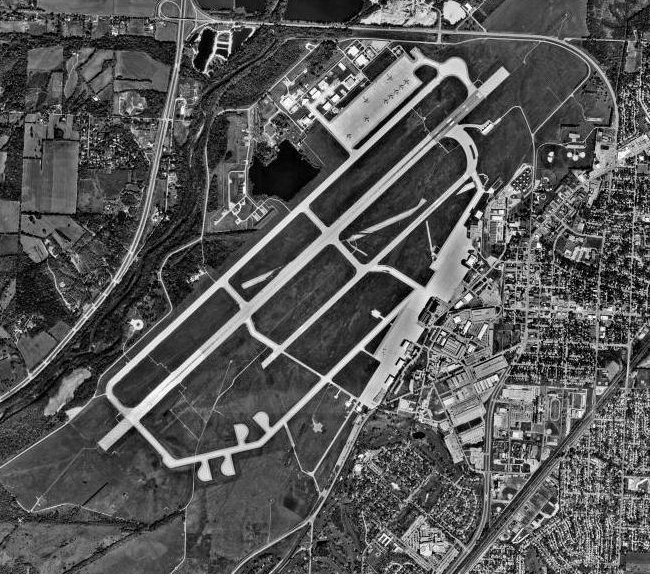
The official posture on the Dayton sightings was deliberate non-engagement. Wright-Patterson Air Force Base, the home of the by-then-closed Project Blue Book and the most UFO-associated installation in the country, sits inside the very area where these objects were reported. Asked about the 10 October cluster, base officials classified every one of the sightings "unofficial" and told the Columbus Dispatch there would be no attempt to investigate "unless there was an imminent danger." None of the objects had been picked up on radar, the explanation went, because they were flying too low to be tracked.
This was the post-Blue Book vacuum working exactly as designed. The Air Force had shut down Blue Book in December 1969 on the strength of the Condon Report, and from that point on it had no mandate, and no desire, to chase civilian sightings. So in October 1973, with police blotters across Ohio filling up nightly and the governor himself going on record, the federal apparatus that had spent two decades collecting and explaining-away these reports simply declared them somebody else's problem. Wright-Patterson's own historical tally, cited by Ohio researchers, had logged 12,618 sightings between 1946 and 1969 with 701 left formally unidentified, but in 1973 the base would not even open a file on the objects buzzing the treetops a few miles from its runways.
There was a separate and very real federal operation overhead that month, and it matters for any honest assessment. On 6 October 1973 the Yom Kippur War broke out, and on 13 October the United States launched Operation Nickel Grass, a round-the-clock strategic airlift to resupply Israel. Wright-Patterson was a hub for that effort, with military cargo aircraft lifting off at all hours for thirty straight days. The official record of the period is therefore a base that was extraordinarily busy with classified, fast-moving, heavily-lit air traffic while simultaneously refusing to comment on the lights people were seeing.
The one piece of the wave that did get an on-the-record resolution came not from the military but from local police. Late on 19 October 1973, drivers on U.S. 35 near Dayton called in three figures with silver skin and antennae walking near the highway. Responding officers found three teenagers who had wrapped themselves in aluminum foil as a Halloween prank.
What did the witnesses think it was?
The witnesses at the core of this case were not thrill-seekers or anonymous callers. They were on-duty police officers and the elected governor of Ohio, people with careers and credibility to lose. Deputy Michael Sullivan, who handled the Montgomery County reports, plainly believed his colleague had seen something real, stressing that the New Lebanon officer was reluctant to admit it and that no balloon, helicopter, or kite could account for the speed, the vertical climb, and the cluster of colored lights. The officer's own behavior, shining a spotlight and getting an immediate reaction from the object, reads as a trained observer testing what he was looking at rather than reaching for a flying-saucer story.
Sergeant Hugh of the Greenfield police gave the line that captured the whole flap, a self-described non-believer converted by a single night chasing a glowing object he could not identify. Governor Gilligan, far from hedging, doubled down at a press conference that was significant enough to be quoted on Walter Cronkite's national CBS broadcast in mid-October 1973: he insisted he was "absolutely serious," that what he and his wife watched for half an hour was not a plane and not a bird, and that he genuinely did not know what it was. A sitting governor volunteering a UFO sighting on the record, with his wife as corroborating witness, is the kind of testimony that does not get walked back lightly, and Gilligan never recanted it.
The corroboration is geographic and temporal density. This was not one witness with one story. It was police departments in multiple counties, the Montgomery County Sheriff's office, Cincinnati city police, a Greenfield officer, farm families, and the governor, all reporting low, fast, multicolored objects across the same two- to three-week window. The Cincinnati ufologist Kenny Young spent years afterward collecting and preserving these southwestern Ohio reports, and Francis Ridge folded them into the NICAP 1973 wave database, which treats October 1973 as one of the largest and best-attested flaps on record, with the Center for UFO Studies counting on the order of a thousand reports nationwide that month.
The dispute
The dispute is narrow but real, and it is the reason this page is tiered Barely Disputed rather than Verified Unexplained. The Dayton wave was reported and remembered as a single flap, and one named, dated element of that flap was conclusively shown to be a hoax. Late on 19 October 1973, motorists on U.S. 35 near Dayton phoned police about three figures with silver skin and antennae beside the road. Responding officers found three teenagers who had wrapped themselves in aluminum foil for a Halloween prank. This is a method-shown identification of a specific real-world cause for that specific incident, recovered and confirmed by police on the night, and it is documented in reporter John Lasker's account drawing on contemporary Ohio newspapers. Within the boundary of that one sub-event, the "UFO" was nothing of the kind.
A second strand of the dispute is environmental and was advanced implicitly by the Air Force's own non-response and by later skeptical reconstruction of the period. Operation Nickel Grass put an unusual volume of brightly-lit military airlift traffic over the Wright-Patterson area for thirty days starting 13 October 1973, exactly overlapping the flap. The argument is that an anxious public, primed by the Pascagoula abduction story and wall-to-wall national coverage that month, misread legitimate low-flying aircraft as hovering, color-shifting craft. This is a plausible-natural-cause argument, not a demonstrated one. No investigator has tied a specific named aircraft sortie to the New Lebanon officer's object or to the governor's amber light, and an aircraft explanation has to strain to cover an object that allegedly reacted to a police spotlight by climbing vertically.
That is why the dispute does not close the case. The foil teenagers explain the foil teenagers. They do not explain the Montgomery County deputy's account, the governor's on-the-record half-hour sighting that aired on national news, the Greenfield sergeant's chase, or the broader NICAP-logged cluster. There is no confession, no recantation, and no positive identification of the object behind the core police sightings. The counter-evidence is partial, reaches only a peripheral incident, and leaves the load-bearing testimony intact, which keeps the case firmly in the barely-disputed tier.
Is the Dayton, Ohio UFO Wave (1973) real? The two-pass assessment
Pass one, the ordinary explanations. October 1973 over Dayton was an unusually noisy sky. Operation Nickel Grass had Wright-Patterson launching heavy military cargo aircraft around the clock from 13 October onward, and brightly-lit aircraft seen low and at odd angles, sometimes holding in a pattern and then climbing out fast, can absolutely read to a ground observer as an object that hovers and then "shoots straight up." Multicolored navigation lights, helicopters, and the ordinary misperception of bright planets and stars near the horizon account for a real fraction of any flap, and a county sheriff's office taking fifteen excited calls in one night will inevitably log some of those. And the wave demonstrably contained at least one outright hoax: the silver-skinned "extraterrestrials" on U.S. 35 on 19 October were three teenagers in aluminum foil, caught and identified by responding police. That single resolved incident is the strongest evidence that not everything reported in this flap was anomalous, and it is the basis for the dispute on this page.
Pass two, if some of it was real. The hoax on U.S. 35 explains the U.S. 35 hoax and nothing else. It does not touch the New Lebanon police officer's object, which reportedly reacted to a spotlight by accelerating and climbing vertically, behavior that a foil-wrapped teenager cannot produce. It does not touch a sitting governor and his wife watching an amber vertical light for half an hour. It does not touch a veteran Greenfield sergeant chasing a glowing object, nor the Coyne Army Reserve helicopter crew near Mansfield on 18 October, whose own separate case is among the most heavily investigated aircraft-UFO encounters on record. The official handling is itself a tell: Wright-Patterson, sitting in the middle of the reports, declined even to open a file, classifying everything "unofficial," which under standing order counts as an apparatus choosing to close a thing down rather than as evidence the thing was nothing.
So the case sits at Barely Disputed. The flap is genuinely real as a documented event, anchored to contemporary newspaper text and a sheriff's deputy quoted by name, and the core New Lebanon sightings remain unexplained. A specific, method-shown counter-explanation exists, but it positively identifies only one peripheral sub-incident, the foil teenagers, and not the police-witnessed objects or the governor's sighting that give the case its weight. Because the debunk is partial and does not reach the load-bearing testimony, the case largely stands. That is the definition of barely disputed, not strongly disputed, and not a discredit.
Sources
- www.thinkaboutitdocs.com/1973-15-sightings-of-ufos-near-dayton-ohio/
- www.roundtownufosociety.com/Articles/ufosightingoct73.htm
- www.nicap.org/wave73.htm
- freepress.org/article/ohio-against-universe-50th-anniversary-ufo-wave-during-halloween-1973
- www.citybeat.com/news/space-invaders-12184054/
- www.youtube.com/watch?v=My3D5M2bvaI
More cases from this region: UFO sightings in United States