The Edwards AFB Abductee Crash Claim
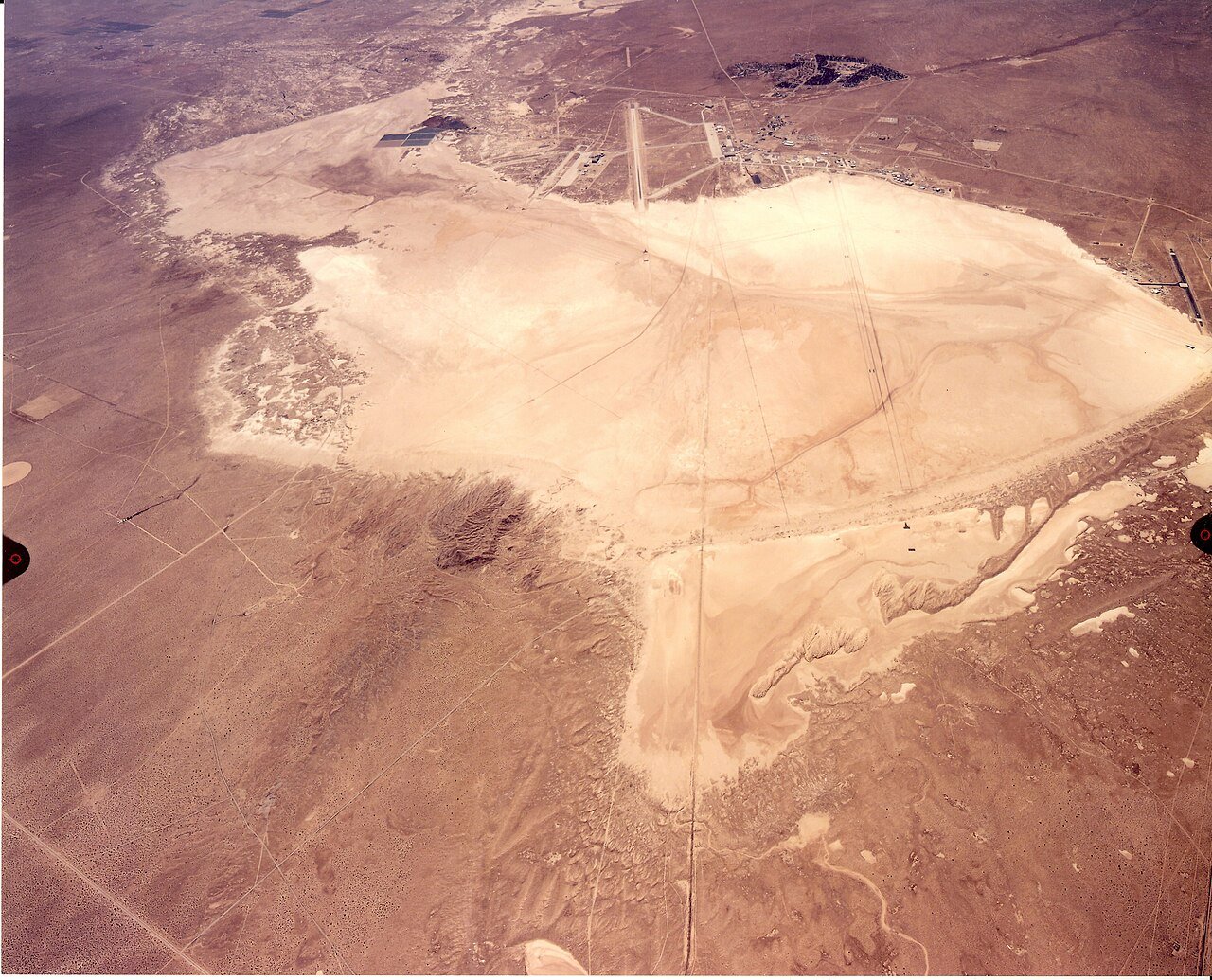
North of Edwards Air Force Base, Mojave Desert, California This case file covers what witnesses reported, the official narrative, and a two-pass assessment with its evidence tier.
What did witnesses see at North of Edwards Air Force Base?
North of Edwards Air Force Base, Mojave Desert, California
What is the official explanation?
No official record exists; Project Blue Book had already closed in December 1969 and no Air Force, FOIA, or newspaper documentation of a 1971 Edwards-area crash has ever surfaced.
What did the witnesses think it was?
Lorraine "Lori" Jean Dvorak Cordini (1942 to 2015), with a claimed but unverified second witness named Debbie (Debby Lee) Clayton.
The dispute
The dispute is not about whether Lori Cordini existed or whether she sincerely believed her account, both of which are settled. The dispute is about where the story came from and when. The detailed crash-survivor narrative, the human aboard the pod, the dead and living gray entities, the white-gowned captain, the hangar examination, and the chemical memory wipe, is absent from every source that predates Cordini's hypnotic regression. The researcher Richard Geldreich traced the printed lineage and found that the oldest source, Leonard Stringfield's "UFO Crash Retrievals" status reports (1978 to 1994), and its repetition in Kevin Randle's 1995 "A History of UFO Crashes," reported only a crash and a military recovery near Edwards AFB with no occupants and no survivors. Cordini herself had no conscious memory of any involvement until June 1995, and the survivor details emerged through hypnosis sessions beginning in July 1995, with her written account circulated only from 1997 onward, after she found Stringfield's crash report online.
That sequence is the core of the dispute. Hypnotic regression is a discredited method for retrieving accurate historical memory; it is well established in the memory-science literature that hypnosis reliably generates confident, emotionally real, and false recollections, particularly when the subject is primed by another abductee's testimony, as Cordini explicitly was at the MUFON meeting that triggered her. So the most natural explanation is that Cordini, a self-described lifelong experiencer immersed in abduction culture, encountered an unrelated thirdhand crash rumor and, under hypnosis, wove herself into it as its sole human survivor. The cultural fingerprints reinforce this: she described the entities as being "like in 'Close Encounters of the Third Kind,'" a 1977 movie, and the rest of the narrative tracks standard period abduction tropes.
Two things keep this in the "barely" tier rather than pushing it toward a stronger verdict. First, Cordini never confessed, never recanted, and produced no hoax materials; she pursued corroboration sincerely for twenty years. The hypnosis critique is a strong psychological argument about how the memory likely formed, but it is an argument, not a demonstrated fabrication or a positive identification of a specific real-world object or cause. Second, the supporting witness Debbie Clayton, if she were a genuine, independent, contemporaneous observer, could in principle anchor the event in reality. No such anchor has been produced; Clayton exists in the record only as a name inside Cordini's own retelling, with no surviving first-person statement and no confirmation that researchers ever located her. The case therefore largely stands as an uncorroborated single-witness recovered-memory claim, which is exactly what "barely disputed" describes: a real and serious counter-explanation exists, but it has not closed the case with a confession, a recovered prop, or a named identified object.
Is the Edwards AFB Abductee Crash Claim real? The two-pass assessment
Barely Disputed. A real, sincere witness, but the load-bearing crash-survivor details exist only in hypnotically recovered memories from July 1995 onward and are absent from the original Stringfield report, with no physical evidence, no contemporaneous record, and no confirmed independent witness.
Sources
- medium.com/@richgel99/lori-cordini-the-only-survivor-found-at-a-1971-crash-retrieval-68f781c77faf
- archive.org/details/ufo-crash-retrievals-status-reports-1-vii
- www.fatemag.com/post/encounters-ets-phone-here
- wahoo-ashland-waverly.com/obituaries/lorraine-dvorak-cordini/article_76c0a740-8713-11e5-9f88-ab2b97f185e7.html
- thechurchofufology.blogspot.com/2011/05/lorraine-dvorak-cordini.html
- www.thinkaboutitdocs.com/1971-abductee-involved-in-ufo-crash-near-edwards-afb/
- www.ufoinsight.com/aliens/abductions/alien-abductee-ufo-crash
- www.tall-white-aliens.com/abductee-involved-in-ufo-crash-near-edwards-afb-2/
More cases from this region: UFO sightings in United States