The Gemini 7 "Bogey at Ten O'Clock High"
About four hours and twenty-four minutes into the fourteen-day Gemini 7 mission, on 4 December 1965, command pilot Frank Borman called Houston with a phrase that has followed the flight ever since. This case file covers what witnesses reported, the official narrative, and a two-pass assessment with its evidence tier.
What did witnesses see at Low Earth orbit?
About four hours and twenty-four minutes into the fourteen-day Gemini 7 mission, on 4 December 1965, command pilot Frank Borman called Houston with a phrase that has followed the flight ever since. The NASA air-to-ground transcript released by the Pentagon in 2026 tags the line to the spacecraft and to Borman: "A bogey at ten o'clock high." When the ground did not catch it, Houston came back, "This is Houston, say again seven," and Borman repeated, "I said we have a bogey at ten o'clock high." "Bogey" is fighter-pilot and test-pilot slang for an unidentified contact, and both Borman and Lovell came out of that world, so the word was natural shorthand rather than a claim about origin.
Houston then asked the obvious question, recorded in the same document: "Gemini 7, is that the booster or is that an actual sighting?" The crew's answer is where the case gets interesting. They already had their spent Titan II second stage in view as a separate object. Pilot Jim Lovell described what he was looking at in vivid terms that the transcript preserves: "I have the booster on my side. It's a brilliant body in the sun against a black background with trillions of particles on it," and he added that it was "ahead of us at two o'clock, slowly tumbling." Borman, for his part, reported a swarm of debris: "We have very, very many, ah, it looks like hundreds of little particles going by to the left, out about three or four miles." The crew said plainly that this was "an actual sighting," not a misread of a single object.
Houston pressed on the geometry, asking, as the document records, "Were these particles in addition to the booster and the bogey at ten o'clock high?" Lovell answered, "Roger. I have the booster on my side," confirming that the booster was one thing and the particle field and the bogey were being described alongside it. So the crew were not simply confusing the booster for something exotic. They had the booster in sight, they had a cloud of small bright particles, and they had what they called a bogey, and they reported all three to the ground in real time. There was no report of structure, of maneuvering against them, or of any approach. The objects drifted, tumbled, and glittered in sunlight against the black of space.
What is the official explanation?
There is an unusual feature to this case: the official narrative and the witness testimony come from the same physical document. The file the Pentagon posted on 8 May 2026 at war.gov, titled "Gemini 7 Transcript" and filed as nasa-uap-d3-gemini-7-transcript-1965.pdf, is a scan of the original 1965 NASA air-to-ground voice transcript together with the contemporaneous NASA Public Affairs Office commentary that was broadcast live from Mission Control. On that PAO track, Gemini Control characterizes the event in plain language while the flight was still under way: "The reference in that conversation to the third and unidentified object, of course, was, or, the third object was a minor bogey. There were several references to the bogey." It then time-stamps the discussion, "At 4 hrs 24 min into the flight, this is Gemini Control." NASA's own term for it in real time was a "minor bogey," folded into a routine status update, not flagged as alarming or anomalous.
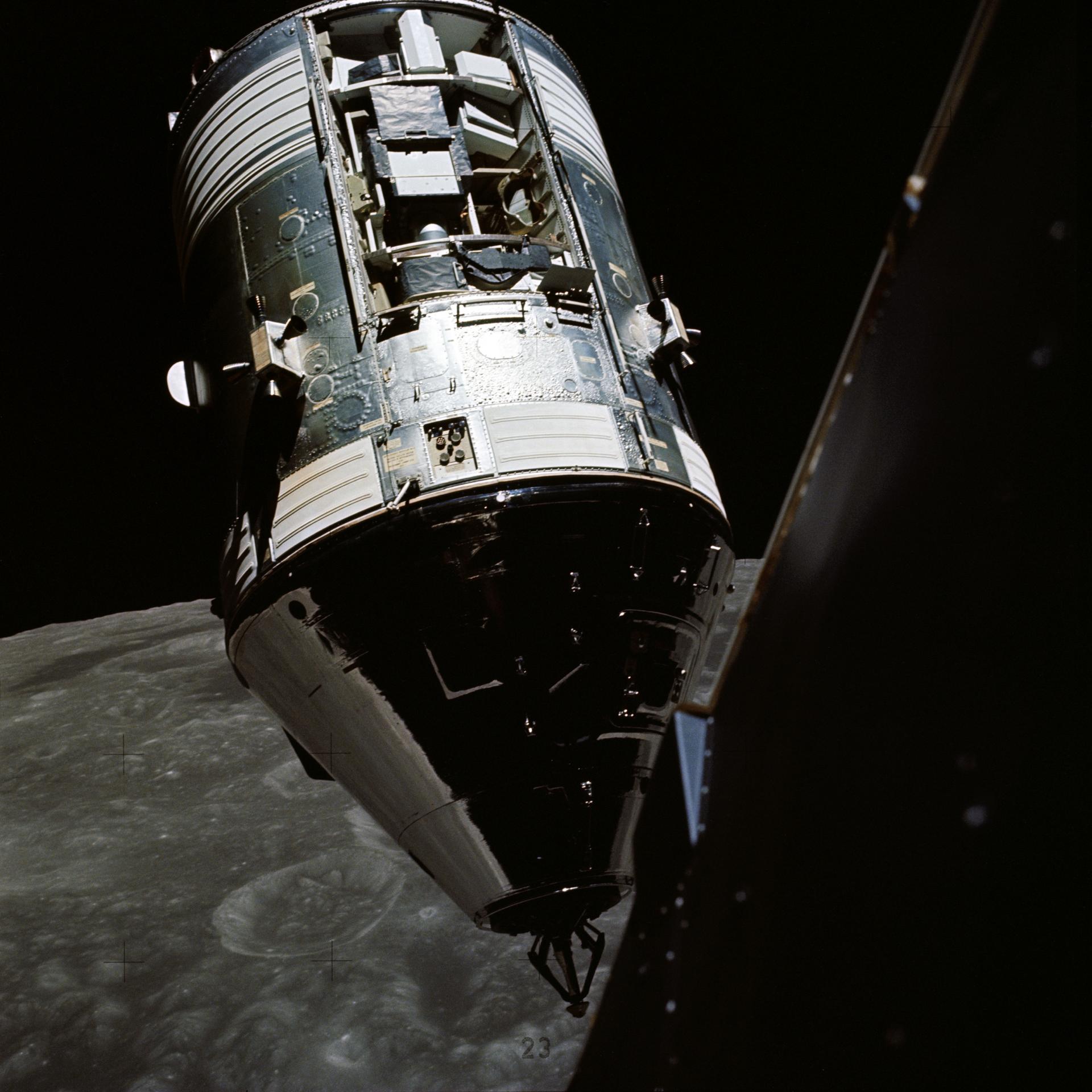
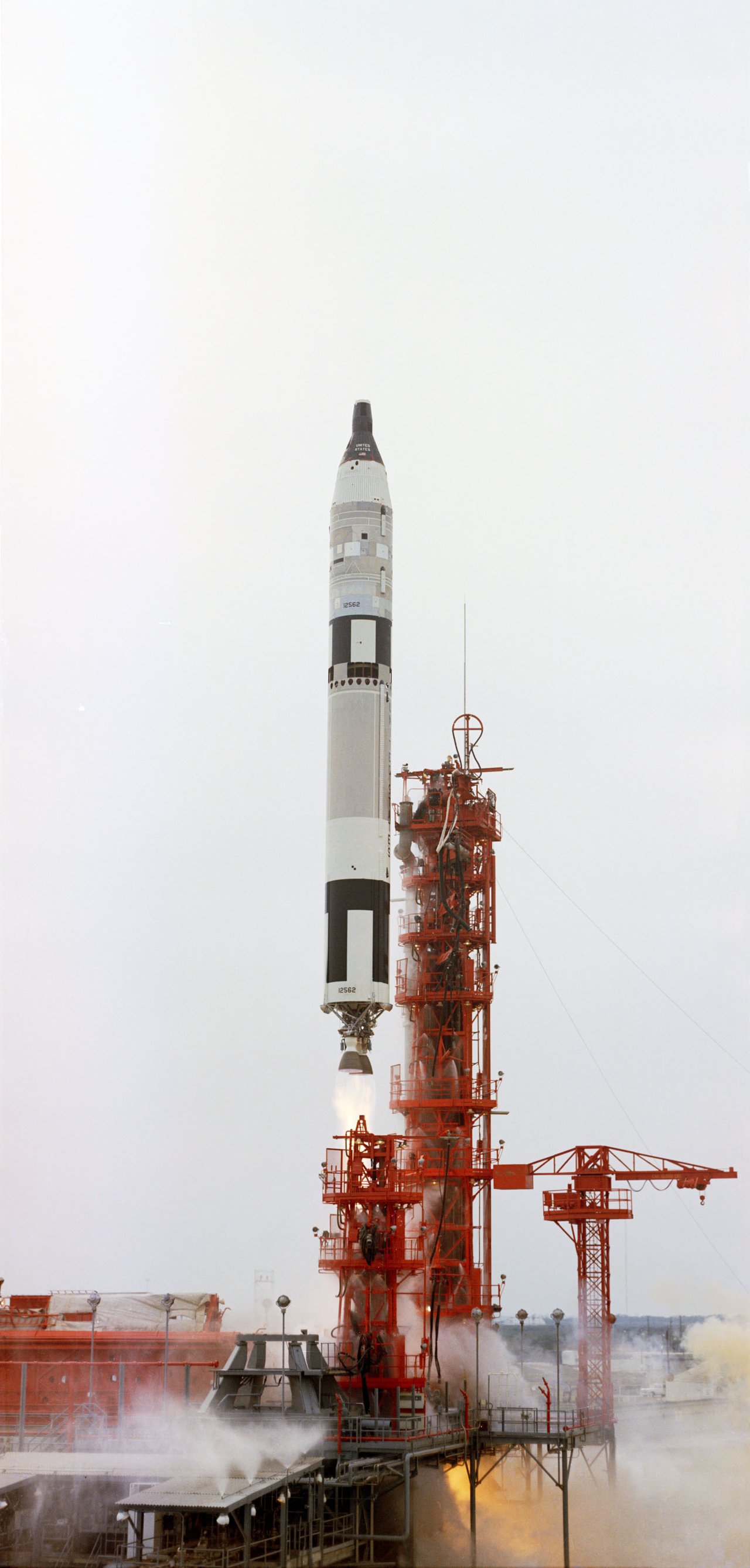
The hard mechanical context sits in NASA's mission record. Gemini 7 launched 4 December 1965 atop a Titan II from Pad 19. Immediately after orbital insertion the crew deliberately station-kept with the spent Titan II second stage, closing and maneuvering around it at ranges from a few meters out to tens of kilometers. The official mission history records that the stage was tumbling at roughly 2 RPM because fuel was venting from a broken line, and that Borman broke off the formation flying after about fifteen minutes because he judged it was burning too much propellant and the stage was moving erratically. In other words, the crew had spent the opening of their flight in close company with a tumbling, venting rocket body shedding its own debris. That same Titan II second stage stayed in a similar orbit and remained visible for hours afterward.
NASA's working explanation, both in 1965 and in later histories, is the parsimonious one that follows from this record. The large bright object the crew kept seeing was the spent Titan II second stage. The "trillions of particles" and the "hundreds of little particles" were the kind of ice and frozen debris that surrounds any Gemini-era spacecraft: water and waste vented overboard freezes instantly in vacuum and hangs near the vehicle as a glittering cloud, and the venting booster added its own. Crews across Gemini, Apollo, and later the Shuttle reported the same "snowflakes" and "sparklers," and engineers treated them as expected. The release carried no separate NASA finding overturning that reading; the document was unsealed as a historical UAP-related record, not as a reopening of the analysis.
What did the witnesses think it was?
The witnesses were two of the most experienced and tested observers NASA had: Frank Borman, the command pilot, and Jim Lovell, the pilot, both career military aviators who would go on to command later missions, Borman on Apollo 8 and Lovell on Apollo 8 and Apollo 13. Their credibility as observers is not in question, which is exactly why the line has stuck.
What they believed, though, cuts against the sensational reading. Neither man ever framed the sighting as an encounter with an alien craft. In the transcript itself they identify the booster as a known object in their own field of view, and they describe the rest as particles and a bogey in the everyday language of pilots cataloging traffic. In their later careers, interviews, and memoirs, neither Borman nor Lovell presented the Gemini 7 sighting as a UFO mystery; where the booster and debris came up at all, they treated them as mundane hardware-related phenomena. There is no primary statement from either astronaut objecting to NASA's booster-plus-debris explanation or claiming the bogey was something unexplained.
The corroboration here is the documentation rather than a second set of eyes. Mission Control heard the calls live, the Public Affairs Officer narrated them to the press in real time, and the audio and the typed transcript were preserved together. That gives this case something most astronaut sightings lack: a contemporaneous, multi-channel record with the crew, the controllers, and the official narrator all on tape within minutes of the event, and the document itself was the thing the Pentagon chose to unseal decades later.
The dispute
The dispute is straightforward and it is well supported. The counter-explanation, advanced by NASA itself in 1965 and consistent with later space-history analysis, is that the "bogey at ten o'clock high" and the cloud of particles were not an unknown craft but the spacecraft's own spent Titan II GLV second stage plus ordinary orbital debris. This is not a loose guess. Gemini 7's documented flight plan had the crew deliberately station-keeping with that second stage right after insertion, closing to within a few meters and flying formation with it. NASA's official mission record states the stage was tumbling at roughly 2 RPM because fuel was venting from a broken line, and that Borman broke off the exercise after about fifteen minutes over propellant and the stage's erratic motion. A large, slowly tumbling, sunlit rocket body shedding vented fuel is exactly the "brilliant body in the sun against a black background, slowly tumbling" that Lovell described, and the surrounding "trillions of particles" match the ice and frozen waste that vented from every Gemini vehicle and glittered in sunlight.
The method behind this explanation is the contemporaneous documentation itself. On the same transcript the Pentagon released in 2026, the NASA Public Affairs Officer, narrating live, calls the object "a minor bogey" and time-stamps the discussion at four hours twenty-four minutes into the flight, treating it as routine. The crew's own words reinforce the prosaic reading: they repeatedly reference "the booster" as a known object they had in sight, and neither Borman nor Lovell ever later claimed the sighting was anything other than hardware and debris.
Where the dispute falls short of closing the case is the crew's clear distinction between the booster and the bogey. When Houston asked whether the particles were "in addition to the booster and the bogey at ten o'clock high," Lovell answered roger and confirmed he had the booster on his side, which means the crew were reporting the bogey as a third thing, not as the booster itself. The official line does not reconstruct that third object frame by frame; it labels it a "minor bogey" and moves on. The most probable identity of that residual is simply another piece of debris or separated hardware on a similar orbit, which keeps the case firmly in the booster-and-debris family, but because the identification of the separate contact rests on NASA's real-time assertion rather than a demonstrated object-by-object match, the case is best read as largely explained rather than conclusively closed. That is why it is Barely Disputed and not Strongly Disputed, and not a discredit.
Is the Gemini 7 "Bogey at Ten O'Clock High" real? The two-pass assessment
Pass one, how could this be entirely ordinary. The mundane explanation is unusually well anchored in the primary record. Gemini 7 had just finished deliberately formation-flying with its own spent Titan II second stage, a large object the crew explicitly say they still had in sight. The official mission history documents that this stage was tumbling at about 2 RPM and venting fuel from a broken line, which produces both a slowly turning bright body and a trailing cloud of debris. Spacecraft of that era were also surrounded by ice particles from vented water and waste, the famous "snowflakes" reported on flight after flight. So the brilliant tumbling object Lovell described and the hundreds to "trillions" of particles map cleanly onto the booster and the standard debris environment, and NASA's own live commentary on the same tape calls the extra object a "minor bogey." A spent rocket body the crew had been flying alongside, plus ordinary vented ice, accounts for almost everything reported, with no structure, no intelligent motion, and no approach in the testimony.
Pass two, if real, what is it. The one detail the mundane reading does not fully absorb is the crew's own insistence on three separate things. They told Houston they had the booster in sight, and the particles, and a bogey at ten o'clock high, and when the ground asked directly whether the particles were "in addition to the booster and the bogey," Lovell answered roger. The crew did not collapse the bogey into the booster; they reported it as a distinct contact. If taken at face value, that leaves a small residual: a third object, briefly, that the booster-only explanation glosses. Realistically that residual is most likely another piece of separated hardware or a second debris fragment on a similar orbit, exactly the sort of thing a tumbling, shedding booster generates, but the official commentary asserts the "minor bogey" reading rather than reconstructing it object by object.
The tier follows from that balance. The material is fully authenticated, the Pentagon itself released the original 1965 NASA transcript, and there is a specific, named, real-world cause on the table: the spent Titan II GLV second stage the crew had just station-kept with, tumbling and venting, accompanied by vented ice and debris. That is a strong, method-supported counter-explanation, not a vague guess, which is why this is not "Verified Unexplained." But it stops short of airtight, because the identification of the separate "bogey" rests on NASA's contemporaneous assertion rather than a frame-by-frame match, and the crew themselves logged the bogey as distinct from the booster they already had in view. A strong but not fully closed official explanation that leaves a thin residual is the textbook definition of Barely Disputed, and that is the tier here.
Sources
- www.war.gov/medialink/ufo/release_1/nasa-uap-d3-gemini-7-transcript-1965.pdf
- www.war.gov/UFO/
- www.war.gov/News/Releases/Release/Article/4480582/department-of-war-releases-unidentified-anomalous-phenomena-files-in-historic-t/
- www.nasa.gov/mission/gemini-vii/
- www.nasa.gov/history/55-years-ago-the-spirit-of-76-the-first-rendezvous-in-space/
- www.drewexmachina.com/2020/03/26/gemini-7-two-weeks-in-the-front-seat-of-a-volkswagen/
- www.nasa.gov/image-detail/amf-s65-61628/
- taskandpurpose.com/news/pentagon-ufo-files-2026/
More cases from this region: UFO sightings in United States