The Disappearance of Private Gerry Irwin
On the night of 28 February 1959, Private First Class Gerry Irwin, a twenty-four-year-old Nike missile technician stationed at Fort Bliss near El Paso, Texas, was driving alone back to base after leave spent with family in Nampa, Idaho. This case file covers what witnesses reported, the official narrative, and a two-pass assessment with its evidence tier.
What did witnesses see at Route 14 near Cedar City?
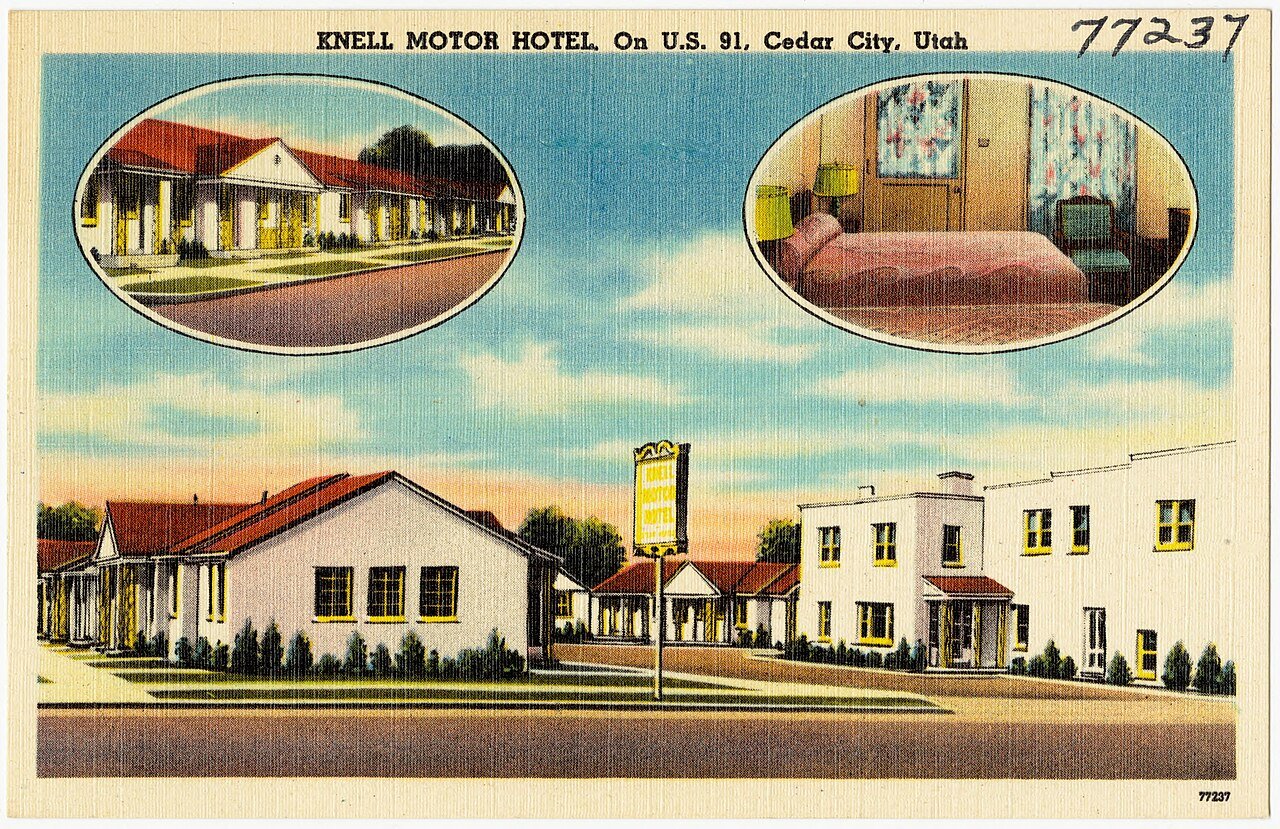
On the night of 28 February 1959, Private First Class Gerry Irwin, a twenty-four-year-old Nike missile technician stationed at Fort Bliss near El Paso, Texas, was driving alone back to base after leave spent with family in Nampa, Idaho. At Cedar City, Utah, he turned southeast onto State Route 14. About six miles past the turnoff the landscape ahead of him brightened, and a glowing object crossed the sky from right to left and appeared to come down in a field just off the road. Irwin's first thought, by his own account given to investigators within weeks, was that he had watched an aircraft go down and that there might be survivors.
He stopped the car. On a sheet of paper he wrote a note and left it on the steering wheel: "Have gone to investigate possible plane crash. Please call law enforcement officers." Using shoe polish, he wrote the single word "STOP" on the side of the vehicle so that a passing motorist would know to halt. Then he set out on foot across the snow toward where the light had come down.
A passing motorist, in some accounts a fish and game inspector, spotted the note and the marked car and alerted the authorities. Cedar City sheriff Otto Pfeiff organized a search. Roughly an hour and a half after the sighting, the party found Irwin lying unconscious in the snow, by most accounts about a quarter of a mile from his car. There was no airplane, no wreckage, no fire, nothing burning in the field. Irwin could not be roused. He was taken to Cedar City Hospital, where Dr. Broadbent examined him, found his temperature, pulse and respiration normal and no physical injury, and could still not wake him. The diagnosis entered was hysteria.
Irwin remained unconscious for close to twenty-four hours. He came to on 2 March 1959. His first words on waking were a question about the crash he believed he had gone to investigate, something to the effect of "Were there any survivors?" He had no memory of reaching the field or of anything after he left his car. He also noticed that his field jacket was gone.
That was only the opening. After he was returned to Fort Bliss, Irwin collapsed again on base, then collapsed a third time on a street in El Paso on or about 15 March and was taken to Southwest General Hospital. Waking from that spell he again asked whether there had been survivors, and was disoriented to learn that more than two weeks had passed, since to him it was still the night of 28 February. Then came the strangest episode of all. On 19 April, the day after a psychiatric release, Irwin felt a compulsion he could not explain, boarded a bus back to Cedar City, walked straight to the field, and found his missing jacket hanging on a bush. Threaded through one of its buttonholes was a pencil, and around the pencil was a piece of paper wound tightly. Irwin pulled it off and burned it without reading it, and afterward described feeling as if he were coming out of a trance. He could not say why he had done any of it.
What is the official explanation?
There was never a single unified "official" UFO finding on the Irwin case, because the object itself was never the focus of any formal Air Force investigation that survives in the public record. What exists instead is a thick layer of military medical and personnel documentation, generated because a soldier with a security clearance kept collapsing and behaving inexplicably. That documentation is the official spine of the case, and it cuts two ways.
In the days after the first incident Irwin was observed at William Beaumont Army Hospital at Fort Bliss, then returned to limited duty with his security clearance withdrawn. After the repeated fainting spells he was admitted to the psychiatric ward at William Beaumont for roughly a month of observation. He was evaluated by an Army psychiatrist, named in the records as Captain Valentine, and was eventually pronounced essentially normal. The Army did pursue the strangeness aggressively. On 27 March 1959 Irwin was given sodium amytal, the so-called truth serum, and questioned under its influence. The notes from that session, recovered decades later, record Irwin saying things he could not explain in normal consciousness, including a claim that some "special intelligence" had directed him not to remember, and a fragment that "it all began at the age of three years," which he would not elaborate on. The military also documented further treatment and noted a resulting speech impediment.
The case then passed into the civilian UFO record through the Aerial Phenomena Research Organization. Coral Lorenzen and her husband Jim Lorenzen, who ran APRO out of Tucson, interviewed Irwin in 1959 and published the account in the APRO Bulletin, framing it as a soldier who saw a flash, went unconscious for roughly a day, and then suffered serial amnesia. From APRO the story migrated into the wider literature. Jacques Vallee included it in "Passport to Magonia" in 1969 and returned to it in "Dimensions," and Time-Life Books retold it in "The UFO Phenomenon." Every one of these retellings closed on the same dramatic note: Irwin failed to report for duty on 1 August 1959, was listed as absent without leave and then a deserter, and "has never been seen again." That sentence, repeated for half a century, became the heart of the legend.
The most important official-grade reconstruction came much later. From roughly 2013 onward the independent investigator David Booher filed Freedom of Information Act requests for Irwin's military personnel file, obtained service records from the National Personnel Records Center, pulled hospital and Veterans Administration medical records, and cross-checked vital and genealogical records. He published the result in 2017 as "No Return: The Gerry Irwin Story, UFO Abduction or Covert Operation?" through Anomalist Books, with Jacques Vallee involved in the project. Booher's documents flatly contradict the "never seen again" ending. The personnel file shows Irwin was apprehended after his absence, returned to the Army, was posted overseas to Germany and then Austria, and was later discharged under a character of discharge that was not dishonorable or stigmatizing. He went on to an ordinary civilian life and died in the early twenty-first century. The famous disappearance, the keystone of the whole mystery as it was told for decades, never happened.
What did the witnesses think it was?
Gerry Irwin himself appears to have genuinely believed, at least at first, that he had stopped for a plane crash. That belief is why he wrote the note about survivors and marked his car, and it is why, on waking each time, his reflex question was whether anyone had survived. He did not present himself to the world as a UFO contactee. The interpretive weight, the idea that this was a close encounter or an abduction, was largely placed on the case by the researchers who took it up rather than by Irwin advancing a flying-saucer claim of his own. Under sodium amytal he produced the unsettling fragments about a "special intelligence" telling him not to remember, but those are the words of a sedated man being interrogated, not a public testimony he stood behind afterward.
The strongest corroborating witnesses are the people who responded that first night and treated him. Sheriff Otto Pfeiff and his search party found Irwin unconscious in the field with no wreckage anywhere near, which establishes that the collapse and the missing time were real events with independent observers, whatever caused them. Dr. Broadbent at Cedar City Hospital documented a man who could not be woken yet had normal vital signs and no injury, an unusual clinical picture that does not match simple fainting or a blow to the head. The Army's own psychiatrists, including Captain Valentine, are in effect hostile-leaning witnesses who nonetheless could not find Irwin malingering or mentally unfit enough to discharge him as a problem case, which is itself a kind of corroboration that something real and medically puzzling was happening to him.
Coral and Jim Lorenzen are the witnesses to Irwin's own contemporaneous account. They interviewed him close to the events, before the story had been polished by retelling, and their APRO record preserves the details of the note, the jacket on the bush, the wound paper, and the burned message. Their reliability on the dramatic ending, though, did not survive Booher's archival work. The Lorenzens, and everyone who followed them, treated Irwin's failure to report on 1 August as a permanent vanishing, when the military paper trail shows he was found, returned to service, and lived for decades more. The most credible later witness is therefore the documentary record itself, assembled by David Booher and independently assessed by the folklorist Thomas E. Bullard, whose review in the Journal of Scientific Exploration confirms that Booher traced Irwin through primary records to an ordinary death and that no firsthand interview was possible because Irwin had already died by the time the trail was followed to its end.
The dispute
The dispute over the Irwin case has two distinct layers, and they should not be confused. The first layer is settled, and it is settled against the legend. For roughly fifty years the case was told as the story of a soldier who saw a UFO, suffered uncanny aftereffects, then deserted on 1 August 1959 and "was never seen again," with the disappearance presented as a brute, unexplained fact. The independent investigator David Booher demolished that ending. Working from 2013 onward he filed Freedom of Information Act requests, obtained Irwin's military personnel file from the National Personnel Records Center, pulled hospital and Veterans Administration medical records, and cross-referenced vital and genealogical databases. He published the result in 2017 as "No Return: The Gerry Irwin Story" through Anomalist Books. The records show Irwin was apprehended after his absence, returned to Army service, was posted to Germany and then Austria, received a non-stigmatizing discharge, lived an ordinary civilian life and died in the early twenty-first century. This is a method-shown, civilian, independent correction, exactly the kind of evidence that can move a case, and on the disappearance it is decisive. The folklorist Thomas E. Bullard, reviewing the book in the Journal of Scientific Exploration in 2018, independently confirmed that Booher traced Irwin through primary records to an ordinary death.
The second layer is the original event itself, and here the dispute is much weaker. The natural explanation on offer is that the light was a meteor or bolide, since nothing was ever found in the field, and that the collapses, amnesia and trance-like return were a dissociative or conversion reaction triggered by the stress of believing he had witnessed a fatal crash. This framing was effectively the period diagnosis of hysteria, and it is the reading attributed to Carl Jung, who described the condition as ambulatory automatism, a fugue state. It is a serious, coherent psychological model and it deserves weight. But it is a reconstruction, not a proof. No one has positively identified the specific object Irwin saw, and the dissociation hypothesis does not cleanly account for the day-long unconsciousness with entirely normal vital signs that puzzled Dr. Broadbent, nor for the jacket left on the bush with a tightly wound, unread note that Irwin burned in a trance. Booher himself, who had every record in hand, declined to declare the core event solved and refused to endorse either the abduction reading or the covert-operation reading.
So the case sits in Barely Disputed for a precise reason. The part of the story that made it famous, the permanent vanishing, has been positively and independently falsified with documents. The part of the story that made it strange, the physiological collapse and the amnesia and the jacket, has a plausible natural candidate but no demonstrated, specific cause. A debunked legend wrapped around an unexplained core is the textbook shape of a barely disputed case, not a strongly disputed one, because there is no confession, no recovered hoax, and no positive identification of the actual object or the actual mechanism behind the collapses.
Is the Disappearance of Private Gerry Irwin real? The two-pass assessment
Pass one, the entirely ordinary reading. The luminous object that started everything was never photographed, never recovered and never independently tracked. A glowing thing crossing the night sky from right to left and appearing to descend behind a ridge is a near-textbook description of a bright meteor or bolide, or possibly a flare or a conventional aircraft seen at an odd angle. Nothing physical was ever found in the field, no wreckage, no burn, no debris, which is exactly what you expect if the light was a meteor that burned out far away and only looked like it came down nearby. The medical sequence has an ordinary candidate too. A young soldier under stress, who genuinely believed he had just watched people die in a crash, then collapsing with normal vitals, suffering serial fainting, amnesia covering exactly the traumatic stretch of time, and a compulsive trance-like return to the scene, fits the clinical picture of a dissociative or conversion reaction. That is essentially what the period diagnosis of hysteria meant, and it is the framing Carl Jung is reported to have offered when the case was described to him, calling it a form of ambulatory automatism, a fugue state, and recommending hypnosis. Crucially, David Booher's archival work removes the single most paranormal-seeming element, the permanent disappearance, by showing from military and civilian records that Irwin did not vanish at all. He was apprehended, returned to duty, served in Germany and Austria, was discharged without stigma, lived an ordinary life and died in the early twenty-first century. The "never seen again" mystery was an artifact of researchers losing the paper trail, not of anything genuinely unexplained.
Pass two, if there is something real here. Strip away the debunked disappearance and a hard residue remains that the ordinary reading does not fully dissolve. A meteor explains a light in the sky, but it does not explain a man found unconscious a quarter mile from his car for nearly a full day with normal temperature, pulse and respiration and no injury, a state that puzzled the examining physician. It does not explain the serial collapses weeks apart, each one resetting his sense of time to the night of 28 February. And it does not explain the jacket. The jacket on the bush, with a pencil through the buttonhole and a tightly wound note that Irwin burned unread while in a trance, is the detail no natural model has ever accounted for, because if Irwin placed it there himself during the missing hours, that act is itself part of the unexplained dissociative behavior, and if he did not, no one knows who did. The covert-operation thesis that Booher entertained, that Irwin was caught up in a Cold War intelligence or behavioral program, is fed by the real sodium amytal interrogation and the abrupt overseas posting, but Booher found no documentary proof of it and treats the famous tent-and-mine AWOL detail as unverified folklore rather than fact.
Weighing both passes, this is not a discredited case and it is not a clean unexplained one either. What has been positively dismantled, with method shown, is the legend of the vanished soldier, killed by Booher's primary records and confirmed by Thomas Bullard's independent review. What has not been explained is the original physiological event, the day-long unconsciousness with normal vitals, the recurring amnesia, and the jacket. The leading natural explanation, a meteor plus a dissociative fugue, is plausible and well argued but remains a reconstruction, not a positive identification of the specific light or a demonstrated cause of the collapses. Because a real and significant counter-finding exists that corrects the case yet does not close its core, the right tier is Barely Disputed. The sensational disappearance is debunked; the strange night near Cedar City still is not.
Sources
- ufologie.patrickgross.org/htm/gerryirwin59.htm
- anomalyarchives.org/collections/file/irwin-gerry/
- archive.org/details/noreturngerryirw0000booh
- journalofscientificexploration.org/index.php/jse/article/view/1255
- www.stgeorgeutah.com/life/arts-entertainment/alien-abduction-or-government-mind-control-new-book-seeks-answers-to-1959-cedar-city-mystery/article_0eba67a5-7ff3-555d-b31b-b26856dd3f11.html
- medium.com/@Cristina_Gomez/60-years-later-reassessing-army-official-gerry-irwins-ufo-sighting-and-its-aftermath-a2ca5f564f40
- philpapers.org/rec/BULNRT
- www.amazon.com/NO-RETURN-Abduction-Covert-Operation/dp/193839884X
More cases from this region: UFO sightings in United States