Gordon Cooper and the Edwards AFB Film (1957)
Two distinct stories sit under this case, and keeping them apart is the whole problem. This case file covers what witnesses reported, the official narrative, and a two-pass assessment with its evidence tier.
What did witnesses see at Edwards Air Force Base?
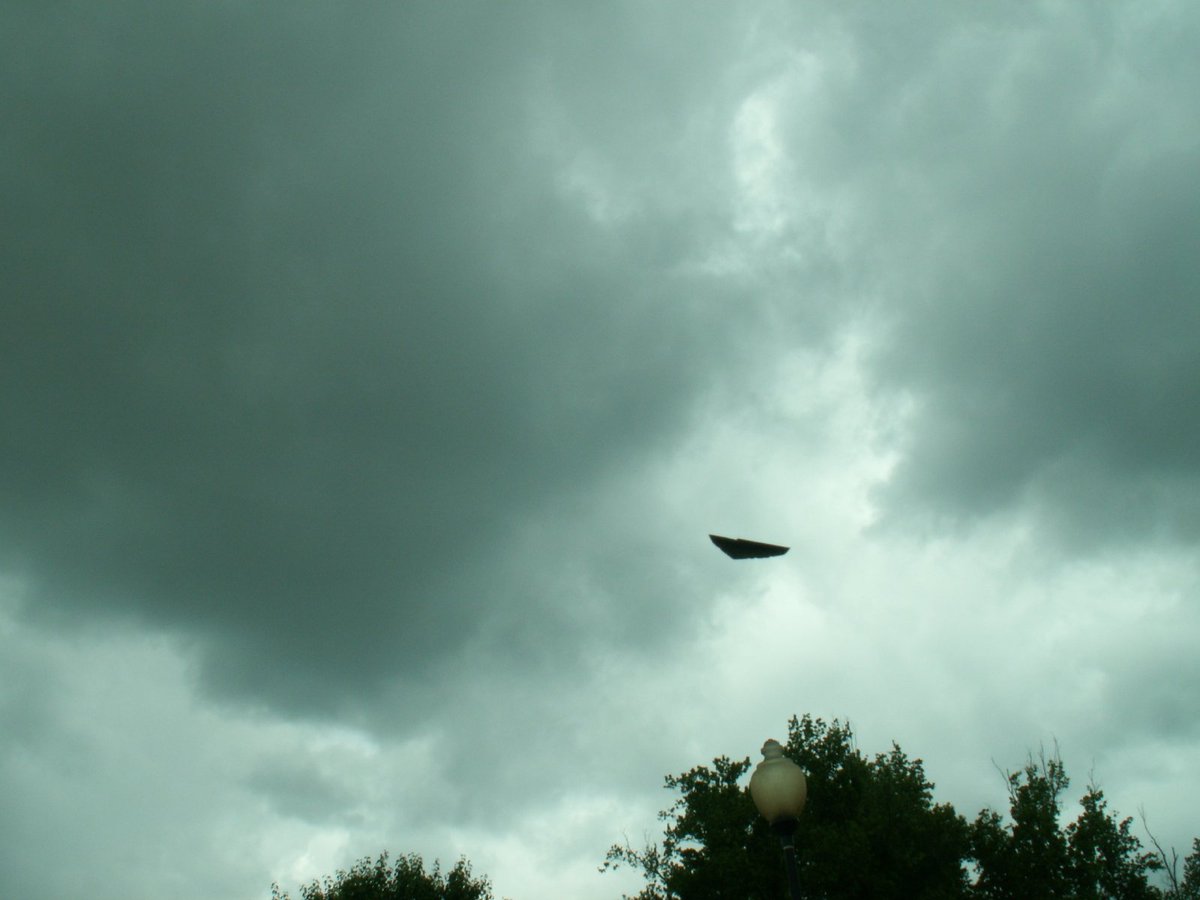
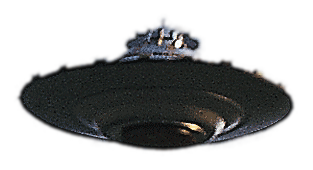
Two distinct stories sit under this case, and keeping them apart is the whole problem. The contemporary 1957 event is well documented. On the morning of 3 May 1957 at Edwards Air Force Base in the high California desert, two veteran civilian camera operators, James D. Bittick and John R. Gettys Jr., were setting up an Askania phototheodolite on the test range near Rogers Dry Lake. The Askania is a precision 35mm tracking camera that shoots roughly one frame per second to measure aircraft performance during flight tests. Just before 8 a.m., as they reached the Askania number 4 site, the two men saw an object they could not place. Dr. James E. McDonald, who interviewed them in the 1960s, recorded their description: a golden colored thing that "looked somewhat like an inverted plate with a dome on top, and had square holes or panels around the dome." They immediately radioed the range director, Frank E. Baker, asking whether anyone else was manning an Askania who could get a second angle for triangulation. They photographed it. McDonald wrote that the number of shots was uncertain and that "Gettys thought perhaps 30." The object was described as changing from round to elliptical as the morning sun caught it, drifting slowly over the lakebed, and it was tracked from a distance of roughly a mile. That is the version filed with the Air Force and reported in the local press at the time.
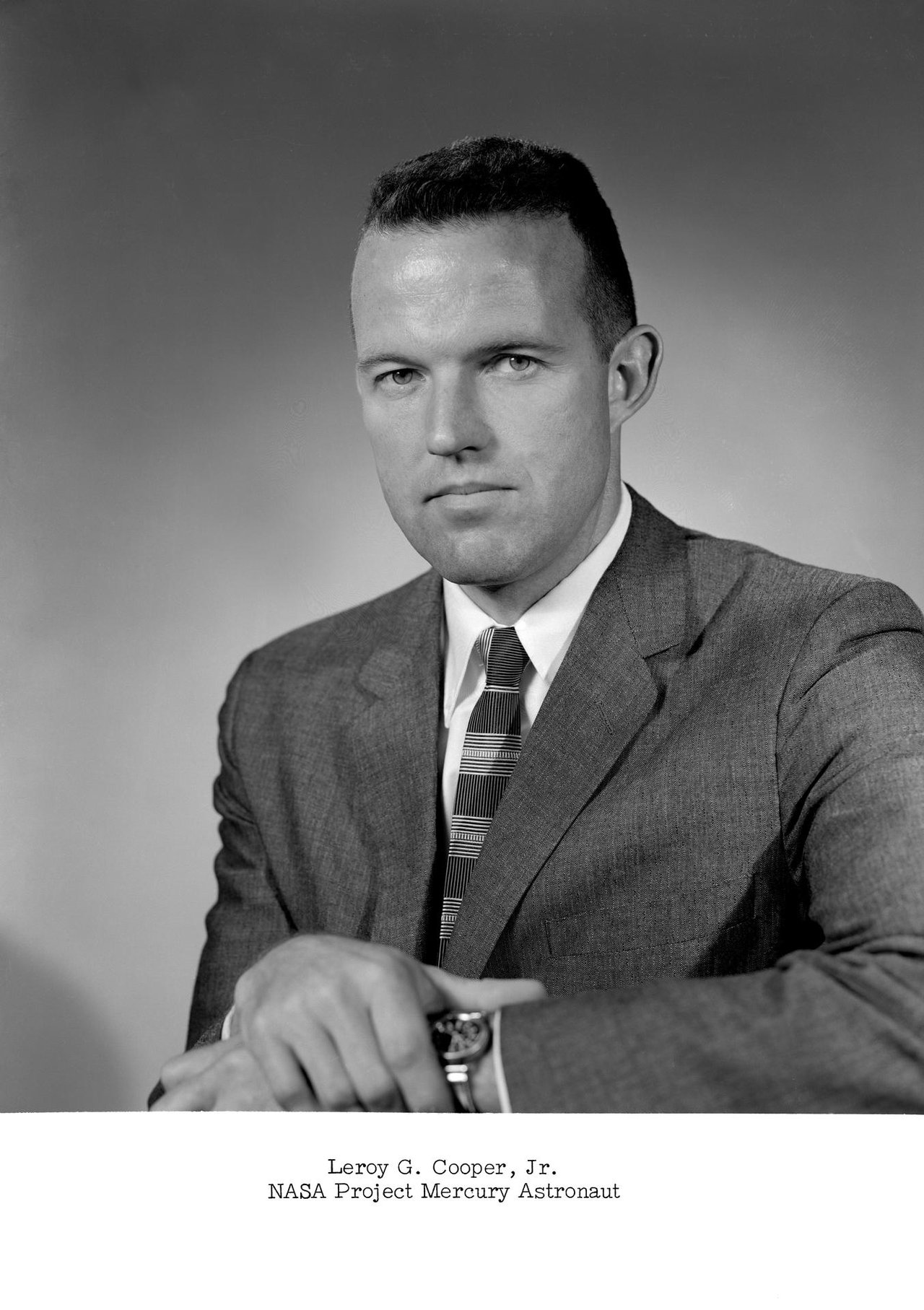
The second story is Gordon Cooper's, and it is much bigger. Cooper, one of the original Mercury Seven astronauts, was a captain and test pilot at Edwards in 1957. Decades later, in his 1978 letter to the United Nations and across television interviews through the 1990s and his 2000 autobiography Leap of Faith, he said he had been supervising the camera crew that day. In the dramatic version he gave on the Merv Griffin Show and to UFO researcher Lee Spiegel, the disc did not merely drift past at a mile's range. Cooper said it "was definitely hovering above the ground. And then it slowly came down and sat on the lake bed for a few minutes," that it set down on three extended landing legs about fifty yards from the cameramen, that a crewman walked toward it, and that it then "took off at quite a sharp angle and just climbed straight on out of sight." He said the cameras filmed the whole landing, that he had the film developed, was ordered by a Pentagon general to send the negatives to Washington in a locked courier pouch and make no prints, and that he never saw the film again.
Cooper also reported a separate sighting from 1951, when he was a fighter pilot stationed in West Germany. He said that for two days he and other pilots watched "many flights of them, of different sizes, flying in fighter formation, generally from east to west over Europe," metallic saucer shapes flying higher than his jets could climb. That earlier sighting is his own first-person account and is not the photographed Edwards event.
What is the official explanation?
The official record on the photographed Edwards event exists, it survives, and it is mundane. The case is preserved in the files of the United States Air Force Project Blue Book as case number 4715, dated 2 May 1957, and is held at the National Archives annex in College Park, Maryland, with stills from the film included. The film was not lost. It was sent to Wright-Patterson Air Force Base, where the object was identified as a weather balloon. The conclusion was that the object's motion matched the wind plot for that morning and that a balloon had been released from a weather unit a short distance west of the Askania position. An Edwards spokesman, quoted in the Los Angeles Times, offered the memorable line that "this desert air does crazy things." Investigator James Oberg, who located the formal report, summarized it bluntly: the encounter was "attributed to a routine balloon launch at the base earlier that morning," and notably the file "conspicuously lacks the several 8- by 10-inch glossy prints reportedly made from some of the 35-mm stills." The case was, by the file's own account, handled poorly: the base Public Information Officer told the press the object was "unknown" before Blue Book had finished, which is part of how it acquired a reputation larger than its evidence.
Gordon Cooper's own most formal statement entered the official record of a different body. On 27 November 1978, during the United Nations General Assembly's Thirty-Third Session, the Special Political Committee held its 36th meeting under chairman Mr. Piza-Escalante of Costa Rica, taking up Agenda Item 126, the proposal to establish a UN agency for research into unidentified flying objects. The representative of Grenada, Mr. Eric Gairy's delegate Mr. Friday, read Cooper's letter into the verbatim record, document A/SPC/33/PV.36. Cooper wrote: "I believe that these extraterrestrial vehicles and their crews are visiting this planet from other planets which obviously are a little more technically advanced than we are here on earth." He called for "a top-level coordinated programme to scientifically collect and analyse data from all over the earth," cited his 1951 two-day observation over Europe, and signed it "L. Gordon Cooper, Colonel, United States Air Force, Retired, Astronaut." That letter is an authenticated primary document. It is a statement of his belief, not itself proof of the Edwards landing.
What did the witnesses think it was?
Gordon Cooper believed, without hedging, that Earth is being visited. He told the United Nations he was "somewhat qualified to discuss them since I have been into the fringes of the vast areas in which they travel," and in a 1980 Omni interview he said, "I'm sure some of the UFOs at least are not from anywhere on Earth." On the Edwards film he was insistent, telling Merv Griffin, "I think it was definitely a UFO. However, where it came from and who was in it is hard to determine, because it didn't stay around long enough to discuss the matter." He maintained to the end that the footage was real and that it had been buried by the government.
The trouble is that the people who were actually on the range that morning do not corroborate Cooper's role or his landing. The two camera operators, James Bittick and John Gettys, are the genuine eyewitnesses, and their account as recorded by Dr. James McDonald is the slow drift-pass version, not the three-legged touchdown. Gettys was openly skeptical of the high strangeness later attached to the case. Critically, every direct participant who was ever asked said they had no knowledge of Gordon Cooper being involved in the event or its aftermath at all. McDonald, the most respected pro-UFO scientist of his generation and an atmospheric physicist at the University of Arizona, investigated the case in the mid-1960s, interviewed the men, and never connected Cooper to it. The witnesses did push back on the official answer in one respect: Bittick and Gettys rejected the weather balloon label because, as range veterans, they saw balloons released there constantly and felt they knew what a balloon looked like. That refusal is the strongest pro-anomaly thread in the whole case, and it comes from the men who were really there, not from Cooper.
The dispute
The dispute is not vague skepticism, it is a documented identification of the real object plus a documented demolition of the dramatic version. The photographed Edwards object was logged in Project Blue Book as case 4715 and concluded to be a weather balloon, with the determination resting on a match between the object's slow drift and the recorded wind plot for that morning, and on a known balloon release from a weather unit a few miles west of the camera site. The original 35mm film was not seized and lost. It was forwarded to Wright-Patterson Air Force Base, and the file with stills is preserved at the National Archives in College Park, Maryland. Investigator and aerospace writer James Oberg located the formal report and confirmed it attributes the encounter to "a routine balloon launch at the base earlier that morning."
Three independent corroboration investigations reached the same conclusion as the official file. Dr. James E. McDonald, an atmospheric physicist at the University of Arizona and the leading pro-UFO scientist of his era, investigated in the mid-1960s and interviewed the two camera operators, James Bittick and John Gettys. James Oberg investigated in 1980 to 1982 and interviewed one of the cameramen and Hubert Davis, the base officer who first debriefed them. Brad Sparks investigated for NICAP in the 1990s. All three independently found that the original event was a slow-drift, scintillating object of disputed nature that never deployed landing legs, never touched down, and never took off again. All three found that every direct participant reported no knowledge whatsoever of Gordon Cooper being involved in the event or its aftermath.
That is fatal to the famous version. Cooper's account, that he supervised the crew, that the disc landed on three legs about fifty yards away, that a crewman approached it, that it then shot away, and that the film was sent to Washington in a locked pouch and never seen again, is contradicted on every dramatic point by the contemporary record and by the only genuine eyewitnesses. Cooper told the story with inconsistent dates, drifting between 1957 and 1958, and Oberg documented that Cooper incorporated details from Oberg's own 1980s reconstruction into his book and interviews, presenting reconstructed information as personal memory. This goes beyond an official assertion. It is a positive identification of the specific real-world cause, a traced balloon launch matched to the wind, combined with a shown fabrication of the landing-and-seizure narrative built around an ordinary case by a man who was not a primary witness. One genuine anomaly thread survives, the two range veterans' refusal to accept the balloon label because they handled balloons routinely, and that is why the underlying photographed object is not declared fully solved. But the Cooper legend itself, the reason this case is famous, does not stand.
Is the Gordon Cooper and the Edwards AFB Film (1957) real? The two-pass assessment
Pass one, the entirely ordinary reading. The photographed object has a documented, method-shown mundane explanation. Project Blue Book case 4715 concluded it was a weather balloon, and the basis was not a hand-wave: the object's slow drift matched the recorded wind plot, and a balloon had been launched from a weather unit a few miles west earlier that morning. The film was photographed from about a mile away by a one-frame-per-second tracking camera, which is exactly the kind of instrument that turns a distant balloon, scintillating and shape-shifting in desert thermals, into something strange looking. Three independent investigators reconstructed the case and reached the same result as the official file: James McDonald in the mid-1960s, James Oberg in 1980 to 1982 after a challenge from Flying Saucer Review's Gordon Creighton, and Brad Sparks for NICAP in the 1990s. Oberg interviewed one of the cameramen and Hubert Davis, the young Air Force officer who held the Blue Book desk at the base and was the first to interview the shaken photographers. All three found the same thing: a slow-drift scintillating shape that never deployed landing legs, never landed, and never took off again, with the photographs and interviews intact in the Blue Book record, written up in local newspapers and a UFO newsletter at the time. Nothing vanished.
Pass two, if the photographed object were genuinely anomalous, the case for it rests entirely on the two range veterans insisting it was not a balloon. That is a real data point and it is why this is not a closed file. But it is a judgment by two observers about a distant object, not a measurement, and it does not survive the documentary record that the object tracked the wind.
The decisive problem is Cooper's overlay. The landing on three legs, the crewman walking up to it, the courier pouch, the film that "disappeared," are the load-bearing details that make this famous, and they are precisely the details that the contemporary record and every direct participant contradict. The film is in Blue Book, with stills available in the National Archives microfilm. No participant ever placed Cooper at the event. Cooper himself told the story with shifting dates and details, sometimes 1957, sometimes 1958, sometimes a flyby, sometimes a landing, and Oberg documented that Cooper drew on Oberg's own 1980s reconstruction for details he later presented as firsthand memory. This is not an official assertion without a method. It is a positive identification of the real-world cause of the photographed object, a balloon traced to a specific launch and matched to the wind, plus a documented demonstration that the sensational landing-and-seizure narrative was attached to a real but ordinary case after the fact by a man who was not a primary witness. That combination, a named real-world cause and a shown fabrication of the dramatic claims around it, is what separates a strongly disputed case from a barely disputed one. The 1951 Germany formation sighting remains Cooper's unverified personal testimony and is a separate matter. For the Edwards film specifically, the tier is Strongly Disputed.
Sources
- ufologie.patrickgross.org/books/mcdonaldhcsa68photos.htm
- files.ncas.org/ufosymposium/mcdonald.html
- www.nicap.org/570502edwardsafb_dir.htm
- web.archive.org/web/20240616130008/http://www.jamesoberg.com/effort_locate_cooper_ufo_report.pdf
- yarchive.net/space/politics/ufo_cooper.html
- www.reddit.com/r/UFOs/comments/q20yz3/gordon_cooper_and_harry_reid_on_the_video/
- www.nasa.gov/gallery/l-gordon-cooper/
More cases from this region: UFO sightings in United States