The Ghost Rockets: Sweden's 1946 Wave and the Newly Released War Department Review
For seven months in 1946 something crossed Sweden almost nightly, and the Swedish state wrote down close to a thousand sightings of it. Stockholm told the public they were meteors. It told Washington, privately, that they were Soviet missiles from Peenemunde. A War Department review of the wave, published in machine-readable form for the first time on 7 August 2026, says both, and says the second one was the truth. Neither explanation was ever demonstrated, and nothing was ever pulled out of a lake.
What did witnesses see at Sweden and Scandinavia (nationwide wave?
Between the late spring and the end of 1946, Sweden and its Scandinavian neighbours were crossed, night after night and often in broad daylight, by things nobody could name. The Swedish press called them spokraketer, ghost rockets. The foreign wire services called them spook bombs and phantom bombs. Close to a thousand of them were written down by the Swedish Defence Staff before the year was out, and eighty years later no one has produced the object that made them.
The first stirrings came out of Finland. On the night of 9 June 1946 a brilliant light crossed Helsinki trailing smoke and a sound like thunder, its luminous trail hanging for around ten minutes. That alone would have been logged as an unusually fine meteor. It was the second one, the following night, that changed the character of the thing: according to the news reports of the time it turned and went back the way it had come. On 12 June the Swedish Defence Staff ordered all military personnel to report unusual phenomena to higher headquarters and asked its military attaches in Norway and Denmark to collect the same material. By 8 July roughly thirty reports had been recorded.
Tuesday 9 July 1946 broke the case open. In a window of about five minutes either side of half past two in the afternoon, reports came in from across the middle of the country. At Hagfors in Varmland, at 2:35 pm, a comet-like object dived steeply toward Lake Ullen and was seen by three witnesses to extinguish itself a couple of metres above the water. At Vaxholm, just after 2:30, two residents on the north side of Vaxon watched a glowing white oblong object with a blunt nose and a blue-white tail cross the sky at what the Morgon-Tidningen called an unheard-of speed and vanish behind an island; at Jarna station a Bjorknas man described the same thing as shaped like the glass flask inside a thermos. At Ockelbo, Mr Efraim Johnson of Gumgarden fixed the time at exactly 2:35 pm and described a cigar-shaped or sugarloaf-shaped object that shone like silver and tumbled straight down. On the shore of Lake Barken, at Huggnora near Soderbarke, a housewife doing her washing saw an object come out of the north-east at great speed, changing from blue to green with a long tail, and tumble into the lake about a hundred metres from her. At Mockfjard the fall left a strong smell of burning. Kristinehamn, Falun, Borlange, Norrby, Rommehed, Satterbo, Borrum and Finspang all filed. Something had been over almost the whole of central Sweden at once.
Then came the crashes. On Friday 19 July 1946, at Kolmjarv near Overkalix in Norrbotten, a construction labourer named Knut Lindback and a housemaid named Beda Persson watched an object come over the treetops and go into the lake at around 11:45 in the morning, throwing up a wall of water. Lindback described it as roughly two metres long with a blunt nose and a pointed stern, possibly with small wing-like protrusions. He cycled down to the shore and put out in a rowing boat to look for it in the muddy water. By Saturday afternoon the military had a team of experts on the lake. The same Friday a boy elsewhere in the north heard a strange sound and saw something fall into the water throwing up a ten metre cascade, and the military cordoned off both asserted crash sites. In Norway an engineer from Ullern watched a luminous object through binoculars at 12:50 pm as it crossed south-westward over Fornebu airfield spewing a thick grey-white smoke trail, and was certain it was not an aircraft.
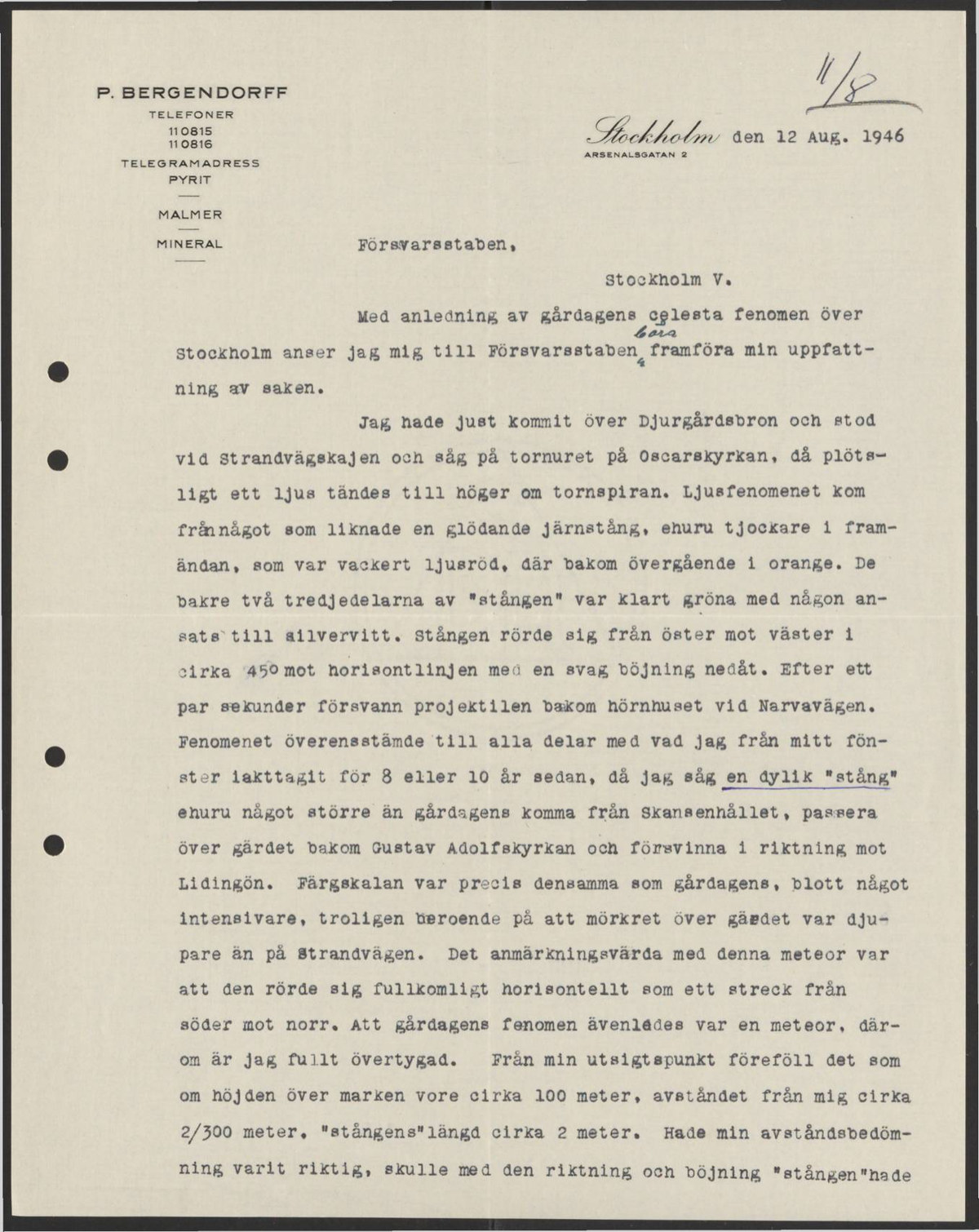
The second great peak came on Sunday 11 August 1946, when hundreds of reports arrived from the Stockholm area alone. One survives in the Defence Staff file in the observer's own hand. Writing to Forsvarsstaben on 12 August, P. Bergendorff described standing at Strandvagskajen by Djurgardsbron the previous evening when a light appeared beside the tower spire of Oscarskyrkan: something like a glowing iron bar, thicker at the front, light red at the leading end shading through orange, the rear two thirds clearly green with a hint of silver-white, running east to west on a shallow descent before it passed behind the corner building at Narvavagen. He put it at about two metres long, roughly a hundred metres up and two to three hundred metres away, and told the Defence Staff plainly that he thought it was a meteor.
Not everyone thought so. On 14 August 1946 at 10:00 am a Swedish Air Force pilot flying at about 200 metres over central Sweden reported a dark cigar-shaped object roughly fifteen metres long, some two kilometres away and a little above him, moving at an estimated 650 kilometres an hour with no visible wings, rudder or projecting parts and no exhaust flame or light at all. What he said next is the strangest line in the whole file: the object was holding a constant height above the ground, and was therefore following the large features of the terrain. By autumn the reports had spread to Denmark, Norway, Finland, Portugal, Italy, Morocco, and in the first days of September to northern Greece, where acting foreign minister Stephanos Stephanopoulos confirmed that Greek divisional commanders and British officers had seen objects east and west of Salonika, and Premier Constantin Tsaldaris told reporters they did not know where they came from.
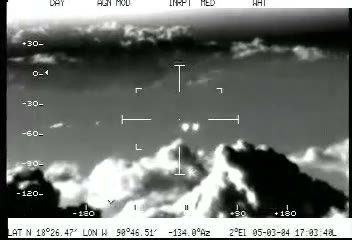
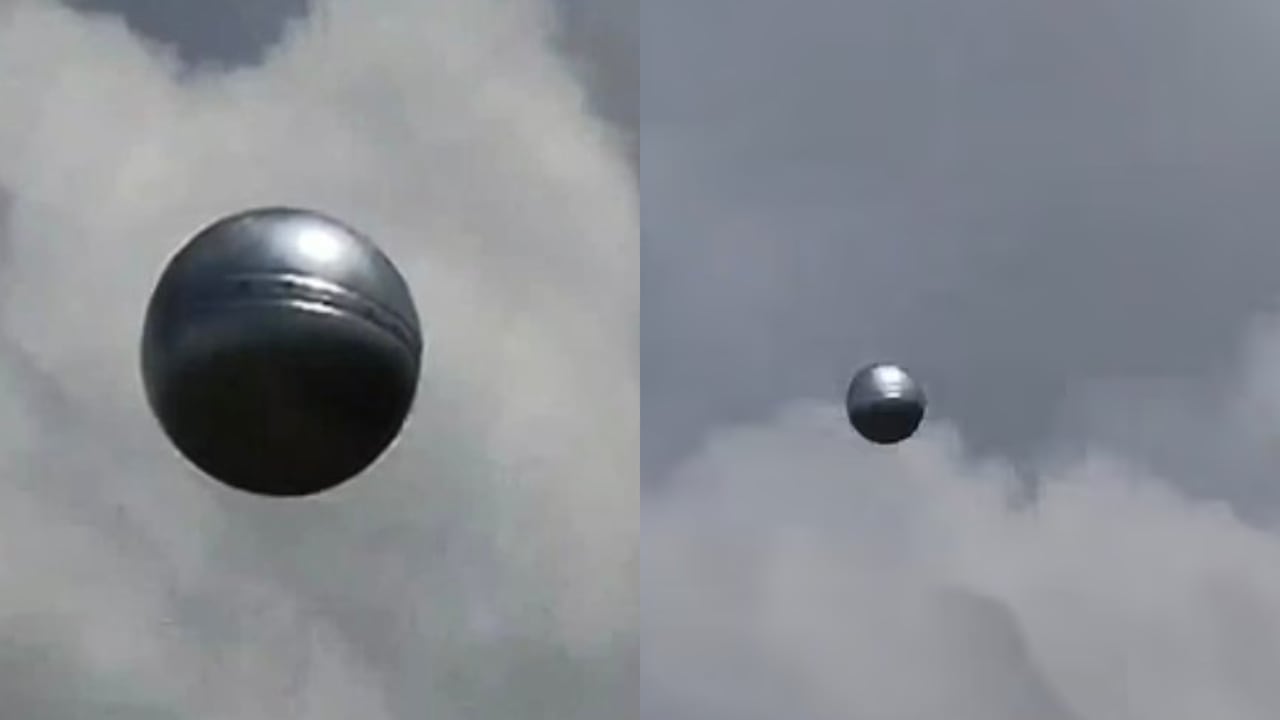
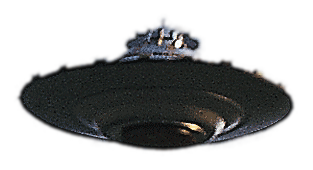
More footage and images of this sighting
Central Intelligence Group memorandum for the President on the Ghost Rockets, signed by Lieutenant General Hoyt S. Vandenberg on 22 August 1946 and forwarded to President Truman by Admiral William D. Leahy on 23 August 1946. Five pages, declassified from Top Secret. View source
Full PDF of the Bergendorff letter of 12 August 1946 to the Swedish Defence Staff. View source
Spokraketerna 1946, nyhetsbyramaterialet: the news agency and local press compilation on the ghost rocket wave assembled and edited by Anders Liljegren for Arbetsgruppen for ufologi, the working group that became Archives for the Unexplained. View source
The Swedish Defence Staff ghost rocket file, 1,779 documents, on the Internet Archive. View source
What is the official explanation?
The Swedish response was fast, formal and mostly published. On 10 July 1946 a standing committee was set up drawing in the Defence Staff, the Aviation Staff, the Naval Administration, the Air Administration, the Defence Research Institution and the Defence Radio Institution. Its chairman, Colonel Bengt Jacobsson, was in America when it convened, so Major Cerwall took the chair. A communique the same day asked the public to send observations directly to the Defence Staff. Officers went out to evaluate important reports, special investigations were ordered whenever an impact was claimed, and liaison was set up with the customs authorities and Stockholm Observatory. Within days the military asked the Swedish press to stop printing the place names of sightings and to substitute vague regional expressions such as southeastern Norrbotten.
The first public accounting came on 10 October 1946, carried by Reuters in the London Times. The staff had sifted over a thousand reports covering 1 May to 30 September and concluded most of the meteor-like objects were ordinary celestial phenomena. But the same report went on: "Most of the observations are vague and must be treated very skeptically. In some cases, however, clear unambiguous observations have been made which cannot be explained as natural phenomena, Swedish aircraft, or imagination on the part of the observer. Echo, radio and other equipment registered readings but gave no clue as to the nature of the objects." As to the physical residue, "fragments were found which were reported to have fallen from projectiles, but analysis showed them to be ordinary coke or slag." The fuller Swedish text put the celestial share at about eighty per cent and said collaboration with astronomers had made clear the two peaks in July and August were probably meteoric, before adding that "some projectiles trajectories cannot satisfactorily be explained". The American wire service INS spun the same communique into a claim that at least twenty per cent of the objects had been identified as foreign weapons of an unknown nature, which is not what the Swedish text says. Working from the archive itself, UFO-Sverige puts the Defence Staff's registered total for the wave at 997 observations, around 225 of them in daylight, with some 300 reports arriving in a single four day stretch in July.
The committee's closing document is blunter still. It met fifteen times, the last on 1 December 1946, and on 23 December Jacobsson's committee wrote to the Commander-in-Chief. Information had come from four sources: visual observations, radar trackings, radio observations, and reports from special sources. On 9 July and 11 August luminous phenomena had been seen at the same time over almost all of Sweden, and it was possible these were celestial; excluding them, about half the remainder were luminous phenomena and the rest were observations of what the committee called real objects, mainly spool-shaped without wings or stabilising surfaces at 42 per cent and spool-shaped with wings at 8 per cent. Around a hundred impacts had been reported with fragments recovered from about thirty, all examined by the Defence Research Institution, and it proved impossible to establish that any came from projectiles or rockets. Of Kolmjarv the committee wrote that a positive impact had been reported in July by two different observers and that an intensive investigation gave no result. Its conclusion: "Despite the extensive effort which has been carried out with all available means, there is no actual proof that a test of rocket projectiles has taken place over Sweden." And yet, it added, even if the main part of the reports can be referred to celestial phenomena, "the committee cannot dismiss certain facts as being merely public imagination."
Britain got fragments too. Dr R. V. Jones, wartime head of British scientific intelligence, remembered them as irregular lumps, the best remembered piece about three inches across, grey, porous and shiny, with a density not much more than that of water; one tested at 98 per cent carbon with trace iron and manganese. A British Air Ministry report of 9 September 1946, "Investigation of Reported Missile Activity Over Scandinavia," listed the notable reported characteristics as great speed, an intense light frequently associated with the missile, a lack of sound, and approximately horizontal flight, and reasoned that if the phenomena were natural they were unusual enough to make the missile alternative possible, in which case they must be Russian.
The Americans were more interested than they admitted. On 21 August 1946 Lieutenant General James Doolittle and General David Sarnoff of RCA were both in Stockholm, each with a cover story. The New York Times reported that the chief of the Swedish Defence Staff, Colonel C. R. S. Kempt, was extremely interested in asking the two generals' advice and would if possible place all available reports before them; Doolittle said he was highly surprised the Swedes had not yet found a trace of a rocket and that no theory had been advanced. Secretary of State Dean Acheson stated in Washington that no American experts had been sent to Sweden in connection with the rocket flights. Two days later, on 23 August, Admiral William D. Leahy forwarded to President Truman a Central Intelligence Group memorandum on the ghost rockets signed by Lieutenant General Hoyt S. Vandenberg, concluding it was probable the USSR was running large-scale guided-missile tests around the Baltic.
The document that brings the case back was published on 7 August 2026, when the U.S. Department of War listed DOW-UAP-D099, "Intelligence Review of 'Ghost Rocket' Incidents, 1947", in Release 05 of its PURSUE programme: agency Department of War, incident date 9 January 1947, incident location Sweden. The Department's own description states that the review "documents a change in the public stance of the Swedish Defense Staff, which privately attributed the objects to Soviet V-1 missile tests launched from Peenemunde", that "the Swedish assessment publicly shifted from an unknown technological origin to one of a 'celestial origin'", that "this shift was a deliberate effort to avoid diplomatic conflict with the Soviet Union", and that the review concludes "that while most reported incidents were likely misidentified natural phenomena, the 'best evidence' suggested a small number of 'real incidents' involving low-flying V-1 type missiles, likely attributable to Soviet tests of captured German technology." That was where this account stood until the document itself was recovered. The individual PDF is still bot blocked at war.gov, but the Department also published a bundle of the whole tranche, and the Wayback Machine holds a working capture of it, so UAP Globe has now read the review in full. It runs to four printed pages inside Intelligence Review Copy No. 597, stamped 20 January 1947, issued by the Intelligence Division of the War Department General Staff and classified Secret, with a distribution list that runs to the White House, the FBI, the State Department, the Office of Naval Intelligence and 129 copies to the Intelligence Division itself.
What the document actually says is more interesting, and in one respect materially different, from the Department's 2026 summary of it. On the reports themselves: the two most common descriptions were "a ball of fire with a tail" and a "shiny cigar-shaped object", the reported headings covered every point of the compass with northerly slightly predominant, estimated altitudes ran from treetop height to 160,000 feet with the highest figures almost all coming from Finland, and estimated speeds ran from 65 miles per hour to "lightning fast". Crucially: "In no case have fragments been found other than bits of material described as nonmetallic slag."
The review singles out one witness as better than the rest, a Swedish Air Force pilot who on 14 August at 1000 hours was flying at 650 feet over central Sweden when he saw a dark cigar shaped object about 50 feet long and 3 feet in diameter, roughly 200 feet above him and 6,500 feet away, moving at an estimated 400 miles per hour with no visible wings, rudder or projecting part and no flame or light. The American analyst then argues against his own best witness, noting that the pilot described the object holding a constant altitude over the ground and therefore following the terrain, and adding that "the last statement casts doubt on the reliability of the entire report because of the inability of a missile, without wings, to maintain a constant altitude over hilly terrain."
On the Peenemunde question the document is blunt, and it is blunter about the Swedes than the manifest summary suggests. "Spokesmen for the Defense Staff repeatedly have told the United States Military Attache that they definitely believed there were rockets over Sweden, and that they were launched by the Soviets from Peenemunde on the German Baltic coast. However, they have not been able to produce any evidence to support these statements. To date, no United States military or naval personnel in Sweden have seen any fragments, points of impact, or other direct evidence to prove that guided missiles have appeared over Sweden." So Peenemunde is the Swedish claim, offered privately and unsupported, and the review declines to adopt it: its own candidate launch sites are Stolp in Polish administered Germany, or the Baltic islands of Oesel and Dago. The review also answers the range objection that later writers have raised, arguing that V-1 type missiles stripped of warheads and fitted with slightly improved motors "could have a range of 500 miles, and are the only available German missiles believed capable of horizontal flight at low altitudes". Three witnesses reported a sound like an outboard motor, which the analyst notes is characteristic of the V-1's pulse jet, and one said the object resembled a V-1 he had seen over London during the war; others reported little or no sound, which the review suggests might indicate a turbo jet instead.
Its conclusion is quantified, and it is modest: "The best evidence, at present, is that there have been only 2 or 3 real incidents, perhaps as many as 5 or 10, of low-flying missiles of the V-1 type. The high-altitude missiles reported seem definitely to have been meteors or fireworks." On the Swedish authorities it is openly contemptuous. It describes the investigation as "carried out by the Swedish Defense Staff in a very peculiar manner", notes that key personnel were on summer leave and were not recalled, observes that the official communiques did not match what individual officers were saying privately, and reads the shift between the 6 August communique, which said the objects could not in most cases be meteorites, and the 10 October one, which said the great majority were of celestial origin, as an attempt to shrink a story that had grown politically dangerous. It goes further and suggests a motive: "The Swedish Defense Staff probably has taken advantage of the situation for political purposes and allowed the newspapers to make a big story out of the missiles, without admitting that the Staff had any evidence to indicate that there actually were any such missiles. This was done at a time when the Swedish public was demanding reductions in defense expenditures."
A footnote in the same review records that in September and October 1946 flying objects were reported over Belgium, Greece, Italy, Morocco and Austria, and judges that these "in the main" were unconfirmed and attributable to meteors, Very flares or fireworks. And the review is not new to the literature: it is the 9 January 1947 issue of the War Department's Intelligence Review, Number 49, "Ghost Rockets Over Scandinavia", a four page summary classified Secret until 1978 and cited by researchers since.
What did the witnesses think it was?
The witnesses of 1946 were not a fringe. They included a Swedish Air Force pilot in the air, army officers, engineers, an observatory, and thousands of ordinary Swedes writing careful letters on their business stationery. What is striking, reading the file, is how many of them argued themselves out of the mystery. Bergendorff, who watched the 11 August object over Stockholm from Strandvagen, spent most of his letter to the Defence Staff explaining why he was fully convinced it was a meteor, comparing it to a similar bar of light he had seen eight or ten years earlier. The photographer whose picture became the most reproduced image of the wave, Erik Reutersward, who with Asa Reutersward caught a glowing tear-drop shape on 9 July 1946 and sent it in after the Ministry of Defence appealed for evidence, is reported to have suspected he had photographed a meteor. The Swedish Army, which released the picture, was less sure, and the London Daily Telegraph reported that the negative had been analysed by the Swedish General Staff, which concluded by special scientific methods that the projectile was in the midst of the flame track rather than in front of it. The communist paper Ny Dag hinted the photograph was faked.
The most tenacious witness was an investigator. Lieutenant Karl-Gosta Bartoll of the Swedish Air Force led the search of Lake Kolmjarv, and it was not a token effort. Working from 20 July to 12 August 1946 with seven men, his team built a raft with no metal in it so the construction would not confuse their instruments, searched on the order of two thousand square metres a day, and took something like thirty-five thousand core samples of the lake bed. They found disturbed sediment and a crater on the bottom. They found no metal. Bartoll's report concluded that the bottom had been disturbed but nothing recovered, and that there were many indications the object had disintegrated, probably manufactured in a lightweight material such as a magnesium alloy that would break up easily and not register on their instruments. Interviewed by the Swedish researcher Clas Svahn in 1984, Bartoll had not moved: what people saw were real physical objects, and asked whether there was ever any doubt about that, he answered that there never was. He added a detail that had not been published at the time. Within a few days of the search beginning, his sentries noticed a couple of mysterious people moving about in the forest, and someone then cut the telephone line with pliers, forcing his reports out by courier.
Against that stands the testimony of the man who kept the committee's minutes. Air Engineer Eric Malmberg, once secretary of the Swedish Defence Staff committee on the matter, was interviewed four decades later by Anders Liljegren and Clas Svahn and said something that cuts directly across the newly released American review: "I would like to say that everyone on the committee, as well as the chairman himself, was sure that the observed phenomena didn't originate from the Soviet Union. Nothing pointed to that solution." He went further: "On the other hand, if the observations are correct, many details suggest that it was some kind of a cruise missile that was fired on Sweden. But nobody had that kind of sophisticated technology in 1946."
The case did not close in 1946, and the people who kept it open were Swedish civilians. Anders Liljegren, Hakan Blomqvist and Kjell Jonsson founded the working group that became Archives for the Unexplained in Norrkoping in 1973, and one of Liljegren's first projects was the ghost rocket wave; he became one of the first researchers in Sweden to get into the formerly secret government files. AFU's press compilation Spokraketerna 1946, nyhetsbyramaterialet gathered the news agency traffic and material from around twenty local Swedish papers. When the Swedish government opened the ghost rocket files in 1984, researchers found more than fifteen hundred reports had been collected in secret from 1946 onward. AFU now holds copies of the open Swedish Armed Forces UFO investigations back to 1946, roughly two thousand cases, mostly ghost rockets. Blomqvist's summary of the shape of the Swedish record from inside the archive is worth quoting for its pattern rather than its conclusion: apparently physical objects crashing into lakes, and the military finding nothing in spite of intense search. That pattern outlived the wave. It repeated at Lake Backsjon near Arvika in July 1999, where after a ten day submarine search with ultrasound and cameras Colonel Yngve Johansson said the report was considered credible, the search found nothing, and they really did not know what they were looking for.
The dispute
The dispute is unusual because both sides of it are official, they contradict each other, and neither was ever demonstrated.
The first official explanation is astronomical and it is Sweden's own public position. On 10 October 1946 the Swedish Defence Staff, working with Stockholm Observatory, reported that of more than a thousand reports covering 1 May to 30 September the great majority were ordinary celestial phenomena, and the fuller Swedish text put the figure at about eighty per cent. The method behind it is real and checkable. The two largest surges, 9 July and 11 August 1946, were simultaneous across almost the whole country, which is the behaviour of celestial objects and not of missiles; the 11 August surge sits one day short of the Perseid maximum, and the 9 July daytime cluster is compressed into about five minutes across hundreds of kilometres, the classic signature of a single daylight fireball. Every recovered fragment failed. Roughly thirty samples went to the Defence Research Institution and none could be tied to a projectile; the Swedes described them to Reuters as ordinary coke or slag, and R. V. Jones's British sample tested at 98 per cent carbon. What this explanation never did was account for the remainder. The Defence Staff itself said some observations were clear and unambiguous and could not be assigned to natural phenomena, Swedish aircraft, or imagination, and that some trajectories could not be explained. An eighty per cent solution advertised as a solution is a partial finding, not a closure.
The second official explanation is Soviet missiles, and it is now stated in the strongest form yet by the U.S. Department of War's newly published DOW-UAP-D099, the 9 January 1947 War Department General Staff intelligence review released on 7 August 2026. Per the Department's own description, the review records that the Swedish Defence Staff privately attributed the objects to Soviet V-1 tests launched from Peenemunde, that Sweden's public position shifted to celestial origin as a deliberate effort to avoid diplomatic conflict with the Soviet Union, and that the best evidence suggested a small number of real incidents involving low-flying V-1 type missiles. The private attribution part is well corroborated: the Central Intelligence Group memorandum sent to President Truman on 23 August 1946 over Hoyt Vandenberg's signature says the weight of evidence pointed to Peenemunde, cites General McNarney reporting Peenemunde operational, and quotes the U.S. Military Attache in Moscow relaying a senior Swedish air officer's claim that Swedish radar course-plotting traced most launches to the Peenemunde area.
The physical case for that attribution is weak, and it is weak in ways that can be checked rather than argued. The Smithsonian National Air and Space Museum gives the V-1 a range of about 240 kilometres, with a late-war long-range model reaching nearly 400. Peenemunde to Stockholm is about 633 kilometres and to Lake Kolmjarv in Norrbotten about 1,440, with Greek reports 1,648 kilometres out. Only southern Skane is inside a V-1's reach. The chronology is worse for it than the geometry: the National Security Agency's declassified history of the early Soviet missile programme describes Soviet work in Germany through 1946 as documentation rather than flight test, notes that the German specialists and the installations were removed to the USSR in October 1946, and dates the first Soviet launch on Soviet soil to October 1947 at Kapustin Yar. And the American review's own analyst balked at the reported flight behaviour, observing that a wingless missile cannot hold a constant altitude over hilly terrain and that the 14 August 1946 pilot report was therefore doubtful. Eric Malmberg, secretary of the Swedish committee, said flatly decades later that everyone on the committee including its chairman was sure the phenomena did not originate in the Soviet Union, and that if the observations were correct the details suggested a cruise missile that nobody in 1946 had the technology to build.
Neither explanation closed the file. No object was recovered from any lake, no fragment was ever tied to a weapon, and the Swedish committee's own conclusion of 23 December 1946 was that despite extensive effort with all available means there was no actual proof a rocket test had taken place over Sweden, and that it could not dismiss certain facts as public imagination. The case stands as Barely Disputed: heavily explained in bulk, unexplained in residue, and with the specific mechanism named by the American review failing on range, on chronology, and on the reported behaviour of the objects.
Is the Ghost Rockets: Sweden's 1946 Wave and the Newly Released War Department Review real? The two-pass assessment
Pass one. How could the ghost rockets have been entirely ordinary, and how much of the wave does the ordinary explanation actually cover?
A great deal of it, and the Swedish authorities said so at the time on the advice of their own astronomers. Take the two peaks first. The committee's letter of 23 December 1946 records that on 9 July and 11 August luminous phenomena were seen simultaneously over almost all of Sweden, and that these may have been celestial. For 11 August that is close to unarguable. The American Meteor Society gives the Perseids an activity period of 17 July to 24 August with maximum on 12 to 13 August, and the Southern Delta Aquariids a period of 12 July to 23 August peaking 30 to 31 July. A nationwide surge of luminous objects on the night of 11 August 1946 falls squarely in the Perseid build-up, one day short of maximum. The 9 July daytime cluster is different in kind but has an equally ordinary candidate: the reports crowd into roughly five minutes around 2:30 pm across hundreds of kilometres of central Sweden, from Kristinehamn to Vaxholm to Ockelbo to Soderbarke, which is precisely the signature of one bright daylight bolide seen from many places at once and described differently by each observer. Cigar, sugarloaf, thermos flask, glowing bar, blue turning green with a long tail: these are the standard vocabularies of people describing a fireball they have no words for. The Swedish figure of roughly eighty per cent celestial is a serious, method-backed number produced with Stockholm Observatory, not a brush-off.
The physical residue supports the sceptics hard. About a hundred impacts were reported and fragments came in from about thirty of them. Every one went to the Defence Research Institution and none could be shown to come from a projectile. The Swedes told Reuters the fragments proved to be ordinary coke or slag, and Jones's British sample tested at 98 per cent carbon, which is coke. A Danish farmer's prize spook bomb turned out to be a detached Swedish aircraft antenna. A metal bolt recovered in Sweden was worn enough that a press photographer screwed it into his Rolleiflex tripod mount, and it was judged to have come from an old surveying instrument. A hole in the ground attributed to a rocket was found on 3 August to have been made by subterranean water. Add the conditions of the summer: a nervous post-war Europe, a Swedish press printing rocket stories daily, a government appeal asking the public to report anything unusual, and then a censorship regime that stripped place names and made the phenomenon look managed and therefore real. Report waves feed themselves, and this one had every accelerant.
Pass two. What does not go away when you have granted all of that?
The residue the Swedish state itself refused to explain away. After removing the two celestial peaks, the committee still classed roughly half the remainder as observations of real objects, 42 per cent spool-shaped without wings and 8 per cent spool-shaped with wings, from a report population that included trained observers, military personnel and technicians, with around 225 of the sightings made in daylight. The 10 October communique said in the government's own words that some observations were clear and unambiguous, could not be explained as natural phenomena, Swedish aircraft, or imagination, and that some trajectories could not satisfactorily be explained. Echo and radio equipment registered readings and gave no clue what the objects were. At Kolmjarv two independent witnesses reported a positive impact, a three week military search under an Air Force officer found a disturbed lake bed and a crater and no metal, and that officer never retracted a word of it in the following four decades. Daytime, low, slow, silent, structured: whatever else that is, it is not the Perseids.
The Soviet missile explanation, which the newly released American review states in its strongest form, is examined in full in the dispute section below. In short: the private Swedish attribution is real and corroborated, the Central Intelligence Group put it in writing to President Truman on 23 August 1946, and the hardware does not support it. The V-1 the review names had a range of about 240 kilometres and Peenemunde is roughly 633 kilometres from Stockholm and 1,440 from Lake Kolmjarv, while the National Security Agency's own history of the Soviet missile programme has the Soviets doing paperwork in Germany in 1946 and firing nothing until Kapustin Yar in October 1947.
So the case ends where it began, with two official explanations that contradict each other and neither of which was ever demonstrated. Sweden said publicly that the wave was mostly celestial and privately, at least through some officers, that it was Soviet. Washington believed the Soviet story in August 1946 and was still committing a version of it to paper in January 1947. The Swedish committee that actually held the files wrote in December 1946 that there was no actual proof of any rocket test over Sweden and that it could not dismiss certain facts as public imagination. Nothing was ever recovered from any lake, any impact site, or any fragment. Because a substantial counter-explanation exists and covers the bulk of the wave, but was never demonstrated for the residual reports and collapses on range and chronology for the specific weapon named, this file is tiered Barely Disputed.
Sources
- web.archive.org/web/20260809022023id_/https://www.war.gov/Portals/1/Interactive/2026/UFO/uap-data.csv?release=5
- www.war.gov/medialink/ufo/release_05/Aug_07/documents/DOW-UAP-D099_Intelligence-Review-of-Ghost-Rocket-Incidents_1947.pdf
- web.archive.org/web/20230930055630id_/https://www.cia.gov/readingroom/docs/1946-08-23.pdf
- sohp.us/collections/ufos-a-history/pdf/GROSS-1946-The-Ghost-Rockets.pdf
- www.ufo.se/index.php/fakta/arti/verkligheten-bakom-ufopodden-i-p3/1611-spoekraketerna
- www.afu.se/about-afu/afu-people/anders-liljegren/
- www.project1947.com/fig/1946a.htm
- www.ufoscans.com/001264/
- www.ufoscans.com/10001-text/
- archive.org/details/SwedishGhostRockets
- web.archive.org/web/20250807181839id_/https://www.nsa.gov/portals/75/documents/news-features/declassified-documents/cryptologic-spectrum/early_history_soviet_missile.pdf
- web.archive.org/web/20240721094422id_/https://airandspace.si.edu/collection-objects/missile-cruise-v-1-fi-103-fzg-76/nasm_A19600341000
- www.amsmeteors.org/meteor-showers/meteor-shower-calendar/
- web.archive.org/web/20080801081600id_/https://www.bibliotecapleyades.net/ciencia/ufo_briefingdocument/1946.htm
- ufoarchives.blogspot.com/2017/06/the-vanishing-missiles.html
- web.archive.org/web/20260809162414/https://www.war.gov/medialink/ufo/release_05/Aug_07/release_05_Aug_07_documents.zip
More cases from this region: UFO sightings in Sweden