USS Gyatt and the Delta Over Puerto Rico, 19 November 1964
A US Navy destroyer testing a prototype radar tracked something at 3,800 knots off Puerto Rico, a Crusader pilot chased it and lost, and four months later the CIA was still trying to work out whose it was.
What did witnesses see at North of Puerto Rico?
On the night of 19 November 1964, Lieutenant Commander Kyle H. Woodbury, executive officer of Utility Squadron Eight at Naval Station Roosevelt Roads, was flying a DF-8F Crusader, bureau number 144456, at 30,000 feet over the middle of Puerto Rico. His squadron's own report puts him at latitude 18 degrees 10 minutes north, longitude 66 degrees 12 minutes west, at 200112Z November 1964, which is 9:12 in the evening local time. The weather was clear, visibility better than 15 miles, low scattered cumulus at two to five thousand feet. An Air Force message records the pilot's own summary: "WEATHER CLEAR, VISIBILITY GOOD, WITH FULL MOON".
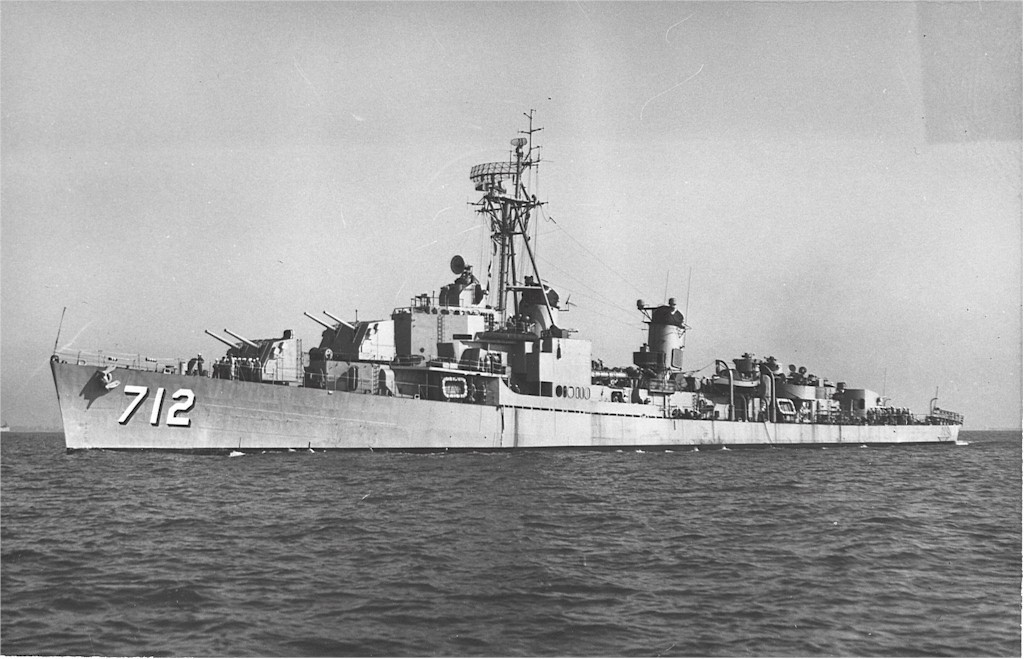
He was not working alone. Roughly 220 miles to the northwest the destroyer USS Gyatt was at sea running trials for the Operational Test and Evaluation Force, and the first detection was hers, not his. Commander Caribbean Sea Frontier's message of 24 November 1964 states it flatly: "THE INITIAL CONTACT MADEE BY USS GYATT RRADAR". Woodbury later wrote that the ship "first warned me of its presence and kept me advised of its re-appearance". Communications between them were poor, which he put down to working UHF at 230 miles.
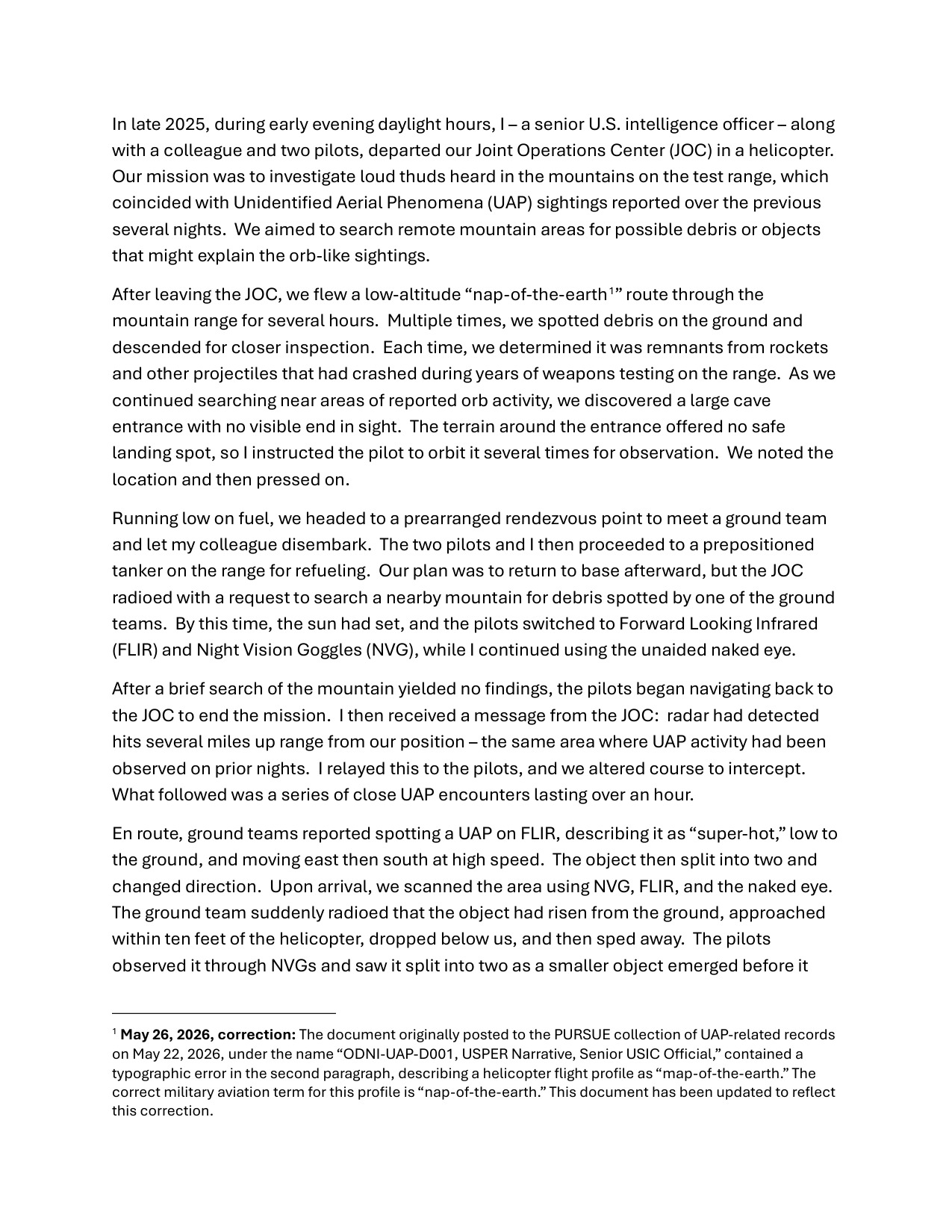
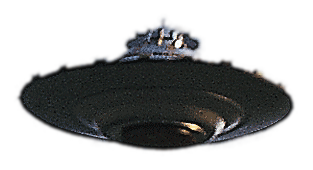
What he then saw he set down in a set of terse form answers. The object was a delta, "About size of operational fighter (F4)", "Dark (black or gray)", a single object showing "Delta shape, one heat source, trail visable", with "No contrail, light source emitting from tail of delta shape during periods of acceleration". Under speed he wrote only "Very high speed". It carried no navigation lights at all, nothing "except what looked like after burner light (single source) during acceleration".
The track was stranger than the speed. The object "Flew over head, very high altitude at very high speed", turned north through about 276 degrees, came back past him in a shallow 16 degree dive on a parallel course about nine miles off, then "circled to right around observer and joined up at about 8 or 9 miles in 9 o'clock position, speed .84 at 30,000 feet heading 145 degrees magnetic". It had matched his altitude, heading and speed and settled off his wing. Woodbury tried to close, and recorded the outcome in one word. He "Attempted to turn 90 degrees to port to close target at 9 o'clock position", then "(Unsuccessful)". The object "accelerated out of sight in wide starboard turn climbing thru 50,000 feet at about 18 to 20 degrees angle of climb in excess of MACH 1". When he later pushed into a rapid descent it "failed to follow down to lower altitude, last position 6 o'clock, 4 miles". The engagement ran "About 21 minutes off and on", and on his way home to Roosevelt Roads it closed on him again from astern.
The two headline numbers come from different sensors and do not agree. The Caribbean Sea Frontier message reports "SPEED PILOT REPORT IN EXCESS MACH 3" and, separately, "GYATT RADAR TRACKED IN EXCESS 3800 KTS", roughly 4,370 miles per hour. Asked whether any meteorological or astronomical condition might account for the sighting, the squadron form answered "None". Asked to locate other air traffic in the area at the time, it answered "None" again.
It was not an isolated night. A combat intelligence officer at Ramey Air Force Base reported on 26 November that "THIS IS NOT THE ONLY UNIDENTIFIED CONTACT BY THESE PEOPLE. THERE HAS BEEN RADAR CONTACT ON 16, 17 AND 18 NOV AND THE LATEST ON 24 NOV." The object tracked on the 18th behaved in the opposite way to the one on the 19th: it "WAS LOW SPEED AND LOW ALTITUDE, TRACKED ON RADAR FOR 8NM. INTERCEPT ATTEMPTED BUT OBJECT FADED."
More footage and images of this sighting
Project Blue Book case file on the USS Gyatt incident, part 1 of 3, 62 pages of scanned 1964 Navy and Air Force message traffic, the Utility Squadron Eight speedletter, and the Foreign Technology Division routing on the radar scope prints View source
Project Blue Book case file on the USS Gyatt incident, part 2 of 3 View source
Project Blue Book case file on the USS Gyatt incident, part 3 of 3, including the Utility Squadron Eight speedletter of 24 November 1964 and the enclosure listing photographs from the AN/SPS-49 (XN-1) radar installed in Gyatt View source
Antonio Rullan's independent re-analysis of the Gyatt radar scope bearing and range data, disputing the Foreign Technology Division's subsonic finding View source
What is the official explanation?
The official record here is unusually thick, and almost all of it can be read. Utility Squadron Eight's commanding officer filed a speedletter, serial 050, on 24 November 1964 to Commander Caribbean Sea Frontier under OPNAV Instruction 3820.9, signed T. D. Fosdick, copy to the Atlantic Fleet Weapons Range. The same day Caribbean Sea Frontier put out a message headed "UNIDENTIFIED FLYING OBJECT REPORT (U)" to CINCLANTFLT, CINCONAD, 32nd NORAD Region, Headquarters USAF, the Chief of Naval Operations and Commander Eastern Sea Frontier. The Defense Intelligence Agency was on the distribution from the first signal.
The Air Force went after the physical evidence immediately. On 27 November the Foreign Technology Division at Wright-Patterson signalled the Gyatt directly, over the signature of Major Hector Quintanilla, the director of Project Blue Book, asking that the radar scope photographs be forwarded when she reached Norfolk. Commander of the Norfolk Test and Evaluation Detachment sent them on 3 December 1964 under serial 0166, subject "Unidentifiable Flying Objs, report of", with two enclosures: "Detailed events of the evening of 19 Nov 64" and "Photos taken from AN/SPS-49 (XN-1) Radar installed in GYATT (Nineteen (19) prints)". On 7 December Quintanilla, signing as Chief of the Aerial Phenomena Branch, routed the prints on for evaluation.
That enclosure line is the most useful technical fact in the file, because it explains why a destroyer was carrying a radar the fleet did not yet have. The XN-1 suffix marks an experimental prototype. The Naval History and Heritage Command's Dictionary of American Naval Fighting Ships records that the Gyatt went into Charleston Naval Shipyard on 29 June 1962 for an overhaul "that included the removal of her missile system and installation of newly developed equipment that would prepare her for specialized service with the Operational Test and Evaluation Force", that she reverted from DDG-1 to DD-712 on 1 October 1962, and that from January 1963 she did "continuing experimental work under Operational Test and Evaluation Force in waters reaching into the Caribbean Sea", being "especially active in testing and evaluating new equipment". The Destroyer History Foundation records the same reversion and the same trials role. Every 1964 document in the Blue Book file calls her USS Gyatt (DD 712). She was not a guided missile destroyer that November, which is worth saying because the Department of War's 2026 manifest twice describes her as one.
The technical verdict came fast. A Headquarters USAF message notes that "FOREIGN TECHOLOGY DIVISION, AFSC, IN UNCLASSIFIED MESSAGE TDEW (UFO), 27 NOV 64, EVALUATED OBJECT AS UNIDENTIFIED AIRCRAFT", and Blue Book filed the case as aircraft. Antonio Rullan, working through the scope data, reports that the division concluded from the photographs that the target was subsonic for the first ten minutes and then accelerated to an average of about 1,200 knots, far short of 3,800. Consistent with that closure, Blue Book's published list of 1964 unexplained cases contains no Puerto Rico entry at all. The only 19 November 1964 case on that list is an unrelated sighting 1,400 miles east of Tokyo, and the two should never be confused.
Yet the apparatus did not act like an organisation that thought the matter settled. On 8 December 1964, eleven days after that evaluation, the Chief of Staff of the Air Force signalled Air Defense Command demanding more: "REQUEST INFORMATION ON THIS INCIDENT. HIGH LEVEL INTEREST REQUIRES DETAILS. REQUEST IMMEDIATE RESPPONSE TO THIS HEADQUARTERS". The phrase "HIGH LEVEL INTEREST" is underlined in the original. The researcher Joel Carpenter, who obtained the complete case file, wrote that it "went to White House levels" and that the demand for answers "caused some turmoil".
That is where the 2026 disclosure resumes the story. On 7 August 2026 the Department of War published its fifth PURSUE tranche, 41 records including CIA material. Two of them, CIA-UAP-D022 and CIA-UAP-D023, are cross-paired to each other in the Department's own manifest, which is how the Department says they document one event. D022 is titled "Unidentified Flying Object Reported near Puerto Rico, 1965" and holds memoranda between the Assistant Director for Special Activities and the Assistant Director for Scientific Intelligence. D023 is "Briefing Notes for Mr. Walter Elder", prepared for the executive assistant to the Director of Central Intelligence.
The Department's descriptions of those files corroborate the 1964 paperwork almost line for line, recording a naval aviator's "delta-shaped, about the size of a jet fighter", a visual estimate of Mach 3, a 3,800 knot AN/SPS-49 track from the Gyatt and a contact held for 21 minutes. They add three things the 1964 file never says aloud. The Assistant Director for Scientific Intelligence thought the object "conceivably associated with foreign intelligence gathering activities", citing active missile testing within the Atlantic Fleet Weapons Range as an attractive reconnaissance target. Both offices ruled out American experimental aircraft, naming the YF-12A and OXCART. And the Director's front office was briefed on the meteorological conditions and on the sensing capabilities of nearby United States collection systems.
Both CIA documents have since been read here in full, recovered from the Department's own bundle of the tranche through a Wayback capture, and they are worth setting out because they are considerably more striking than the summary of them.
CIA-UAP-D023, the briefing prepared for Walter Elder, is headed "BRIEFING NOTES FOR MR. WALTER ELDER" and subtitled "UNIDENTIFIED OBJECT FLYING IN THE VICINITY OF PUERTO RICO ON 16, 17, 18, 19 AND 24 NOVEMBER". So the Director's own front office was briefed on a five day sequence, not a single night. It records that on 19 November the Gyatt picked the object up on radar as it closed on the fighter rapidly, that it stayed on the ship's radar for twenty one minutes, and that it closed on the fighter again to within four miles. It records a separate event on 24 November in which the Atlantic Fleet Weapons Range held a high speed, high altitude target that pulled away rapidly from another Crusader then flying at Mach 0.99 at 45,000 feet. On the night of the 19th, it says, the Crusader pilot observed the object in full moonlight in good weather and good visibility, and "UFO was identified as a Delta shaped object about the size of a jet fighter", with the pilot estimating speed in excess of Mach 3. It notes that the Gyatt confirmed the tracking with motion pictures of the radar scope presentation, that the Office of Naval Intelligence had no further information and had been asked to report similar incidents in future, and it explains for the reader that the Gyatt is "a Navy Surface-to-Air Missile Destroyer equipped with the latest and most accurate" radar.
CIA-UAP-D022 is the pair of memoranda, and its classification markings are the part that matters most. Both carry TOP SECRET with BYEMAN control and the project caveat OXCART, the compartment covering the A-12, with the standard warning that access is restricted to those cleared for the specific project. The first, dated 1 February 1965, is a memorandum to the Assistant Director for Scientific Intelligence from the Assistant Director for Special Activities, the officer who ran the Agency's overhead reconnaissance programmes. It records that a cable from Commander, Caribbean Sea Frontier to Commander in Chief Atlantic Fleet, date time group 01/2048Z December, had informed CINCLANTFLT that the object was "identified by CO Ramey as being YF-12A", and then rejects that: "We think ONI finally convinced, through our efforts, that UFO in fact not YF-12A or similar category Lockheed Aircraft." It records that the Navy had handed over the original radar film and prints at the Agency's request, and asks the scientific intelligence side to evaluate the radar photography for what a thorough scientific analysis might yield about "a high speed, high altitude UFO".
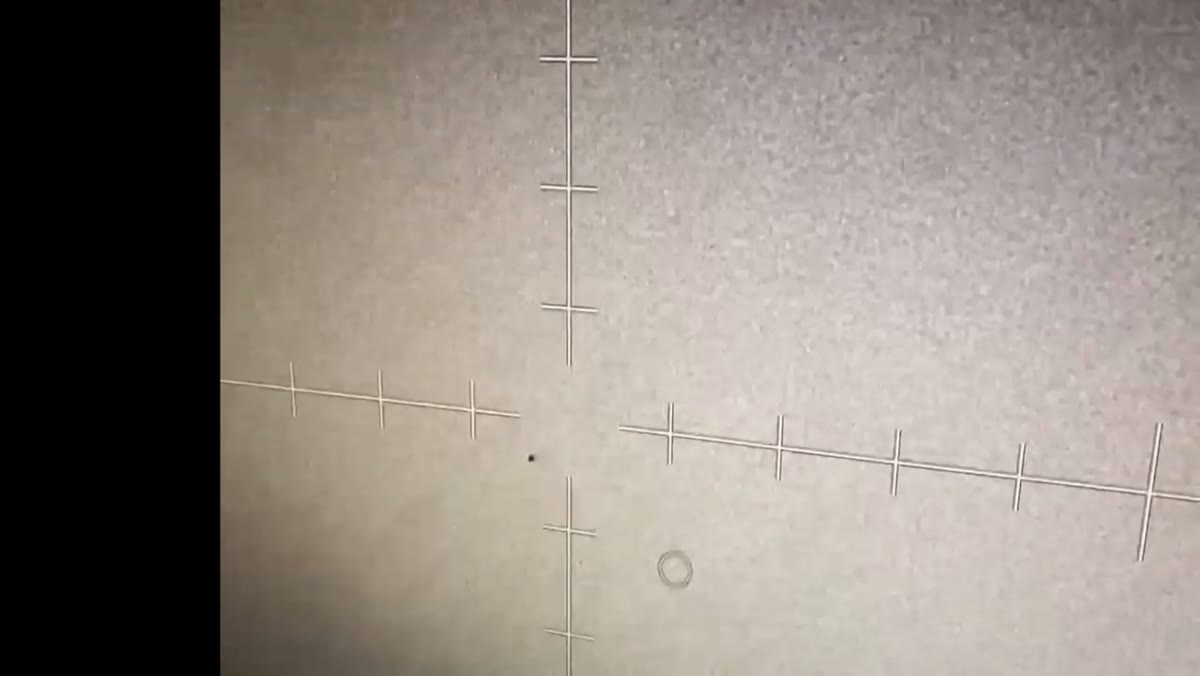
The reply, dated 11 February 1965 and signed by Donald F. Chamberlain, Assistant Director, Scientific Intelligence, is the analytical bottom line. It reports that detailed analysis of the radar photographs of 19 November 1964 and review of the associated correspondence indicated multiple high altitude, high speed sightings north of Puerto Rico during the 18 to 24 November period, with apparently valid radar contacts and observations of unidentified aircraft near the Atlantic Fleet Weapons Range on 16, 17, 18, 19 and 24 November. It confirms the pilot's delta shaped description and his Mach 3 estimate, and confirms the ship's figure: the Gyatt "reported a radar track in excess of 3800 knots". On method it notes that radar photographs were taken of the SPS-49 PPI presentation, that the radar was then undergoing an advanced test programme which included a recording camera, and that analysis of those photographs showed a good track in excess of 300 nautical miles, the object flying a course of about 165 relative to the Gyatt at a relative speed of about 3,800 knots.
Its conclusion is careful and, read closely, unresolved. The Agency concluded that the object was probably a delta wing aircraft of a type with significantly higher performance than the F-8C, based on the limited information in the correspondence, and that the objects reported over the period would appear to be unidentified aircraft. It then examines the obvious hostile candidate and does not close it either: missile test firings were scheduled at the range during the period, which would make it an attractive reconnaissance target, and the Gyatt was 421 nautical miles from the northern tip of Cuba, within MiG-21 range, and the Soviets had a MiG-21 reconnaissance configuration carrying an AFA-39 camera and possibly side looking radar. But, it adds, there was no evidence to suggest any MiG-21 reconnaissance activity based in Cuba, with either Soviet or Cuban pilots.
That leaves a documented position that is easy to state and hard to dismiss. The organisation that built and flew the A-12 was shown a radar track it could not account for, went to the trouble of talking the Navy out of blaming the A-12's own sister airframe, obtained the original film, ran it through its scientific intelligence directorate, and came out the other side describing an unidentified aircraft of unknown type with performance beyond the interceptor sent after it. Everything attributed to D022 and D023 above comes from the Department's own published manifest descriptions, recovered from an archived copy of its machine-readable release file, and from outlets that covered the release. The 1964 Navy and Air Force documents, by contrast, have been read directly from the scanned Blue Book case file.
What did the witnesses think it was?
There are no civilian witnesses here, and it would be dishonest to give this the texture of a public sighting. This is a documents-and-radar case. Everyone in it was on duty, in uniform, inside a reporting system, and their words survive because regulations required them to write.
The central witness is Kyle H. Woodbury, described in the file as having extensive flying and jet experience. What makes his testimony worth something is that he refused to inflate it. Asked for his preliminary analysis of the possible cause, he wrote: "There is no reasonable explanation of this target. Its speed, acceleration, ceiling and ability to de-cellerate exceed any aircraft I have ever seen or heard of." Then, in the same paragraph, he classified it anyway: "I would evaluate target as aircraft, very high performance, maneuvered as an aircraft and performed no unusual maneuvers except, extreme acceleration and de-celleration at will, plus a very steep climb angle in excess of 50,000 feet at high speed." That is a careful man drawing the narrowest conclusion his evidence allowed. He is not claiming a spacecraft. He is saying it flew like a machine and that no machine he knew of could do it.
The corroboration is the ship and the chain of command. The Gyatt's crew held the track and photographed their own scope, and Woodbury noted that she "held track and has supporting data on this contact". Captain Paul Y. Powell, combat intelligence officer of the 72nd Bombardment Wing at Ramey Air Force Base, went and interviewed the participants himself, naming them in his message of 26 November: "I HAVE TALKED TO THREE NAVY OFFICERS, CAPT SICILY, DIRECTOR OF OPERATIONS, COMMANDER BERTER, OPERATIONS OFFICER FOR ANT FL WPN RGN, AND LT. COMDR WOODBURY, THE PILOT." His own view is the closest thing in the file to an emotional register: "THE NAVY HAS BECOME QUITE CONCERNED WITH THIS AND I THINK A MORE THOROUGH INVESTIGATION IS NEEDED." He also checked the evidence independently, reporting that the Gyatt "TOOK PHOTOGRAPHS OF THEIR RADAR SCOPE DURING THEIR 21 MINUTES OF CONTACT. THIS WAS VERIFIED BY NAVY INTELLIGENCE."
The last participants never saw anything, and they are the reason this case resurfaced in 2026. Walter N. Elder was executive assistant to the Director of Central Intelligence, which in this period meant John A. McCone, and a briefing prepared for Elder is a briefing prepared for the Director's front office. The two office chiefs in the D022 correspondence are equally telling. The Assistant Director for Scientific Intelligence assessed foreign technical threats. The Assistant Director for Special Activities ran the agency's overhead reconnaissance, the U-2 and the A-12 OXCART. Those are exactly the two desks you consult when the question is whether a thing is Soviet or one of your own.
What the record does not say matters too. Nobody claims a landing, an occupant, an abduction or a message. There is no physical trace and no photograph of the object, only nineteen prints of a radar scope. Commander Louis L. Junod, who took command of the Gyatt on 5 September 1964, does not appear by name in the surviving correspondence. And Woodbury's line has been quoted loosely for sixty years, usually as "no reasonable explanation for this target" rather than the "of this target" he actually typed, while his surname is rendered Woodsbury in at least one long-standing catalogue entry. The document itself is unambiguous.
The dispute
The dispute is not a modern debunk. It is the United States Air Force's own 1964 finding, and it has two parts.
The first part is a positive classification. The Foreign Technology Division at Wright-Patterson, in unclassified message TDEW (UFO) of 27 November 1964, evaluated the object as unidentified aircraft, and Project Blue Book closed the case in that category. This is why the incident appears nowhere on Blue Book's published list of 1964 unexplained cases. The pilot himself did not resist that classification. Kyle Woodbury wrote that he would evaluate the target as an aircraft of very high performance that "maneuvered as an aircraft and performed no unusual maneuvers except, extreme acceleration and de-celleration at will". Captain Paul Y. Powell's report of several IFF paints of Code One during the November series points the same way, because a transponder reply is the signature of built equipment rather than of an unknown phenomenon.
The second part is a technical rebuttal of the number that made the case famous. The Gyatt's initial message reported a radar track in excess of 3,800 knots, and the CIA memoranda repeated it. The Foreign Technology Division analysed the nineteen radar scope prints and concluded that the target had been subsonic for the first ten minutes of the track and then accelerated to an average of roughly 1,200 knots. Major Hector Quintanilla's December 1964 file conclusion, as reported by Tim McMillan of The Debrief after examining the case file, was that the reported high speed was not confirmed from the scope photographs and that the speeds in the initial report were in error. That is a real method applied to real physical evidence, and it is the strongest single argument against the case.
It is not, however, enough to close it, for three reasons. It identifies nothing. "Unidentified aircraft" tells you the Air Force believed the object was manufactured, not who built or flew it, and in sixty years no type, operator or flight has ever been matched to it. It did not satisfy the apparatus that produced it, because on 8 December 1964, after the evaluation had already been issued, the Chief of Staff of the Air Force signalled Air Defense Command that "HIGH LEVEL INTEREST REQUIRES DETAILS", and the CIA was still exchanging memoranda about whose aircraft it might have been in February 1965, ruling out the YF-12A and OXCART and weighing a foreign reconnaissance interest in the Atlantic Fleet Weapons Range. And the analysis is contested on its own ground: Antonio Rullan reworked the published bearing and range figures from the scope photographs and found the target supersonic for most of the encounter, directly contradicting the subsonic first ten minutes. The raw prints have never been published, so no third party can adjudicate between them.
Weighed together, this is a partial official finding without an identification, disputed by an independent re-analysis of the same data, on a case the government itself kept pushing after the finding was made. That is Barely Disputed, not Strongly Disputed, and it falls well short of anything that would justify a discredit.
Is the USS Gyatt and the Delta Over Puerto Rico, 19 November 1964 real? The two-pass assessment
Pass one. How could this be entirely ordinary?
The strongest prosaic evidence sits in Captain Powell's message and is almost never quoted. He reported that during the November series "THERE HAVE BEEN SEVERAL IFF PAINTS OF CODE ONE BUT SMEARED". IFF is the military identification transponder, and a Mode 1 reply is something a cooperating, transponder-equipped aircraft emits. If the Gyatt was seeing IFF returns from that track, then whatever it was probably was a real aircraft carrying real equipment, and the question narrows from what to whose. That one line does more sceptical work than any modern debunk of this case, and it was not found in a sceptical article. It is in the Air Force's own teletype.
The second strand is the radar. The Gyatt was carrying an AN/SPS-49 marked XN-1, an experimental prototype, and she was at sea precisely to shake that equipment down. Prototype long-range air search sets produce spurious tracks, anomalous propagation returns and range or bearing errors, and 3,800 knots is exactly the sort of number an untested article generates. The Foreign Technology Division reached that conclusion from the scope photographs. The file also records a real electronic anomaly: the SPS-49 was jammed for a short period during the encounter, source unknown. Jamming is mundane on a weapons range, and it is another reason to distrust the raw readout.
Third, the setting. This was the Atlantic Fleet Weapons Range at the height of Cuban-related reconnaissance, two years after the missile crisis, in airspace busy with real classified hardware. The pilot's own preferred reading was a very high performance aircraft, and the obvious candidate was an American one. The CIA appears to have checked exactly that and ruled out the YF-12A and OXCART. The timing is worth noting: the SR-71 did not fly until 22 December 1964, after the Blue Book file was closing, so the family of aircraft the object most resembled was still in early development and, on the available evidence, not in the Caribbean.
Fourth, the honest human factor. A single pilot judging the range, size and closure of an unlit dark shape at night, even under a full moon, is working at the limit of what vision can do. Woodbury never claimed to have measured anything. He said it looked like a delta the size of an F-4 at what he took to be nine miles, and nine miles is far past the range at which an eye can size an object it cannot resolve.
Pass two. What resists all of that?
The IFF paints were "SMEARED", and no returning identity is recorded anywhere in the file. Had a friendly aircraft squawked a readable code, the incident would have died on 20 November and never reached the Chief of Staff of the Air Force. Instead it escalated. The Foreign Technology Division evaluated the object as unidentified aircraft on 27 November, and eleven days later the Chief of Staff was still demanding details because "HIGH LEVEL INTEREST REQUIRES DETAILS". Under this archive's standing rule an official closure is evidence a case was real enough to need closing, and this one was reopened from above after being closed from below.
The multi-sensor structure is hard to wave away. The ship detected it first and told the pilot where to look. He then saw it visually, both platforms held it through the same 21 minutes, nineteen photographs of the scope were taken as it happened, and Navy intelligence confirmed they existed. That is not a lone witness with a story. It is the combination the Blue Book era almost never produced.
The behaviour does not fit a reconnaissance overflight either. A spy aircraft transits. This one turned through 276 degrees, dived past on a parallel track, circled the observer, formed up on his wing at his own speed and altitude, declined to follow him down, and re-closed from astern on his way home. That is interaction, not transit, and it is what pushed a professional aviator who wanted to call it an aircraft into writing that its performance exceeded anything he had seen or heard of.
Finally, the speed rebuttal is not the last word on its own data. Antonio Rullan re-derived distance and speed from the same bearing and range values and concluded the target was supersonic for most of the track, peaking near 1,500 miles per hour before decelerating to around 260. Two analysts, one dataset, opposite answers, and the raw scope prints have never been published.
The tier. An official narrative exists, so this is not an Unknown. The Foreign Technology Division examined the physical evidence and produced a specific, method-bearing rebuttal of the headline number, and Blue Book filed the case as aircraft. But nothing in that closure identifies anything. The Air Force's own words were "unidentified aircraft", which is a category, not an answer. No type, operator, nation or traced flight was ever produced, the CIA was still asking whose it was in February 1965, and an independent re-analysis contests the very finding the closure rests on. That is a counter-explanation that is partial and contested rather than conclusive, which is Barely Disputed, and the case very largely stands.
Sources
- web.archive.org/web/20260808030643id_/https://www.war.gov/Portals/1/Interactive/2026/UFO/uap-data.csv?release=5
- www.nicap.org/641119ussgyatt_dir.htm
- www.nicap.org/docs/641120puertorico_docs1.pdf
- www.nicap.org/docs/641120puertorico_docs2.pdf
- www.nicap.org/docs/641120puertorico_docs3.pdf
- www.nicap.org/reports/641120ussgyatt_report.htm
- www.nicap.org/reports/641120ussgyatt_report2.htm
- www.nicap.org/reports/641120ussgyatt_carpenter.htm
- www.history.navy.mil/research/histories/ship-histories/danfs/g/gyatt.html
- www.history.navy.mil/our-collections/photography/numerical-list-of-images/nhhc-series/nh-series/NH-106000/NH-106723.html
- destroyerhistory.org/coldwar/ussgyatt/
- thedebrief.org/devices-of-unknown-origin-part-i-mystery-in-the-caribbean/
- www.wsaz.com/2026/08/07/fifth-batch-ufo-files-released-contains-cia-notes-artistic-renderings/
- www.ufologie.patrickgross.org/htm/bluebooku64.htm
- www.navsource.net/archives/05/712.htm
- web.archive.org/web/20260809162414/https://www.war.gov/medialink/ufo/release_05/Aug_07/release_05_Aug_07_documents.zip
More cases from this region: UFO sightings in Puerto Rico