The Kaikoura Lights
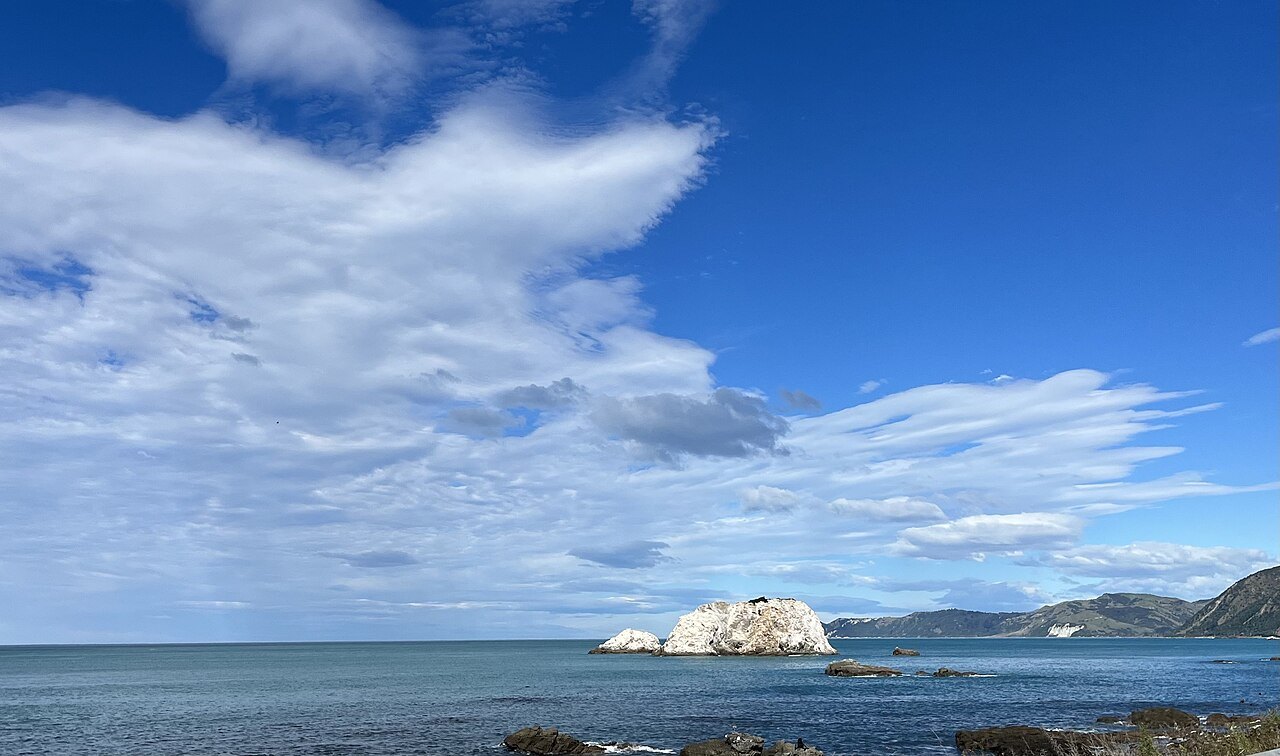
The Kaikoura Lights were not one sighting but a cluster over two nights in December 1978, off the east coast of the South Island of New Zealand, all involving Safe Air Ltd freight crews flying the Blenheim to Christchurch run in four-engine Argosy turboprops. This case file covers what witnesses reported, the official narrative, and a two-pass assessment with its evidence tier.
What did witnesses see at Off the Kaikoura coast?
The Kaikoura Lights were not one sighting but a cluster over two nights in December 1978, off the east coast of the South Island of New Zealand, all involving Safe Air Ltd freight crews flying the Blenheim to Christchurch run in four-engine Argosy turboprops.
The first event came on the night of 20 to 21 December 1978. Captain Vern Powell, southbound in a Safe Air Argosy, reported bright lights trailing and pacing his aircraft off the coast. He was not alone. Wellington Air Traffic Control radar, run that night by controllers including John Cordy, painted unidentified targets near Cape Campbell that tracked in close proximity to Powell's plane. Some of the radar returns moved erratically and at impossible rates, with one widely reported estimate putting a target's apparent speed in the tens of thousands of kilometres per hour with sharp directional changes no conventional aircraft could survive. A Royal New Zealand Air Force warrant officer on the ground at the Blenheim base also reported seeing unusual lights performing odd movements that night. The objects would appear, hold station, vanish from radar, and reappear elsewhere.
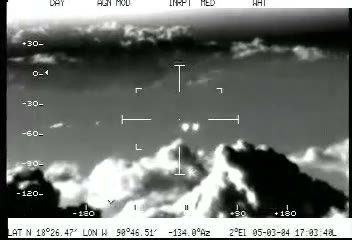
The famous event followed ten days later, in the early hours of 31 December 1978. A four-engine Argosy left Wellington late on 30 December captained by Bill Startup with First Officer Bob Guard, carrying an Australian Channel 0 (Melbourne) television crew who had come specifically to investigate the earlier reports: reporter Quentin Fogarty, freelance cameraman David Crockett, and Crockett's wife Ngaire on the tape recorder. On the southward leg toward Christchurch, roughly between 0010 and 0100 hours, the crew saw a string of four or five small bright lights near the Kaikoura ranges, variously stationary and moving, the count changing as they watched. Crockett filmed them on a professional 16mm colour movie camera. On the northward return leg toward Blenheim, between about 0218 and 0315 hours, a single large brilliant object, described as a bright yellow-white-orange light, fell into station off the wingtip and paced the aircraft for close to a quarter of an hour while being filmed. The aircraft's own weather radar showed a target that the crew said was three to five times larger than the blip a fishing boat returns, and Wellington ATC again reported correlating unidentified returns. Startup at one point turned the aircraft toward a light and the light moved away. Fogarty's recorded on-camera line, said as the object sat off the wing, became the title of his later book: "Let's hope they're friendly."
What is the official explanation?
The official New Zealand response ran through the Royal New Zealand Air Force and the Defence establishment, and its private file language was only made public when the New Zealand Defence Force declassified its UFO files, reported by the Otago Daily Times on 23 December 2010. The internal assessment was authored by Wing Commander J B Clements. His conclusion was deflationary: "Almost all the sightings can be explained by natural but unusual phenomena." The file proposed a basket of ordinary causes: an unusually bright Venus seen through super-refraction so that it appeared before its true rising time, "freak propagation" of radio and light waves, anomalous radar returns off the east coast of the South Island that controllers said had been recurring for months, and the lights of a squid fishing fleet working off the coast, plus cars and trains on land. Clements noted pointedly that the aircrews "do not seem to be prepared to accept the fact that they might have observed Venus," and he recommended that "Defence should issue a PR statement fairly soon in order to tone down much of the wild speculation."
The official line was never fully consistent. The same files conceded it was hard to explain some of the lights "short of them being some anomalous type of reflection or refraction, cars or trains," and that the Wellington radar returns were probably "spurious," which is an admission that the apparatus itself could not be relied on to support or refute the visual reports. The Department of Scientific and Industrial Research and Defence figures floated the squid-boat fleet as the source of both the lights and the radar paints, although critics pointed out there was no proof such boats were positioned where and when the targets appeared.
There was also a physical follow-up. An RNZAF P-3 Orion was sent up on the night of 2 January 1979 to look for repeat visual or radar contacts. The reported radar targets faded before the Orion could reach their positions, and the sortie produced no clear result. The net official posture, captured in the government's own United Nations file held by Archives New Zealand (record ABHS 6958 W5579 Box 227, NYP 3/58/13 Part 1, created by the New Zealand Permanent Mission to the UN), was that "the prospect of extra terrestrial intervention being proved is regarded as extremely remote," while stopping short of a single clean identification that fit every observation.
What did the witnesses think it was?
The witnesses were experienced aircrew and working journalists, not casual observers, and they did not back down. Captain Bill Startup, a senior Safe Air pilot, rejected the planetary explanation flatly, saying the lights he saw were neither Jupiter nor Venus, and decades later he held the same line: "What it was all those years ago, I wish I knew. People can think what they want but they were not in the aircraft." First Officer Bob Guard, a self-described non-believer, was just as firm that something real and unexplained had happened while resisting the alien framing: "One of the issues for me is we were just doing our job. We suddenly had to justify ourselves. We didn't know what the hell it was," and separately, "Do I believe in UFOs? No I don't." That combination, a skeptic who still insists the object was real, is part of what gives the case its weight.
Quentin Fogarty, the Channel 0 reporter, wrote the fullest first-person account in his 1982 book Let's Hope They're Friendly. He described the sequence of small lights near Kaikoura on the southward leg and the large pacing orb on the return, and he was candid that the experience had a strange subjective dimension, writing that he "did experience something psychic, be it real or imagined," and sensing at moments that the crew "were being allowed to film." He also recorded how badly the scepticism stung once the footage went worldwide: "The level of initial scepticism both surprised and, at times, overwhelmed me." Cameraman David Crockett, who actually shot the 16mm colour film and later produced the documentary UFO: A True Story (archived at Nga Taonga Sound and Vision, reference F1910), said simply, "To this very day, the incident has never left my mind."
The corroboration is unusually broad for a UFO case. Across the two nights the witnesses included multiple Safe Air pilots (Powell on the first night, Startup and Guard on the filmed flight), Wellington air traffic controllers reading radar, the aircraft's own onboard radar, an RNZAF observer on the ground, and the television crew with their camera and two independent tape recordings made live during the sightings. Bruce Maccabee, an optical physicist with the US Navy, took the actual film and called the New Zealand sightings among the most instrumented in civilian ufology, citing the seven witnesses, the two tape recordings, the colour movie, and the ground and air radar together.
The dispute
The dispute is a real one and it has named authors and a shown method, which is why this case is not filed as Verified Unexplained. Two strands carry it. First, the official New Zealand assessment, written by Wing Commander J B Clements and made public when the Defence Force files were declassified (reported by the Otago Daily Times, 23 December 2010), argued that "almost all the sightings can be explained by natural but unusual phenomena": an unusually bright Venus seen through super-refraction before its true rising time, the lights and radar signature of a squid fishing fleet, and Wellington radar returns the file itself calls "spurious" and says had been anomalous off the South Island east coast for months. Second, in the scientific literature, W. Ireland and M. K. Andrews published a formal critique in Applied Optics (volume 18, issue 23, pages 3889 to 3890, 1979) of Bruce Maccabee's photometric analysis of the 16mm film, contesting his brightness and distance estimates. Maccabee answered them in Applied Optics (volume 19, issue 11, pages 1745 to 1746, 1980).
Why it does not close the case. The official explanation is an assertion stitched together from several different ordinary causes, and it was never internally consistent. The same file admits some lights cannot be explained "short of them being some anomalous type of reflection or refraction, cars or trains," and it concedes the radar was probably unreliable, which cuts against using that radar to wave the case away. Crucially, Clements recommended that "Defence should issue a PR statement fairly soon in order to tone down much of the wild speculation," language that reads as managing public reaction rather than resolving the physics. No investigator has produced the specific squid boat, the specific ship, or a Venus reconstruction that accounts for an object pacing a turning Argosy for nearly fifteen minutes while returning a radar blip several times the size of a fishing boat. The Ireland and Andrews critique is a legitimate methodological challenge to one researcher's optical numbers, but a contested photometry argument is not a positive identification of the real-world object, and Maccabee published a rebuttal. Under our standard, an official assertion without a single clean shown identification, plus a contested-but-unresolved scientific exchange, is a weak dispute against a strongly corroborated radar-visual-film core. The case largely stands, which is why it is Barely Disputed rather than Strongly Disputed.
Is the Kaikoura Lights real? The two-pass assessment
Pass one, the entirely ordinary reading. The official New Zealand file lays out the prosaic menu: a brilliant Venus distorted by super-refraction, a squid-boat fishing fleet whose deck lights and radar signature could mimic a slow bright object near the water, "anomalous" Wellington radar that controllers admitted had been throwing spurious east-coast returns for months, and freak atmospheric propagation. None of these is absurd on its own. Venus genuinely can dominate a dark sky and confuse trained observers, mirages of bright sources do happen at low elevation over the sea, and weather radar painting fishing boats is routine. In the peer-reviewed literature, W. Ireland and M. K. Andrews published comments in Applied Optics (volume 18, issue 23, pages 3889 to 3890, 1979) challenging Maccabee's photometric reconstruction, arguing his brightness and distance estimates were not as secure as claimed. That is a genuine, method-shown scientific objection, not hand-waving.
Pass two, if it is real. What the ordinary menu struggles to cover is the combination, on the same nights, of independent visual sightings by separate aircrews, simultaneous ground radar at Wellington and onboard aircraft radar, a single object pacing the Argosy off the wingtip for nearly fifteen minutes and reacting when the captain turned toward it, and a professional 16mm colour film of the event. Venus does not pace a turning aircraft for a quarter of an hour, and it does not put a discrete blip on weather radar three to five times the size of a fishing boat. Bruce Maccabee's optical analysis, published in Applied Optics (volume 18, issue 15, pages 2527 to 2528, 1979) with his author's reply to the Ireland and Andrews critique in Applied Optics (volume 19, issue 11, pages 1745 to 1746, 1980), concluded that the filmed object was a genuinely bright source consistent with an unidentified object or phenomenon, and he specifically rejected the squid-boat account on the grounds that there was no evidence such boats were where the targets were. Critically, the official apparatus here debunked but did not identify: Clements explicitly recommended a PR statement to "tone down" speculation, which is administrative damage control, and his own file conceded the radar was probably spurious and that some lights could not be explained short of refraction guesses. Under our rules an official assertion without a single clean shown identification of the actual object does not close a case.
So where does it land. There is a real, named, method-shown scientific dispute (Ireland and Andrews on the photometry; the Venus and squid-boat reconstructions), which keeps this out of Verified Unexplained. But there is no confession, no recovered prop, and no positive identification of the specific object: nobody has shown that this light was that boat, or that this radar blip was that ship, or that the pacing orb was demonstrably Venus. The strongest counter is a plausible-but-unproven natural reconstruction plus a contested optical critique, which is exactly the profile of a barely disputed case. The case largely stands on its multi-witness, dual-radar, filmed core. Tier: Barely Disputed.
Sources
- www.ngataonga.org.nz/search-use-collection/search/F1910/
- www.flickr.com/photos/archivesnz/23623047260
- opg.optica.org/ao/abstract.cfm?uri=ao-18-23-3889
- opg.optica.org/ao/abstract.cfm?uri=ao-19-11-1745
- www.odt.co.nz/news/politics/air-force-report-explains-kaikoura-ufo-sightings
- www.nzherald.co.nz/nz/crew-remember-the-day-ufo-was-spotted-over-kaikoura-40-years-on/JXWELO7AJEOR6KVXCJ6OKVGUKU/
- ufocusnz.org.nz/2020/07/22/the-world-famous-kaikoura-lights-sightings-of-december-1978/
- theozfiles.blogspot.com/2020/12/lets-hope-theyre-friendly-quentin.html
More cases from this region: UFO sightings in New Zealand