The Kinross Incident
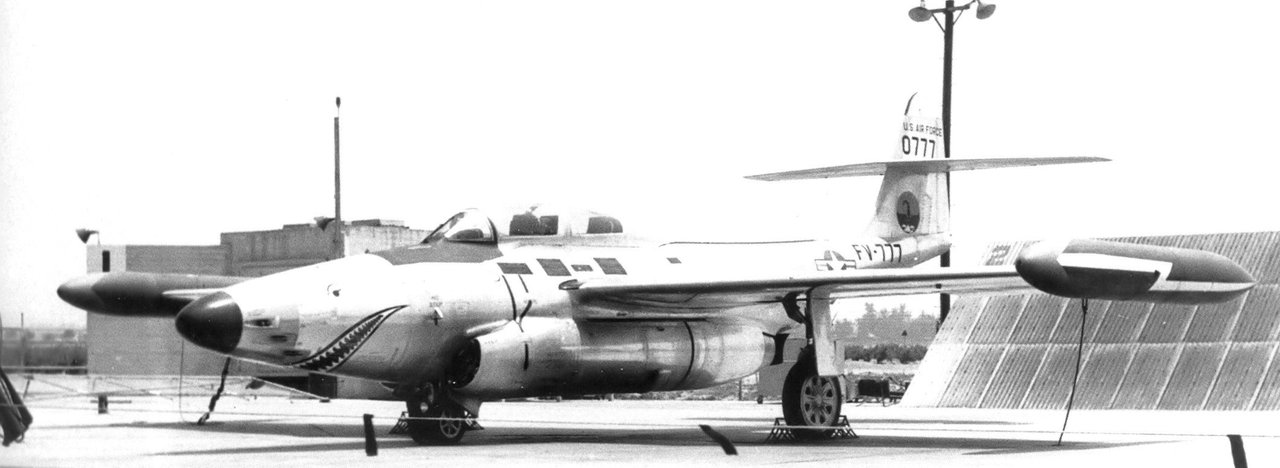
On the evening of 23 November 1953, a ground control intercept radar station on the Keweenaw Peninsula picked up an unidentified target moving over restricted airspace near the Soo Locks at the eastern end of Lake Superior. This case file covers what witnesses reported, the official narrative, and a two-pass assessment with its evidence tier.
What did witnesses see at Lake Superior?
On the evening of 23 November 1953, a ground control intercept radar station on the Keweenaw Peninsula picked up an unidentified target moving over restricted airspace near the Soo Locks at the eastern end of Lake Superior. An F-89C Scorpion all-weather interceptor, serial 51-5853-A, of Detachment 1, 433rd Fighter-Interceptor Squadron, was scrambled from Kinross Air Force Base near Sault Sainte Marie, Michigan. The pilot was First Lieutenant Felix Eugene Moncla Jr., 27, of Moreauville, Louisiana, on temporary duty from Truax Field. His radar observer was Second Lieutenant Robert L. Wilson, 22, of Ponca City, Oklahoma. The accident report logs the takeoff at 2322 Zulu, which is roughly 6:22 in the evening local time, with last contact at 2352 Zulu.
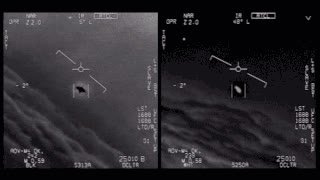
Ground control vectored the Scorpion north and east out over the lake. Moncla climbed, then was brought down in a long descent toward the target, dropping toward about 7,000 feet, and was reported flying at roughly 500 miles per hour during the chase. The pursuit ran for about half an hour, taking the jet well past the international boundary into Canadian airspace, to a last reported position near 48 degrees north, 86 degrees 49 minutes west, in the area north of Michipicoten Island. At approximately 2355 Zulu, the controller watched the two radar returns, the Scorpion and the unknown, close until they merged into a single blip on the scope. When the returns are described in the accident report, the surviving return continued on its original course while the return from the F-89 simply vanished. The IFF transponder signal from the Scorpion was lost at the same moment. There was no further radio transmission, no mayday, and no recorded distress call.
A second F-89 from the same detachment, flown by Lieutenant Mingenbach and remembered in some accounts under the call sign Avenger Black, was launched on the search. Mingenbach and his radar observer later reported hearing a short, garbled radio transmission, only a few seconds long and cut off in the middle of a sentence, that they believed sounded like Moncla's voice, roughly forty minutes after contact had been lost. By the calculations in the report the Scorpion would have run completely out of fuel a little after 8 in the evening. A search and rescue operation by the United States Air Force, the United States Coast Guard and the Royal Canadian Air Force covered a large part of the lake over the following days. No wreckage, no oil slick, no debris and no bodies were ever recovered. The men and the aircraft were gone.
What is the official explanation?
The official record is the United States Air Force Aircraft Accident Report for F-89C 51-5853-A, later released and transcribed by civilian researchers and held in the Computer UFO Network and UFO*BC archives. The report records the scramble, the radar-controlled interception, the merging of the returns on the ground control scope, and the loss of the aircraft. Its language is cautious. It states that the radar returns merged on the controller's scope, that the return from the other aircraft continued on its original flight path while the F-89 return disappeared, and that an extensive aerial search revealed no trace of the aircraft, which remained missing along with its crew. The board concluded the aircraft probably crashed in the Canadian waters of Lake Superior at or near the time of interception, but it determined no mechanical cause and recovered no wreckage to examine.
The Air Force's public account shifted in the years after. Early statements acknowledged the jet had been tracked until it merged with an object roughly 70 miles off the Keweenaw. The settled explanation that the service offered was that the controllers had misread the situation, that the unknown target had been an off-course Royal Canadian Air Force C-47 Dakota transport, registration VC-912, flying eastbound across Lake Superior, and that Moncla had successfully identified it, broken off, and then crashed on the way home, possibly after suffering an attack of vertigo in poor conditions over dark water. The report itself conceded there was no firsthand evidence of vertigo and rested that part on secondhand impressions of Moncla's medical history.
The Royal Canadian Air Force angle does not sit cleanly with the record. The C-47 named, VC-912, was flying that night, but its pilot, Flight Lieutenant Gerald Fosberg, stated for the record, including in interviews for the David Cherniack documentary made for Vision TV's Enigma series, that his aircraft was never 30 miles off course, that the radio navigation aids he used had a maximum error of only about 5 miles, and that nobody from the United States Air Force ever told him at the time that an interceptor had been lost trying to identify him. No corresponding Royal Canadian Air Force investigation appears to have been opened. Donald Keyhoe and later the National Investigations Committee on Aerial Phenomena noted that references to the unidentified-target nature of the mission were stripped from some official summaries, with the case reduced in places to a plain aircraft accident, while Project Blue Book treated the radar behaviour as a product of unusual atmospheric conditions.
What did the witnesses think it was?
The primary witnesses were the radar controllers at the ground control intercept station who watched the intercept unfold in real time and saw the two returns merge into one and then lose the fighter. Their observation, the merged blip, is the single fact every account agrees on and is recorded in the accident report itself. Lieutenant Mingenbach and his radar observer in the second Scorpion add the disputed but striking detail of a brief radio transmission in what they took to be Moncla's voice well after the loss.
The earliest detailed civilian account came from retired Marine Corps Major Donald E. Keyhoe in his 1955 book The Flying Saucer Conspiracy, Henry Holt and Company, on pages 13 to 15. Keyhoe, by then the most prominent investigator of military UFO reports in the country, wrote that the two blips had suddenly merged into one, that the large return remained on the glass, and that it then went off the scope, with the fighter gone. He treated the case as one of the clearest instances of an interceptor closing on something it could not explain. Keyhoe also documented that Moncla's widow had been given inconsistent stories by the service about whether the jet had gone in at low altitude or had exploded high up, a discrepancy that became central to family doubts about the official line.
The most exhaustive independent investigation is that of Gord Heath of UFO*BC, who has worked the case since 2001, assembling the accident report, unit histories, witness contacts and a reconstruction of the radar geometry. Heath, and separately the Open Skies Project, which obtained accident and unit records from United States Air Force archives, both concluded that the off-course C-47 explanation has serious problems: the geometry and the navigation error Fosberg described do not support a 30-mile deviation, and the Royal Canadian Air Force was apparently never formally told one of its aircraft had been the subject of a fatal intercept. Heath's blunt reading is that the C-47 explanation looks more like an after-the-fact tidy-up than a documented finding. The Moncla family, who maintain a memorial gravestone in Avoyelles Parish, Louisiana, never accepted that the matter was settled.
The dispute
The dispute is the United States Air Force's own explanation, advanced in the accident report and in later public statements, that there was no unknown craft at all. In this account the radar target was an off-course Royal Canadian Air Force C-47 Dakota transport, registration VC-912, flying eastbound across Lake Superior from Winnipeg, that Moncla intercepted and identified it, that the merging of the two radar returns was simply two aircraft passing within radar resolution, and that the Scorpion was then lost on the way home, most likely because Moncla suffered vertigo and flew into the lake in the dark. Project Blue Book separately attributed any odd radar behaviour to unusual atmospheric conditions. This is the counter-explanation that keeps the case out of the Verified Unexplained tier.
The reason it does not close the case is that the explanation conflicts with its own evidence and was never properly tested. The pilot of VC-912, Flight Lieutenant Gerald Fosberg, stated on the record, including for the David Cherniack documentary The Moncla Memories made for Vision TV's Enigma series, that his aircraft was never 30 miles off course, that the radio navigation system he was using had a maximum error of only about 5 miles, and that he was never informed at the time that an American interceptor had been lost trying to identify him. No Royal Canadian Air Force investigation appears to have been opened into an event that, on the Air Force's telling, killed two men chasing one of its transports. Independent civilian investigators Gord Heath of UFO*BC and the Open Skies Project, both working from the released accident report and unit records rather than from secondhand summaries, concluded that the off-course claim is geometrically and procedurally implausible and reads like an after-the-fact reconciliation. The speed and altitude attributed to the target, roughly 500 miles per hour at 7,000 feet, also do not match a loaded C-47 transport.
The vertigo half of the explanation is acknowledged in the report itself to rest on no firsthand evidence, only secondhand impressions of Moncla's medical history. Against it stand the empty search, the reported short radio transmission in what the crew of the second F-89 took to be Moncla's voice some forty minutes after the loss, and the inconsistent accounts the family say the service gave them about whether the jet went in low or exploded high. Because the official counter-explanation is an assertion without a method that withstands examination, contradicted by the very pilot it names, and because no specific identified object, confession, or recovered wreckage has ever positively closed the radar event, the dispute is real but weak. It places the case in the Barely Disputed tier rather than overturning it.
Is the Kinross Incident real? The two-pass assessment
Pass one, the ordinary readings. An all-weather interceptor scrambled at night over the cold open water of Lake Superior in late November is operating in one of the most dangerous environments in military aviation, and spatial disorientation, the vertigo the report raises, is a documented killer of pilots in exactly these conditions: dark, featureless, over water, in a steep controlled descent. A crash with no survivors in deep cold water can leave nothing to find, which is consistent with the empty search. The merging blips, taken alone, are not proof of anything exotic. When two aircraft close to within the resolution of a 1953 ground radar, their returns routinely merge into one, and that is precisely what the accident report describes: two returns becoming one, with one of them then continuing on course. The Air Force's named ordinary candidate is the Royal Canadian Air Force C-47 Dakota VC-912, a real aircraft genuinely in the air that night. If Moncla simply intercepted that transport, identified it, broke off, and then crashed from disorientation on the way home, the entire event collapses into a tragic but mundane training-era accident, and the UFO framing is a later overlay.
Pass two, if the prosaic version does not hold, what is left. The problem is that the chosen ordinary explanation does not actually fit its own evidence. The C-47 pilot, Gerald Fosberg, on the record, denied being 30 miles off course and put his navigation error at about 5 miles, and no Canadian investigation followed, which is strange for a deviation supposedly large enough to trigger a fatal scramble. The radar return that the report says continued on its course was at 7,000 feet at roughly 500 miles per hour closing speed, while a loaded C-47 transport cruises far slower, a mismatch researchers have repeatedly flagged. The reported transmission in Moncla's voice forty minutes after the loss, if the two men in the second Scorpion heard it correctly, is hard to square with an immediate impact at the moment of the merge. And the family's testimony that the service told them mutually exclusive stories, low-altitude crash versus high-altitude explosion, points to an account that was being managed rather than simply reported. None of that requires a non-human craft, but it does mean the object Moncla was sent to identify, and what happened in the seconds the blips were one, remain genuinely open.
On evidence tiering, this is not a hoax and there is nothing fabricated to expose: two airmen really died, the accident report is authentic, and the radar merge is officially documented. The official narrative supplies a counter-explanation, the off-course C-47 plus vertigo, but it is an assertion without a shown method that survives scrutiny: the named aircraft's own pilot contradicts the off-course claim, the speed and altitude do not match a transport, no Canadian inquiry corroborates it, and independent civilian investigators such as Gord Heath and the Open Skies Project have shown the explanation is internally inconsistent rather than demonstrated. That is the definition of a weak, partial, contested official finding, so the case sits at Barely Disputed. It is not Strongly Disputed because no one has produced the specific real-world object, no confession, no recovered wreckage matched to a mundane cause, and no positive identification that actually closes the radar event. The dispute is logged honestly, but the core, an interceptor that vanished without trace while merged with a target the Air Force could not consistently explain, still stands.
Sources
- www.ufobc.ca/kinross/openingQuestions/whatMergedOnRadar.html
- ufobc.ca/kinross/openingQuestions/whatHappenedToF89.html
- www.ufobc.ca/kinross/
- www.openskiesproject.org/news/kinross-incident
- www.nicap.org/reports/kinross3.htm
More cases from this region: UFO sightings in United States