The Davis-Monthan B-36 Discs
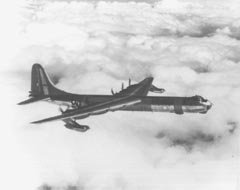
At about 9:10 in the morning on 1 May 1952, Major Rudolph "Rudy" Pestalozzi, the base Air Intelligence officer at Davis-Monthan Air Force Base just outside Tucson, was walking up to the base hospital for treatment of an injured knee. This case file covers what witnesses reported, the official narrative, and a two-pass assessment with its evidence tier.
What did witnesses see at Davis-Monthan Air Force Base?
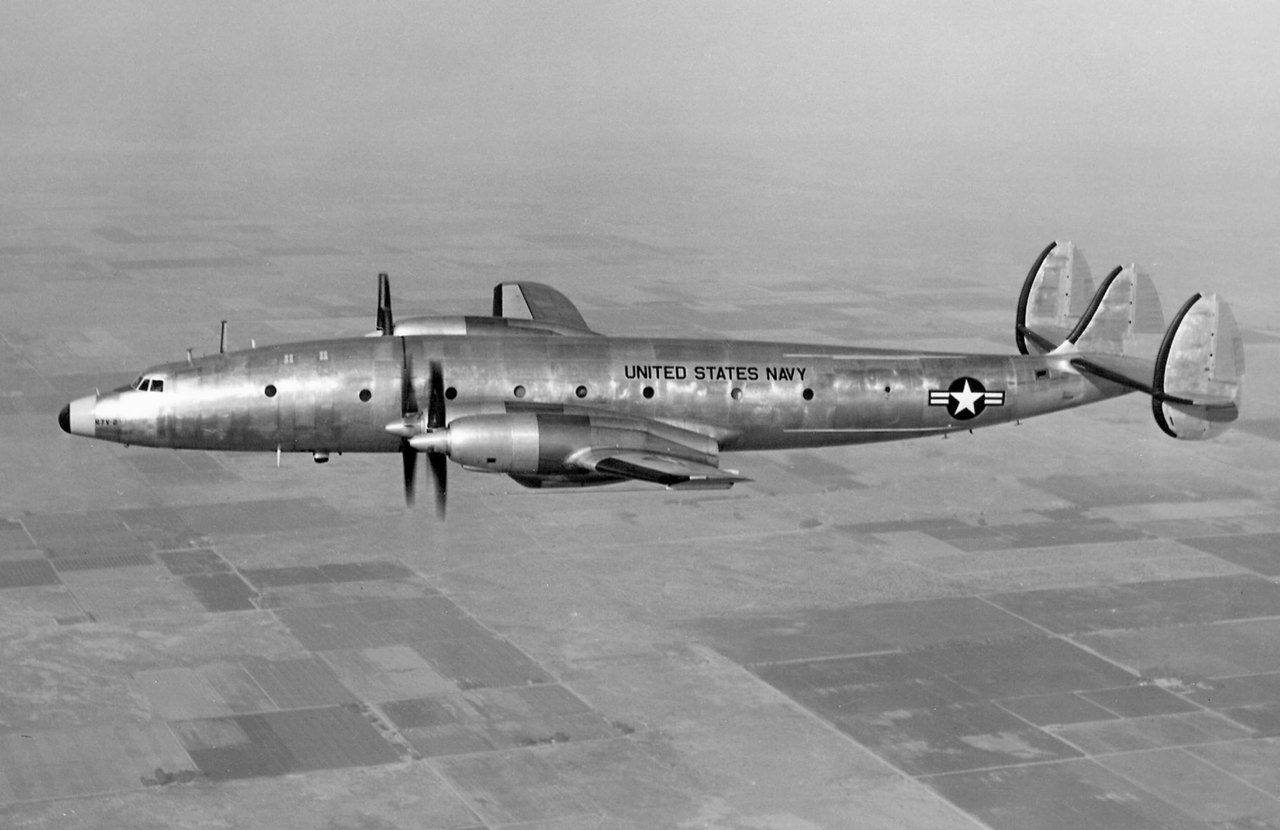
At about 9:10 in the morning on 1 May 1952, Major Rudolph "Rudy" Pestalozzi, the base Air Intelligence officer at Davis-Monthan Air Force Base just outside Tucson, was walking up to the base hospital for treatment of an injured knee. An airman was coming down the same steps, just leaving the hospital. Both men looked up and saw a Convair B-36 strategic bomber crossing the sky to the east of the base, heading almost due west at an estimated 20,000 feet. What stopped them was that two shiny, round objects were overtaking the bomber.
The two objects came up on the B-36 at three to four times its speed, then braked hard and slowed to exactly match the bomber, settling into formation with it. Pestalozzi held them under observation for what he later estimated at three to five minutes as the aircraft passed nearly overhead. He put his line of sight to the bomber at the moment the objects joined it at about 50 degrees of elevation, and again at about 50 degrees above the western horizon when they left. Hynek records what happened next from the surviving report: the two objects "stayed in formation with it for about 20 seconds, then executed a sharp, no-radius 70-80-degree turn from the line of flight of the B-36, and resumed original speed and went to about one-fourth the distance to the horizon when one of the two objects made an immediate stop and hovered." There was no sound except the engines of the B-36, and no contrails from either the objects or the bomber.
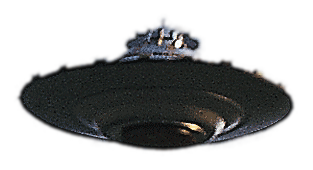
The objects were not blurry specks. Pestalozzi sketched them for McDonald years later. Each disc was round, roughly 20 to 25 feet across and about 10 to 12 feet thick at the center, symmetrically convex top and bottom and sharper at the rim, with some crew describing a pale band partway down. The disc nearest the aircraft sat at a level distinctly below the mid-line of the fuselage, low enough that the crew looked down on it. That detail mattered: Hynek notes it may explain "why there was no marked aerodynamic disturbance of the aircraft's flight characteristics, one of the very puzzling features of the incident."
The B-36 crew saw the objects too, and they reacted. As McDonald wrote, all of the crew except the pilot were able to get back to the starboard blister, the bubble window aft of the wing, to look at the disc before it left. The crew was shaken. After the objects departed, the bomber radioed the Davis-Monthan control tower and demanded permission to land immediately. It was just after they touched down that Operations called Pestalozzi over to interrogate the crew, which he did in his capacity as the base UFO officer. He also learned that roughly six or seven other Air Force personnel at scattered points around the base had watched the same two objects from the ground, their descriptions matching his own and the airman's closely enough that he later said he did not even bother to fold all of them into his official report.
What is the official explanation?
This case has a strange official footprint, and the strangeness is the whole point. Pestalozzi was not a passing civilian. He was the Air Intelligence officer whose routine duty was to analyze UFO reports made to the base, and he was himself one of the witnesses. He filed a report to Project Blue Book that he described to McDonald as "a rather thick report on this B-36 case, the thickest he ever filed on a UFO," covering his own observation, the B-36 crew he personally interrogated, and the airman beside him.
That report then vanished from the files. Dr. James E. McDonald, the senior atmospheric physicist at the University of Arizona who in the mid-1960s was working through Blue Book's records, made two separate attempts to locate any trace of the B-36 incident in the official files and came up empty both times. In a letter dated 14 July 1966 to Major Hector Quintanilla, the head of Project Blue Book, McDonald wrote: "Following our second unsuccessful effort to locate in the Blue Book files any record of the B-36 incident at Davis-Monthan AFB, I have asked Maj. Pestalozzi to put down, in a letter to me, an account of such details as he can still remember with confidence." The thick file was gone. Hynek notes that "a small part of this was apparently recovered and now appears in the Blue Book microfilms."
And here is the disposition. Hynek, who worked inside Blue Book for years, states it plainly: "Despite the detailed description (in the original report) of the maneuvers of the two shiny, silent objects, Blue Book dismissed this case as 'Aircraft.'" Two 20 to 25 foot discs that overtake a B-36 at several times its speed, brake to formation, then make a no-radius 70 to 80 degree turn and stop dead to hover were officially logged as ordinary aircraft. The case does not appear in the published roster of Blue Book "Unknowns," precisely because the surviving fragment was tagged "Aircraft" rather than Unidentified.
Independent researchers reject that label. Brad Sparks lists the event in his Comprehensive Catalog of Project Blue Book UFO Unknowns as case 407 (BBU 1175): "9:10 a.m. Base Intelligence Officer Major Rudolph Pestalozzi, Butonne, and several others saw 2 shiny round 20-25-foot objects rapidly overtake then pace a B-36 in E-W flight at 20,000 ft at about 50 degrees plus or minus 10 degrees elevation, then depart at high speed, one object stopping to hover briefly, before disappearing, no sound, no trail. B-36 crew also saw objects and interrogated on landing. (Case file missing.)" Sparks cites Hynek pages 109 to 112 and the FUFOR Index, and notes ten or more witnesses. Hynek himself credits the recovery of the case entirely to McDonald: "It is due largely to the industry and perseverance of Dr. James McDonald that this excellent case was resurrected at all." Hynek also records that inside Blue Book, McDonald was "regarded by Blue Book personnel as an outstanding nuisance" for insisting on a serious scientific study of the cases that defied natural explanation.
What did the witnesses think it was?
The lead witness believed exactly what his training told him he was looking at, and his training was the problem for the skeptics, not for him. Major Rudolph Pestalozzi was an Air Intelligence officer from roughly 1950 to 1960 and was stationed at Davis-Monthan during 1951 to 1953, with field investigation of UFO sightings as one of his standing duties. He was, in other words, the single best-qualified observer the Air Force could have put on the ground that morning, and he was looking at the objects deliberately and continuously for minutes, not catching a half-second glint. He sketched the discs, their dimensions, and their flight paths for McDonald, and he stood by the account well enough to write it down again in 1966 when the original was lost.
He was not alone, and that is what lifts this case above a single-witness anecdote. The airman on the hospital steps beside him saw the same thing; whatever this airman's exact name (Hynek says Pestalozzi had forgotten it, while Sparks records it as "Butonne" and some secondary retellings render it Bouton), his independent vantage gave Pestalozzi a second ground witness within arm's reach. The entire B-36 crew except the pilot crowded the starboard blister to watch the disc, then landed shaken and demanded to come down at once, which is corroboration written into the flight's own actions. And six or seven more Air Force personnel scattered across the base reported the two objects from the ground, their accounts matching closely enough that Pestalozzi treated them as redundant. That is something on the order of ten or more military witnesses, from the air and from multiple separated points on the ground, all describing two shiny discs pacing a bomber.
McDonald, for his part, did not file this as a curiosity. He pressed Pestalozzi closely on the timing, the angles, and the geometry, cross-checking the five-minute and three-minute estimates against a 20,000 foot altitude and the lines of sight, the work of a physicist trying to break the story rather than dress it up. It survived that. The witnesses believed they had watched two structured, controlled objects fly in a way no 1952 aircraft could, and the man tasked by the Air Force with explaining such things away could not explain it away.
The dispute
The only counter-explanation that exists for this case is the Project Blue Book disposition itself, which classified the surviving fragment of the report as "Aircraft." This is an official finding, and it is genuine, so the case is not free of dispute. But it is a weak finding by every test that matters. Blue Book named no aircraft, identified no flight, and offered no aerodynamic account of how two ordinary aircraft could overtake a B-36 at three to four times its speed, brake to formation, execute a no-radius 70 to 80 degree turn, and then stop and hover. It is an assertion without a shown method, advanced by the same office that, on Hynek's own testimony from inside Blue Book, was institutionally inclined to close cases rather than study them and regarded the scientist who reopened this one, James McDonald, as "an outstanding nuisance."
The dispute is compounded, not resolved, by the missing file. The original report was filed by the base Air Intelligence officer, the very person whose duty was to evaluate such sightings, and he described it as the thickest UFO report of his career. That report then disappeared from Air Force custody, and only "a small part" survives on the Blue Book microfilms. McDonald wrote twice trying to locate it and failed both times, which is why his 14 July 1966 letter to Major Quintanilla had to ask Pestalozzi to reconstruct the account from memory. An official "Aircraft" label attached to the fragment of a vanished report, with the detailed body of evidence no longer available to test it, cannot bear the weight of a real debunk.
What it cannot be is anything stronger than Barely Disputed. There is no confession, no recantation, no recovered hoax prop, and no positive identification of any specific real-world object, no named aircraft type, no traced flight, no balloon launch, nothing. The witnesses never wavered, and the independent catalog tradition (Hynek, McDonald, and Brad Sparks, who lists it as BBU 1175 among the Blue Book unknowns) treats the official "Aircraft" tag as untenable rather than authoritative. The dispute is therefore real but thin: an unsupported official label sitting on top of a lost file, against the on-record testimony of the base intelligence officer, a bomber crew, and roughly ten military witnesses. The case largely stands.
Is the Davis-Monthan B-36 Discs real? The two-pass assessment
Pass one, the ordinary readings. Could the two objects have been real aircraft, which is literally what Blue Book wrote down? No 1952 aircraft, and none since, overtakes a bomber at three to four times its speed, brakes to formation in seconds, then performs a "sharp, no-radius" 70 to 80 degree turn and stops dead in the air to hover, all silently and without contrails. The "Aircraft" tag is an assertion with no named aircraft, no flight, and no shown aerodynamics behind it. Could it be a reflection, a sundog, or an optical artifact? Those do not pace a moving bomber from multiple separated ground positions and from the bomber's own crew at the blister for minutes, and they do not produce a consistent 20 to 25 foot disc with estimated thickness that the lead witness could sketch. Could it be a balloon or balloons? Balloons drift; they do not overtake a westbound B-36 at several times its speed, hold formation, then knife away and halt. Hoax is essentially excluded by the witness mix: this is the base Air Intelligence officer, the bomber crew, and a half-dozen more airmen, with no prop, no photo to fake, and no motive, the lead witness being the very officer whose job was to debunk such reports.
Pass two, if it is real. Then what Pestalozzi and the crew watched were two structured, controlled, roughly disc-shaped craft about 20 to 25 feet across and 10 to 12 feet thick, capable of accelerations and an instantaneous hover that sat outside the entire 1952 performance envelope, deliberately closing on and pacing a nuclear bomber over a Strategic Air Command base. The low position of the near disc relative to the fuselage, and the absence of any aerodynamic disturbance on the B-36 despite a 20 to 25 foot object flying in close formation, is exactly the kind of detail Hynek flagged as "very puzzling," because conventional lift and wake physics would predict the opposite.
The reason this is not filed as Verified Unexplained is the disposition. There is a counter-explanation on the official record, the Blue Book label "Aircraft," and a non-disputed tier would ignore it. But that label is the textbook example of a weak, method-free official assertion: no aircraft is identified, the surviving record is an admitted fragment of a report that went missing while in Air Force custody, and the man who wrote the original was the base's own intelligence officer. Independent researchers (McDonald, who resurrected it; Hynek, who reproduced it; Sparks, who catalogs it as BBU 1175) treat the event as a genuine unknown, and the "Aircraft" tag has never been backed by a shown method. A weak official finding that the case largely survives is the definition of Barely Disputed, and that is the tier. The dispute is the Air Force's unsupported label and the missing file, not any demonstrated mundane cause.
Sources
- archive.org/stream/TheHynekUFOReport/The_Hynek_UFO_Report_djvu.txt
- ia600600.us.archive.org/21/items/TheHynekUFOReport/The_Hynek_UFO_Report.pdf
- www.fcoiaa.it/wp-content/uploads/Data/Ufo/USA/BBook/BB_Unknowns_1_7.pdf
- www.nicap.org/reports/520501davismonthan_hynek.htm
- ufologie.patrickgross.org/htm/davis.htm
- archive.org/details/TheHynekUFOReport
More cases from this region: UFO sightings in United States