The Navy R7V-2 Giant Disc
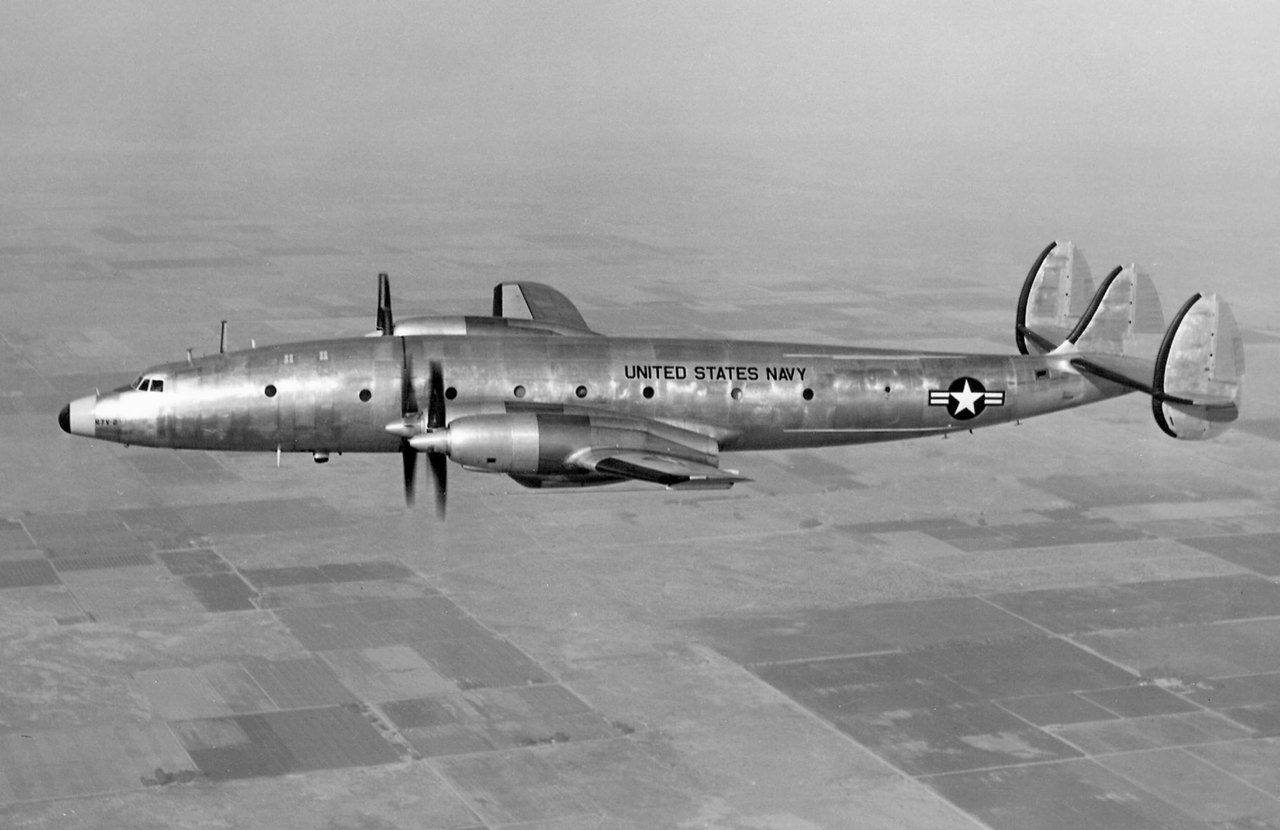
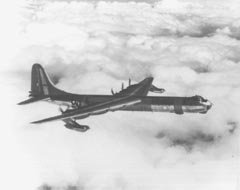
On a clear night with unlimited visibility, a US Navy R7V-2 transport, the four-engine turboprop Super Constellation, was cruising west across the North Atlantic at 19,000 feet, bound for Gander, Newfoundland, with a final destination of Naval Air Station Patuxent River, Maryland. This case file covers what witnesses reported, the official narrative, and a two-pass assessment with its evidence tier.
What did witnesses see at North Atlantic Ocean?
On a clear night with unlimited visibility, a US Navy R7V-2 transport, the four-engine turboprop Super Constellation, was cruising west across the North Atlantic at 19,000 feet, bound for Gander, Newfoundland, with a final destination of Naval Air Station Patuxent River, Maryland. In the senior pilot's seat sat the man Keyhoe called Commander George Benton, age thirty-four, a Navy flier with a decade of experience who said he had made the Atlantic crossing more than two hundred times. The aircraft carried close to thirty men, including multiple pilots, navigators, and flight engineers, because long ocean legs were flown with relief crews aboard.
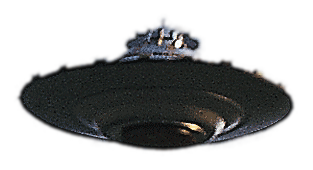
A few minutes earlier the sea below had been black. Then Benton saw what looked like a cluster of lights, "like a village," roughly twenty-five miles ahead and below. The glow, he realized, was coming from the rim of a large round object that was climbing toward the transport's altitude. As it rose it swiftly took shape as a giant disc. Its bulk was the detail every account fixes on. Its diameter was estimated at three to four times the Constellation's wingspan, and the machine was at least thirty feet thick at the center, shaped like a gigantic dish inverted on top of another dish. The glow along the rim was bright enough to show the curving surface and to give a hint of dully reflecting metal. From the answers later collected, the majority crew opinion put the disc at between 350 and 400 feet in diameter.
The object reached the transport's altitude and then held off, pacing or shadowing the aircraft for a brief period before it tilted, accelerated, and pulled away into the night sky. From the timing the crew gave, the disc had climbed to 19,000 feet in something like five to eight seconds, a rate that worked out to a speed of between 1,400 and 2,200 knots, with the object accelerating beyond that as it departed. There was no reported interference with the engines or ignition, the cockpit instruments were not being closely watched during those seconds, and the radio was not in use at that exact moment, so the crew were careful afterward to say what they could and could not vouch for.
Benton called Gander on the radio and asked whether the field showed any other traffic near his position. Gander answered that they had something on the scope close to him but had not been able to raise it. Benton's reply was blunt and is the line most often quoted from the case: "We saw it. It was no aircraft." That radar-and-visual pairing, an object held on a ground scope at the same time multiple aircrew watched it climb and pace them, is what lifted this report out of the lone-pilot category and into a multi-witness military encounter.
What is the official explanation?
The case never became a public Air Force pronouncement, which is part of why it sat unknown for years, but the official machinery did engage with it immediately. When the Constellation landed at Gander, Air Force Intelligence officers were waiting for the transport, and Keyhoe's account stresses that from the start it was plain the officers accepted the giant disc sighting as fact rather than treating the crew as confused. The men were questioned at length. Back at Gander, teletype messages were rushed to the US Air Defense Command, to the Commanding Officer of the Eastern Sea Frontier, to the Director of Air Force Intelligence, and to the Air Technical Intelligence Center at Wright-Patterson, ATIC being the body that ran Project Blue Book. That distribution list is the official footprint of the case: four separate commands receiving priority reports the same night.
The report then went quiet inside the system. Keyhoe wrote that he learned of it only in early 1959, two to three years after the flight, when a short message reached him from Rear Admiral Delmer S. Fahrney, the retired former chief of the Navy's guided-missile program and at that time a figure on the new NICAP board. Fahrney pointed Keyhoe to Captain James Taylor, USN retired, who was working at a firm called Spacetronics, Inc., in Washington, and who held the detailed Navy account. Keyhoe wrote that once Taylor gave him the report he could see why it had never been released to the public, and that he and Fahrney later met at the Army and Navy Club to go over the details. Fahrney's own posture toward such cases was on the record: at a NICAP press conference on 16 January 1957, widely reported including in the New York Times, the admiral stated that reliable reports indicated objects were entering the atmosphere at very high speeds and that the way they changed position indicated their motion was intelligently directed.
Because Keyhoe deliberately disguised the identifying details, no single declassified Project Blue Book card has been cleanly matched to this flight in the public files, and the names "Benton," "Mooney," and "Erdman" are pseudonyms by the author's own statement. The case is preserved instead through NICAP's documentary record. NICAP's 1964 compilation "The UFO Evidence," edited by Richard Hall and later reproduced in full inside the CIA's own reading-room holdings, presents this kind of multi-witness military encounter as core evidence that the unexplained objects behaved as real, artificial, intelligently controlled craft. Later NICAP-derived chronology work ties the actual flight to 8 February 1957, treating Keyhoe's "1956" as one of the changed details.
What did the witnesses think it was?
The central witness is the man Keyhoe called Commander George Benton, the senior pilot, who had no doubt the object was a structured machine under control. When an intelligence officer asked whether he had seen any sign of life aboard the disc, Benton answered that he had not, but added that it was intelligently controlled, "that's certain." He was not a lone observer. The flight deck included the co-pilot Keyhoe named Lieutenant Peter Mooney and the navigator he named Lieutenant Alfred Erdman, and with close to thirty airmen aboard, a relief complement of pilots and navigators, the disc was seen by multiple sets of trained eyes. The crew's collective answers to the intelligence officers' questions are what produced the 350-to-400-foot diameter estimate and the five-to-eight-second climb figure, meaning these were not one man's impressions but a pooled, cross-checked crew account.
What the witnesses believed comes through in how carefully they bounded their own testimony. They did not claim engine failure, they did not claim instrument disturbance, and they did not pad the story. They reported a solid, metallic, self-luminous disc of enormous size that climbed at impossible speed, paced their aircraft, and left. The fact that Gander radar had an unidentified return near them at the same time reinforced, for the crew, that they had watched a physical object and not a star, a reflection, or a trick of the night.
The corroboration runs up the chain rather than just across the cockpit. Admiral Fahrney, who routed the report to Keyhoe, was a senior naval officer with no incentive to chase fantasies, and he had said publicly that such objects appeared to be under intelligent control. Captain Taylor held and vouched for the detailed Navy account. The Air Force Intelligence officers at Gander, by Keyhoe's telling, accepted the sighting as fact on the night it happened. This is the pattern that makes pilot cases like this one weigh heavily: the witnesses were professionals trained to identify aircraft and navigate by the stars, their account was internally consistent, and the people who handled the report afterward, including a rear admiral and military intelligence, treated it as a serious physical event rather than a misperception.
The dispute
The dispute is twofold and both prongs are real but limited. The first prong is provenance. The case is famous almost entirely because Donald Keyhoe published it in his 1960 book "Flying Saucers: Top Secret," and in that same book Keyhoe stated outright that he had changed the names, the date, and the aircraft identification because the commander and most of the crew were still on active duty. By his own hand, then, the central published facts of who, when, and which aircraft were deliberately altered. The pilot "Commander George Benton," co-pilot "Lieutenant Peter Mooney," and navigator "Lieutenant Alfred Erdman" are pseudonyms, and the year "1956" in Keyhoe's text is one of the changed details. Skeptics reasonably point out that a story whose own author scrambled its identifying anchors is very hard to independently verify against military records, and that no cleanly matched Project Blue Book case card, no photograph, and no preserved radar tape has surfaced in the public archives.
The second prong is the perceptual and physical reconstruction. The disc's enormous size, its 350-to-400-foot diameter, and its derived speed of 1,400 to 2,200 knots were not measured by instruments. They were built from crew estimates of angular size at night over open water and from a few seconds of perceived climb time, conditions in which range, and therefore size and speed, are extremely hard to judge. A critic can argue the initial "cluster of lights like a village" was a star, a planet, or distant aircraft lighting misjudged for distance, and that the Gander radar return, described as an unidentified contact the tower could not raise, falls short of a calibrated track confirming a solid 400-foot object.
What the dispute does not contain is decisive. No analyst has produced a confession, a recovered hoax prop, a positively identified conventional aircraft, a specific traced balloon or rocket, or a demonstrated natural light source that accounts for this particular encounter. The strongest concrete point against the case, Keyhoe's admitted alteration of names and date, undermines traceability without explaining what nearly thirty airmen reported watching pace their aircraft. Because the counter-arguments are a documentation weakness and an unproven perceptual reconstruction rather than a method-shown identification of the real object, the case sits at Barely Disputed and is not pushed toward discredited.
Is the Navy R7V-2 Giant Disc real? The two-pass assessment
Pass one, how this could be entirely ordinary. The honest weak point of the case is that the public record runs through a single author who openly altered the identifying facts. Donald Keyhoe wrote in 1960 that he had changed the names, the date, and the aircraft identification because the crew were still on active duty, which means the primary published account is, by design, partly fictionalized at the level of who, when, and which tail number. That gives a debunker real room. A skeptic can argue that the "village of lights" twenty-five miles ahead was a misjudged star, planet, or another aircraft's lighting at the limit of visibility over black ocean, where distance and size are notoriously impossible to estimate, exactly the caveat that pilots in similar Atlantic night cases attached to their own reports. The huge diameter and the 1,400-to-2,200-knot speed are not instrumented measurements; they are reconstructions built from crew estimates of angular size and a few seconds of perceived climb, and small errors in assumed range balloon into enormous errors in derived size and speed. The Gander radar return is suggestive but, as reported, was an unidentified contact the tower could not raise, which is not the same as a calibrated track confirming a 400-foot object. No surviving, matched Project Blue Book file, no photograph, and no preserved radar tape has surfaced in the public archives, so the case rests on testimony filtered through a NICAP advocate.
Pass two, if real, what it is. If the crew's account is taken at face value, this is a textbook high-strangeness military encounter: a large, metallic, self-luminous disc, hundreds of feet across, that climbed to airliner altitude in seconds, paced a Navy transport at close range, and departed at a speed no 1950s aircraft could touch, while a ground radar simultaneously held an unidentified return near the plane. The corroboration is unusually strong for the era. Close to thirty trained airmen aboard, intelligence officers who accepted it on landing, priority teletypes to four commands the same night, and a retired rear admiral, Delmer Fahrney, who personally routed the report and had publicly stated that such objects appeared to be intelligently controlled. An official-apparatus reaction this fast and this high is itself evidence the case was real enough to take seriously, and under Graham's standing rule that counts in pass two, not against the case.
The dispute here is genuine but it is not method-shown. Nobody has produced a confession, a recovered prop, a named conventional aircraft, a traced balloon, or a specific identified light source that demonstrably explains this sighting. The only concrete strike against it is the author's admitted alteration of names and date, which damages traceability but does not explain away what the crew described. That is a partial, documentation-level weakness, not a positive counter-identification, so the case lands at Barely Disputed and largely stands.
Sources
- ufologie.patrickgross.org/htm/bethune51keyhoe.htm
- www.nicap.org/ufoe/UFO%20Evidence%201964.pdf
- www.cia.gov/readingroom/document/cia-rdp81r00560r000100010001-0
- www.thisdayinaviation.com/tag/lockheed-r7v-2/
More cases from this region: UFO sightings in Canada