The Santa Barbara Channel UFO (1953)
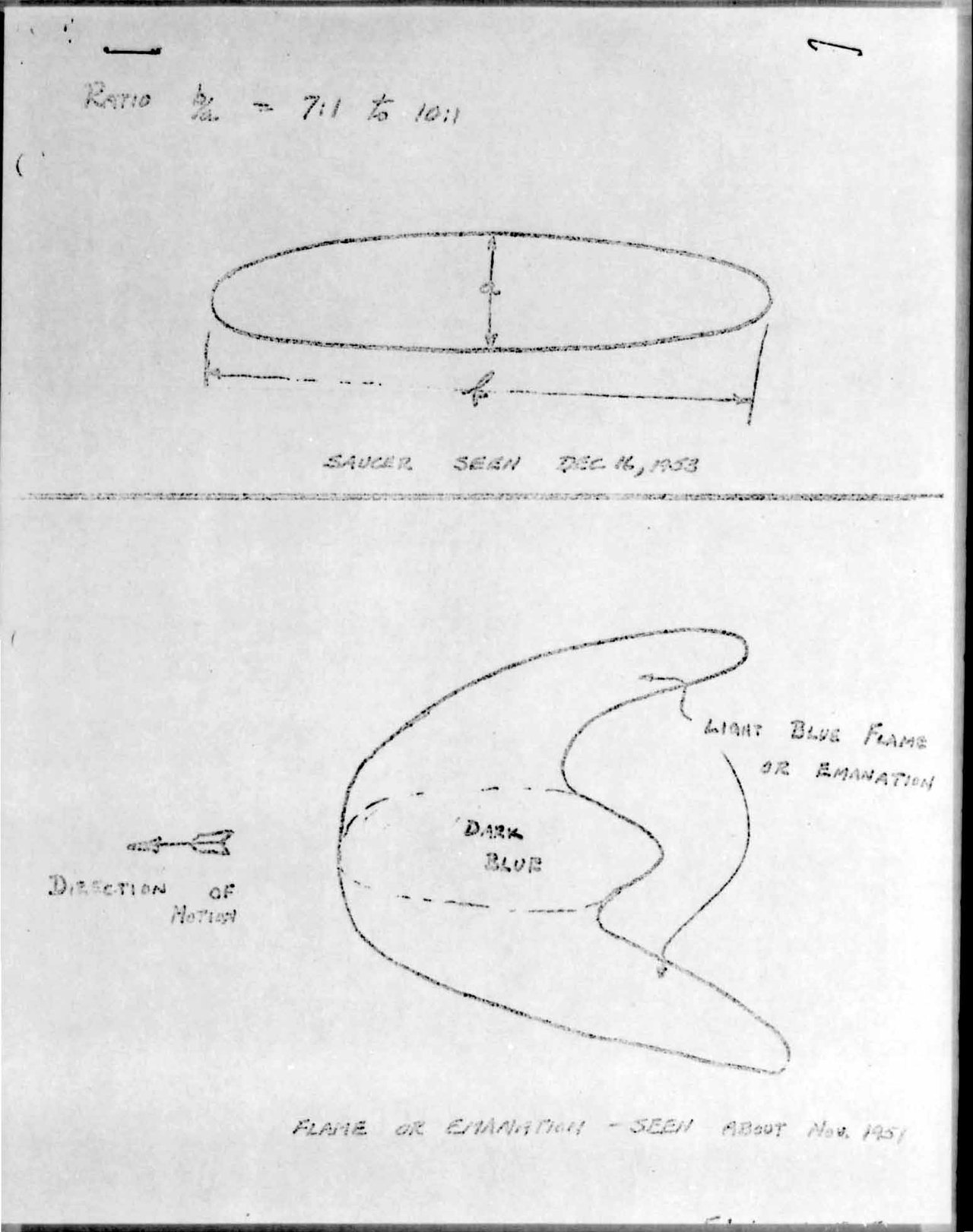
At about 17:00 PST on Wednesday 16 December 1953, two separate groups of Lockheed personnel watched the same dark object hanging over the Santa Barbara Channel, and neither group knew the other was watching until afterward. This case file covers what witnesses reported, the official narrative, and a two-pass assessment with its evidence tier.
What did witnesses see at Santa Barbara Channel?
At about 17:00 PST on Wednesday 16 December 1953, two separate groups of Lockheed personnel watched the same dark object hanging over the Santa Barbara Channel, and neither group knew the other was watching until afterward. The first group was airborne. A Lockheed WV-2, the Navy radar early-warning version of the Super Constellation, had lifted off from the Lockheed Air Terminal at Burbank at 16:29 PST on a test flight and was climbing northwest along the coast. On board were five of the company's most senior technical men: Roy E. Wimmer, the engineering test pilot in command; Rudy L. Thoren, Lockheed's Chief of Flight Test, in the right seat; Philip A. Colman, the Chief Aerodynamics Engineer; Joseph F. Ware, Jr., of the Flight Test Section; and flight engineer Charles Grugan.
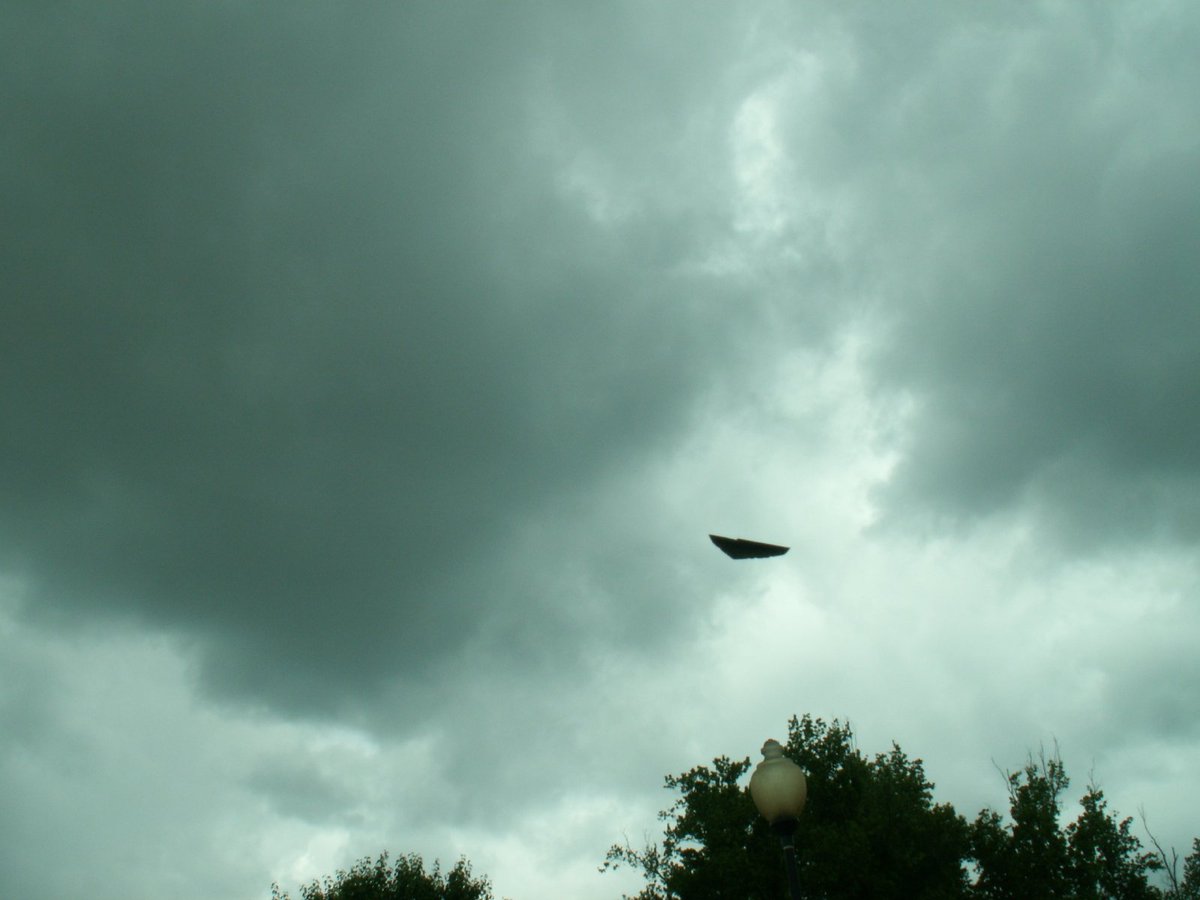
A little before five o'clock, around 16:58 PST, Roy Wimmer spotted a dark shape ahead at roughly their own altitude, out over the water between Point Mugu and the Channel Islands. It read to the crew as a simple flattened ellipse, "sharp-edged black silhouette against the post-sunset sky," solid and substantial, like a very large aircraft of some kind. They turned and flew toward it at around 225 miles per hour and could not close the distance at all. For something on the order of five minutes the object hung essentially stationary, holding its shape exactly, and then, near 17:05 to 17:07 PST, it appeared to head west directly away from them at high speed, dwindling to a tiny dot and vanishing while staying dark and solid-looking the whole way. Reconstruction by researcher Martin Shough places the WV-2 at roughly 16,000 to 17,000 feet at the moment of the sighting.
The second group was on the ground. Clarence "Kelly" Johnson, Lockheed's Chief Engineer and the man who would go on to run the Skunk Works and design the U-2 and the SR-71, had driven out with his wife Althea to their Lindero Ranch about three miles west of Agoura, arriving in the late afternoon. Looking out through the big southwest-facing windows toward Point Mugu, Johnson saw a long, distinct, "intense black" elliptical object standing motionless against the brilliant post-sunset sky over the western mountains. He first took it for an unusually dark, dense cloud or a smoke trail, but it would not behave like one. He fetched a pair of 8x binoculars and went outside. By then the object had begun to move, accelerating away from him in a long shallow climb, shrinking steadily without ever changing shape, and it disappeared in about ninety seconds. Johnson recorded the bearing at roughly 255 degrees true and put the proportions of the ellipse at a width-to-thickness ratio of seven to one up to ten to one, which he drew out on paper with dimension arrows. Both vantage points, the climbing WV-2 and the ranch at Agoura, had lines of sight that converged out over the Channel near the islands, the two bearings differing by about forty degrees, which is what makes this a genuine two-station observation rather than a single point of view.
What is the official explanation?
The reporting chain here is unusual because the witnesses were themselves the aerospace establishment. Kelly Johnson was reluctant to file at all. He collected five separate eyewitness statements from the WV-2 crew, added his own account, his sketches, and a map drawn by Joseph Ware, and forwarded the whole package "discreetly," in Shough's word, on 20 January 1954 to Project Blue Book at the Air Technical Intelligence Center, Wright-Patterson AFB, by way of Lieutenant General Donald Putt. The covering note that went with it captured the awkwardness: it recorded that the report "was handed to me by Lockheed personnel with the explanation that Mr. Johnson was most reluctant to write the report."
Blue Book's handling was thin. The Project 10073 Record Card for the case, under BRIEF SUMMARY AND ANALYSIS, reads: "First appeared as black stationary cloud, then rapid movement in long shallow climb." Under CONCLUSION it reads: "OTHER - CLOUD lenticular cloud." That is the entire official verdict. Shough's reconstruction of the file found that, in his words, the reports "were merely filed, exactly as they had been submitted," with no sign of any subsequent investigative or analytical work, and Joseph Ware's sighting map was later lost from the file altogether.
The lenticular-cloud label is the crux of the official narrative and also its weak point. A lenticular cloud is a lens-shaped standing wave cloud that forms in stable air flowing over terrain, and it does sit still, which is the one behavior it shares with what the witnesses described. What it does not do is hold a hard, sharp black silhouette and then accelerate away at high speed in a climb while keeping its exact shape. The Lockheed engineers, men whose entire professional lives were spent judging shapes moving through air, considered the cloud explanation and rejected it on exactly those grounds. Johnson initially reached for "lenticular cloud" himself and then abandoned it because of the object's darkness, its hard edge, and its shape-preserving departure. The Air Force never reconciled its single-line conclusion with the motion the same card recorded.
What did the witnesses think it was?
Kelly Johnson did not come to this as a casual observer or a believer looking for confirmation. In the report he wrote for the Air Force he was candid about where he stood and what it had cost him professionally to say so: "I should state that for at least five years I have definitely believed in the possibility that flying saucers exist - this in spite of a good deal of kidding from my technical associates." Having watched the December 16 object with his own eyes, and knowing his own flight-test crew had independently watched it from twenty miles away, he wrote: "Having seen this particular object on December 16th, I am now more firmly convinced than ever that such devices exist, and I have some highly technical converts in this belief as of that date." The "highly technical converts" were the WV-2 crew, his own chief of flight test, his chief aerodynamicist, and two test pilots, the people he trusted to evaluate aircraft behavior for a living.
The strength of the case rests on who the witnesses were and on the geometry that linked them. This is not a lone motorist or a frightened farmhand. It is the Chief Engineer of one of the world's leading aircraft companies plus the cream of his flight-test organization, observing simultaneously from an airborne platform and a fixed ground position, with their lines of sight crossing out over the Channel. Every one of them described a dark, solid, sharp-edged object that hovered and then accelerated. Johnson's instinct, recorded at the time, was that it was a "so-called saucer," and he reached that conclusion not from enthusiasm but by elimination, because nothing in his deep knowledge of cloud, smoke, or aircraft would behave the way this thing behaved. Johnson also told the Air Force he had seen an earlier unexplained object, which he sketched as a dark blue ellipse trailing a light blue "flame or emanation," around November 1951, and his confidence in the 1953 event was built on top of that earlier experience.
The dispute
The dispute is over a single counter-explanation: that the object was a lenticular (lens-shaped standing wave) cloud. This was the original Project Blue Book conclusion, recorded on the Project 10073 Record Card as "OTHER - CLOUD lenticular cloud," and it was revived decades later by the skeptical community. Tim Printy, who publishes the skeptical newsletter SUNlite, drew attention to the case, and UK weather forecaster Nigel Bolton offered an analysis arguing that conditions over the Southern California coast on the evening of 16 December 1953 were conducive to lenticular cloud formation. The notaghost blog assembled this into a prosaic explanation, citing modern video of lenticular clouds filmed near the same stretch of coast as a demonstration that such clouds form there and can look striking and saucer-like.
The reason this counts as a dispute is that a lenticular cloud genuinely is the best-fitting ordinary explanation for a dark, lens-shaped object that hangs motionless against a sunset horizon. That single shared trait, apparent stationarity, is real, and it is why both the 1954 Air Force and later skeptics landed on the same word. So the case cannot be presented as having no counter-explanation at all.
The reason the dispute does not close the case, and why this is barely rather than strongly disputed, is that the lenticular hypothesis is an assertion and a reconstruction, not a positive identification. No one has produced a photograph of the actual cloud, pinned down the specific formation, or shown by demonstration that a lenticular cloud can do what every witness reported, namely present a hard, sharp black edge and then translate horizontally and climb away at high speed while keeping its shape unchanged. A standing wave cloud is by definition anchored to the terrain feature that creates it and does not go racing off to the west. The witnesses, who included Lockheed's chief aerodynamicist and chief of flight test, explicitly considered the cloud idea and rejected it on those grounds, and Kelly Johnson himself reached for "lenticular cloud" first and then abandoned it. Independent researcher Martin Shough examined the Long Beach and Santa Maria radiosonde soundings for that evening and found ordinary lapse rates of about 6.7 to 6.8 degrees C per kilometre with no significant atmospheric anomaly at the relevant level, weakening the case that unusual air was producing an unusual cloud or a mirage at the object's apparent position. The counter-explanation is therefore weak and contested, an official label plus a plausible but unproven weather argument, and the case largely stands on the quality of its witnesses and the two-station geometry.
Is the Santa Barbara Channel UFO (1953) real? The two-pass assessment
Pass one, the ordinary case. The official explanation is a lenticular cloud, and it has a modern defender. Tim Printy, who publishes the skeptical UFO newsletter SUNlite, took the case up, and UK forecaster Nigel Bolton argued that the atmospheric conditions over Southern California on the evening of 16 December 1953 were favorable for lenticular cloud formation. The notaghost analysis built on this, pointing to footage of lenticular clouds shot near the same coastline as visual support. A lenticular cloud is the one prosaic candidate that naturally explains a stationary, lens-shaped, dark shape low on a sunset horizon, and the Air Force reached for it for exactly that reason. Other ordinary candidates fare worse. A conventional aircraft cannot account for several minutes of apparent hover followed by a departure so fast it shrank to nothing in ninety seconds, nor for the failure of a 225-mile-per-hour Constellation to close on it. A contrail in sub-freezing, dry air at that altitude is unlikely without violent maneuvering, and a balloon or blimp does not climb away at speed while holding a hard silhouette. There is no confession, no recovered hoax prop, and no classified test program that anyone has ever named as the culprit.
Pass two, if it was real. Then two stations twenty miles apart, manned by Lockheed's most expert observers, both watched a single large dark solid object hold position over the Santa Barbara Channel and then accelerate out of sight in a shallow climb, an object that behaved like nothing in the 1953 inventory.
The dispute here is real but unsettled, which is why this sits in the Barely Disputed tier rather than anywhere harder. The lenticular-cloud explanation is the official conclusion and it has a serious meteorological argument behind it, so the case cannot be called cleanly Verified Unexplained. But that explanation has never been closed out. Nobody has identified the specific cloud, produced the specific photograph of it, or shown that a lenticular formation can present a hard black edge and then translate horizontally at high speed while preserving its shape, which is the behavior every witness reported and the behavior a standing wave cloud by definition does not exhibit. Martin Shough's reconstruction examined the Long Beach and Santa Maria radiosonde profiles for that evening and found "very anodyne average lapse rates of 6.7C/km and 6.8C/km" with no significant anomaly, which undercuts the idea that the air was doing anything exotic at the object's apparent position. The men who saw it, including the engineer who designed the U-2 to fly at the edge of space, weighed the cloud idea and threw it out. A contested official assertion plus a plausible-but-unproven weather reconstruction is precisely the definition of barely disputed, and the case, carried by the calibre of its witnesses and the two-station geometry, largely stands. Tier: Barely Disputed.
Sources
- www.project1947.com/fig/lockufo53.htm
- www.nicap.org/reports/lockufoinc.htm
- theufodatabase.com/photos/1953-lockheed-sightings
- www.openminds.tv/multiple-witness-ufo-sighting-top-secret-aircraft-engineer-1953/28560
More cases from this region: UFO sightings in United States