Navy Aviators Encounter Three Discs Over Thule (1952)
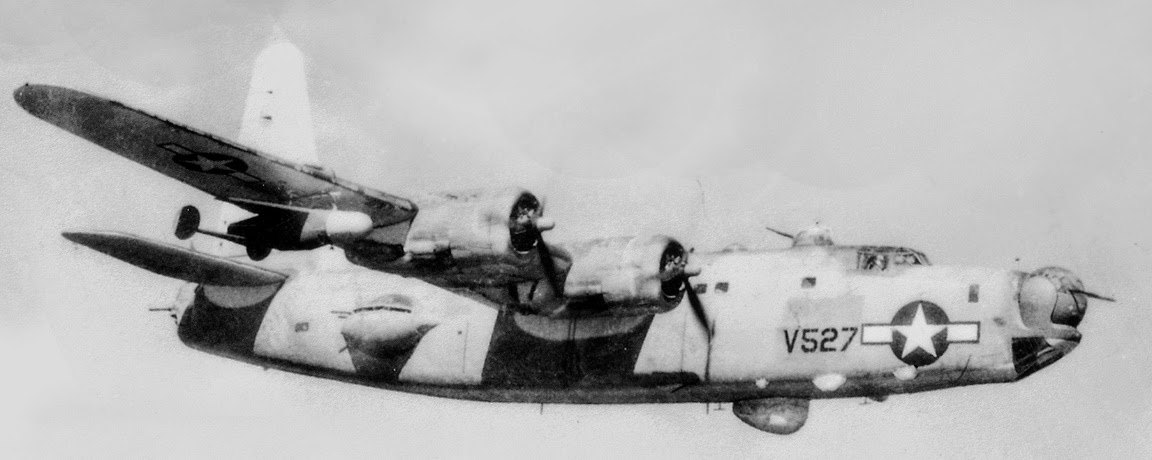
On the morning of 29 August 1952, a four-aircraft detachment of Patrol Squadron VP-23 was operating out of the newly built air base at Thule in northwest Greenland, flying Consolidated PB4Y-2 Privateers, the four-engine, single-tail Navy patrol bomber derived from the B-24 Liberator. This case file covers what witnesses reported, the official narrative, and a two-pass assessment with its evidence tier.
What did witnesses see at West of Thule Air Base?
On the morning of 29 August 1952, a four-aircraft detachment of Patrol Squadron VP-23 was operating out of the newly built air base at Thule in northwest Greenland, flying Consolidated PB4Y-2 Privateers, the four-engine, single-tail Navy patrol bomber derived from the B-24 Liberator. The detachment's primary job was ice reconnaissance over Smith Sound, Kennedy Channel, Baffin Bay and the Davis Strait. A secondary job was to support a cosmic-ray research party that sent up large high-altitude balloons carrying scientific instruments. The officer in charge of the detachment was Commander Edward P. Stafford, a career naval aviator who later became one of the Navy's best known writers. He is the narrator of the account.
On a flight that morning, one of the Privateer's crew spotted three shining, saucer or globe-shaped objects clustered close to the hanging tail of one of the research balloons, just above the dark dot of the instrument package. The pilot, Lieutenant junior grade William A. O'Flaherty, maneuvered the aircraft to keep the objects in sight while the crew studied them, some through binoculars. The navigator on the flight was Lieutenant junior grade R. S. Moore. The Blue Book record fixes the time at 10:50 a.m. and the position at roughly 77 degrees North, 75 degrees 15 minutes West, west of Thule.
The witnesses described three white, disc-shaped or spherical objects. Reconstructions drawn from Stafford's article put each object at somewhere between half and nearly the full apparent size of the giant balloon, arranged in a tight triangular cluster to one side of the instrument package. For a couple of minutes the objects appeared to hover near the balloon. Then they separated from it, drew into a compact vee formation, executed a sharp vertical bank, and accelerated to a blinding speed, vanishing from sight in roughly three seconds. The crew judged the departure speed and the implied turn to be far beyond anything a conventional aircraft of 1952 could do at that altitude. The whole encounter, from first sighting to disappearance, lasted on the order of two to three minutes.
The setting matters because it is unusually well pinned down. The balloon the crew was watching was a real, documented object. The aerospace-launch archive stratocat records that on that exact date, from the icebreaker USCGC Eastwind in Baffin Bay at 77 21' North, 73 29' West, James Van Allen's University of Iowa group launched a Skyhook-class cosmic-ray balloon as part of the rockoon program. So the aviators were watching a genuine high-altitude research balloon. What they could not account for were the three structured objects that gathered beside it and then left at high speed.
What is the official explanation?
The case entered the official record as a United States Air Force Project Blue Book report and was retained as an "Unknown." The most authoritative public trace of that classification is the catalogue of Blue Book Unknowns compiled by Don Berliner for the Fund for UFO Research. Berliner reviewed the original Project Blue Book case files at Maxwell Air Force Base in January 1974, before the files were redacted and microfilmed for release through the National Archives in 1976, and recorded the witness details and case summaries directly from those files. His entry reads: "Aug. 29, 1952; west of Thule, Greenland (77 N., 75 15' W.) 10:50 a.m. Witnesses: two U.S. Navy pilots flying a P4Y-2 patrol plane. Three white disc-shaped or spherical objects hovered, then flew very fast in a triangular formation, in 2-3 minutes."
A Project Blue Book "Unknown" is not a throwaway label. It is the Air Force's own designation for a report that its investigators could not match to any known aircraft, balloon, astronomical body, or weather phenomenon despite having sufficient data to attempt an identification. The great majority of the thousands of Blue Book cases were written off as misidentifications. Only a small residue, on the order of a few percent, survived as Unknowns. This case is one of them. Independent UFO-history research keys it as Blue Book Unknown case number 803 in the catalogue assembled by analyst Brad Sparks, and the case is carried in NICAP's listings and in Project 1947 archives.
The official narrative therefore is thin in the usual official way. There is a logged report, an investigation that could not explain it, and a final classification of Unknown. There is no surviving Air Force or Navy memorandum that names a specific cause, identifies the three objects, or walks the sighting back. The obvious candidate explanation, the research balloon itself, was already known to the crew and to investigators, because the Privateers were there to support the balloon program. That the case was still filed as an Unknown rather than closed as "balloon" tells you the balloon did not account for the three maneuvering objects in the eyes of the investigators who had the full file.
The 1952 context is also relevant to how the report was handled. The summer of 1952 was the peak of the great American UFO wave, the season of the Washington National radar-visual cases in July and a record flood of military reports. Reports from trained military aircrews in strategically sensitive Arctic airspace, near a brand-new forward base built under the classified Operation Blue Jay, carried weight and went up the chain rather than into a wastebasket. The result, in this instance, was an investigation that ended in an honest "unknown."
What did the witnesses think it was?
The central witness is the narrator himself, Commander Edward P. Stafford, United States Navy (Retired), the officer in charge of the Thule patrol detachment. Stafford was not a fringe figure. He was a naval aviator who flew with the Navy's Hurricane Hunters in PB4Y-2 Privateers in the early 1950s and went on to become a respected naval historian and author, best known for "The Big E," the classic history of the carrier USS Enterprise, published by the U.S. Naval Institute. He told the story decades later in his article "Cosmic Curiosity" in Naval History magazine, the Naval Institute's history journal, in the October 2004 issue (Volume 18, Number 5). A man with that reputation does not casually attach his name to a flying-saucer story in his own service's professional journal unless he believed what his crew saw.
The aircrew witnesses named in the record are the pilot, Lieutenant junior grade William A. O'Flaherty, who flew the Privateer to keep the objects in view, and the navigator, Lieutenant junior grade R. S. Moore. The Blue Book entry summarizes the witnesses as "two U.S. Navy pilots," meaning trained aircrew accustomed to judging the size, distance, speed, and behavior of objects in the air. These were not startled civilians. They were professional observers who knew exactly what their own balloon looked like, because supporting that balloon was part of their mission, and who still reported three additional objects they could not explain.
What the witnesses believed is captured in the tone of Stafford's account and in the simple fact that the report was filed at all. The crew did not think they had seen the balloon, sundogs, or another aircraft. They reported structured, disc or globe shaped objects that clustered beside the balloon, held position, then formed up and left at a speed and in a manner that struck experienced aviators as impossible for the machinery of 1952. They were impressed enough that the encounter stayed with the officer in charge for the rest of his life and that he chose to set it down in print half a century later.
Corroboration is unusually solid for a case of this vintage. The aircraft type and the Thule deployment are confirmed by the published history of Patrol Squadron VP-23, which records a four-plane PB4Y-2 detachment operating from Thule in 1952 on long-range Arctic reconnaissance over Baffin Bay and the Davis Strait. The balloon is confirmed by the stratocat launch record for 29 August 1952, which documents James Van Allen's University of Iowa cosmic-ray rockoon flight from the USCGC Eastwind at nearly the same coordinates, the same day. The official report is confirmed by the Blue Book Unknowns catalogue and contemporary press, including a notice in the Omaha World-Herald of 18 October 1952. Every load-bearing element of the story, the squadron, the aircraft, the place, the date, the balloon, and the official classification, is documented by a source independent of the witness himself.
Is the Navy Aviators Encounter Three Discs Over Thule (1952) real? The two-pass assessment
Pass one, how this could be entirely ordinary. The strongest mundane candidate is sitting right in the frame. The aviators were watching a genuine high-altitude research balloon, a Skyhook-class cosmic-ray balloon launched the same morning from the icebreaker USCGC Eastwind under James Van Allen's University of Iowa program, documented in the stratocat launch archive at 77 21' North, 73 29' West. High-altitude balloons are by far the most common honest explanation for daylight saucer reports of the period: the polyethylene envelope and its rigging can throw bright, disc-like glints, and a cluster of payload elements, parachutes, or even multiple balloons can read as several round objects hanging in the sky. Sundogs and ice-crystal halos are also routine in the high Arctic and can plant bright spots near a bright object. A skeptic can reasonably argue that the "three discs" were reflective parts of the balloon train or atmospheric reflections, and that the dramatic high-speed departure was an artifact of the balloon assembly being released, swinging, or being lost from view against the sky.
But that explanation has a clear seam. The witnesses were the very crew assigned to support the balloon. They knew what the balloon looked like, they were watching it deliberately, and they still reported three separate structured objects that gathered beside it and then formed up and accelerated away. Project Blue Book had the balloon in front of it as the obvious answer and declined to use it, keeping the case as an Unknown. No named analyst has ever shown, with a method, that the three maneuvering objects were a specific reflective component, a specific second balloon, or a specific optical effect. The balloon explains the backdrop. It does not, on the evidence shown, explain the objects.
Pass two, if real, what is it. Then this is a daylight observation by trained naval aircrew of three structured disc or globe shaped objects that held station near a stratospheric balloon, drew into a vee, banked sharply, and departed at very high speed in about three seconds. It belongs to the dense 1952 cluster of military aircrew saucer reports and is notable for an exceptionally tight evidentiary frame: a fixed date, fixed coordinates, named aircrew, a named and documented narrator, a confirmed squadron, a confirmed balloon launch, and an official Unknown classification.
On the tiering rules, an official-apparatus finding cuts in favor of the case, not against it. Blue Book reviewed this report and could not close it, leaving it as an Unknown, which is evidence it was real enough to resist explanation. There is no independent, civilian, method-shown debunk that positively identifies the three objects. The balloon, while a genuine and tempting natural anchor, is suggestive rather than a demonstrated identification of the maneuvering objects, so it does not push the case into a disputed tier. The material here is officially documented and the objects remain unexplained. Tier: Verified Unexplained.
Sources
- www.nicap.org/1952ad.htm
- www.nicap.org/bluebook/unknowns.htm
- www.usni.org/magazines/naval-history-magazine/2004/october/cosmic-curiousity
- www.usni.org/people/edward-p-stafford
- stratocat.com.ar/fichas-e/1952/ESW-19520829a.htm
- stratocat.com.ar/bases/20e.htm
- www.legion.org/information-center/news/magazine/2015/february/top-of-the-world
More cases from this region: UFO sightings in Greenland