The Malta Fishermen's Submarine and the Little Men

On an evening in June 1947, a small fishing boat working the water about 20 miles south of Malta, near latitude 35.39 north and longitude 14.25 east in the Mediterranean, became the setting for one of the stranger occupant reports of the 1947 wave. This case file covers what witnesses reported, the official narrative, and a two-pass assessment with its evidence tier.
What did witnesses see at About 20 miles south of Malta?
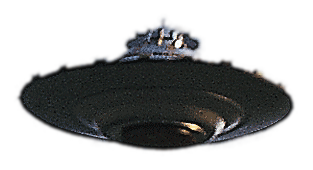
On an evening in June 1947, a small fishing boat working the water about 20 miles south of Malta, near latitude 35.39 north and longitude 14.25 east in the Mediterranean, became the setting for one of the stranger occupant reports of the 1947 wave. The named witness in the surviving accounts is a Maltese fisherman, Pawlu Zammit, who was aboard with others hauling in their nets after a catch. According to the catalogued testimony, as the men were raising the nets they noticed an object floating on the surface of the sea that, at first glance, looked like a black submarine.
What unsettled them was that it did not read as an ordinary submarine. In the words preserved in the case file, the fishermen "were frightened because they thought it looked more like a monster than a submarine," and they reacted the way frightened fishermen would: they quickly pulled in their nets and started the boat's engine to get clear of it. At that moment a bright light came on from the dark hull and "lit up the whole area." In that sudden illumination, figures described as "little men" began running over the deck of the object.
The fishermen were too far off to make out fine detail, but the report is specific about two things. Whenever the light caught the little men, the witnesses could see what they described as "some sort of apparatus around their waist," a belt or harness of some kind that they could not identify. And when one of the witnesses was later asked how tall these figures were, he answered plainly, "About the size of a 10 year old boy."
The closing of the account is what pushes it out of the ordinary. After the little men had moved about the deck for a few minutes, they went back inside the craft. The object then began to glow, the report says, so brightly that the fishermen could no longer see it at all, the glare forcing them to look away. Once the light died down the thing was gone. It had submerged and left no trace behind it, just the empty patch of sea where, moments before, a black hull and a crew of small running figures had been lit up against the night.
What is the official explanation?
There is no official narrative for this case, and that absence is the single most important fact about it. No 1947 government file, no Royal Navy incident report, no Maltese police record, and no contemporary newspaper account has ever been produced for it. Malta in 1947 was a British Crown Colony and a major Royal Navy base, so any genuinely reported mystery submarine 20 miles offshore would plausibly have generated an Admiralty or colonial security note. None has surfaced. The case did not pass through Project Sign, Project Grudge, or Project Blue Book, and it carries no UFOCAT or Blue Book reference number. In the catalogues that do log it, the date itself is uncertain: NICAP's dedicated case-file page records it as "June 8???, 1947," with the trailing question marks signalling that even the cataloguer could not fix the day.
The entire documentary chain runs back to one man. The original reference cited by every downstream catalogue is "UFOs fuq il-Gzejjer Maltin" (UFOs over the Maltese Islands), a roughly 64-page Maltese-language booklet by David Pace, an amateur astronomer from Malta who was locally regarded as a pioneer of Maltese UFO research and who is now deceased. Maltese sources, including an art project that drew on his work, give the booklet's publication year as 1997. The case reached the wider English-speaking research world through the website of Malta UFO Research (MUFOR), the small group associated with Pace, which has since gone offline; Patrick Gross of the URECAT catalogue notes that he preserved the MUFOR page in his own archive after the site disappeared.
From that single Maltese origin the report fanned out into the standard reference works. It appears in Albert Rosales's "Humanoid Encounters - International Catalogue - 1947" (Digital Mirage, 2009, pages 21 to 22) and in his earlier online "1947 Humanoid Reports." It is logged in Carl Feindt's WaterUFO database of unidentified submerged objects, where it carries the approximate coordinates of 35.39 north, 14.25 east, derived from a Malta gazetteer produced by the U.S. Army Topographic Command in November 1971 rather than from any 1947 plotting. It sits in the NICAP "1947 UFO Sighting Wave" chronology compiled in December 2005 and updated June 2018, and from there into popular collections such as The Black Vault case files and UFO Casebook. None of these is an investigation. They are all retellings of Pace's paragraph, and several of them carry forward the same uncertainty about whether the encounter happened in June or in early July of 1947.
The closest thing to an analytical official reading comes from Patrick Gross, who catalogued the case as URECAT-001738. He flags up front that "the first issue here is the totally unknown credibility of the report," notes that he does not have Pace's book and could not independently date it or find any other documentation, and offers a mundane reconstruction discussed in the assessment below. His verdict line reads "Possible submarine and crew," with the explicit qualifier "Explanation certainty: Low."
What did the witnesses think it was?
Pawlu Zammit and other Maltese fishermen aboard the same boat (the others unnamed)
The dispute
The dispute is a single mundane reconstruction, advanced most clearly by the French ufologist Patrick Gross in his URECAT catalogue (case URECAT-001738), where he reads the report as "Possible submarine and crew." His reasoning is direct: the described object behaves like a submarine, not a flying craft, because it does not fly, it dives, and a black hull on the surface at night, lit up with figures moving on its deck before it submerges, is exactly what a surfaced submarine and its crew look like from a distance. Malta in 1947 was a major Royal Navy base, so a real submarine in those waters is not just possible but expected. On this reading the "apparatus around their waist" becomes life vests or deck harnesses, the misjudged size of the figures becomes a distance-and-darkness error by frightened fishermen, and the glow becomes the dazzle of the boat's own light against failing night vision.
What this explanation cannot do is identify the submarine. No specific vessel has been named, no Royal Navy patrol or exercise has been traced to that position on that night, and no log has been matched to the sighting. Crucially, Gross does not present his reading as a solution. He states that "the first issue here is the totally unknown credibility of the report," records that he never obtained David Pace's source booklet and could find no other documentation, and labels his own explanation with "Explanation certainty: Low." A counter-explanation that its own author rates as low-certainty against a report he calls totally uncredentialed is a hypothesis, not a closing of the file.
The two details the submarine reading has to explain away rather than absorb are the size of the figures, given firsthand as "about the size of a 10 year old boy," and the craft glowing until it was too bright to look at. Real submarines do not do the second, and their crews are not the size of children. The mundane case asks us to treat both as perceptual error by anonymous witnesses at night, which is reasonable but unproven. Because there is no confession, no recovered hoax material, and no positive identification of a specific real-world vessel or cause, the dispute lowers confidence without resolving the case. It is therefore weighed as Barely Disputed: a plausible ordinary explanation exists and is taken seriously, but it has not been demonstrated, and the encounter as reported is not closed.
Is the Malta Fishermen's Submarine and the Little Men real? The two-pass assessment
Pass one, the ordinary readings. The most economical explanation is the one Patrick Gross reaches in the URECAT catalogue: this "looks just like the sighting of a surfaced submarine and its crew," and as he points out, the object does not fly, it dives, which is exactly what a submarine does. Malta in 1947 was a working Royal Navy base, and submarines transiting or exercising in those waters were entirely normal. A surfaced boat running on the diesels at night, its deck lit, crewmen moving about in life vests or harnesses (a plausible read of the "apparatus around their waist"), then submerging, fits the bare bones of the report. Frightened fishermen, at distance, at night, with a bright light wrecking their night vision, could badly misjudge both the size of men on a far deck and the apparent glow of the hull as it dived. A second ordinary path is that the story is folklore, an oral tale that grew in a fishing community and was set down only fifty years later in Pace's 1997 booklet, by which point the monster framing and the little men had hardened into the version we have. Both readings are available and neither can be ruled out.
Pass two, if the core of it is real. If the fishermen genuinely saw small humanoid figures, plainly not the size of adult sailors, moving on a hull that then lit up to a blinding intensity and submerged without wake or sound, then a routine submarine does not comfortably cover it. Modern submarines do not glow until they are too bright to look at, and a Royal Navy crew is not the size of ten-year-old boys. This is why the case has lived for decades in the occupant and unidentified-submerged-object literature rather than in naval-history footnotes: the size of the figures and the blinding glow are the two details a conventional submarine explanation has to explain away rather than absorb. If taken at face value, it belongs to the small but persistent class of 1947 reports describing a craft that operates as comfortably under the sea as a flying object does in the air, crewed by short humanoid figures.
The honest position sits between the two. The mundane explanation is plausible, but it is a reconstruction, not an identification. No specific submarine has been named, no patrol log matched, no exercise traced to that patch of sea on that night, and Gross himself rates his own "possible submarine and crew" reading as Low certainty against a report whose credibility he calls totally unknown. On the other side, the case is anchored to a single named witness, reaches us secondhand through a scarce 1997 booklet, has no contemporary 1947 documentation of any kind, and cannot be independently corroborated. There is no confession, no recovered prop, and no positive identification of a real-world object that would let it be closed. That is precisely the profile of a case where a counter-explanation exists but does not close the matter. The tier is Barely Disputed: a real, plausible, mundane reading is on the table and pulls the case toward the ordinary, but it is unproven, and the encounter as reported still stands largely on the fishermen's word.
Sources
- www.nicap.org/chronos/1947fullrep.htm
- ufologie.patrickgross.org/ce3/1947-00-00-malta.htm
- www.theblackvault.com/casefiles/1947-malta-small-creatures-seen-water-craft/
- ufoindex.blogspot.com/2012/02/ufo-evidencesome-of-best-cases-from.html
- web.archive.org/web/20250130165522/https://www.ufocasebook.com/malta1947.html
More cases from this region: UFO sightings in Malta