A Pilot Sees Discs over Morristown, New Jersey (1947)
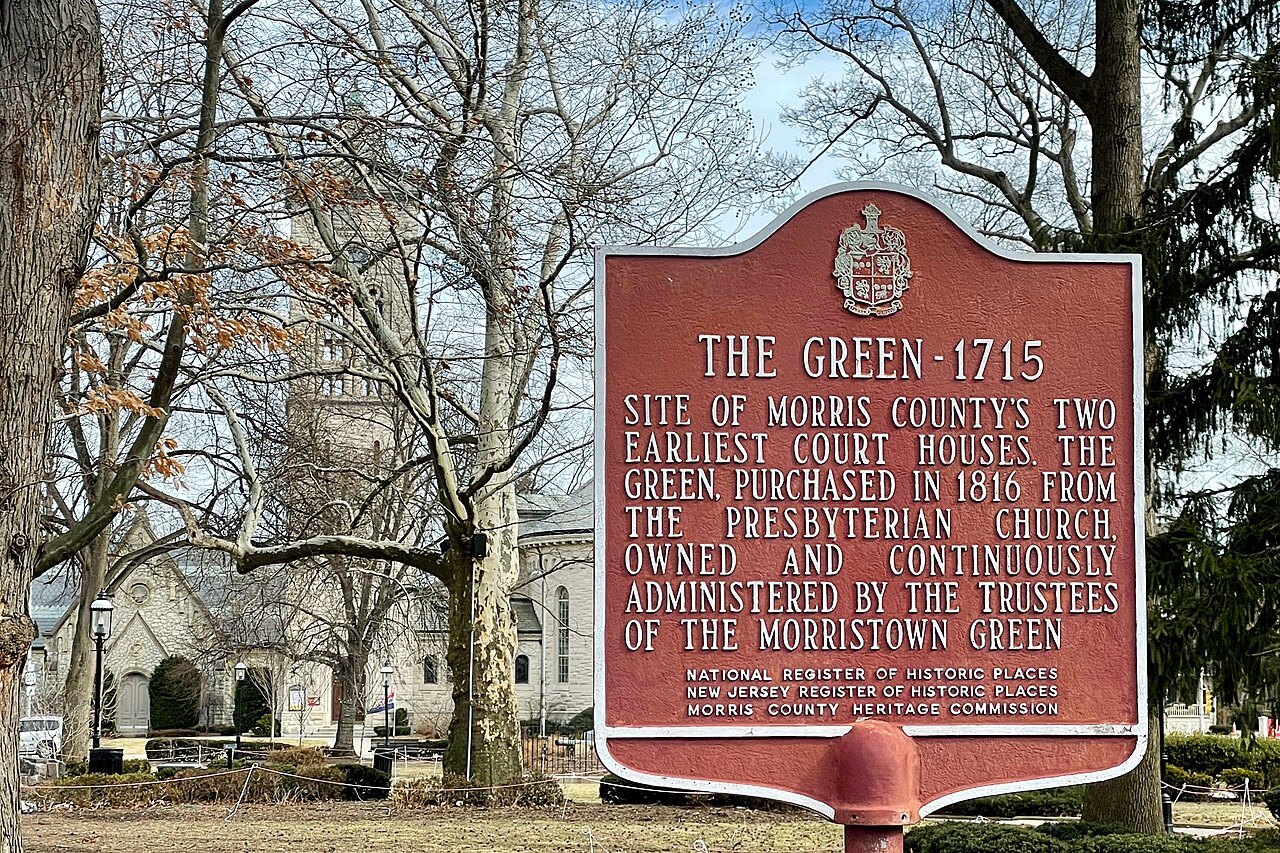
On the morning of 9 July 1947, John H. Janssen, the airport columnist for the Morristown Daily Record in New Jersey, reported watching a formation of four disc-like objects in the sky as he traveled to the airport. This case file covers what witnesses reported, the official narrative, and a two-pass assessment with its evidence tier.
What did witnesses see at Morristown?
On the morning of 9 July 1947, John H. Janssen, the airport columnist for the Morristown Daily Record in New Jersey, reported watching a formation of four disc-like objects in the sky as he traveled to the airport. His account ran in the Daily Record the next day, 10 July 1947, and it is from that contemporary column that the case enters the record. Janssen put the objects at roughly 10,000 feet. He estimated each disc at somewhere between 100 and 300 feet in diameter, saying the circumference was the thinnest part and that each stood perhaps ten to twenty feet high through the middle, so they read to him as flattened domes rather than thin plates. He described the lead object as a dull metallic color and the three others as a silvery hue. According to his column he managed to take a single photograph before the formation left. He said the lead disc suddenly shot upward and away toward New York City in a dazzling burst of speed, the other three followed, and within seconds all four were gone.
The photograph, as he described it, showed four bright objects, three of them distinct ovals set in a slightly curved line against a clear sky, with the fourth and highest object less distinct. That image is the reason the case is remembered at all, and it is also the reason it cannot be fully tested today, because the original print has not survived in any verified archive and later retellings circulate only descriptions or reproductions of it.
About two weeks later, on or around 23 July 1947, Janssen published a far more dramatic first-person narrative of a second encounter, this time while he was actually flying his own aircraft out of Morristown at about 6,000 feet. In that account he wrote that while his eyes "played over the horizon" he became aware of "a shaft of light that seemed like that of a photographer's flash bulb," coming "from aloft, very high up." He first took it for sunlight glinting off a high aircraft. Then, he wrote, his engine "coughed and sputtered spasmodically" and quit. What unsettled him was not the dead engine but the aircraft's behavior afterward: instead of dropping into a normal glide, "the nose of my plane remained rigid, fixed on the horizon," and he reported the airspeed reading falling away to nothing while the plane held level. He described "an odd prickling, electric-like sensation" running through his body and a strong feeling of being watched and examined. Looking out, he said he saw a "strange wraith-like craft" with "a flanged and protecting rim" that was "dotted on either side with steamer-like portholes" and radiated "a dull metallic hue," with a second object hanging fixed in the sky beyond it. He wrote that he eventually switched the magnetos back on, the propeller slowly began to turn, and the engine "burst into a steady rhythmic roar" as ordinary flight resumed.
What is the official explanation?
There is no surviving official military investigation file that pins down this case, and that absence is itself part of its character. The sighting happened in the opening fortnight of the 1947 flying disc wave, after Kenneth Arnold's 24 June report near Mount Rainier had pushed "flying saucers" onto front pages across the country. In that window the Army Air Forces had not yet built the apparatus that would later become Project Sign, Project Grudge, and Project Blue Book, so a local newspaperman's report of four discs over a small New Jersey town was handled as press copy, not as a formal intelligence inquiry. The case therefore does not carry a Blue Book card or an official identification, which means there is no government "answer" on file to weigh either for or against it.
What stands in for an official record is the documentary work of UFO historian Ted Bloecher, whose Report on the UFO Wave of 1947, prepared with an introduction by atmospheric physicist Dr. James E. McDonald and circulated in 1967, remains the standard catalog of that summer. Bloecher built the report from roughly 850 sightings drawn primarily from about 140 newspapers in 90 cities, cross-checked against the files of NICAP and Project Blue Book, and the Morristown case sits inside that chronology under its Daily Record citation. The National Investigations Committee on Aerial Phenomena, NICAP, later carried the same entry in its 1947 case files, citing the Morristown Daily Record of 10 July and reproducing Janssen's title as the paper's airport columnist, his size and color estimates, the photograph of four objects, and his statement of belief that the craft were intelligently controlled. The NICAP file also records, in flatter and more cautious language than Janssen's own column, the later claim that "his plane was stopped in mid-air for a number of minutes while being scrutinized by a pair of discs," and notes that the original photograph is not available and that what survives is a reproduction rather than the print itself.
So the official posture here is not a debunk and not an endorsement. No agency identified the objects as balloons, aircraft, or anything else, and no agency authenticated them. The case rests on a contemporary newspaper column written by the witness, preserved and catalogued by independent civilian researchers, with no shown government method either confirming or dismissing it.
What did the witnesses think it was?
John H. Janssen was not an anonymous passerby. He wrote the airport and aviation column for the Morristown Daily Record, which made him a man who spent his working life around aircraft and who knew what conventional planes looked like in the sky over his own field. That background is the single strongest thing the case has going for it, because a misidentified airliner or a flight of military aircraft is exactly the error an aviation columnist would be least likely to make and most likely to be challenged on by his own readers.
Janssen did not hedge about what he thought he had seen. In print he committed himself to the most extraordinary reading available in the summer of 1947, writing, "I really believe these craft to be operated by an intelligence far beyond that developed by we earth-bound mortals," and adding that he was "inclined to agree with the theory that they are space craft from another planet." Bloecher noted that this made Janssen one of the very first witnesses in the 1947 wave to publicly state a belief that the objects were extraterrestrial spacecraft, at a moment when most witnesses, and certainly most aviation professionals, were carefully avoiding any such conclusion and offering only descriptions. That places his testimony at the leading edge of the extraterrestrial hypothesis rather than as a later echo of it.
The weakness on the witness side is that the corroboration is thin to absent. The contemporary record gives Janssen alone for the 9 July formation, with no named second observer of the four discs and no surviving independent print of his photograph. The 23 July narrative is more vivid still, with the dead engine, the rigid nose, the prickling sensation, and the portholed craft, but it too rests on his own published telling, written in a polished, dramatic, almost short-story register that reads differently from the plainer column that reported the first sighting. A single credible witness who is also a skilled writer is both the case's foundation and its ceiling. Nothing in the record shows Janssen ever recanted, was caught staging anything, or walked his statements back, so his testimony stands as he gave it, uncontradicted by him and uncorroborated by anyone else.
The dispute
The dispute here is not a named debunk by an identified analyst who showed a method. No researcher has produced the actual launch record of a balloon, the tail number of an aircraft, or a demonstrated fabrication of Janssen's photograph. The skepticism is structural and evidentiary rather than a positive identification, which is exactly why this sits at Barely Disputed and not lower.
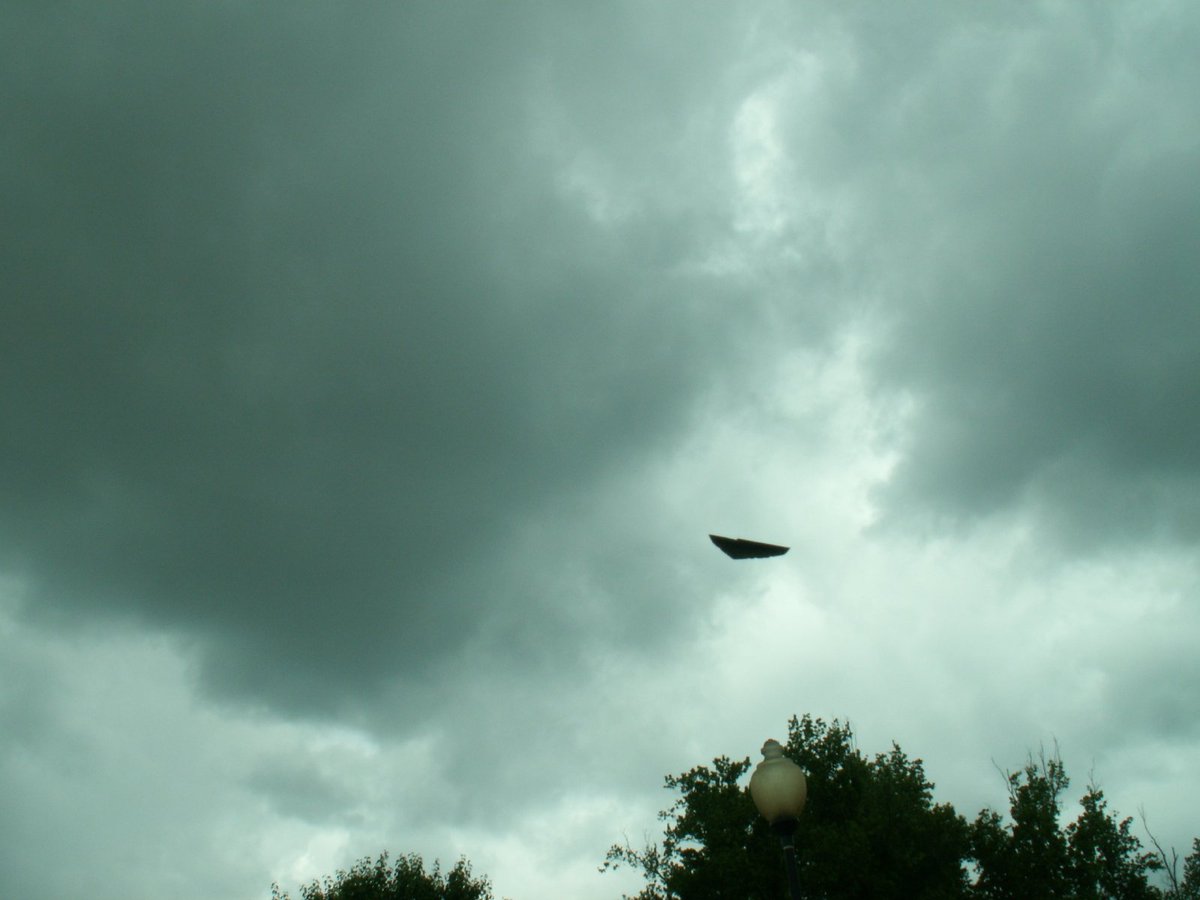
The first weakness is the lost photograph. Janssen's column described a single image showing four bright objects, three distinct ovals in a curved line, but the original print does not survive in any verified archive, and the NICAP case file itself records that only a reproduction or description remains. A photograph that cannot be examined cannot be authenticated, and it equally cannot be debunked, so the single most testable element of the case is unavailable to both sides. Images circulating online under this case, including a generic gallery scan attached to the embellished "six luminous spheres" retelling, are not verifiable as Janssen's actual 1947 photograph and should not be treated as such.
The second weakness is that the case is single witness. The contemporary record names no independent observer of the 9 July formation and no one who saw the 23 July aircraft incident from the ground or another plane. Everything traces to one man's published columns. That man was credible in the relevant way, an aviation writer who knew aircraft, but a lone witness with no corroboration is inherently harder to weigh, and the later, far more dramatic second-encounter narrative, with its dead engine, rigid nose, zero airspeed, prickling sensation, and portholed wraith-like craft, is written in a polished, dramatic register that reads more like crafted prose than a terse incident report. Critics reasonably note that an engine hiccup from carburetor icing or a magneto fault, combined with disorientation and later literary reconstruction, could account for the second event without anything unexplained in the sky. None of this is proof that Janssen invented anything, and he is not known to have recanted or been caught staging a hoax, so the case is not closed against him. It is simply under-supported, and that under-support, lost photo plus single witness plus an embellished second telling, is the whole of the dispute.
Is the A Pilot Sees Discs over Morristown, New Jersey (1947) real? The two-pass assessment
Pass one, the ordinary explanations. The first sighting, four flattened discs at around 10,000 feet that climb and streak off toward New York City, falls squarely inside the most common misperception categories of July 1947. High-altitude reflective objects, a cluster of weather or research balloons catching morning sun, sunlit aircraft seen at a steep angle, or even the visual fragments of a glint reflected off the witness's own car windshield as he drove to the airport could all produce "silvery discs" that seem to dart away when a head turns or a reflection moves. The size estimate of 100 to 300 feet is not a measurement, it is a guess about objects of unknown distance, and unknown distance makes size and speed estimates almost worthless. The lost photograph is the deciding problem in pass one. Without the original print there is nothing to examine for emulsion defects, lens flares, dust on the negative, or birds and debris, and a description of "four bright ovals in a curved line" is consistent with a great many mundane causes. The second encounter is harder to read as a simple misidentification because it is so structured, an engine failure plus a strange craft plus physical sensations, but that very structure is also what a carburetor-icing or magneto problem combined with vertigo and an adrenaline rush, written up afterward by a gifted columnist, could yield. The honest ordinary reading of the whole case is single witness, lost photograph, and a second account whose literary polish outruns its evidence.
Pass two, if it is real. If Janssen genuinely watched four metallic-looking discs hold formation at altitude and then accelerate vertically out of sight in seconds, and if his aircraft really did lose power and hold level attitude with no airspeed while a portholed craft hung nearby, then this is an early, articulate pilot report of structured craft showing flight performance and an apparent engine-stopping effect that no 1947 aircraft could produce. Coming from a man who wrote the aviation column, willing to put his name to the extraterrestrial interpretation before almost anyone else in the wave, it would be a genuinely significant early entry in the record rather than a throwaway saucer scare.
The case does not reach Verified Unexplained, because the one piece of physical evidence, the photograph, is lost, and there is no authenticated material and no corroborating witness to anchor it. It is also not Strongly Disputed, because there is no confession, no recovered hoax prop, no recantation, and no positive identification of a specific real-world object, balloon launch, or aircraft that explains what Janssen reported. What pulls it toward dispute is real but partial: a single witness, a missing photograph, and a dramatic second narrative written in a style that invites caution. That combination is the textbook definition of Barely Disputed. The sighting stands on a credible witness and a contemporary newspaper record, weakened by lost evidence and the absence of corroboration, with no shown method that closes it either way.
Sources
- www.nicap.org/docs/morristown_rufow47.htm
- www.theblackvault.com/casefiles/report-on-the-ufo-wave-of-1947-by-ted-bloecher-introduction-by-dr-james-e-mcdonald/
- kirkmcd.princeton.edu/JEMcDonald/bloecher_67.pdf
- web.archive.org/web/20250130145031/https://www.ufocasebook.com/morristownnewjersey1947.html
More cases from this region: UFO sightings in United States