The Disappearance of Frederick Valentich
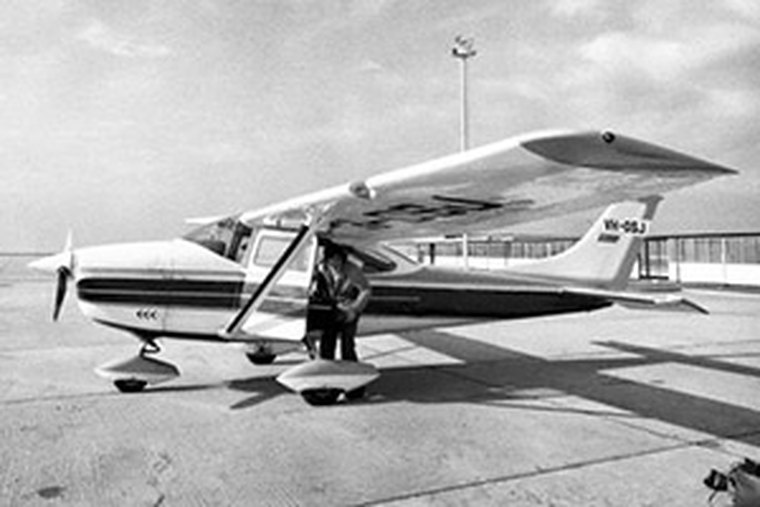
At about 7:06 in the evening on 21 October 1978, Frederick Valentich, a 20-year-old pilot with roughly 150 flying hours and a Class Four instrument rating, was flying a single-engine Cessna 182L, registration VH-DSJ, south over Bass Strait. This case file covers what witnesses reported, the official narrative, and a two-pass assessment with its evidence tier.
What did witnesses see at Bass Strait?
At about 7:06 in the evening on 21 October 1978, Frederick Valentich, a 20-year-old pilot with roughly 150 flying hours and a Class Four instrument rating, was flying a single-engine Cessna 182L, registration VH-DSJ, south over Bass Strait. He had left Moorabbin Airport near Melbourne at about 18:19 local time, bound for King Island, a flight of roughly 125 nautical miles. The night was clear. As recorded in the Melbourne Flight Service Unit log and reproduced in the Department of Transport report, at 19:06:14 Valentich (callsign Delta Sierra Juliet) asked controller Steve Robey whether there was any known traffic below 5,000 feet. Robey replied there was none.
Valentich then said an aircraft had just passed over him, several thousand feet above, and that it had four bright lights that looked like landing lights. He said the lights had momentarily blinded him. Over the next six minutes his reports grew stranger. He described the object as moving at high speed, then orbiting above him, then approaching from the east. He said, "It seems to me that he's playing some sort of game, he's flying over me two, three times at a time at speeds I could not identify." Asked to describe the aircraft, he said it was a long shape, that he could not give it more detail because it was moving so fast, and that "it's got a green light and sort of metallic light on the outside, it's all shiny."
At about 19:11:50 Valentich reported that his engine was rough-idling and "coughing." Robey asked his intentions; Valentich said he was proceeding to King Island and then added, "that strange aircraft is hovering on top of me again. It is hovering and it's not an aircraft." The final logged transmission, at 19:12:28, was the callsign "Delta Sierra Juliet, Melbourne" followed by 17 seconds of an open microphone carrying an unidentified metallic, scraping sound, and then nothing. Robey's repeated calls went unanswered. No mayday was ever sent, and the aircraft and pilot were never found.
What is the official explanation?
The Australian Department of Transport opened an aircraft accident investigation immediately. A sea, air and land search began that night and continued until 25 October, covering on the order of 2,600 square kilometres of Bass Strait with a Royal Australian Air Force Lockheed P-3 Orion, civilian aircraft and surface vessels. No wreckage, debris, fuel slick or body was found at the time.
The investigation file became the Department of Transport Aircraft Accident Investigation Summary Report, approved for release on 27 April 1982 by A.R. Woodward as delegate of the Secretary. Its opinion as to cause is recorded in a single line: "The reason for the disappearance of the aircraft has not been determined." The outcome was classified as presumed fatal. The report noted Valentich had told different people different reasons for the trip, to collect friends or crayfish on King Island, and that the investigation found no firm evidence for either. The full file, including the radio transcript, was held in the National Archives of Australia as series B1497, control symbol V116/783/1047 (the 315-page Melbourne file titled "DSJ-Cape Otway to King Island 21 October 1978 - Aircraft missing (Valentich)") and series A4703, control symbol 1978/1205 (the Canberra marine search and rescue file). Both were opened to the public in 2012 after a request by researcher Keith Basterfield.
There was one later physical lead. On 16 May 1983, an engine cowl flap washed ashore on Flinders Island. The Bureau of Air Safety Investigation examined it and reported that the part "has been identified as having come from a Cessna 182 aircraft between a certain range of serial numbers," a range that included VH-DSJ (construction number 18258572). In July 1983 the Bureau asked the Royal Australian Navy Research Laboratory to model whether the part could have drifted to Flinders Island from the area where the Cessna vanished; the drift analysis found that a journey from the Cape Otway approaches was possible. The part was never positively confirmed as belonging to Valentich's specific aircraft, and the official cause-undetermined finding was never amended.
What did the witnesses think it was?
Frederick Valentich himself, on the tape, believed he was being shadowed by a real solid craft that was not a conventional aircraft. His delivery, captured on the Flight Service recording, was tense and increasingly alarmed rather than playful, and he repeatedly tried to identify the object to a controller who could see nothing on radar. His father, Guido Valentich, said his son had a genuine interest in UFOs and carried UFO literature, and the family consistently rejected the idea that Frederick had staged his own disappearance or faked an abduction.
The case did not rest on the pilot alone. Researcher Keith Basterfield, drawing on Victorian UFO Research Society and Tasmanian UFO Investigation Centre files and press from the period, catalogued roughly twenty other reports of unusual aerial lights across Victoria, Bass Strait and Tasmania on 21 October 1978. Among them: a taxi passenger named Robert Bratetich near Tullamarine at about 13:03; a group of tennis and cricket players at Corio around 15:00; Ken Hansen and two nieces at Apollo Bay near the time of the disappearance at about 19:10; Col Morgan and his wife on the Brooklyn to Geelong road between roughly 19:10 and 19:55; and observers at Frankston, Ringwood and Blackwood later that evening. None of these people knew Valentich was in trouble when they looked up.
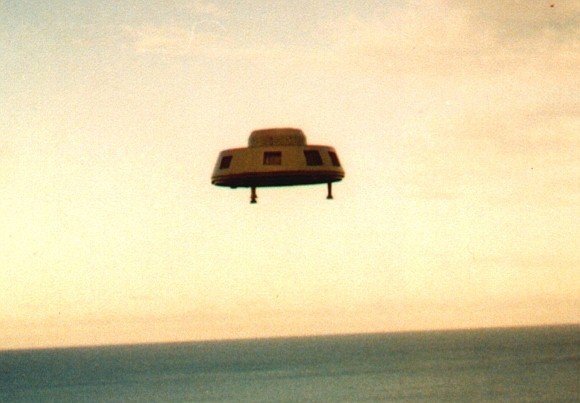
A separate photographic strand came from Roy Manifold, who was taking time-lapse photographs of the sunset from Cape Otway near the time and place Valentich crossed the coast outbound. His frames were later said to show an indistinct fast-moving object emerging from the water, and he was interviewed about them on television years afterward, though the images were never resolved into anything conclusive. The radio recording itself was examined by Dr Richard Haines, a former NASA human-factors scientist, who with Paul Norman of the Victorian UFO Research Society published "Valentich Disappearance: New Evidence and a New Conclusion" in the Journal of Scientific Exploration, volume 14, in 2000, and earlier the book Melbourne Episode in 1987.
The dispute
The dispute is over whether Valentich simply crashed after misreading the night sky, with no real object involved. The leading counter-explanation was advanced by astronomer and retired Air Force pilot James McGaha together with veteran investigator Joe Nickell in the Skeptical Inquirer in 2013. Using a computer sky search for the date, time and location, they reported that Venus (near its brightest), Mars, Mercury and the star Antares would have been visible low in Valentich's field of view, and they argued these could have produced the impression of four bright lights or a diamond-shaped craft. They then proposed that an inexperienced night pilot over featureless dark water suffered spatial disorientation and entered a "graveyard spiral," with the steepening turn increasing G-forces and reducing fuel flow enough to explain the rough-running engine he reported, ending in an unrecoverable descent into Bass Strait.
A second, narrower piece of the dispute concerns the final 17 seconds of metallic sound. Dr Richard Haines, analysing the actual tape, concluded the noise was consistent with extremely rapid manual keying of the aircraft's microphone press-to-talk switch, and this was supported by an account from Valentich's girlfriend that he habitually clicked the microphone button in flight. That removes the metallic sound as standalone evidence of anything anomalous.
These arguments are substantial, but they do not close the case to the standard that would make it strongly disputed. They are a reconstruction, not a demonstrated identification of what actually befell VH-DSJ. The aircraft was never conclusively recovered. The 1983 cowl flap found on Flinders Island was identified only as coming from a Cessna 182 within a serial-number range that included Valentich's machine, not as definitely his, and the Royal Australian Navy drift study showed such a journey was merely possible. The planetary-illusion model also has to absorb features that stars and planets do not show, an object that paced, orbited, approached from a stated direction and hovered over a moving aircraft, plus roughly twenty independent regional witnesses to odd lights the same evening. Because the counter-explanation is plausible and seriously argued yet remains unproven, and because the official Australian finding to this day is that the cause "has not been determined," the case is tiered Barely Disputed rather than resolved.
Is the Disappearance of Frederick Valentich real? The two-pass assessment
Pass one, the ordinary reading. A young, low-time night pilot flying a single-engine aircraft over dark water is a textbook setup for spatial disorientation. With no visible horizon, the lights he reported could have been a misidentified celestial sight, and the most cited reconstruction, by astronomer and pilot James McGaha and investigator Joe Nickell in the Skeptical Inquirer in 2013, runs a sky simulation for that exact time and place and finds Venus near its brightest plus Mars, Mercury and the star Antares low in the sky, which they argue could read as a cluster of bright lights or a diamond shape. From there they propose Valentich became disoriented, banked into a "graveyard spiral," and that the tightening turn raised the G-load enough to starve the carburettor and produce the rough-running engine he described, ending in a crash into Bass Strait. The metallic noise at the end has an innocent candidate too: Dr Richard Haines concluded the 17-second sound was consistent with rapid manual keying of the microphone press-to-talk switch, and Valentich's girlfriend reportedly described that as a habit of his. Hoax, suicide or a staged disappearance have also been floated, and the conflicting stories he told about the purpose of the trip keep those alive.
Pass two, if the encounter was as reported. Valentich described a structured solid object with four bright lights, a long shiny metallic body and a green light, that orbited, paced, approached from a chosen direction and finally hovered directly over a moving aircraft, behaviour no star or planet performs. The same evening produced roughly twenty independent witnesses to unusual lights across the region, none of whom were primed by news of the disappearance, and the Manifold photographs from the departure coast remain unresolved. If something physical was present, it outflew and outmanoeuvred a Cessna at will and the pilot vanished with no mayday and no recovered body.
Weighing the two. The skeptical account is a serious, internally coherent reconstruction, but it is a reconstruction, not a demonstrated identification of what happened to this specific aircraft. No wreckage was conclusively recovered, the 1983 cowl flap was only narrowed to a serial-number range that included VH-DSJ rather than confirmed as his, and the official Department of Transport finding remains, in its own words, that "the reason for the disappearance of the aircraft has not been determined." A planetary-conjunction-plus-spiral model and a microphone-keying explanation for the noise are plausible and partly evidenced, but they are not a confession, a recovered prop, or a positive match to a named real-world object, and the corroborating regional sightings cut the other way. Because a real counter-explanation exists and is argued in detail, yet it is unproven and the case substantially stands on the recorded testimony and the open official file, this sits at Barely Disputed.
Sources
- www.project1947.com/kbcat/kbvalent.htm
- ufos-scientificresearch.blogspot.com/2013/06/the-valentich-radio-transmissions.html
- ufos-scientificresearch.blogspot.com/2012/06/valentich-files-released-by-australian.html
- www.atsb.gov.au/publications/investigation_reports/1978/aair/197802563
- skepticalinquirer.org/2013/11/the-valentich-disappearance-another-ufo-cold-case-solved/
- www.newdawnmagazine.com/articles/australian-ufo-mysteries-the-disappearance-of-frederick-valentich
- www.monumentaustralia.org/themes/people/aviation/display/30627-frederick-valentich
- www.semanticscholar.org/paper/Valentich-Disappearance:-New-Evidence-and-a-New-Haines-Norman/d447c09dd1ea49e7278be0000afee5bee2167bb3
- www.austairdata.com.au/component/rsdirectory/entry/view/15753-vh-dsj-1
More cases from this region: UFO sightings in Australia