The Kelly Cahill Encounter
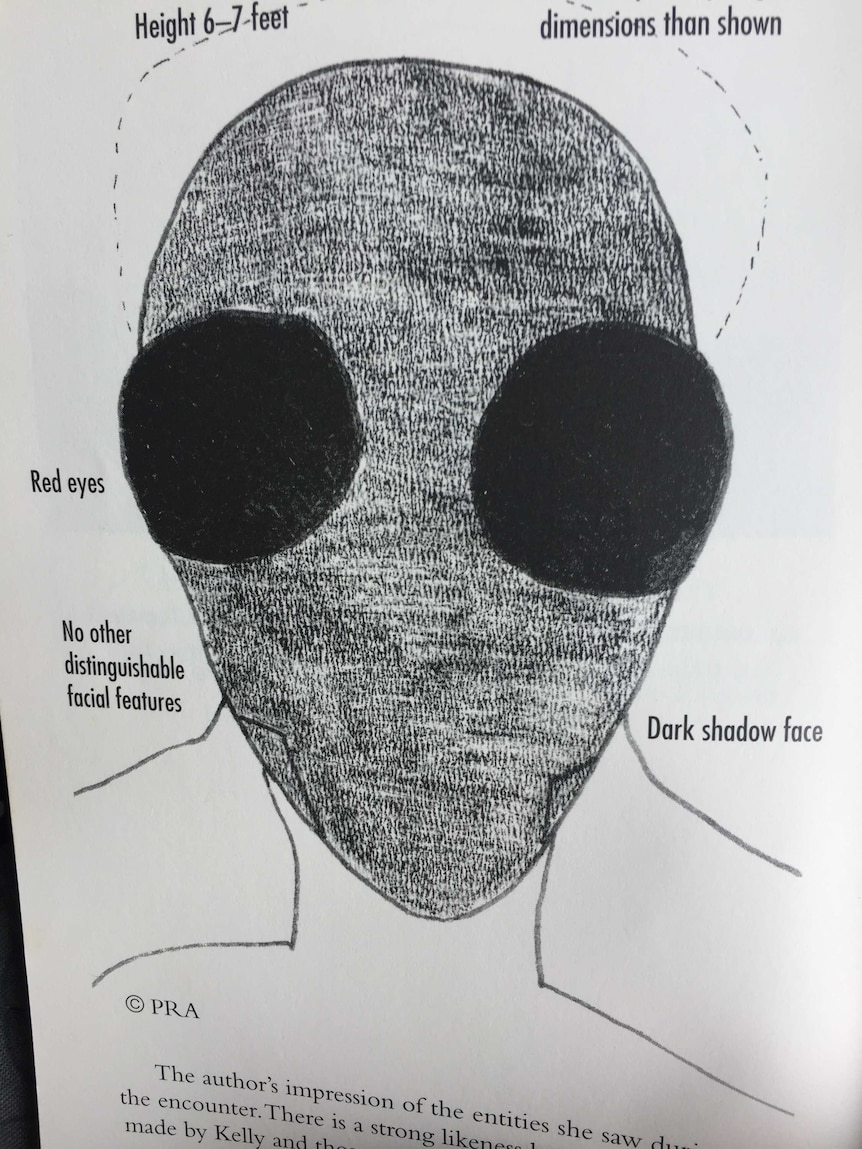
Just before midnight on the night of 7 August 1993, running into the early hours of 8 August, Kelly Cahill, then a 27-year-old mother of three from Gippsland, was driving home with her husband Andrew along the Belgrave-Hallam Road at Narre Warren, on the south-eastern fringe of Melbourne. This case file covers what witnesses reported, the official narrative, and a two-pass assessment with its evidence tier.
What did witnesses see at Belgrave-Hallam Road near Eumemmerring Creek?
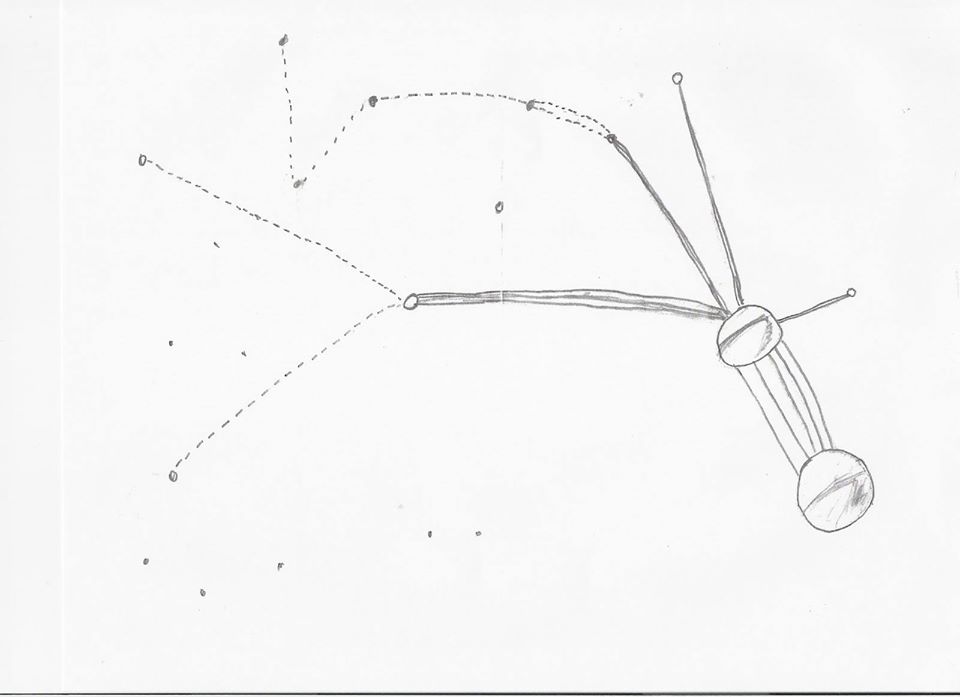
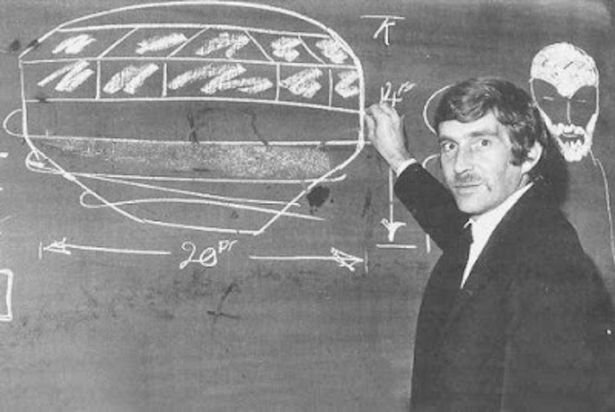
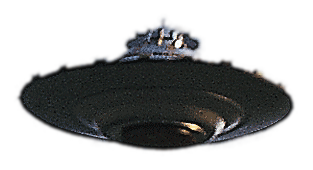
Just before midnight on the night of 7 August 1993, running into the early hours of 8 August, Kelly Cahill, then a 27-year-old mother of three from Gippsland, was driving home with her husband Andrew along the Belgrave-Hallam Road at Narre Warren, on the south-eastern fringe of Melbourne. They were returning from a friend's house. Earlier that evening, on the way out, Kelly had seen in a roadside paddock what she described in her book Encounter as a row of five or six large orange lights on a "distinct circular shape . . . like nothing I had ever seen before." Her husband and their friends laughed it off as a helicopter.
On the drive home, on the same dark rural road, she and Andrew saw what she believed were the same lights, this time hanging above the road ahead of them. As they got closer the shape resolved. "I could then see that the orange lights were really windows," she wrote. "I could make out figures standing behind the portals." The object then shot off "at incredible speed." Soon after, they saw it again, this time sitting in a paddock beside the road.
What happened next is the heart of the case. Kelly's conscious memory cut out. She described it as "like a cut to scene in a film." The next thing she knew, the car had travelled several hundred metres further down the road with no memory of how it got there. By the time they reached home it was about 2:30 in the morning, later than the trip should have taken. In the days and weeks that followed she found a small triangular wound below her navel, began suffering stomach pain, and reported night "visitations" by tall black-hooded figures with faintly glowing red eyes.
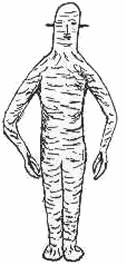
Through later recollection, and in part through hypnosis, Kelly filled in the missing stretch. She said Andrew had pulled the car over and the two of them had got out to look at the brightly lit object in the paddock. Further back up the road, a second car had also stopped, and its occupants were standing at the edge of the field. A tall thin figure appeared in front of the craft. She described the beings as roughly seven feet tall, and the blackness of them as something beyond ordinary darkness, as if all colour and matter had been removed, a being she felt had "no soul." Their eyes were large, round and red, which she likened to "huge flies' eyes" that burned "like fluorescent stop lights." She said more of them appeared in the field and moved toward the witnesses faster than a person could run, gliding rather than walking.
Kelly said she felt a force strike her, like being winded, that threw her onto her back, and her vision went black. She heard a being's intent in her mind, words to the effect of "let's kill them," and she screamed a warning to her husband and the other witnesses: "They've got no souls! They're evil! They're going to kill us!" Her conscious recollection ends there.
What is the official explanation?
There was never any official government narrative for this case. No RAAF or Australian Department of Defence file on the Cahill encounter has ever surfaced through archives or freedom-of-information requests. The investigation was entirely civilian, and that is part of what makes the case unusual: the people who worked it were UFO researchers, not state agencies, and the central document they produced has never been released.
The first researcher Kelly contacted was Bill Chalker, a chemist by training and one of Australia's most documentation-minded UFO investigators, associated with the UFO Investigation Centre in Sydney. Chalker logged her approach on 4 October 1993. He judged it straight away "a fairly important case" but one that "required a lot of feet on the ground and a lot of intensive field investigations," more than he could mount from Sydney. He referred it to a Melbourne group, Phenomena Research Australia (PRA), then directed by John Auchettl.
Auchettl and PRA did the legwork. They interviewed Kelly many times and examined the site near Eumemmerring Creek. According to Chalker, PRA reported a ground trace and a low-level magnetic anomaly at the encounter location, and collected samples for analysis. Crucially, PRA placed an advertisement in local newspapers asking the occupants of the second car to come forward. They got a response. Auchettl told the ABC that the stories from the second car were "identical" to Kelly's, and went further, describing experiences inside the craft in which the witnesses were "strapped to a table and examined by the beings." PRA also reported that the women among the other witnesses had "the same triangular wounds near their navels, as well as other strange marks." Auchettl said there was even a third car, said to have been driven by a local lawyer, whose account also lined up.
Chalker published the first public account, "An Extraordinary Encounter in the Dandenong Foothills," in the International UFO Reporter (the journal of the J. Allen Hynek Center for UFO Studies), September/October 1994. In his own 2016 retrospective he set out the reason the case mattered: "Two groups of people unknown to each other have witnessed the same UFO encounter, entities and also experienced missing time." He reported that PRA had located the second car, carrying a couple and a third person, by November 1993, and that their independently produced drawings of the craft and the entities "closely coincide" with Kelly's.
Then the case stalled. PRA began preparing what was described as an exhaustive 300-page report that promised to settle the matter. It was never published. Auchettl told the ABC in 2020 that the report was real and "worthy of release," but that PRA would not put it out because "once we release our report, then we become the focus of the case," and because they no longer knew where the witnesses were. He also said the original 300 pages had been cut to "100 pages or so" after the witnesses, including Kelly and Andrew, asked for material to be removed and refused to allow publication of the medical and psychological reports that PRA said backed the stories. Chalker, for his part, came to regret handing the case over. "There was a lot of bad blood that's passed between them and me as a consequence of their role in this case," he told the ABC. "This was an extraordinary lost opportunity."
What did the witnesses think it was?
Kelly Cahill never wavered from the account that she had encountered something real, intelligent and hostile. She read the beings as malevolent, even demonic in feel, and that interpretation shaped her 1996 book Encounter, published by HarperCollins Australia, which sold out and was reprinted before going out of print. She drew the entity she remembered: a tall, dark, bald-headed figure with a "dark shadow face," no other distinguishable facial features, and two large red eyes, annotated in her own hand with "Height 6-7 feet." That sketch, credited to PRA, became the iconic image of the case. She also described the triangular mark below her navel and a later hospital admission, telling of a doctor who, during a laparoscopy, remarked that her reproductive anatomy looked as though it had been surgically interfered with, despite her having had no such surgery.
The corroboration is what lifted this case above a single person's strange night. Andrew, Kelly's then-husband, was in the car and shared the initial sighting, though he never went public to back the fuller story and the couple later divorced. The decisive element was the second car. Its occupants, a couple and a friend, were strangers to the Cahills, did not know them before that night, and came forward only in response to PRA's newspaper appeal, not through Kelly. According to PRA they described the same large luminous object in the same paddock, the same tall dark beings, the same missing time, and at least two of the women carried the same triangular navel wounds. Their sketches, made separately, were said to match Kelly's. A possible third vehicle, a lawyer's, was reported to fit as well, though that witness was never publicly identified.
Kelly believed deeply enough in what happened to spend years on the UFO lecture circuit through the mid-1990s, appearing on the current-affairs program Today Tonight and in newspapers and magazines, releasing pieces of PRA's promised report as she went. The case became famous enough that The X-Files name-checked it when the show rebooted in 2016. But the public role wore on her. Chalker said that once it became clear she would be the only witness willing to go public, and once PRA would not release the supporting material, she lost confidence in carrying the case alone. Around 1998 she withdrew. In the early 2000s she telephoned Chalker, sent him all her files, "three large archival boxes," and left the country. She later returned to the Latrobe Valley in Gippsland, living quietly under a different name, and declined the ABC's request for an interview in 2020. As Chalker put it, "She really wanted to take a low profile and put all this behind her."
The dispute
No official body ever advanced a counter-explanation for the Kelly Cahill encounter. The page is explicit that there was never any official government narrative, and that no RAAF or Australian Department of Defence file on the case has ever surfaced. There is no identified aircraft, helicopter, balloon, drone, or flare on record, no confession, and no retraction. By this archive's method, that absence matters: where there is no named agency or skeptic offering a method-shown disproof, there is no apparatus debunk to weigh at all, only the case itself.
What skeptical pressure exists is methodological rather than a positive identification. The first is the suggestion that the triggering lights on a dark rural road could have begun as something mundane, such as aircraft or helicopter lights, or ground lighting misjudged against a paddock. This is offered as a possibility, not as a demonstrated reconstruction, and it does nothing to explain the close-encounter core of the account. The second and stronger objection is that parts of the witnesses' recollection surfaced under hypnosis, and hypnotically recovered memory is widely regarded as unreliable and prone to confabulation. That is a legitimate caution about reliability, but it is a reason to discount detail, not a finding that the event did not happen.
The real obstacle is provenance, not disproof. The load-bearing corroboration, a second car carrying a couple and a friend who came forward via a newspaper appeal and reportedly gave accounts described by Phenomena Research Australia as identical, including matching triangular navel wounds and closely coinciding sketches, sits almost entirely inside PRA's roughly 300-page report, which has never been released. No outside investigator has been able to read the witness statements, check the soil and magnetic data, identify the second-car occupants, or confirm that the matching sketches are as described. A 2011 blogger went further and speculated about possible collusion between Cahill and her investigators, but that was unsupported speculation, not evidence, and names no mechanism.
So the dispute does not close the case in either direction. Nothing has shown the encounter to be false, and there is no prosaic explanation on record that settles it as ordinary, which is why the page does not treat it as discredited. But the corroboration that would make it solid is locked inside a report no independent party has been allowed to examine, so it cannot be called verified either. The counter-explanation here is weak and partial, an appeal to mundane lights plus a fair warning about hypnosis, with no identified object and no method shown, so the case largely stands as an unresolved, well-attested but unverifiable account.
Is the Kelly Cahill Encounter real? The two-pass assessment
Pass one, the ordinary explanations. The triggering lights on a dark rural road could have begun as something mundane: aircraft or helicopter lights, which is exactly how the first sighting was dismissed that evening, or ground lighting misjudged against a paddock. The recovered detail, the field, the beings, the assault, came partly through hypnosis, and memories surfaced under hypnosis are widely regarded as unreliable and prone to confabulation, so the most dramatic content is the least secure. The triangular mark and the gynaecological problems have prosaic possibilities; small geometric skin marks and pelvic conditions occur without any exotic cause, and no independent doctor's statement or medical record was ever published to rule those out. Most importantly, the strongest pillar of the case, the matching independent witnesses, the ground trace, the magnetic anomaly, the corroborating medical findings, exists almost entirely inside Phenomena Research Australia's 300-page report, which has never been released. No outside investigator has been able to read the witness statements, check the soil and magnetic data, identify the second-car occupants, or confirm that the matching sketches and matching navel wounds are as described. A skeptical reading is that an encounter built on a sincere but ordinary roadside scare was elaborated through hypnosis and then locked behind a report nobody can audit.
What pass one does not contain is a debunk. There is no confession, no retraction, and no method-shown disproof. No skeptic has tracked down the second car and shown the witnesses were invented, identified the lights as a specific aircraft, or produced a forensic analysis explaining the marks. The doubt around this case rests on absence, the unreleased report, the anonymous witnesses, the reliance on hypnosis, not on any positive prosaic solution. Bill Chalker's own caution is part of that doubt: he still believes Kelly's story but has said plainly that the case cannot be properly evaluated while PRA keeps the data, and a blogger writing in 2011 went further, calling the whole thing a possible collusion between Cahill and her investigators on the grounds that the report and the corroboration cannot be checked.
Pass two, if it is real. Then this is potentially one of the most significant abduction cases on record, because it would be a rare instance of genuinely independent multiple-witness corroboration. Two carloads of strangers, brought together only by a newspaper appeal months later, would have separately described the same landed craft, the same gliding red-eyed beings, the same lost time, and at least two of them would have carried the same triangular navel wound, with separately drawn sketches matching. Add a physical ground trace and a magnetic anomaly at the site, and you have the combination, multiple independent witnesses plus physical effects plus medical sequelae, that investigators called the potential "holy grail" of abduction research. The official-apparatus silence here is the inverse of most famous cases: there is no government effort to explain it away, only a civilian body that says its evidence is real and "worthy of release" and simply will not release it.
The honest tier is Disputed. Nothing has shown the encounter to be false, and there is no prosaic explanation on record that closes it, so it is not discredited and never should be. But the case cannot be called verified either, because its load-bearing corroboration sits inside a report no independent party has been allowed to examine, and the most vivid testimony came through hypnosis. The dispute is genuine and it clouds the case without settling it. Until PRA's report and the witness and medical records are opened to outside scrutiny, the Cahill encounter stands as a powerful, sincerely told, and frustratingly unauditable claim: contested, unresolved, and unclosed.
Sources
- www.abc.net.au/news/2020-09-26/ufo-abduction-book-kelly-cahill-encounter-eumemmering-australia/12661498
- theozfiles.blogspot.com/2016/03/the-kelly-cahill-case-revisited.html
- anomalien.com/australian-kelly-cahills-ufo-abduction-story-still-stirs-passions/
- www.theblackvault.com/casefiles/kelly-cahill-abduction-dandenong-foothills-australia-august-8-1993/
- digitalseance.wordpress.com/2011/09/04/kelly-cahill-the-hoax-is-over/
- www.abebooks.com/9780732257842/Encounter-Cahill-Kelly-0732257840/plp
More cases from this region: UFO sightings in Australia