The Belgian UFO Wave
The Belgian wave was not one sighting but a flood of them, concentrated in the French- and German-speaking south of Belgium across the winter and spring of 1989 to 1990. This case file covers what witnesses reported, the official narrative, and a two-pass assessment with its evidence tier.
What did witnesses see at Eupen and the Walloon provinces?
The Belgian wave was not one sighting but a flood of them, concentrated in the French- and German-speaking south of Belgium across the winter and spring of 1989 to 1990. The Belgian study group SOBEPS, and its successor COBEPS, catalogued the reports in the Catalogue des Observations Belges. By the count of long-time SOBEPS field investigator Franck Boitte, the period from late 1989 through 1993 produced 1,282 notifications from 2,531 witnesses, with 897 cases formally investigated and roughly half of those left with no plausible conventional explanation after investigation.
The event that put the "Belgian triangle" on the map happened on the evening of 29 November 1989 outside Eupen, near the German border. Two on-duty gendarmes, Heinrich Nicoll and Hubert von Montigny, were driving on the road toward Eynatten when they saw a large, flat, dark structure hanging motionless over a field. In their own report it was "een enorme sombere donkere driehoek," an enormous somber dark triangle, carrying a strong white light aimed downward at each corner and a bizarre reddish pulsing gleam at the centre. It made no sound. When it moved off it did not behave like an aircraft: it executed a slow half-turn and drifted along the road at low altitude toward Eupen. The two officers radioed it in and then tracked it for the rest of the evening. Their sighting ran, by the report, from roughly 17:45 until exactly 20:39, when the object suddenly accelerated in a straight line to the north-northeast and vanished over the horizon. By the end of that single night the gendarmerie had logged around thirteen officers watching from eight separate locations, and SOBEPS later tied roughly 150 notifications to 29 November alone.
What witnesses described, again and again over the following months, was consistent: a dark, silent, slow-moving platform, usually triangular, sometimes with the corners marked by intense white lamps and a red light at the centre. Reports came in from the Liege region, from Brabant, from Brussels, from around La Louviere. The objects were almost always low and slow, frequently hovering, then sliding away or accelerating sharply.
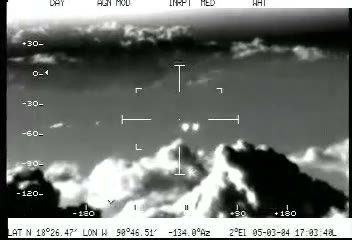
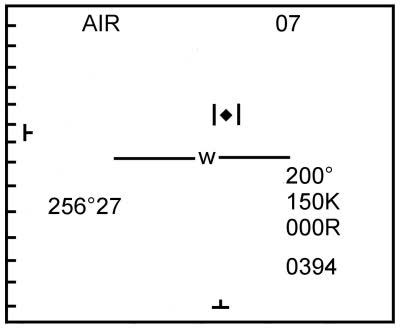
The single most cited night came four months later. On 30 to 31 March 1990, ground witnesses again reported lights forming a triangle. At Ramillies in Brabant Wallon, a gendarme's wife drew her friends' attention to "funny moving lights in the sky." Her husband relayed it up the chain, and at about 23:00 the report reached the Glons NATO radar control station, which itself registered an unidentified contact. Captain Yves Meelbergs and Lieutenant Rudy Verrijt were scrambled in two F-16s from Beauvechain air base around 00:05. Over roughly an hour the pilots made nine intercept attempts and, on six occasions, got an air-interception radar lock at distances of five to eight nautical miles. In Meelbergs' own published account, the target first showed at around 5,000 feet moving at near-hovering speed, then accelerated to enormous figures the radar could only estimate, with altitude readings the pilots described as swinging wildly. The locks broke after ten to sixty seconds each. Crucially, neither pilot ever made visual contact with anything.
What is the official explanation?
Belgium is one of the rare modern waves where the air force engaged openly rather than denying everything. Colonel (later Major General) Wilfried De Brouwer, Chief of Operations of the Air Staff of the Belgian Air Force, was made the official point of contact. He set up a special task force to work with the gendarmerie, and the military cooperated with the civilian investigators of SOBEPS to an unusual degree.
The core official document is the Belgian Air Force summary report on the night of 30 to 31 March 1990. It records the Glons air-defence radar station receiving the initial report around 23:00 on 30 March, a second station confirming an identical contact at the same place around 00:05, police in Wavre confirming the lights from the ground near 23:30, and a radar track moving slowly westward at roughly 25 knots at about 10,000 feet. It records the scramble of two F-16s from Beauvechain at 00:05, the nine intercept attempts, the six radar lock-ons at five to eight nautical miles with computed speeds varying between 150 and 1,010 knots, the break-locks after ten to sixty seconds, and the flat statement that no visual contact could be established by either pilot. The report's conclusion was that the Air Force "was unable to identify neither the nature nor the origin of the phenomena," while it explicitly excluded conventional candidates including aircraft, balloons, remotely piloted vehicles and laser projections.
De Brouwer pursued the obvious suspicion that this was a secret American aircraft. He filed inquiries through the U.S. Embassy, and the Embassy returned a memo confirming that no USAF stealth aircraft were operating in the area during the periods in question. Summing up the military's posture, De Brouwer stated that "the Belgian UFO wave was exceptional and the air force could not identify the nature, origin and intentions of the reported phenomena," and that the witnesses were sincere.
That is the strong version of the official line, but it is not the whole of it, and the Air Force itself was careful. On the F-16 radar data specifically, De Brouwer also reported that after analysis the Air Force concluded "the evidence was insufficient to prove that there were real crafts in the air on that occasion." The radar screenshots that became famous, the head-up display frames showing a target with speed and heading readouts, were not released by the Air Force as proof of a craft. They were photographed by French aeronautics engineer and former Air Force officer Jean-Pierre Petit at a Belgian Air Force control room after a June 1990 meeting between Petit, the Paris Match journalist Marie-Therese de Brosses and Colonel De Brouwer, and they were published in Paris Match on 13 February 1997. The Air Force's documented finding was unidentified, not extraterrestrial.
What did the witnesses think it was?
The witnesses at the heart of this wave were not fringe enthusiasts. The Eupen sighting began with two serving gendarmes, Nicoll and von Montigny, who filed a formal report and stuck to it. Across November and the following months the catalogued reporters included more gendarmes, an air-traffic controller at Zaventem, a retired airline pilot, and ordinary families. Captain Yves Meelbergs, one of the two F-16 pilots, gave a detailed interview years later in which he insisted that "given the multitude of testimonies from different sources, the only objective fact is that there was indeed a material object in the sky that night," and that the temperature-inversion explanation and the U.S. stealth explanation should both be ruled out. He described the witnesses as "reliable people whose story is fairly consistent."
The civilian investigation was led by SOBEPS, the Belgian Society for the Study of Space Phenomena, whose president at the time was Michel Bougard and whose general secretary was Lucien Clerebaut. SOBEPS published two thick volumes on the wave (referred to internally as VOB1 and VOB2). The investigator who later wrote the candid COBEPS retrospective, Franck Boitte, had been a SOBEPS field investigator since 1972. SOBEPS's analyst Professor Auguste Meessen of the Catholic University of Louvain became the chief scientific defender of the view that at least some of the radar echoes represented a real unknown craft, and he devoted years and hundreds of pages to that argument.
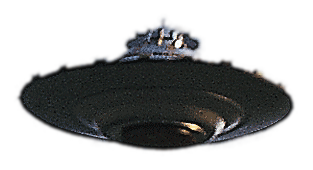
The most famous single piece of physical evidence the wave produced was the Petit-Rechain photograph, taken in early April 1990 by a young factory worker near Verviers, showing a dark triangle with three bright corner lights and a central red glow against a black sky. It was treated for two decades as the wave's best evidence. It was examined by Marc Acheroy's signal and image laboratory at the Royal Military Academy in Brussels, by Francois Louange and the nuclear physicist Andre Marion connected to France's space science community, and by former NASA scientist Richard Haines, none of whom found evidence of trickery at the time, and it was reproduced as best evidence in Leslie Kean's 2010 book. What the believers thought, then, was anchored in that photograph and in the F-16 night. Both have since been heavily eroded, which is the dispute below.
The dispute
The dispute against the Belgian Wave goes straight for its two most iconic exhibits, and on those two exhibits it largely lands. The famous Petit-Rechain photograph, the single image that defined the wave in the public mind, was confessed as a hoax by Patrick Marechal on July 26, 2011. By the account he gave on RTL-TVI the method was crude and fully reproducible: "we made the model with polystyrene, we painted it, and then we suspended it in the air, then we took the photo." This is not an apparatus assertion or a hand-wave. It is a named confession with a described technique, and the Belgian researcher Wim van Utrecht had already reproduced the look with a small model in the 1990s. The second pillar, the F-16 radar intercept of March 30 to 31, 1990, has a conventional reading that does not rest on official fiat: a documented temperature inversion over southern Belgium that night, pilots who never visually acquired anything, and recorded speeds and altitude jumps of exactly the kind a confused or poorly calibrated air-interception radar throws when it locks onto ground returns or clutter. Even Professor Auguste Meessen of the Catholic University of Louvain, the case's chief scientific champion, allowed that the affair resulted in all likelihood from a clutter of rare atmospheric phenomena, a poorly calibrated F-16 radar then in maintenance, and witnesses confusing twinkling planets and stars.
That is a serious counter-explanation. What it is not is a clean kill, and the reason is scope. The two attacks dispose of two data points. They do not reach the body of the case. The hoax explains one photograph, and the investigating body COBEPS, through veteran SOBEPS investigator Patrick Ferryn, said so plainly when the confession aired: it is not because one document is declared false that the whole wave is false. Hundreds of investigated gendarme and civilian reports of a silent low triangular object, including the formal report by serving gendarmes Nicoll and von Montigny who filed it and stuck to it, were never individually resolved. The "strong" evidence is also softer than it presents. Marechal's confession was never fully corroborated, and in 2022 he muddied it himself by telling a MUFON investigator he had been paid to call the photo a hoax; that later claim is thinly sourced and settles nothing, but it leaves the headline exhibit a contested confession rather than a closed fact. Meessen, for his part, conceded conventional factors without ever cleanly recanting, his 2011 paper still calling the wave unexplained, so the radar pillar is an argued reading, not a positive identification of the targets. And the official record cuts against closure: the Belgian Air Force found itself unable to identify the nature or origin of the phenomena while excluding aircraft, balloons, remotely piloted vehicles and laser projections, the U.S. Embassy confirmed no USAF stealth aircraft were in the area, and that "unidentified" finding has never been rescinded.
So the dispute is strong but partial. A confession with a described method dents the headline photo, and a documented atmospheric-and-instrument explanation dents the radar intercept. Together they strip the case of its two most quoted exhibits. They do not account for the standing official "unidentified" ruling, the excluded stealth explanation, or the mass of independent ground-level testimony, and the very evidence that is supposed to close the case is itself contested. The case is rightly tiered Disputed, not discredited: its showpieces have been convincingly explained or recanted, while the core anomaly, a silent low triangle reported by trained and ordinary witnesses across months and never officially identified, still stands.
Is the Belgian UFO Wave real? The two-pass assessment
Pass one, how could this be entirely ordinary. Take the wave apart and a lot of it dissolves into mundane things misread under suggestion. The single most famous artefact, the Petit-Rechain photograph, was confessed as a hoax. On 26 July 2011 a man identified as Patrick Marechal told the Belgian network RTL-TVI that he had faked it as a joke on his workmates. He described the method plainly: a piece of polystyrene cut into a triangle, painted black, with spotlights fixed at the corners, suspended and photographed at night. In his words, "we made the model with polystyrene, we painted it, and then we started sticking things to it, then we suspended it in the air, then we took the photo," and "it's too easy to fool people, even with a cheap model." This was not an outsider's claim. It was a confession from the man who said he made the image, and it matched what skeptics had long argued: with no foreground and no background, a small model close to the lens is indistinguishable from a giant craft far away. The Belgian researcher Wim van Utrecht had already shown in the 1990s that the image could be reproduced with a small model. The F-16 radar event fares little better under scrutiny. There was a temperature inversion over southern Belgium that night, the pilots never saw anything, the recorded speeds and altitude jumps are exactly the kind of nonsense values a confused or poorly calibrated air-interception radar throws when it locks onto ground returns or clutter, and the ground "triangles" that started the panic were assessed by the investigators themselves as probable stars and planets twinkling and shifting through the inversion layer. Even Professor Auguste Meessen, the case's main scientific defender, eventually allowed that the affair resulted in all likelihood from a clutter of rare atmospheric phenomena, a poorly calibrated F-16 radar then in maintenance, and witnesses confusing twinkling planets and stars. Skeptics added that some early sightings fit a helicopter, and that media coverage primed thousands of people to reinterpret ordinary lights.
Pass two, what survives. The debunk is real, but look at exactly what it reaches and what it leaves untouched. The hoax accounts for one photograph. It does not retroactively explain a gendarme tracking a silent low platform for nearly three hours, and the investigating body COBEPS made precisely that point. Their veteran SOBEPS colleague Patrick Ferryn put it bluntly when the confession aired: it is not because one document is declared false that the Belgian wave is false. The confession itself is also less airtight than it first looks. Marechal's account was never fully corroborated against the negative or the camera, and he later muddied his own story, telling a MUFON investigator in 2022 that he had been paid a large sum to call the photo a hoax. That later claim is itself thinly sourced and proves nothing on its own, but it means the one piece of "strong" evidence here is a contested confession to faking a single image, not a recovered prop tied to the Eupen sighting and not a positive identification of what hundreds of other witnesses saw. The radar pillar is weaker than a clean kill too. Meessen conceded conventional factors, but he did not cleanly recant. His 2011 paper on the wave still treated the phenomenon as unexplained, so the conventional reading of the F-16 night rests on an argued interpretation rather than a demonstrated positive identification of the targets. Standing above all of it is the official record. The Belgian Air Force, after scrambling jets and inquiring of the United States, documented that it could not identify the nature or origin of the phenomena, and the U.S. Embassy confirmed no American stealth aircraft were operating there. That "unidentified" finding has never been rescinded. The witnesses at the core were trained officers, a fighter pilot and an air-traffic controller, and of the 897 formally investigated cases roughly half were left with no conventional explanation after investigation.
The tier is Barely Disputed. A powerful counter-explanation exists and lands on the case's two showpieces, yet it does not close the central claim. To rate this Strongly Disputed you would need a confession, a recovered prop, or a positive identification that explains the wave itself, and none of those is on the table. The photo confession, even taken at face value, closes one photograph, and the radar debunk addresses one night's intercept. Neither touches the body of hundreds of investigated multi-witness ground reports of a silent low triangle, the standing Belgian Air Force "unidentified" ruling, or the Embassy's exclusion of stealth aircraft. Worse for the strong reading, the "strong" evidence is itself contested: the Marechal confession was never fully corroborated and he later claimed he was paid, and the chief defender Meessen never delivered a clean recantation. So the case splits, but it does not fall. Only the photograph is convincingly discredited; the wave is not. That is Disputed, not discredited.
Sources
- www.cobeps.org/pdf/belgian_wave_130310.pdf
- ufologie.patrickgross.org/htm/belrap02.htm
- ufologie.patrickgross.org/be/f16radarnx.htm
- ufologie.patrickgross.org/be/29nov1989-eupenv.htm
- phys.org/news/2011-07-belgium-ufo-puzzled-nasa-polystyrene.html
- badufos.blogspot.com/2011/07/classic-ufo-photo-from-belgian-wave.html
- openminds.tv/belgiums-flying-triangle-wave/
- theweek.com/articles/905215/30-years-later-still-dont-know-what-really-happened-during-belgian-ufo-wave
More cases from this region: UFO sightings in Belgium