The Pascagoula Abduction
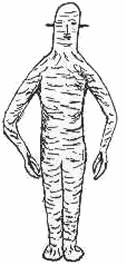
On the evening of 11 October 1973 two shipyard workers from the Ingalls yard, 42-year-old Charles Hickson and 19-year-old Calvin Parker, were bottom-fishing off an old disused pier on the west bank of the Pascagoula River, near the abandoned Shaupeter shipyard on the eastern edge of Pascagoula, Mississippi. This case file covers what witnesses reported, the official narrative, and a two-pass assessment with its evidence tier.
What did witnesses see at West bank of the Pascagoula River?
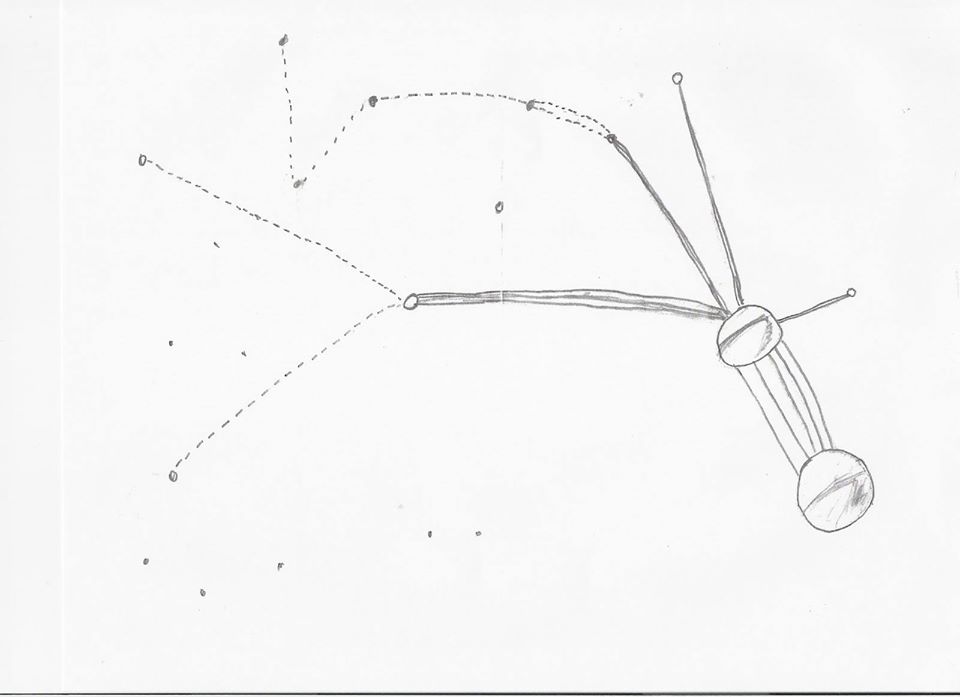
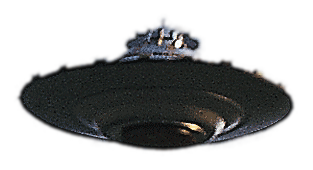
On the evening of 11 October 1973 two shipyard workers from the Ingalls yard, 42-year-old Charles Hickson and 19-year-old Calvin Parker, were bottom-fishing off an old disused pier on the west bank of the Pascagoula River, near the abandoned Shaupeter shipyard on the eastern edge of Pascagoula, Mississippi. It was just after dusk. By their account they first heard a whirring or buzzing sound behind them, then turned to see a glowing, oval, egg-shaped object drift down out of the sky and hover a few feet above the ground close to the riverbank. They put its size at roughly 30 to 40 feet across and 8 to 10 feet high, with a soft blue light at the front. The Hinds Community College case file and the Mississippi Press report both give the same dimensions and the same blue light.
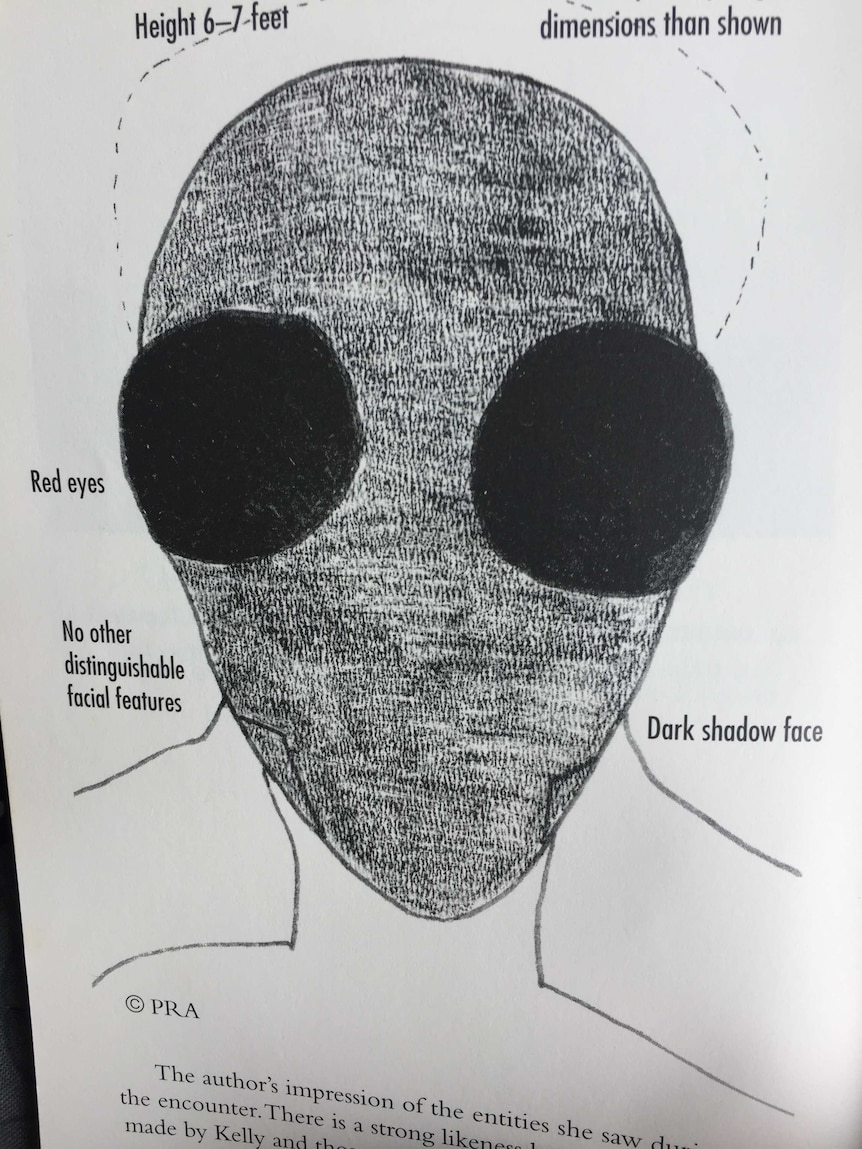
A door or opening appeared in the object and three figures floated out toward them across the ground. The men described the beings consistently in the first hours and for decades after: about five feet tall, roughly humanoid in shape but with no visible neck, a head set straight onto the shoulders, and grayish, deeply wrinkled, leathery or elephant-like skin. In place of a nose and ears there were three thin pointed projections, what Hickson later compared in his 1991 Biloxi lecture to "thin, conical objects sticking out, like carrots from a snowman's head." The mouth was a narrow slit. Where the eyes should have been the men reported nothing they could make out. The hands ended not in fingers but in claws or pincers, "crab-like claws" in Calvin Parker's own later words to the press.
The men said the creatures seized them, that their bodies went rigid, and that they were floated rather than carried into the lighted object. Both described a near-total paralysis with consciousness intact. "I was conscious but paralyzed," Parker told reporters years afterward. Inside, Hickson described being held alone in a room and examined by a free-floating instrument he likened to a large mechanical eye that moved over his body. "I remember being alone in a room where I was examined by some kind of mechanical eye," he said in the 1991 transcript edited by Antonio Huneeus for Open Minds. Parker, who by several accounts fainted or went into shock almost immediately, said simply that he was given "a thorough, I mean a thorough, examination to me just like any doctor would." The encounter, as the men recalled it, lasted on the order of fifteen to twenty minutes, after which they were floated back out and left on the riverbank, the object rising and shooting away. Hickson said Parker was in such a state that he was crying and praying, and that he himself was badly shaken.
The two did not immediately go to police. By the contemporary account they first considered telling no one, then drove to the offices of the Mississippi Press hoping to speak to a reporter. Finding the newsroom closed for the night, they went on to the Jackson County Sheriff's Department, where, visibly frightened, they told their story to Sheriff Fred Diamond and Captain Glenn Ryder late that Thursday evening.
What is the official explanation?
There was never a formal federal "UFO" investigation in the Blue Book sense, because the Air Force had closed Project Blue Book in December 1969. What exists instead is an unusually rich contemporary record built by local law enforcement and by civilian scientists who arrived within days, and a body of original audio that has since been recovered from archive.
The first official act was the sheriff's own interview. Diamond and Ryder taped Hickson and Parker around 11 p.m. on the night of 11 October 1973. The NICAP report on the episode notes that this may have been "the first time in any major UFO encounter that the witnesses' testimony was recorded so swiftly, and on tape." Skeptical that the men might be running a hoax, Diamond and Ryder then did something that became the most quoted single fact of the case. They left the two men alone in the interview room and let the recorder keep running, expecting that if it was an invention the pair would drop the act and laugh or coordinate a story. Secret recording of that kind was legal in Mississippi at the time. What the tape caught instead was two frightened men talking only to each other. In the surviving transcript Hickson tells Parker, "It scared me to death too, son. You can't get over it in a lifetime," and "I can't take much more of that." Parker, near panic, says he needs to get home, "get some nerve pills or see the doctor or something," recalls that his "arms just froze up and I couldn't move," and at one point, believing himself alone, prays aloud, "It's hard to believe. Oh God, it's awful. I know there's a God up there." When Diamond played it back his deputies were shaken. Ryder's reaction, recorded in the case literature, was that if the men were acting they "should become Hollywood actors."
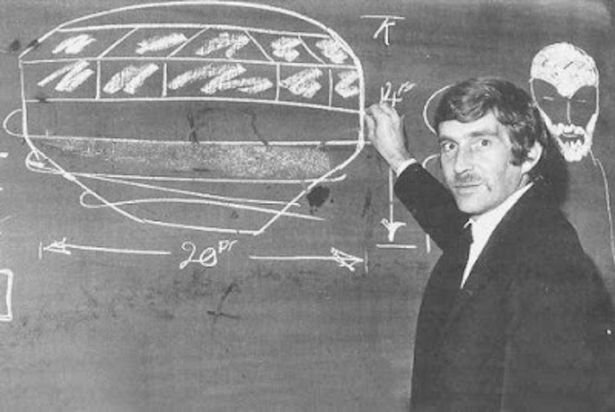
The men were taken to Keesler Air Force Base in Biloxi for a medical check. Base doctors reported no radiation exposure and no injuries beyond a small mark on Hickson, but documented that both men were in a severe state of mental stress consistent with a genuine traumatic experience. Within roughly thirty-six hours two civilian scientists arrived: Dr. J. Allen Hynek, the Northwestern University astronomer who had spent two decades as the Air Force's scientific consultant on UFOs, and Dr. James Harder, a University of California, Berkeley engineering professor working with the Aerial Phenomena Research Organization (APRO). They interviewed Hickson and Parker separately and Harder conducted hypnotic regression sessions on 14 October. Harder's stated view was that the depth of terror he observed under hypnosis was "practically impossible to fake." Hynek, careful in public, told reporters the men had plainly undergone "a very real, frightening experience" and that the case was "deeply puzzling," basing that on the men's consistency and demeanor rather than on physical traces.
On 15 October Hickson took a polygraph examination arranged through attorney Joe Colingo and administered by Scott Glasgow of Raymond A. Pendleton & Associates in New Orleans, with test questions prepared by psychologist R. Leo Sprinkle. Glasgow's reading was that Hickson was telling the truth. "The machine said I was telling the truth," Hickson summarized. The reliability of that single test became a focus of later dispute and is treated below.
The most important recent official-record development is documentary, not interpretive. In 2024 David Marler, executive director of the National UFO Historical Records Center in Rio Rancho, New Mexico, was processing the newly acquired APRO archive when he located five original audio cassettes from the case: Harder's hypnotic regression of Calvin Parker dated 14 October 1973, Harder's post-incident interview, Sheriff Diamond's interview with both men, Diamond being interviewed by Hynek, and Diamond playing the secret recording for Hynek. Marler digitized them and shared them with researchers Philip Mantle and Dr. Irena Scott. Kevin Randle, who reported the recovery, stressed why this matters: this is testimony captured within hours of the event, before memory could degrade or be reshaped, which is the gold standard for this kind of case.
What did the witnesses think it was?
Charles Hickson never wavered. A Korean War veteran and Ingalls Shipyard foreman, he gave the same account to the sheriff that night, to Hynek and Harder days later, in his 1983 book "UFO Contact at Pascagoula" written with college professor William Mendez and published by Wendelle Stevens in Tucson, in the Mississippi Oral History Program's "An Oral History with Mr. Charles Hickson" (Volume 108, held by the University of Southern Mississippi), and in public lectures into the 1990s. The University of Southern Mississippi's special collections hold his papers and an LP of a sermon that Rev. Bill Riddick of the Ocean Springs Baptist Church preached on 14 October 1973, three days after the event, on the meaning of the encounter, a measure of how seriously the local community took it at the time. Hickson did report later contacts and made a prediction of open contact in 1992 that did not come to pass, which his critics fairly note. He died in 2011 still affirming the 1973 event.
Calvin Parker is, in some ways, the more telling witness, precisely because he spent decades trying to get away from the story rather than profit from it. Nineteen and by his account terrified to the point of collapse on the night, he retreated from publicity for forty years, changed jobs and states to escape recognition, and told Fox News in 2013, "You don't never have no privacy," and "this is something I really didn't want to happen." He described the same craft with its blue light that "swooped down" with "a zipping noise," the same gray, claw-handed beings, the same paralysis and medical-style exam. Only late in life did he write his own books and speak at length, and even then he openly wrestled with what the beings were, telling interviewers he could not be sure whether they were "aliens" or something else, even "demons." He died in August 2023; Main Street Pascagoula held a commemoration in October 2023.
There is corroboration beyond the two men. Sheriff Diamond's office logged reports the same night from unnamed motorists who saw an unexplained blue light in the area, which directly contradicts the later skeptical claim that nothing else was seen. In 2019 a woman named Maria Blair came forward after some forty-five years to say she and her late husband had been near the river that night and had seen a blue light rising over the water and what looked like a body in the water below, an independent witness who had no apparent reason to invent it and who surfaced long after any money or fame was available. The town itself has marked the spot with a Pascagoula UFO historical marker on the riverfront.
Is the Pascagoula Abduction real? The two-pass assessment
Pass one, the ordinary explanations. Could this have been a hoax or a misperception? The strongest skeptical case was made by Philip J. Klass, who devoted roughly nineteen pages to it, and by journalist Joe Eszterhas, who covered it for Rolling Stone. Their argument was essentially twofold. First, the polygraph: Klass stressed that examiner Scott Glasgow was young, not yet certified, and had not finished his training, so the "passed the lie detector" headline was weaker than it sounded. The test reportedly ran only about half an hour. That is a fair methodological criticism. It is worth noting, though, that Glasgow's employer, Raymond Pendleton, defended him as fully qualified, that the test questions were drafted by a psychologist, and that the men had insisted on taking the test themselves, which is not the behavior of people expecting an unreliable result. And as the case literature points out, had the needle shown deception, the same skeptics would have treated the result as conclusive. Second, character: Eszterhas reported that Hickson had earlier left, or been pushed out of, a foreman's post at Ingalls after a dispute over borrowed money, and argued the men could have invented the story. That is an attack on Hickson's reputation, not a demonstration that the event did not happen, and it is exactly the kind of motivated, after-the-fact character evidence that is weighed as such rather than treated as closing a case. Eszterhas also noted the riverbank was within sight of two 24-hour toll booths and Ingalls security cameras that recorded nothing unusual, although that cuts against the sheriff's own log of independent motorist reports of the blue light.
A conventional misidentification is hard to fit. There is no balloon, aircraft, drone, or re-entry that produces a hovering egg-shaped craft, three claw-handed five-foot figures, shared bilateral paralysis, and a documented severe stress reaction in two men within the hour. No model or rig was ever found, no confession was ever made by either man across fifty years, and no independent analyst has ever shown a method by which the event was staged. The hoax theory, in the end, rests on doubts about one polygraph and on Hickson's employment history.
Pass two, if real, what is it. This is one of the very few abduction cases anchored not in late hypnotic recall but in same-night, on-the-record material: a sheriff's tape, a secret tape made to catch a lie that instead caught raw fear, a Keesler AFB medical finding of genuine traumatic stress, two scientists of standing (Hynek and Harder) who came within days and found the men credible, and, now, five original 1973 cassettes recovered from the APRO archive by David Marler and the National UFO Historical Records Center. The two witnesses described the same craft and the same beings independently and never broke from it, one of them while actively avoiding fame for forty years. There is at least one fully independent corroborating witness to the blue light over the water. What was actually experienced, a physical craft and physical non-human occupants, a perceptual or "high strangeness" event, or something not yet categorized, remains genuinely open.
The official apparatus here did not try to bury the case; it did the opposite, recording it faster and more completely than almost any other abduction report on file, and that documentation is itself evidence the event was real enough to take seriously. The skeptical counter-case exists and is logged honestly, but it does not close the case: it amounts to one contested polygraph plus motivated character testimony, with no method-shown demonstration of a hoax. Weighing same-night recordings, an official medical finding of trauma, two credible scientific investigators, recovered period audio, and an independent corroborating witness against an uncertified examiner and a reputation attack, the verdict is Verified Unexplained. The contemporary record is authenticated and the object and occupants remain unexplained.
Sources
- www.nicap.org/reports/731011pascagoula_hicksontape.htm
- libguides.hindscc.edu/paranormalms/pascagoula_abduction/1973_recording
- lib.usm.edu/spcol/exhibitions/item_of_the_month/march_2014.html
- kevinrandle.blogspot.com/2024/01/hicksonparker-lost-interview-tapes.html
- openminds.tv/rare-charlie-hickson-transcript-786/
- de173.com/the-polygraph-examination-of-charles-hickson/
- ufologie.patrickgross.org/htm/pascagoula.htm
- www.foxnews.com/us/mississippi-man-who-shunned-spotlight-recalls-alleged-1973-incident-with-ufo.print
- darkhorsepressnow.com/news/top-story/2023-10-10/pascagoula-alien-abductions-of-1973-50-years-later/
- libguides.hindscc.edu/paranormalms/pascagoula_abduction
More cases from this region: UFO sightings in United States