The Coyne Helicopter Encounter
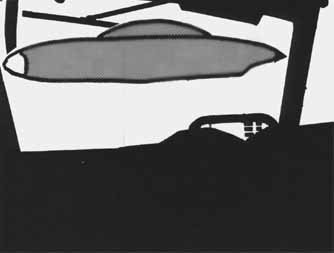
At about 11:02 p.m. on 18 October 1973, an Army Reserve Bell UH-1H "Huey" helicopter, tail number 68-15444 of the 316th Medical Detachment out of Cleveland, was cruising at roughly 2,500 feet on a heading of 030 degrees, returning from Columbus to Cleveland over the dark farmland southeast of Mansfield, Ohio. This case file covers what witnesses reported, the official narrative, and a two-pass assessment with its evidence tier.
What did witnesses see at Near Mansfield?
At about 11:02 p.m. on 18 October 1973, an Army Reserve Bell UH-1H "Huey" helicopter, tail number 68-15444 of the 316th Medical Detachment out of Cleveland, was cruising at roughly 2,500 feet on a heading of 030 degrees, returning from Columbus to Cleveland over the dark farmland southeast of Mansfield, Ohio. Four men were aboard: Captain Lawrence J. Coyne, 36, the pilot in command with 19 years of flying experience, in the right front seat; First Lieutenant Arrigo "Rick" Jezzi, 26, a chemical engineer, at the controls in the left seat; Sergeant John Healey, 35, a Cleveland police officer serving as flight medic, in the rear; and Sergeant Robert Yanacsek, 23, a computer technician, as crew chief in the right rear.
Yanacsek noticed a single red light on the eastern horizon, off the right side, and watched it for perhaps a minute to ninety seconds. It did not behave like the airliner traffic into Mansfield. Then it turned and bore in on the helicopter. In the official report Coyne logged it as "converging on the helicopter at the same altitude at an airspeed in excess of 600 knots." Convinced a collision was imminent and that the object was "like a missile locked onto the helicopter," Coyne took the controls and pushed into a powered dive, dropping the collective and putting the aircraft into a descent that built to about 2,000 feet per minute. He called Mansfield approach control to ask whether any high-performance jets were in the area. Mansfield acknowledged, and then, the crew reported, all the radios went dead on both UHF and VHF in the middle of the transmission.
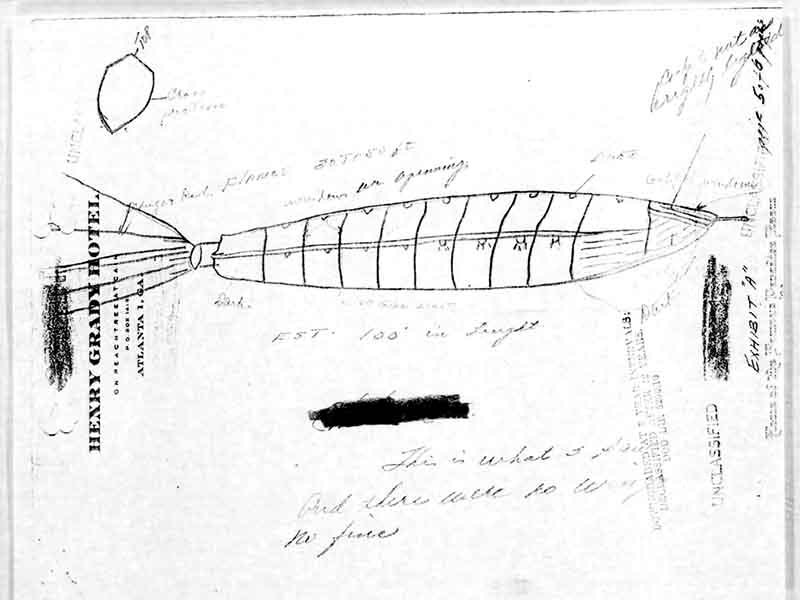
At the bottom of the dive, around 1,700 feet above the ground, the object did not pass. The crew said it stopped and hung over and ahead of the canopy for roughly ten to twelve seconds. Close up it was a featureless gray, metallic-looking shape, cigar or fat-cigar form with a low dome, "as big as the helicopter" or larger, a steady red light at the leading end and a white light at the trailing end. Yanacsek thought he saw a hint of windows along the dome. Then, from the lower aft part of the hull, a green beam that the crew described as roughly pyramid or cone shaped swung up, passed over the helicopter's nose, came through the windshield and into the tinted upper window panels, and bathed the entire cockpit in green light.
While the object hovered, Coyne and Jezzi saw the magnetic compass disk turning, making about four full rotations a minute, useless. Then the object eased off to the west and accelerated away. As it left, Coyne looked at the altimeter and found the helicopter at about 3,500 feet, climbing roughly 1,000 feet per minute, with the collective still bottomed out and the controls set for a dive. He had not pulled up. The aircraft had gained close to 1,800 feet with no apparent input. Radio contact returned only after the object was gone. The magnetic compass never worked properly again and was later replaced.
What is the official explanation?
This is one of the rare close-encounter cases with a contemporary government paper trail. Captain Coyne filed an official U.S. Army DA Form 2496 (Disposition Form, AR 340-15) on 23 November 1973, recording the tail number 68-15444, the unit (316th Medical Detachment, Cleveland USAR), the time of 2305 hours, the heading of 030 degrees, the red light "on the east horizon, 90 degrees to the flight path," the object "converging on the helicopter at the same altitude at an airspeed in excess of 600 knots," the power descent from 2,500 to 1,700 feet to avoid impact, and the finding that the altimeter "read a 1000 fpm climb and read 3500 feet with the collective in the full down position." Notably the terse military form does not itself describe the green beam, which appears in the crew interviews and the civilian investigation.
The case was investigated in depth by Jennie Zeidman, a former secretary and investigator for the Air Force's Project Blue Book, working for the Center for UFO Studies (CUFOS), the organization founded by J. Allen Hynek. Her findings were published in 1979 as the CUFOS monograph "A Helicopter-UFO Encounter Over Ohio," a roughly 122-page document that reconstructs the timeline, interviews all four crewmen and the ground witnesses, and reproduces the two independent crew sketches of the object, which matched closely. Hynek himself interviewed Coyne on 24 January 1974. Hynek also spoke with the FAA's Cleveland operations chief, P.J. Vollmer, who vouched for Coyne in the strongest terms, saying he did not "know anybody that I would believe more" and trusted Coyne's judgment "without a question of doubt."
There was no debunking Air Force project running by 1973, Blue Book having closed in 1969, so no government body issued a dismissal. Instead the case drew formal recognition. On 23 June 1974 the National Enquirer announced that its Blue Ribbon Panel of scientists had awarded the four-man crew a 5,000 dollar prize for the most scientifically valuable UFO report of 1973. CUFOS and Hynek classed the event as unexplained, and Zeidman's monograph remained the definitive primary reference, with the full document still posted on the CUFOS website. The two crew sketches, the matching ground-witness accounts, the official altimeter notation and the radio and compass anomalies form the documentary core that every later analysis, supportive or skeptical, has had to work from.
What did the witnesses think it was?
Capt. Lawrence J. Coyne, 1Lt. Arrigo "Rick" Jezzi, Sgt. John Healey, Sgt. Robert Yanacsek; ground witnesses Mrs. E.C. and four adolescents on Route 430 near Charles Mill reservoir
The dispute
The dispute is not an official verdict but two independent civilian reconstructions, neither of which identifies the actual object. Philip J. Klass, the era's leading UFO skeptic, proposed in "UFOs Explained" that the crew saw a meteor-fireball, possibly an Orionid, and that the helicopter's reported climb came from the pilots instinctively pulling back on the controls. Klass's own account concedes he searched for a meteoric match and "found nothing to corroborate" it, and the fireball hypothesis is hard to reconcile with an object the crew described as decelerating, stopping, hovering for ten to twelve seconds, turning hard and then flying off horizontally to the west, behavior no meteor exhibits. Klass also could not explain how Coyne arrested a climb when the collective was already at the bottom stop. Jennie Zeidman's CUFOS investigation rejected the meteor reading on four grounds: the roughly 300-second total duration, the marked deceleration and hard-angle maneuver at closest approach, the precisely defined shape, and the horizon-to-horizon flight path. Kevin Randle, himself a former Army helicopter pilot, argued that Klass misunderstood military cockpit procedure and presented "speculations as if they were facts."
The stronger skeptical case is the aerial-refueling-tanker reconstruction, set out in detail on the Parabunk blog. It proposes a Lockheed HC-130P or similar tanker: the steady red and green lights were the tanker's wingtip navigation lights misinterpreted as the nose and tail of one craft; the green flood in the cockpit was a searchlight refracting through the Huey's green-tinted upper window panels; and the uncommanded climb was wingtip-vortex upwash from the larger aircraft combined with a startled, inadvertent control input. This account is internally coherent, draws on real helicopter-in-vortex flight data, and gains support from co-pilot Arrigo Jezzi's own 1974 statement that the altitude gain might have come from an inadvertent input or thermals.
What keeps this in the Barely Disputed tier rather than the Strongly Disputed tier is that no version of the skeptical case ever produces the specific object. No tanker flight was traced to that airspace at 2305 on 18 October 1973, no flight log or radar track was ever matched, and no fireball report for that night was ever found. The tanker reconstruction also leaves the radio failure on two bands, the magnetic compass turning four times a minute and needing replacement, and most tellingly the independent ground witnesses unaddressed. The family stopped on Route 430 near Charles Mill reservoir saw the same green wash cover the helicopter, the trees, the road and their own car from a stationary position, which is difficult to attribute to a misjudged tanker the crew alone were tracking. A contested control-input argument and an unmatched aircraft type are a plausible reconstruction, not a positive identification, so the case largely stands.
Is the Coyne Helicopter Encounter real? The two-pass assessment
Pass one, the ordinary explanations. Two have been advanced with actual method. Philip J. Klass argued in "UFOs Explained" that the object was a bright meteor-fireball, plausibly from the Orionid shower active in mid-October, and that the climb came from "unconscious, instinctive reactions of well-trained pilots" hauling back on the controls in fright. The fireball idea runs into the crew's account of an object that decelerated, stopped, hovered for ten to twelve seconds, executed a hard turn and departed horizontally to the west, none of which a meteor does, plus a steady unblinking light and a defined solid shape. Klass also found no independent fireball report for that night, and a fireball bright enough to bathe a cockpit green should have been widely seen and reported. A second, more mechanical reconstruction, argued on the skeptic blog Parabunk, proposes an aerial-refueling tanker such as a Lockheed HC-130P: the red and green were the tanker's wingtip navigation lights misread as nose and tail lights, the green flood was a searchlight refracting through the helicopter's green-tinted upper panels, and the uncommanded climb was wingtip-vortex upwash from the larger aircraft plus a startled control input. This is the strongest skeptical case, and it is buttressed by Jezzi's own 1974 uncertainty about the climb and by documented helicopter behavior in tanker vortex fields. It does not, however, identify any actual tanker flight in that airspace at that time, and it struggles with the radio failure, the four-revolutions-per-minute compass, and the ground family who saw the same green wash from a stationary car on the road.
Pass two, if the encounter is taken at face value. Then a structured, metallic, roughly cigar-shaped craft on the order of the helicopter's own size closed at high speed, halted in mid-air, hung over the Huey while flooding the cockpit with a green beam, disabled the radios and spun the magnetic compass, lifted the helicopter nearly 1,800 feet with its controls set for a dive, and then accelerated away. The independent ground witnesses, the matching crew sketches, the official altimeter notation, and the FAA's own endorsement of Coyne's reliability give this version unusual documentary weight for a 1970s case.
Weighing both passes, this sits at Barely Disputed. The counter-explanations are real and partly method-shown, and the co-pilot's hedge on the climb is a genuine weakness, so the case is not a clean Verified Unexplained. But neither the fireball nor the tanker reconstruction names the specific real-world object, traces a specific flight, or accounts for the full cluster of radio loss, compass spin, green-light corroboration from the ground, and the altimeter reading together. With a plausible-but-unproven natural reconstruction on one side and a heavily documented, multi-witness, officially logged encounter on the other, the case largely stands, which is exactly the definition of Barely Disputed.
Sources
- ufologie.patrickgross.org/htm/coynereport.htm
- cufos.org/PDFs/books/A%20Helicopter-UFO%20Encounter%20Over%20Ohio.pdf
- www.nicap.org/reports/731018mansfield_report.htm
- kevinrandle.blogspot.com/2015/06/october-181973-coyne-helicopter-case.html
- kevinrandle.blogspot.com/2025/04/following-is-long-posting-about-coyne.html
- parabunk.blogspot.com/2018/04/the-1973-coynemansfield-helicopter-ufo.html
- freepress.org/article/ohio-against-universe-50th-anniversary-ufo-wave-during-halloween-1973
- www.ashlandsource.com/2020/10/04/coyne-incident-over-charles-mill-lake-was-most-credible-ufo-sighting-of-1973/
- clevelandufo.com/?page_id=18
- www.abebooks.com/first-edition/Helicopter-UFO-Encounter-Over-Ohio-Zeidman-Jennie/31456743282/bd
More cases from this region: UFO sightings in United States