The Tehran F-4 Incident
A radar-visual military UFO encounter over Tehran on 19 September 1976 in which two Imperial Iranian Air Force F-4 Phantoms lost instruments and weapons as they closed on a brilliant strobing object that out-maneuvered them, documented in a high-distribution US Defense Intelligence Agency cable the agency itself rated "a classic."
What did witnesses see at Tehran?
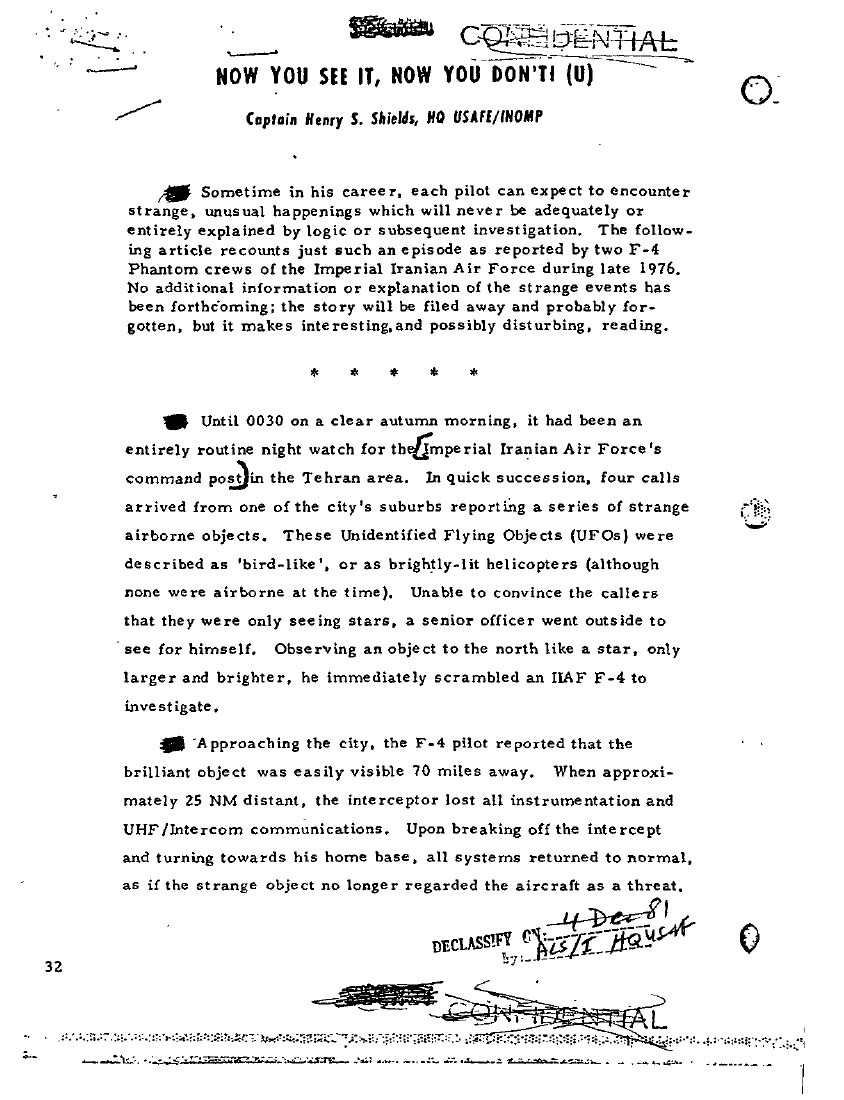
Just after midnight on the night of 18 to 19 September 1976, the command post of the Imperial Iranian Air Force (IIAF) in Tehran took four telephone calls from citizens in the Shemiran district in the north of the city. The primary DIA message records the time as "about 1230 AM on 19 Sep 76." The callers reported strange objects in the sky. Some described a bird-like object, others a helicopter with a light on. The command post knew there were no helicopters airborne at that hour.
The duty officer phoned Brigadier General Yousefi, described in the DIA report as the "Assistant Deputy Commander of Operations." Yousefi at first told the citizen it was only stars, then checked with Mehrabad tower and decided to look for himself. He stepped outside and saw an object in the sky "similar to a star but bigger and brighter." He ordered an F-4 Phantom scrambled from Shahrokhi Air Force Base near Hamadan, west of Tehran, to investigate. The pilot of that first jet is named in later witness testimony as Captain Mohammad Reza Azizkhani; the DIA cable itself does not name the aircrew beyond Yousefi.
The DIA report continues: "At 0130 hrs on the 19th the F-4 took off and proceeded to a point about 40 NM north of Tehran. Due to its brilliance the object was easily visible from 70 miles away." As the Phantom closed to about 25 nautical miles, "he lost all instrumentation and communications (UHF and intercom). He broke off the intercept and headed back to Shahrokhi. When the F-4 turned away from the object and apparently was no longer a threat to it, the aircraft regained all instrumentation and communications."
A second F-4 was launched at 0140 hrs. Its pilot is identified in later testimony as Major Parviz Jafari, a squadron commander, with First Lieutenant Jalal Damirian as his weapons systems officer in the back seat. Per the DIA message, the backseater "acquired a radar lock on at 27 NM, 12 o'clock high position with the VC (rate of closure) at 150 NMPH. As the range decreased to 25 NM the object moved away at a speed that was visible on the radar scope and stayed at 25 NM." The size of the radar return was comparable to that of a Boeing 707 tanker. The object itself was so brilliant the crew could not make out its true shape. The DIA report describes the lights exactly: "the light that it gave off was that of flashing strobe lights arranged in a rectangular pattern and alternating blue, green, red and orange in color. The sequence of the lights was so fast that all the colors could be seen at once."
As the second F-4 chased the primary object south of Tehran, another brightly lit object, estimated at one half to one third the apparent size of the moon, "came out of the original object." This second object headed straight at the F-4 at high speed. The pilot tried to fire an AIM-9 Sidewinder missile. The DIA report states plainly: "at that instant his weapons control panel went off and he lost all communications (UHF and interphone)." He put the jet into a negative-G dive turn to escape. The smaller object followed him in trail at about 3 to 4 nautical miles, then cut to the inside of his turn and rejoined the primary object in what the report calls "a perfect rejoin."
Shortly after, a third object dropped out of the underside of the primary object, descending straight down at great speed. The crew, who had by now regained their systems, expected a large explosion. Instead the object "appeared to come to rest gently on the earth and cast a very bright light over an area of about 2-3 kilometers." The crew descended from 26,000 feet to 15,000 feet to mark its landing position. On the long final approach to Mehrabad they saw yet another cylinder-shaped object "about the size of a T-bird at 10M, with bright steady lights on each end and a flasher in the middle." Mehrabad tower reported no other known traffic.
The aircraft suffered repeated interference near a magnetic bearing of 150 degrees from Mehrabad, losing UHF and interphone communications and watching the inertial navigation system fluctuate "from 30 degrees to 50 degrees." A civilian airliner approaching Mehrabad at the same time, callsign reported in the document as "Kilo Zulu," also experienced a communications failure in the same vicinity but did not report seeing anything. In daylight, the crew was taken by helicopter to where they thought the object had landed, a dry lake bed. They found nothing at the spot, but circling west of it they picked up "a very noticeable beeper" signal, loudest over a small house with a garden. The occupants, asked whether they had noticed anything strange the previous night, described a loud noise and a very bright light "like lightning."
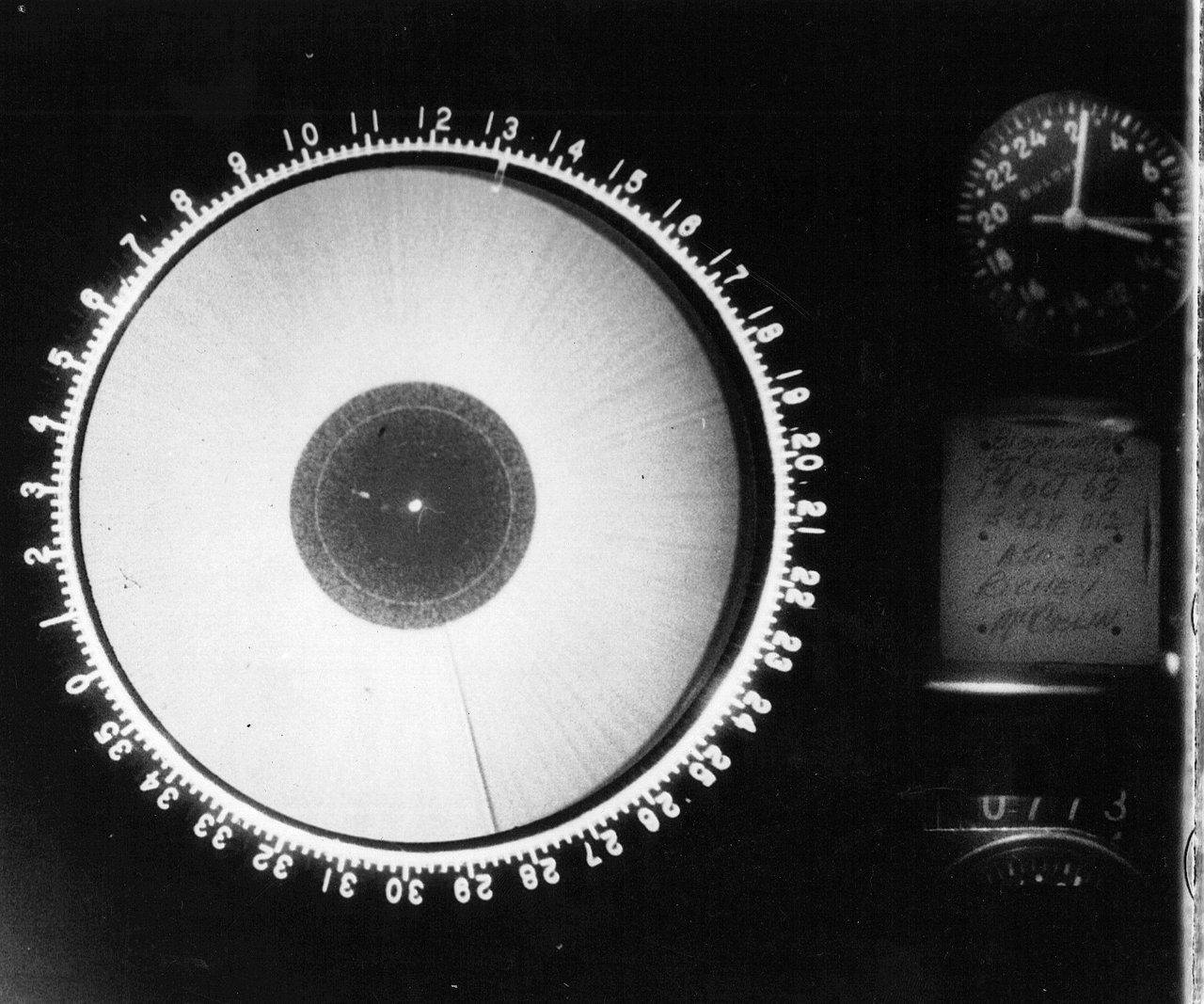
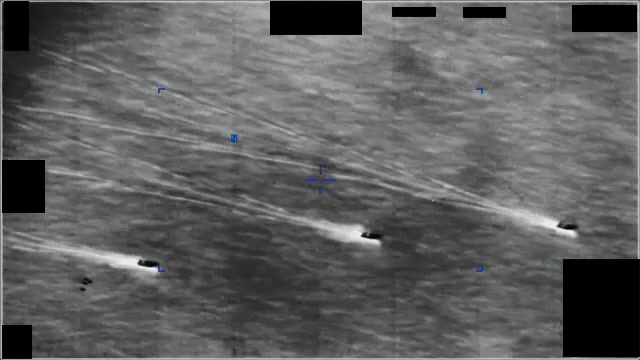
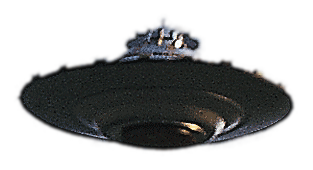
More footage and images of this sighting
The DIA Defense Information Report Evaluation form and NSA routing package, including the six-point remarks rating the case a classic that meets all criteria for a valid UFO study. View source

What is the official explanation?
DIA
What did the witnesses think it was?
The witnesses were not fringe observers. They were serving officers of the Imperial Iranian Air Force and air traffic controllers. The man who set the night in motion, Brigadier General Yousefi, saw the object himself before ordering the scramble. The DIA evaluation singled out the witness quality, noting "an air force general, qualified aircrews, and experienced tower operators."
The most public witness is Major, later retired General, Parviz Jafari, the pilot of the second F-4. Jafari kept his account consistent across decades. On 12 November 2007 he appeared at a press conference at the National Press Club in Washington, organized by former government and military personnel calling for renewed UFO investigation, and described the encounter in detail. He recounted the radar lock, the object's evasion at the edge of his radar, the smaller object that broke away and came at his aircraft, his attempt to fire the AIM-9 that failed when his weapons panel and radio died, and the steep diving turn he flew to escape. He has repeated in interviews that he believed he was dealing with something under intelligent control, not a star or a malfunction.
The corroboration is layered. There were two separate aircrews on two separate jets, both of which lost instruments at roughly the same 25 nautical mile standoff. There were the original civilian callers from Shemiran. There were Mehrabad tower controllers. There was a civilian airliner crew, callsign Kilo Zulu in the cable, who lost communications in the same patch of sky. The DIA report's own line that "similar electromagnetic effects were reported by three separate aircraft" is the official tally of independent corroboration. Other senior Iranian officers, including Lieutenant General Abdollah Azarbarzin, later spoke about the incident and the official concern it caused.
It is worth marking what the witnesses did not claim. They did not claim contact, occupants, or a recovered craft. The "landing" was inferred from a descending light and a ground beeper signal, and when the crew flew out the next day they found nothing physical at the dry lake bed, only a beeper tone near a house whose occupants reported a loud noise and bright light. The witnesses reported instrument failure, radar returns, evasive maneuvering, and ejected sub-objects, and they reported them soberly enough that the receiving agency rated the report a classic.
Is the Tehran F-4 Incident real? The two-pass assessment
Pass one, how this could be entirely ordinary. The strongest skeptical case has been built by Philip J. Klass, James Oberg, and Brian Dunning, and it has real components. The opening trigger, a brilliant unmoving "star, but bigger and brighter," fits a bright planet. On the night in question Jupiter was prominent, and Klass argued the initial object was a celestial body misjudged by tired observers at night. Dunning added that 19 September sits near the maxima of minor meteor showers, the Gamma Piscids and Southern Piscids and the tail of the Eta Draconids, which could seed reports of falling lights and fast bright objects. On the avionics side, the F-4 of that era had documented electrical and radar reliability problems, the Iranian maintenance at Shahrokhi has been described as poor, and at least some of the aircrew had limited night experience, so a chain of intermittent failures, radar artifacts read as "jumps," and disorientation is not impossible. Klass even floated that the descending "landed" object was a separately ejected emergency locator beacon, which would tidily explain the ground beeper the crew found the next day. Taken together, this is a serious attempt to dissolve the case into a planet, some meteors, a flaky jet, and a stray transponder.
But the ordinary explanation has to carry weight it cannot lift. A planet does not give a radar return the size of a 707, does not move off at the edge of a radar scope as range closes, and does not eject a sub-object that flies a pursuit curve and executes "a perfect rejoin." Meteors do not hold a radar lock or station-keep at 25 nautical miles. The avionics-failure theory has to explain why two different aircraft, with two different crews, lost instruments at the same standoff distance and recovered when they turned away, a pattern the Mooy cable states explicitly for the first jet. And the beacon idea was challenged even among skeptics, with former mishap investigators noting there is no maintenance record or technical order supporting an inadvertent C-141 beacon ejection over those mountains that night. Each conventional piece can chip at one element, but none accounts for the radar-visual correlation across multiple platforms plus the synchronized electromagnetic effects, which is exactly the convergence the DIA evaluator flagged.
Pass two, if real, what is it. The honest answer is unknown. The object showed itself as a single brilliant source with a fast rectangular strobe of blue, green, red, and orange, gave a large radar return, out-accelerated an interceptor, deployed and reabsorbed smaller objects, and produced selective electromagnetic interference that killed radios, weapons panels, and instrumentation at close range while sparing the aircraft once they withdrew. That last property, interference that scales with proximity and reverses on retreat, is the signature that most resists a mundane label and that the US intelligence community found notable enough to rate the report a classic. Whatever it was, it behaved as something under control, and no official body has ever named it.
This is not a discredit case. The counter-explanations are method-shown in places but do not close the multi-aircraft radar-visual-EME convergence, and the official apparatus that handled the report rated it credible rather than explained it away, which under our rules counts as evidence the case was real enough to need handling, not as a mark against it. The authenticated, high-distribution DIA documentation is genuine and uncontested, and the object remains unidentified. The case sits at Verified Unexplained.
Sources
- www.theblackvault.com/documents/ufos/1976iranincident.pdf
- documents.theblackvault.com/documents/ufos/nsa/routing_slip_ufo_iran.pdf
- www.theblackvault.com/casefiles/the-1976-iran-incident/
- www.theblackvault.com/documentarchive/the-1976-iran-incident-ufo-encounter-over-tehran-iran/
- www.bibliotecapleyades.net/ciencia/ufo_briefingdocument/1976b.htm
- www.metabunk.org/threads/the-1976-iran-f4-uap-ufo-case.12965/
More cases from this region: UFO sightings in Iran