The Alan Godfrey Abduction
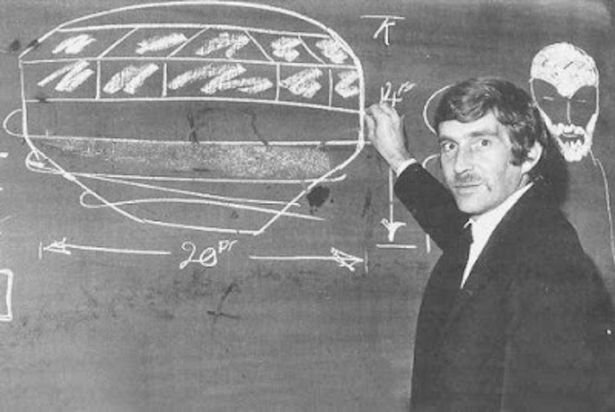
In the early hours of 28 November 1980, Police Constable Alan Godfrey of West Yorkshire Police was on patrol in the small Pennine town of Todmorden, driving his panda car along Burnley Road in search of a small herd of cattle reported loose on a council estate. This case file covers what witnesses reported, the official narrative, and a two-pass assessment with its evidence tier.
What did witnesses see at Burnley Road?
In the early hours of 28 November 1980, Police Constable Alan Godfrey of West Yorkshire Police was on patrol in the small Pennine town of Todmorden, driving his panda car along Burnley Road in search of a small herd of cattle reported loose on a council estate. It was a cold, wet night, around 5am, near the end of his shift. Godfrey later said he first saw what he took to be a stationary double-decker bus a few hundred yards ahead, straddling the road.
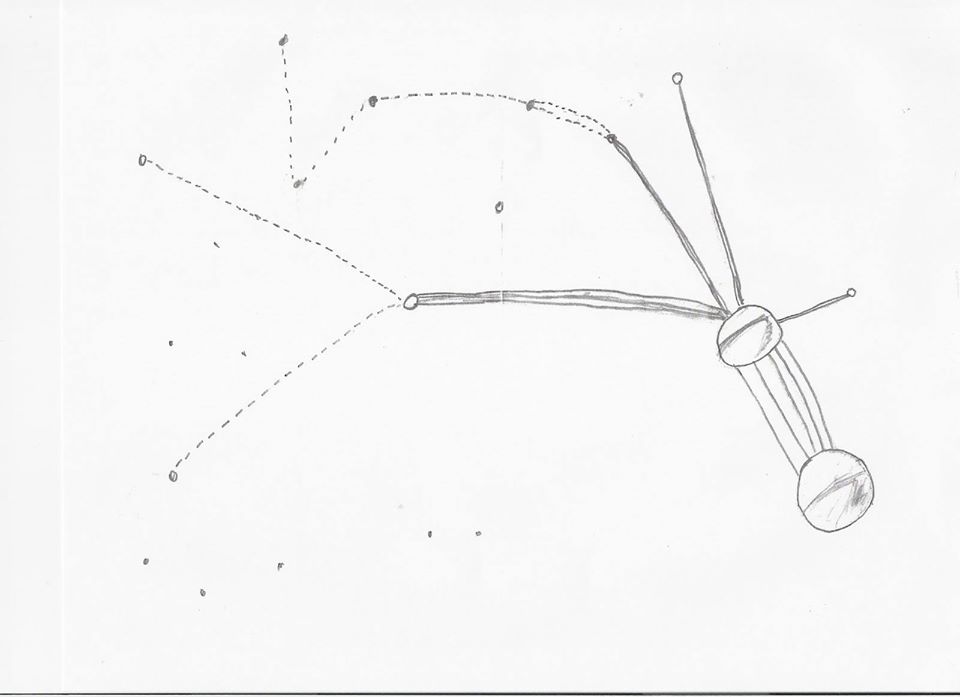
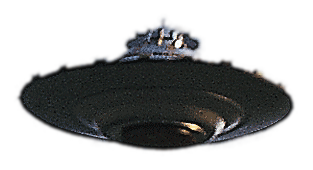
As he closed in he realised it was not a bus. He described a large rotating, diamond-shaped or spinning-top-shaped mass hovering about five feet above the road surface, which he estimated at around twenty feet wide and fourteen feet high. The lower half appeared to be turning, and around it ran what looked like a bank of windows or panels. It was spinning fast enough, he said, that it set the bushes at the roadside shaking. In his own words to a 2019 interview, "It was diamond-shaped. The bottom half was spinning. It was hovering about five feet off the ground. It was about 20 feet wide, 14 feet high."
Godfrey stopped his car. He reached for the radio to call it in and found it dead. Both his vehicle VHF set and his personal handset failed. Trained to record incidents, he took out a police accident-report pad and began to sketch the object resting on the road in front of him. Then, by his account, there was a burst of bright light and a gap. The next thing he knew he was driving his car some distance further up Burnley Road, around a hundred yards on, with the object gone. He was disoriented. Back at the station he realised time was missing. As he put it, "After it had all happened, I realised there was half an hour missing from me drawing the object to me turning up on the other side." Estimates taken later at the site put the unaccounted gap at roughly fifteen to thirty minutes.
Two physical traces were noted. Returning to the spot, Godfrey and colleagues found a dry, roughly circular patch on the otherwise rain-soaked road where the object had hovered, with a swirled appearance. And one of his police boots was found split along the sole, which Godfrey took to mean he had been dragged. He reported an itchy mark on one foot.
This was not Godfrey's first brush with the strange that year. Five months earlier, in June 1980, he had been one of the officers called to the body of Zigmund Adamski, a 57-year-old Polish-born coal miner who had vanished from his home in Tingley and was found dead on top of a coal tip in Todmorden, around twenty miles away, days later. Adamski had a day's beard growth despite being missing for days, his head and neck bore unexplained burns, and a strange ointment on the burns could not be identified by forensic scientists. Godfrey said the dead man looked as if he had been frightened to death. The local press would later wire the two cases together.
What is the official explanation?
Godfrey reported the encounter to his own force. According to the accounts he gave afterward, West Yorkshire Police treated the matter as an embarrassment. He was questioned by superiors, examined and pronounced psychologically fit, and faced scepticism and ridicule from colleagues. He has said an attempt was made to have him sectioned and that he was eventually pushed out of the force, telling reporters he was hounded out for refusing to drop his story. He also described a later visit by an unidentified man in a dark suit who produced his own road sketch and warned him about it, an episode Godfrey could not independently corroborate.
Godfrey's superiors did not produce a public investigative report concluding for or against a craft. The official handling, a fitness-for-duty assessment, a media-management posture, and quiet pressure, treated the man rather than the object. There was no radar trace offered, no recovered hardware, and no government file that resolves the sighting. Under Graham's standing rule, an official-apparatus move to close a case down is logged as a sign the report was taken seriously enough to need managing, not as proof the object was ordinary.
The serious investigation was civilian. Jenny Randles, a Manchester-area researcher and one of Britain's most careful UFO writers, took the case up and first published it (with Godfrey anonymous) in Flying Saucer Review in 1981, then in full in The Pennine UFO Mystery (1983). Eight months after the encounter, in July 1981, on the advice of a solicitor friend, the Manchester solicitor and UFO investigator Harry Harris, Godfrey agreed to regression hypnosis to probe the missing time. The first session was conducted privately by a Manchester psychiatrist who refused to allow recordings; later sessions were run with other therapists and were filmed. A 1982 archival photograph held by TopFoto shows Godfrey at a Manchester UFO seminar in May 1982 alongside investigators Norman Collinson, Harry Harris and Mike Sacks.
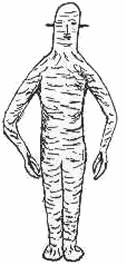
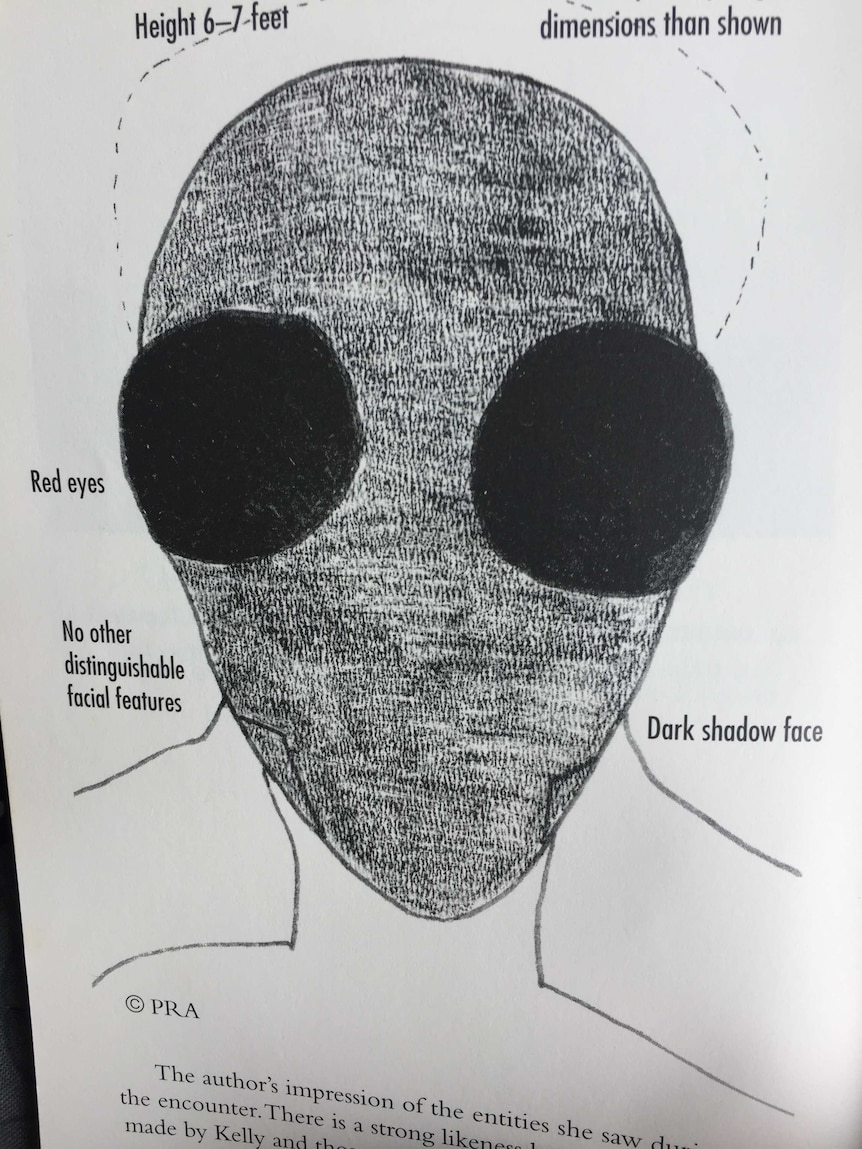
Under hypnosis a fuller, stranger narrative surfaced. Godfrey described being engulfed in light, his engine and radio dead, then finding himself in a room that felt like the inside of a house, with a large black dog present. A tall, heavily bearded man in biblical-style robes, who conveyed the name "Yosef," appeared to study him, assisted by small robot-like figures Godfrey described as about the size of a five-year-old child with a head shaped like a lamp. He believed he was given some kind of examination before being returned to his car. The Adamski death was separately the subject of a coroner's inquest; coroner James Turnbull recorded an open verdict and decades later, in a 2003 BBC interview, called it the biggest mystery of his career, saying the question of where Adamski had been and what led to his death could not be answered.
What did the witnesses think it was?
The sole direct witness to the close encounter is Alan Godfrey, and his position has never wavered on the central point. He has always insisted he saw a solid, structured object that night, while keeping a careful distance from the hypnosis material. He told interviewers, "I must stress that I did see a UFO that night. Make no mistake about that. I definitely saw what I saw. Nobody on this Earth will ever tell me any different." In 2014 he described it as "a nuts and bolts craft, not a trick of the mind," and said, "I have never seen anything like it."
What makes Godfrey unusual as a witness is that he is openly sceptical of his own abduction memories. He has repeatedly said he is certain the object was real, but cannot say whether the hypnotic content, Yosef, the robots, the room, was a dream, a fantasy, a real recovered memory, or some mixture. That self-doubt about the most sensational part of his own story is the opposite of an embellisher's behaviour and is one reason investigators on both sides have taken him seriously as an honest reporter rather than a fabricator. He was a serving constable, a trained observer, with no obvious motive and a great deal to lose, and by his account he did lose it, his career and his standing in the force.
Corroboration is the weak point and is honestly disputed below. The often-repeated claim that three other police officers saw a similar object only fifteen minutes before Godfrey turns out, on the investigators' own reconstruction, to refer to a sighting four days earlier, not the same night. Several accounts state that other officers and a bus driver reported strange lights around that period, but no second witness to Godfrey's specific roadside object, in real time, has ever come forward by name. The Adamski case gives the story an eerie context but is a separate death with its own open verdict, and it does not put a second pair of eyes on the Burnley Road craft.
The dispute
The leading counter-explanation is psychological, and it is a named, method-shown argument rather than an official assertion. The British researcher and folklorist Dr David Clarke, together with Andy Roberts and the writer Peter Brookesmith, examined the case sceptically, most prominently in a Fortean Times feature in 2011, and Brookesmith was billed to give a talk at Goldsmiths, University of London, titled "The Unextraordinary Oddity of Alan Godfrey's Alien Abduction," arguing that the experience makes most sense in light of Godfrey's own personal history. Their case rests on a specific local object. From 1969 into the early 1980s, a real saucer-shaped Futuro house, the prefabricated round building designed by Finnish architect Matti Suuronen, stood at various sites beside Burnley Road in Todmorden, including during a 1979 to 1980 local UFO flap. Godfrey would have driven past this glowing white flying-saucer-shaped structure, with its bank of elliptical windows, near-daily for over a decade. The argument is that a tired officer at the end of a night shift, in the rain, slipping into a brief hypnagogic or semi-awake state, could have generated a vivid image of a hovering windowed saucer seeded by years of familiarity with that building, an image then elaborated and hardened by regression hypnosis months later.
The hypnosis is the second pillar of the dispute. By 1980 the unreliability of hypnotic recall was already documented, and the abduction narrative, the bearded "Yosef," the lamp-headed robots, the black dog, the medical exam, only emerged under hypnosis in July 1981, eight months after the event, in sessions arranged through a solicitor and partly filmed. Critics note this is exactly the setting in which confabulation and suggestion produce detailed but unreal memories. Crucially, Godfrey himself concedes this point and refuses to vouch for the abduction content, which strengthens the sceptical reading of that portion while leaving the core sighting untouched.
The third strand is the absence of independent corroboration. Andy Roberts summarised the difficulty by saying Godfrey may well be reporting his own genuine experience but that it is unlikely to have taken place in consensus reality, with no physical evidence and no other witness to any part of it coming forward. The widely cited "three policemen saw it fifteen minutes before" detail collapses on inspection: the investigators traced that sighting to four days earlier, not the same night, so it is not corroboration of the roadside object at all. The split boot and the dry patch on the road are suggestive but ambiguous and were never forensically tied to an exotic cause.
What this dispute does not contain is a settling blow. No Futuro house or bus or any other identified object has been placed on Burnley Road at 5am on 28 November 1980. No hoax method has been demonstrated, no props recovered, and Godfrey has made no confession; on the contrary, more than forty years on he still affirms the object was real while disowning the abduction memories. The counter-explanation is a plausible, named, mechanism-based hypothesis about how the imagery could have formed, which is why this is a genuine dispute, but it remains a reconstruction of the witness's mind rather than an identification of the thing he says he saw. That is why the case is logged here as Barely Disputed: the official handling and the civilian sceptics both engaged it seriously, a coherent ordinary explanation is on the table, yet the central report still stands on the testimony of a sober, trained, self-questioning witness and has not been closed.
Is the Alan Godfrey Abduction real? The two-pass assessment
Pass one, the entirely ordinary reading. There is a strong, specific, named candidate for how this could be a non-event. Todmorden hosted a real flying-saucer-shaped Futuro house beside Burnley Road for over a decade, exactly the road Godfrey patrolled, complete with the windowed, domed, saucer profile he later sketched. David Clarke, Andy Roberts and Peter Brookesmith argue that a fatigued officer at the end of a wet night shift, primed by years of seeing that building and by a local 1979 to 1980 UFO flap, could have produced a hypnagogic image of a hovering windowed craft, with the elaborate abduction content, Yosef, the lamp-headed robots, the black dog, manufactured later under regression hypnosis in 1981, a setting notorious for confabulation. The corroboration that is usually cited evaporates: the "three officers fifteen minutes before" sighting actually happened four days earlier, and no named second witness ever saw the roadside object. The split boot and dry patch are real but ambiguous. On this reading the case is honest misperception plus suggestible memory, not a craft.
Pass two, if the core report is real. Then what Godfrey describes is a structured, rotating object roughly twenty feet by fourteen feet, hovering five feet off a public road close enough to shake the bushes, accompanied by simultaneous failure of two independent radios and a documented gap in time and position. The witness is about as good as witnesses get: a serving police constable, trained to observe and record, who sketched the thing in real time on his accident pad, who had nothing to gain and by his account lost his career, and who to this day separates the part he is sure of (the object) from the part he distrusts (the abduction). If even the conservative core stands, the Futuro house explains the shape but not the motion, the radio failure, the missing time, or the road trace, and the abduction layer, whatever its status, points to something far stranger.
Weighing the two: the sceptical case is unusually good, named investigators with a concrete local mechanism and a real walk-back of the corroboration, and it is the reason this is filed as disputed rather than unexplained. But it is a hypothesis about how the image could have formed, not an identification of an object actually present on Burnley Road that night, and it gains no help from a confession, recovered props, or a demonstrated hoax, none of which exist here. Against it stands a credible, self-critical, single witness whose central claim has never bent. That balance, a strong but non-settling counter-explanation against a sober uncorroborated witness, is exactly the Barely Disputed tier: the case largely stands on Godfrey's testimony while a serious ordinary reading remains live.
Sources
- ufologie.patrickgross.org/htm/godfrey80.htm
- www.examinerlive.co.uk/news/local-news/taken-bright-white-light-west-19235711
- www.history.co.uk/articles/the-todmorden-ufo-mystery-a-close-encounter-in-west-yorkshire
- wearethemutants.com/2017/08/23/the-alan-godfrey-abduction-case-1980/
- www.calderdalelocalstudies.blog/post/alan-godfrey
- www.topfoto.co.uk/asset/345553/
- ufoevidence.org/cases/case722.htm
- www.examinerlive.co.uk/news/west-yorkshire-news/unsolved-baffling-case-missing-miner-14150127
- www.gold.ac.uk/calendar/?id=3234
- web.archive.org/web/20260810053153/https://drdavidclarke.co.uk/about/my-top-10-ufo-stories/
More cases from this region: UFO sightings in United Kingdom