The Colares Island Flap
Through the second half of 1977 the towns of the Pará estuary, Colares and Vigia chief among them, reported night after night of luminous objects coming in low off the water, usually from the north, and aiming beams of light at people in their homes. This case file covers what witnesses reported, the official narrative, and a two-pass assessment with its evidence tier.
What did witnesses see at Colares and Vigia?
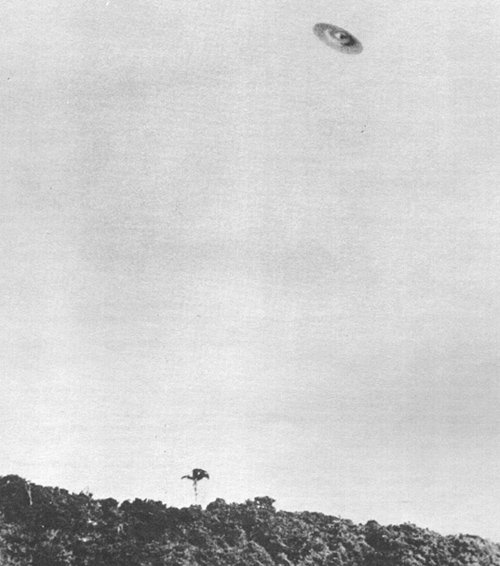
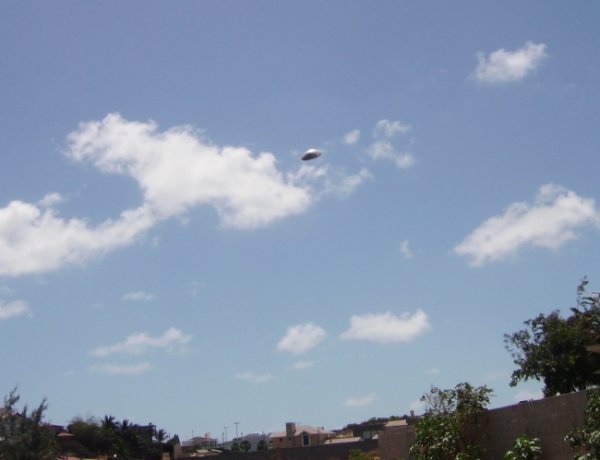
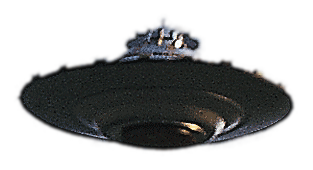
Through the second half of 1977 the towns of the Pará estuary, Colares and Vigia chief among them, reported night after night of luminous objects coming in low off the water, usually from the north, and aiming beams of light at people in their homes. Witnesses described saucer shapes, cigar shapes and barrel or cylinder shapes that hovered, hummed, changed color and reversed direction in ways aircraft do not. The local name for them was "chupa-chupa", from the Portuguese verb chupar, to suck, because people who were caught in the beams said they felt blood or strength being drawn out of them.
The contemporary newspapers carry the specifics. O Liberal of 8 October 1977 described attacks in Vila Santo Antônio do Imbituba where the object "focuses a white light over people, immobilizing them" and "sucks the breasts of the women leaving them bleeding". The same report names Mrs. Rosita Ferreira, married, 46 years old, who said she "was sucked by the light on the left breast, and passed out". O Liberal of 16 October 1977 recorded that "Chupa-Chupa: that was the denomination given by the population of Vigia to an unidentified flying object, which has brought panic to the dwellers". The earliest traceable account, the Jornal da Bahia of 12 July 1977, was already reporting "a fantastic story of a flying object emitting a strong light and sucking blood from people" and stated the phenomenon "has already caused the death of two men".
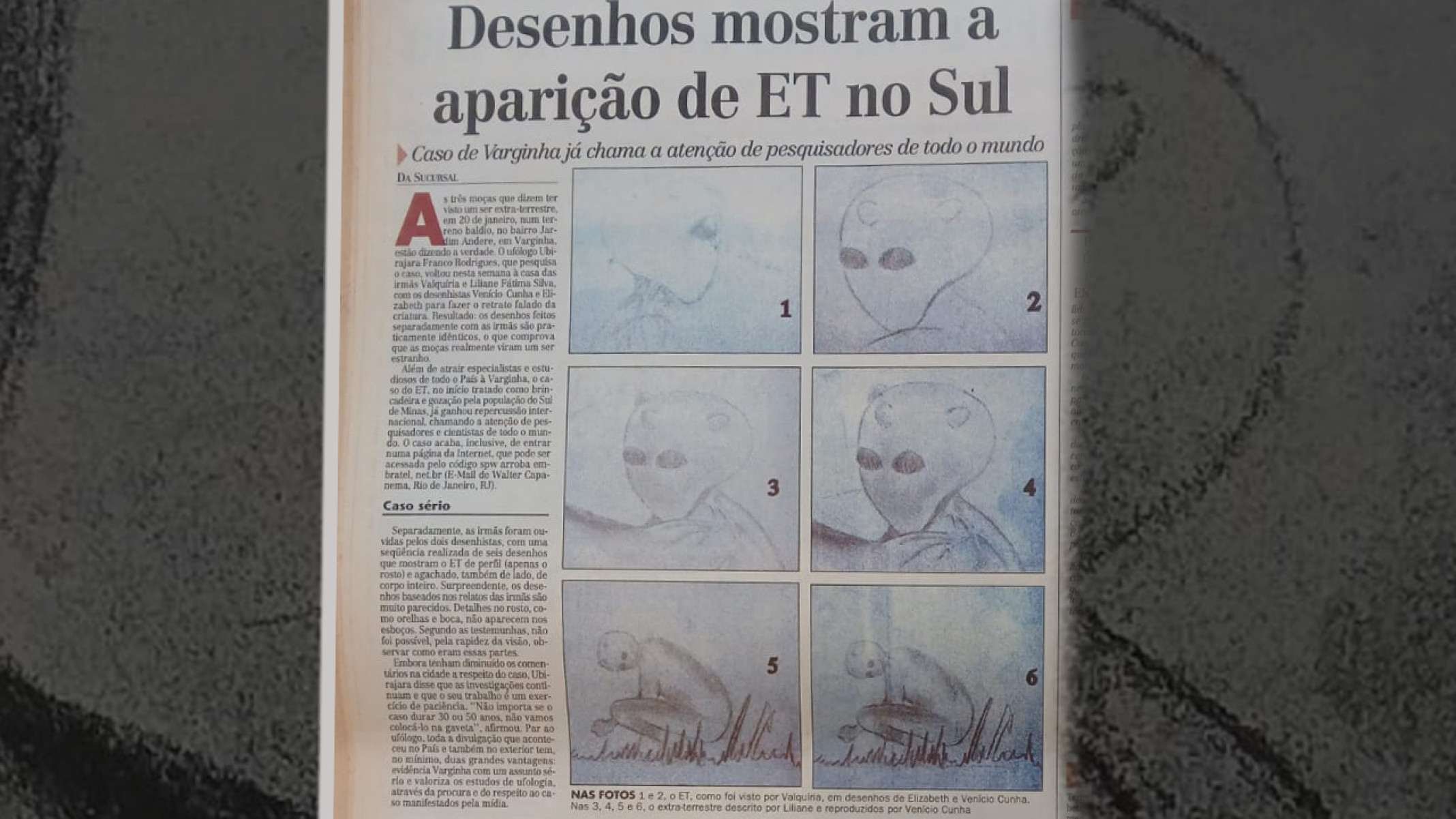
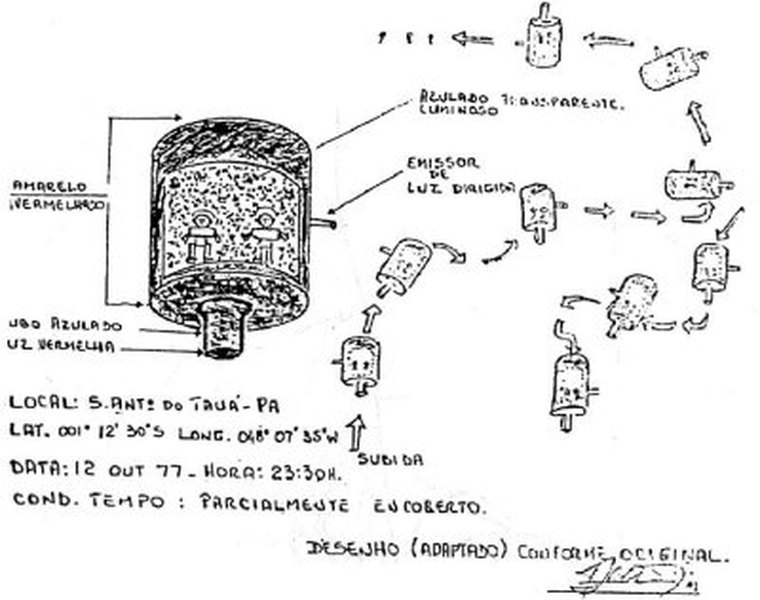
The witnesses had remarkably consistent things to say. The beam would pin a person in place for up to an hour. It left a small burn, often on the chest, and in many cases two tiny puncture marks like needle holes around a darkened, iodine-colored spot. People reported dizziness, weakness, fainting and a lingering sense of having been drained. The shape that recurs in the case file is a vertical barrel or cylinder with a luminous blue cast and a directed light emitter on the underside. One Air Force witness sketch, logged at Santo Antônio do Tauá on 12 October 1977 at 23:30 under partly cloudy skies, labels the object in colored zones, yellow, red and luminous blue, with an "emissor de luz dirigida", a directed-light emitter, and a sequence of smaller drawings showing it maneuvering away. Entire riverside families abandoned their homes at dusk and grouped together for safety, and fishermen stopped going out at night.
What is the official explanation?
Faced with a population in real panic and press reports of injuries and deaths, the Brazilian Air Force opened a formal field investigation in September 1977. It was run out of I COMAR, the First Regional Air Command in Belém, and was code-named Operação Prato, Operation Saucer or Operation Plate. Command went to Captain Uyrangê Bolívar Soares Nogueira de Hollanda Lima, who took a small team of sergeants into the affected towns with cameras, a movie camera, binoculars and medical support, set up observation posts in radio contact, and logged sightings on standardized forms recording the witness, date, time and description.
The documentary trail is unusually concrete for a UFO case because much of it survives in Brazil's National Archive and in leaked mission reports. The compilation catalogued as BR DFANBSB ARX 184, "Registros de Observações de OVNI", lists 130 OVNI observations gathered between 2 September 1977 and 28 November 1978, compiled by I COMAR at the request of the Air Staff (EMAER). The covering dispatch, ARX 197, dated 14 February 1979, was signed by Brigadier Protásio Lopes de Oliveira, the I COMAR commander, formally forwarding those 130 records. A separate file, ARX 322, records I COMAR's own internal inquiry into how the First Mission report leaked to a UFO magazine. The mission reports themselves are dated: the First Mission ran from 20 October to 11 November 1977 across Colares, Tauá and surrounding localities, and the Second Mission from 25 November to 5 December 1977, with further field reports continuing into 1978. The official end product, when the operation wound down in early 1978, characterized what had been observed as unidentified phenomena of unknown origin rather than offering a prosaic identification.
The volume of imagery is contested but documented. Researchers who later examined the leaked and partially released material counted on the order of 110 photographs available for inspection, while Hollanda himself, in his final interviews, claimed the full operation generated over 2,000 pages of reports, more than 500 photographs and roughly 16 hours of 16mm film, most of it never released. The Air Force's later public posture minimized all of this. In 2005 a spokesman from the Air Force social-communication department, Major Antônio Lorenzo, told the press the service had "never gone out looking for flying saucers" and held only stray reports of people saying they saw things in the sky, a statement the Brazilian researcher A.J. Gevaerd flatly rejected given the existence of the named, dated, signed Operação Prato documents in the national and COMDABRA archives.
What did the witnesses think it was?
The investigators themselves became witnesses, which is what makes Colares unusual. Captain Hollanda told the American journalist Bob Pratt, and years later the editor A.J. Gevaerd, that he had gone in as a skeptic. In his words he entered the case "as the devil's advocate" wanting "to demystify this story", and for the first weeks he reached for ordinary explanations, even joking that a light might be "the plumage of an owl reflecting the light". What changed his mind, he said, was watching a light that "turned back on its route, and satellites do not do this", and objects that "never blinked, that passed at a low altitude". He confirmed that "several of them, mainly women, had the strangest marks on their left breast", two needle-like punctures around a brown spot. By his account he and his sergeants saw the objects directly, not just collected stories about them.
The most important medical witness is Dr. Wellaide Cecim Carvalho de Oliveira, the physician at the Colares health post, who treated the affected residents firsthand. She documented a recurring pattern of superficial radiation-like burns with immediate skin peeling rather than delayed blistering, puncture marks clustered on the upper chest or near the neck, low hemoglobin, and patients who felt as if something vital had been drained. Crucially she ruled out the easy dismissal: she said "it did not happen any kind of mass hysteria or visual hallucinations", because the injuries were physically present on the body, and she said she declined pressure from visiting officials to tell the town it was all delusion.
The ordinary townspeople corroborate each other across independent newspaper interviews and the military's own forms: Rosita Ferreira and the woman called "Chiquita" in the October 1977 O Liberal coverage, the fishermen of Vigia, the families who fled their homes. The contemporary press, writing before any military team arrived, already reported the same shapes, the same beams, the same chest wounds and the same fear, which means the core testimony was not seeded by the investigators. Hollanda himself died in October 1997, found hanged shortly after going public, a detail his family and Gevaerd have pointed to as suspicious and that skeptics read as a personal tragedy unrelated to the case.
The dispute
The substantive dispute is photographic, and it is method-shown rather than asserted. Fernando Costa, the son of Sergeant João Flávio de Freitas Costa, who handled film development and drew many of the operation's illustrations, said in an interview published by the Brazilian outlet Vigília that as a teenager forced to work the darkroom he began "pulling pranks, enlarging any light dot impressed upon the film so it'd look like a flying saucer", and that some of those manipulated frames later leaked and were reproduced in ufology books. This is a confession from inside the operation that some of the famous Operação Prato photographs are fabricated, and it is the single strongest piece of skeptical evidence in the case. On the medical side, a skeptical physician, Dr. Zoghbi, attributed some of the puncture and burn marks to anxiety-driven self-scratching during episodes of fear, and critics more broadly note that anemia, malaria and Chagas disease are endemic to the region and could account for the pallor and weakness read as "stolen blood".
What keeps this from closing the case is the scope of each claim. Costa's admission, by the forum researchers' own account, is limited: the doctored images are reportedly identifiable in the documentation because they are credited to specific handlers, and the confession covers only some photographs, not the entire image set and certainly not the testimony or the medical findings. The breast-attack reports, the barrel-shaped luminous objects and the directed beams appear in the Jornal da Bahia of 12 July 1977 and in O Liberal in October 1977, before the military team arrived and before any film was developed, so the core eyewitness record cannot be a darkroom artifact. The physician who actually examined the victims, Dr. Wellaide Cecim Carvalho de Oliveira, documented consistent burns, punctures and low hemoglobin in person and stated plainly that "it did not happen any kind of mass hysteria or visual hallucinations". The natural-disease explanations are general hypotheses about a region, not a demonstration that these specific dated injuries were Chagas or malaria.
So the dispute is genuine and it does damage the photographic pillar, but it does not identify the lights, does not explain the pre-investigation press testimony, and does not overturn the firsthand medical record. A partial, method-shown debunk of part of the evidence, set against a flap that still stands on independent newspaper, medical and military legs, is the textbook shape of a Barely Disputed case rather than a Strongly Disputed one. Only a positive identification of the actual objects, or a demonstration that the eyewitness and medical record as a whole was fabricated, would push it further.
Is the Colares Island Flap real? The two-pass assessment
Pass one, the ordinary reading. The Pará estuary in 1977 had every ingredient for a regional panic that fed on itself: a frightened, largely rural population, sensational nightly newspaper coverage that spread the "chupa-chupa" label and the breast-attack motif from town to town, and endemic conditions, anemia, malaria and Chagas disease, that can produce the weakness and pallor read here as "drained blood". Punctures and burns can come from insect or bat bites, plants, or anxiety-driven self-scratching, and Dr. Zoghbi, a skeptical physician, attributed some marks to exactly that. The lights themselves were never positively identified, but the candidate pool includes aircraft and helicopter lights, satellites and re-entries, planets and the kind of nocturnal misperception that floods any flap. The hardest piece of the prosaic case is the photographic evidence, and here there is a method-shown admission: Fernando Costa, son of Sergeant João Flávio de Freitas Costa, who developed the operation's film, said in an interview that he amused himself in the darkroom by "enlarging any light dot impressed upon the film so it'd look like a flying saucer", and that some of those doctored frames later leaked and turned up in UFO books. That is real, demonstrated fabrication of part of the photo set.
Pass two, if something genuinely anomalous happened. The case does not collapse under the prosaic reading, for several reasons that survive it. The testimony predates the investigators: the July and October 1977 newspapers describe the shapes, the directed beams and the chest wounds before any Air Force team set foot in Colares, so the core reports cannot be an artifact of military suggestion or of darkroom pranks. The medical record is independent of the photographs: Dr. Carvalho treated dozens of patients in person, found consistent burns and punctures, and explicitly rejected mass hysteria, and the Fernando Costa admission says nothing about her clinical findings. The investigating officer was a trained, initially hostile skeptic who came out convinced he had watched objects maneuver in ways no aircraft or satellite could, and the State itself logged 130 observations over fifteen months and filed them, signed, in the national archive rather than dismissing them. An official apparatus does not mount a months-long field operation with cameras, film and medics over nothing.
This is why the dispute is partial rather than fatal. The Fernando Costa confession is genuine method-shown evidence, but it touches only some of the photographs, not the eyewitness flap, not the contemporary press record, and not the medical injuries, and no one has produced a positive identification of the actual lights or a demonstration that the whole event was staged. A confession that explains part of the imagery, plus unproven natural-cause hypotheses for the wounds, weakens the photographic leg of the case without closing the case as a whole. By the archive's standard that is a counter-explanation that is real but partial, so the tier is Barely Disputed. The lights over Colares remain officially unidentified, the medical effects remain documented and unexplained, and the discredit so far reaches only a subset of the pictures.
Sources
- ufologie.patrickgross.org/htm/colarespress02.htm
- operacaoprato.com/documentos-oficiais
- operacaoprato.com/livros-e-trabalhos-academicos
- ufologie.patrickgross.org/htm/colareshollanda.htm
- ufologie.patrickgross.org/htm/colaresgevaerd01.htm
- archive.org/details/giese_vampiros_extraterrestres_amazonia
- documents.theblackvault.com/documents/MUFON/Pratt/prato.pdf
- www.metabunk.org/threads/1977-colares-ufo-flap-opera%C3%A7%C3%A3o-prato.11765/
- ufologie.patrickgross.org/pics/colares.jpg
More cases from this region: UFO sightings in Brazil