The Mexico City Solar Eclipse Sightings
On 11 July 1991 the longest total solar eclipse of the twentieth century swept across Mexico. This case file covers what witnesses reported, the official narrative, and a two-pass assessment with its evidence tier.
What did witnesses see at Mexico City and central Mexico (Valle de Mexico?
On 11 July 1991 the longest total solar eclipse of the twentieth century swept across Mexico. Greatest eclipse fell over the Pacific off the Nayarit coast at 19:06 Universal Time with totality lasting up to six minutes and fifty-three seconds, and the central shadow tracked inland across the country. Mexico City itself sat inside the path of totality, with the Moon fully covering the Sun, maximum eclipse at 13:24 local time, and roughly six and a half minutes of midday darkness. Millions of people were already outdoors with cameras pointed at the sky.
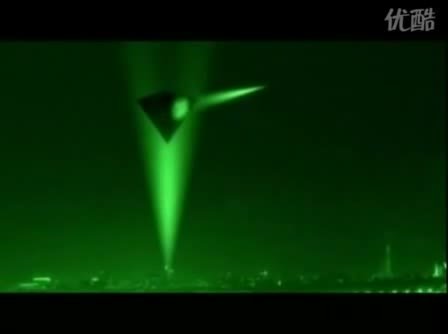
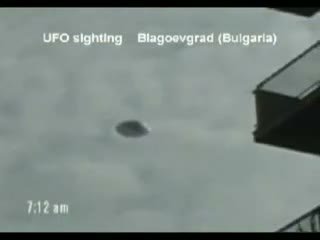
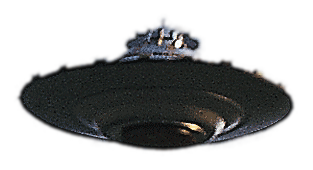
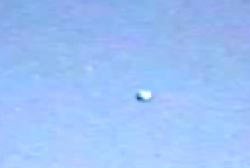
While the Sun was hidden and the sky went dark, a man named Guillermo Arreguin, who worked in Mexican television, was videotaping the eclipse from a rooftop. In his footage a small bright object appears near totality, sits in the sky, and then fades out shortly after the Sun returns. On the tape it reads as a luminous, slightly domed disc with a darker edge on one side, the kind of object people instantly called metallic.
The footage did not stay a single clip for long. About sixty miles away a businessman named Luis Lara had recorded what looked like the same object, in roughly the same part of the sky, at the same time. The Breton family videotaped a similar light from Puebla, around eighty miles to the east. A nineteen-year-old university student named Erick Aguilar caught his own version. When the clips were lined up, the selling point was simple and powerful: here was the same hovering thing, filmed by strangers who did not know each other, from cities tens of miles apart, all at the same moment.
Across the central Mexican plateau the descriptions converged. People reported a bright, silvery, disc-shaped object that hung essentially motionless in the darkened sky during the eclipse, showed no wings, no sound, and no trail, and then was gone as daylight came back. On most of the tapes the object is a single small overexposed blob of light against a washed-out grey sky, with whatever structure people describe sitting right at the limit of what a 1991 camcorder could resolve. The thing that made the case famous was never fine detail. It was the number of independent cameras and the claim that they all caught one craft holding station over the valley.
What is the official explanation?
There was no Blue Book or military board here. The investigation that mattered was journalistic, and it was run by Jaime Maussan, then host of the Mexican newsmagazine Sesenta Minutos, the local cousin of 60 Minutes. Maussan obtained the Arreguin tape and built a segment around it. By his own account, the moment he saw it he was convinced. "When I saw it, I said oh my god. This is a UFO, a real UFO. I mean you can look at it," he said. When the Lara footage from sixty miles away turned up matching it, he framed the case in absolute terms: "It was the first time in history that you had a tape of two UFO's in two different places at exactly the same moment."
The broadcast, roughly eight days after the eclipse, set off a response Maussan described as overwhelming. "The telephone lines blew up. I mean 40,000 calls at the same time," he said, adding that the station received more than fifteen videos and that in at least seven of them "we can see the same ship." That snowballing pile of tapes is where the reputation came from, the claim that this was one of the largest mass UFO sightings ever recorded. The footage was later packaged for international audiences on programs like Unsolved Mysteries and Sightings, and in the documentary work tied to Lee and Britt Elders, where the eclipse object was presented as hard visual evidence of a craft over Mexico.
What there was not, on the official side, was any radar track, recovered object, or government finding that a structured craft had been over the Valley of Mexico that day. The skeptical analysis that came to define the case was civilian and astronomical, and it is logged in the assessment below as a claim with its own evidence, not as a government verdict.
What did the witnesses think it was?
The witnesses were ordinary people pointed at an extraordinary sky. Guillermo Arreguin was an experienced television professional who believed he had filmed a genuine craft, not a mistake. Luis Lara, recording independently from another city, was certain the object he caught was the same one, and that certainty, the idea that two unconnected cameras had locked onto a single hovering ship at the same instant, is the heart of what the witnesses believed. Erick Aguilar, a teenage student, and the Breton family in Puebla added more cameras and more conviction to the same story. To them the synchronization across distance was the proof: a star or a trick of the lens could not be filmed as the same object, in the same sky, by people who had never met.
Maussan, more than any single eyewitness, became the case's voice and its memory. He has spent decades presenting the 1991 eclipse footage as a watershed, the event that, in his telling, launched a whole generation of Mexican UFO interest. His read on the footage, that the object did not move and was seen at the same time from many places, is exactly the argument the witnesses made for themselves.
It should be said plainly that Maussan's later record is heavily contested. He has promoted claims that independent investigators have rejected, including the Roswell-slides episode and the so-called Nazca mummies, and that history colors how his older cases are received. But the 1991 witnesses are not Maussan, and hostile feelings about the promoter do not by themselves dispose of what Arreguin, Lara, Aguilar, and the others sincerely thought they had filmed.
The dispute
The counter-explanation aimed at the heart of this case is the planet Venus, and it was advanced not by any government body but by civilian astronomers. The amateur astronomer and writer Tim Printy, working with Ron Johnson of the Austin chapter of MUFON, took the actual eclipse footage and matched it to the sky. In Luis Lara's tape he found a star in the correct position to the upper left of the "UFO," and Mars in the correct position as well, and concluded that Venus, Regulus, and Mars all appeared in the correct configuration, calling this a definite indicator that the object was Venus. Independently, Paul D. Maley, leading a NASA Johnson Space Center Astronomical Society expedition to Mexico's west coast for the same eclipse, recorded in his expedition report that during totality Venus shone brilliantly at magnitude -4.8. This is a method-shown debunk rather than a bare assertion: the identification rests on a named object, a measured brightness, and a demonstrated sky-position match against the literal frames.
That same identification dissolves the single feature the witnesses and promoter treated as decisive: simultaneity. Witnesses including Arreguin, Lara, Aguilar, and the Breton family believed they had filmed a genuine craft, and journalist Jaime Maussan, then host of the newsmagazine Sesenta Minutos, amplified the story, framing it in absolute terms as the first time in history that you had a tape of two UFOs in two different places at exactly the same moment. The Venus model answers this directly. The reason multiple cameras tens of miles apart caught the same stationary object in the same part of the sky is that they were all filming the same planet, which is effectively at infinity and therefore appears in the same place from every city at once. Printy also explained the apparent structure on the disc, calling the shadow a common artifact produced by the videotape of Venus, and the hero still itself is a tiny smeared blob of light consistent with that.
The reason this does not fully close the case is documentary, not evidentiary in the usual sense. There was no Blue Book or military board here, no radar track, no recovered object, and no government finding that a structured craft had been over the Valley of Mexico that day. The investigation that mattered was journalistic and was run by Maussan, and the original tapes were a heterogeneous pile: a mass-sighting mix with Venus as the dominant culprit and a scatter of unrelated planes and stars folded in by an enthusiastic phone-in. The Venus explanation accounts for the celebrated centerpiece in convincing detail, but a handful of secondary clips were never resolved one by one. The page holds the case short of a clean verdict for exactly that reason, flagging a discredit review for separate human approval rather than asserting it. So while the debunk here is unusually strong for an astronomical misidentification, the case lands at Disputed: the famous claim is well explained, and only an unresolved residue of stray footage keeps it from being settled outright.
Is the Mexico City Solar Eclipse Sightings real? The two-pass assessment
Pass one, the ordinary explanation, and here it is unusually concrete. The key fact is astronomical. During totality the daytime sky over central Mexico went dark enough to show stars and planets, and the brightest object in that sky was the planet Venus. Paul D. Maley, leading a NASA Johnson Space Center Astronomical Society expedition to Mexico's west coast for this same eclipse, recorded in his expedition report that during totality "Venus shone brilliantly at magnitude -4.8," a dazzling point of light. The amateur astronomer and writer Tim Printy, working with Ron Johnson of the Austin chapter of MUFON, took the actual footage and matched it to the sky. Printy's conclusion is specific, not hand-waved: "The videotape of Luis Lara showed a star to the upper left of the 'UFO' in the correct position. Even more revealing is that Mars also shows up in the correct position of his video. I saw enough to identify Venus, Regulus and Mars all in the correct configuration. This was a definite indicator that this UFO was Venus."
That single observation dismantles the case's strongest point. The reason multiple cameras tens of miles apart caught the same stationary object in the same part of the sky is that they were all filming the same planet, which is effectively at infinity and therefore appears in the same place from every city at once. The famous "it did not move" detail is the signature of an astronomical body, not a hovering craft. The "metallic" look, the slight dome, and the dark shadow along one edge are well known artifacts of a 1991 camcorder straining to record a single overexposed point of light against a blank sky. Printy noted exactly this, calling the shadow on the disc "a common artifact produced by the videotape of Venus," and the hero still on this page, a tiny smeared blob of light, looks like nothing more than that. Printy also did not force every clip into one box. He flagged that some of the other tapes in the pile showed different things, for instance a low bright object in Jorge de la Torres's footage that "is not Venus" and could be the landing lights of a distant plane, and a starlike point in another that may be Sirius or Canopus. In other words, the "mass sighting" was a mix, with Venus as the dominant culprit and a scatter of unrelated planes and stars folded in by an enthusiastic phone-in.
Pass two, if it were real. For the eclipse object to be a genuine craft, you would have to explain why it sat exactly where Venus sat, why Regulus and Mars fall into their correct astronomical positions around it in Lara's video, and why it behaved like an object at infinity rather than one hanging below the clouds. No physical trace, radar return, or instrumented detection was ever produced to carry that weight. The honest residual is small: a few of the many submitted tapes may show conventional aircraft or other unidentified lights that were never individually run down, which is why this is not a clean, fully closed file.
This is why the case lands at Disputed. The core, celebrated claim, one craft filmed simultaneously from many places, has a method-shown astronomical counter-explanation that fits the footage and the sky in detail, supplied by independent civilian analysts rather than any official body. That counter-explanation is strong enough that a discredit review is warranted, which is flagged separately for human approval rather than asserted here. It is held short of a clean verdict only because the original tapes were a heterogeneous pile and a handful of secondary clips were never resolved one by one.
Sources
- eclipsewise.com/solar/SEprime/1901-2000/SE1991Jul11Tprime.html
- pauldmaley.com/1991mex/
- astronomyufo.com/UFO/mexico.htm
- web.archive.org/web/20260314140835/https://unsolved.com/gallery/mexico-ufo/
More cases from this region: UFO sightings in Mexico