The Two Blinking Lights Over Neskowin, Oregon (19 September 2026)
A structured report from the Oregon coast describes one light splitting into two and blinking in unison for fifteen minutes. The filing is internally contradictory about when it happened, its own archive flags the file as re-saved, and the footage shows two overexposed points whose separation changes from frame to frame. The case is published because the event is recent and the location is pinned, and it is tiered Unknown because none of the instruments this archive usually reaches for can be run on it.
What did witnesses see at Neskowin?
Two lights over the Oregon coast are the subject of a structured sighting report filed on 20 September 2026. The filing was relayed to r/UFOs by the account u/ufosightingsbot, which verifies a filer through a one time link from their own Reddit account, so the submitter is confirmed as the Reddit user Big-entire. The reporter gives their background as veteran.
The form records two objects, shape given as "changing", distance as "a few miles", apparent size as a pea held at arm's length, the observer facing north west, a duration of fifteen minutes and one witness. Under movement it records "unpredictable, erratic". The witness account reads: "Filmed this phenomenon last night. One light that split into two shapes and would blink in unison when we 'thought' questions towards it. A large triangular craft flew overhead after but I didn't capture it on video." Asked why it could not be a common object, the answer given was "Erratic movements, one light splitting into two".
The clip runs 91.79 seconds at 480 by 854 in portrait and the sky in it is fully dark. That matters, because the form's own time field reads 12:00 pm PDT on 19 September 2026, which is midday. The witness's written account says the footage was taken "last night", and the filing was submitted on the afternoon of 20 September. The recording is therefore of a night time event, almost certainly the night of 19 September running into the early hours of 20 September, and the noon timestamp on the form is not a real observation time. This archive has logged the same problem repeatedly and the rule it earned applies here: never date or time a structured filing from its own form field.
The reporting archive attached a provenance note of its own to the file, stating that the embedded creation time of the clip is 20 September 2026, later than the reported sighting, and that its device and location tags are absent, which it describes as consistent with a file that was forwarded or re-saved rather than as a sign of editing. That reading is reasonable and it is reproduced here rather than sharpened, but it does mean the capture metadata that would independently date the recording is gone.
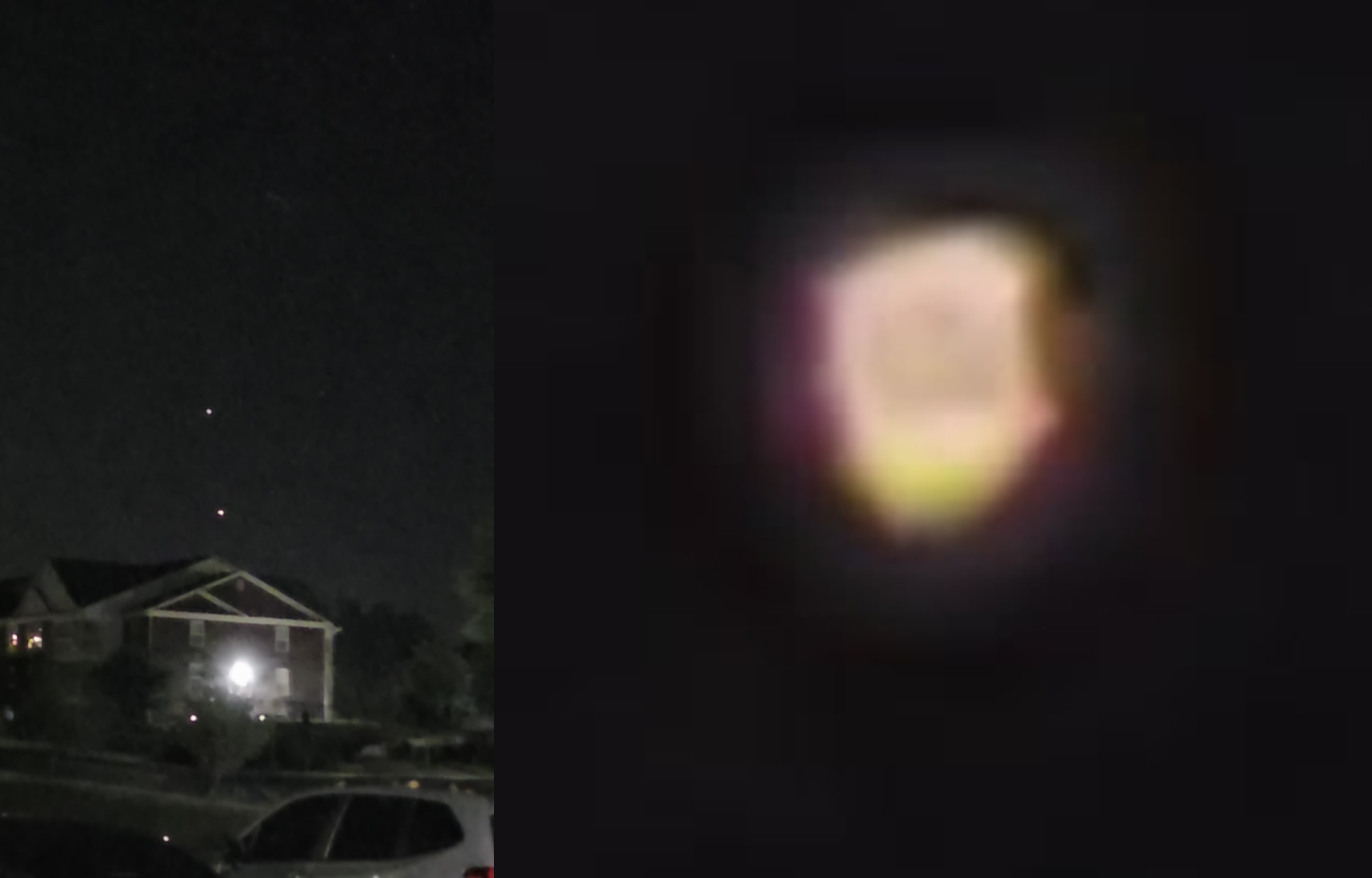
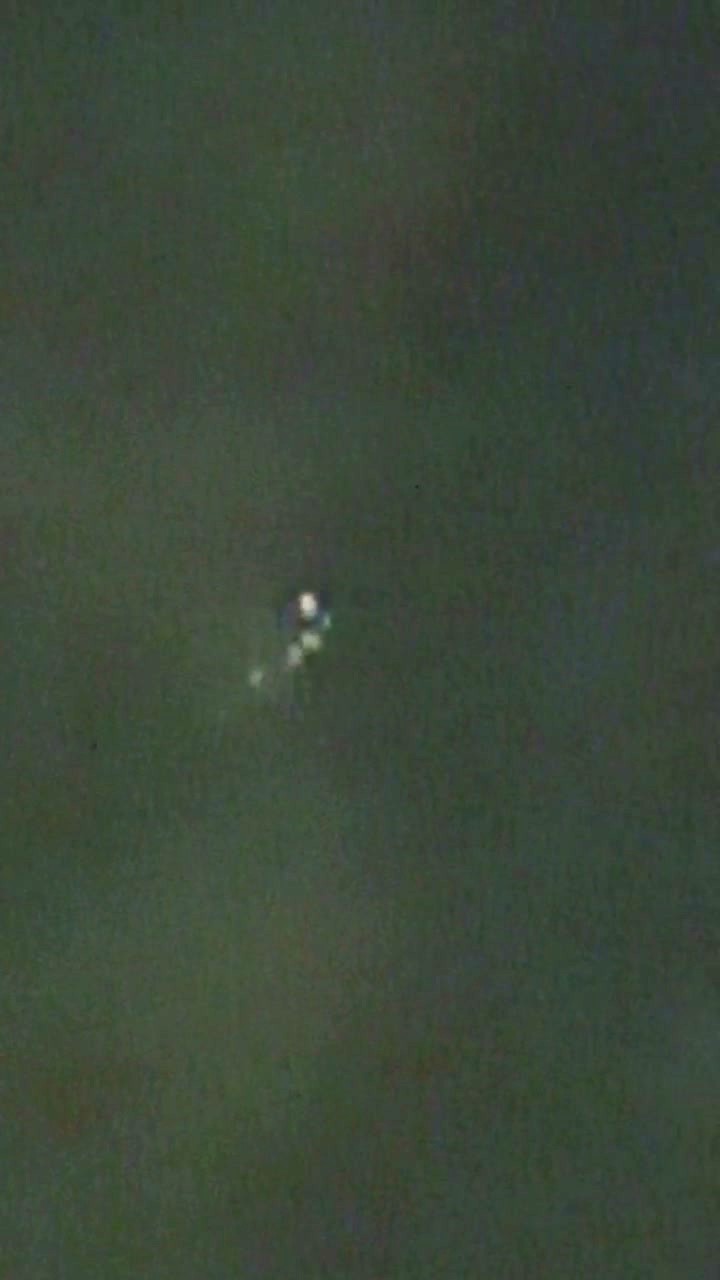
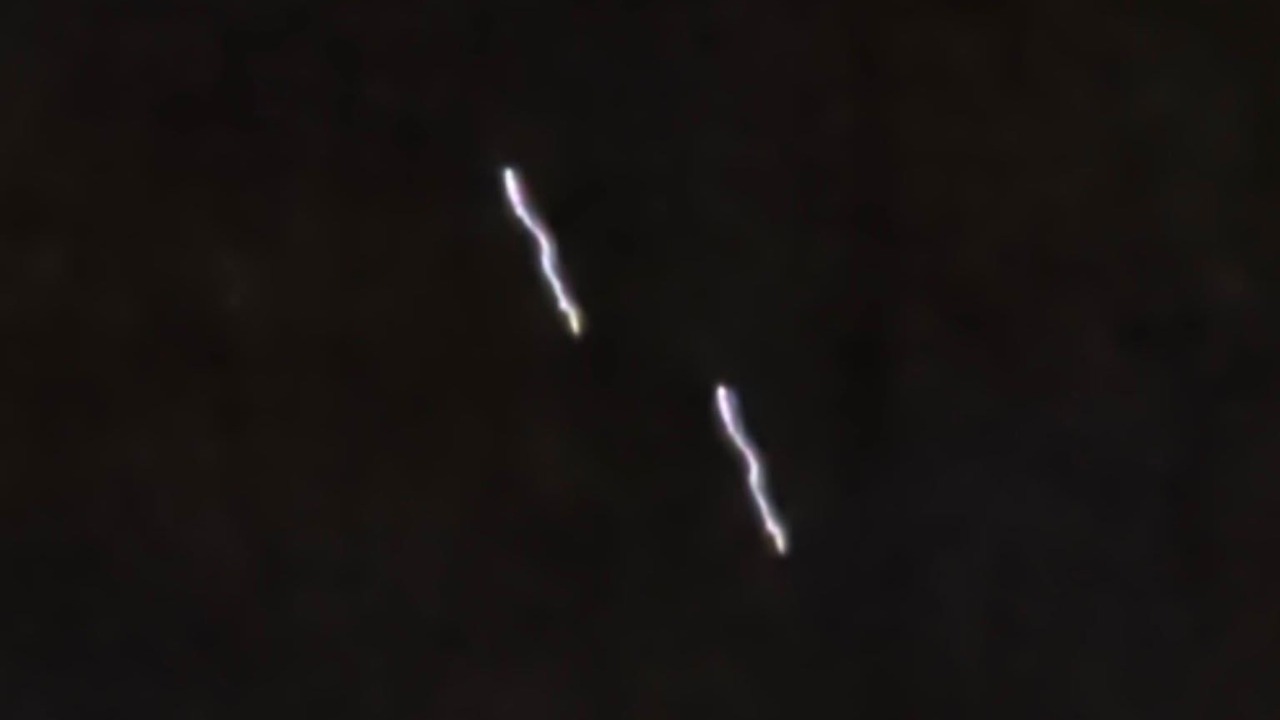
What the footage shows is two heavily overexposed white points at what appears to be substantial digital zoom. Thresholding each frame and labelling the connected components gives a blob area that swings from 24 pixels to 2,047 pixels across the clip, a factor of about eighty five, and at 68 seconds the object drops below the threshold entirely and no blob is detected at all. The pair separates and merges repeatedly: separations of 21.4, 12.1, 27.3 and 21.4 pixels were measured at 24, 32, 44 and 80 seconds, with the two components in a different relative orientation each time, while in the intervening samples only a single blob is present.
What is the official explanation?
There is no official narrative. No agency has been asked about this sighting and none has commented on it, there is no NUFORC or MUFON number attached to the filing, and no outlet has reported it. The only records of the event are the structured filing itself and the Reddit thread relaying it.
What did the witnesses think it was?
The reporter is a single witness who describes themselves as a veteran and who filed through a form rather than posting directly, and the account carries two elements that need separating from each other.
The first is observational: one light that appeared to become two, both blinking, over roughly fifteen minutes, low in the north west. That part is what the footage addresses and it is broadly consistent with what the frames show.
The second is interpretive. The witness writes that the lights "would blink in unison when we 'thought' questions towards it", which is the framing used in contact protocols where a perceived response to directed thought is treated as communication. A flashing light will appear to answer if the observer is watching for an answer, and the interval between strobe flashes on an ordinary aircraft is short enough that almost any mental question will be followed by a flash within a second or two. This is recorded as part of the account, not weighed as evidence for or against the object.
The reference to "a large triangular craft" flying overhead afterwards is uncorroborated and unfilmed by the witness's own statement, so it stands as testimony with nothing attached to it.
Is the Two Blinking Lights Over Neskowin, Oregon (19 September 2026) real? The two-pass assessment
Pass one: how could this be mundane?
The ordinary checks are mostly unavailable here, and the reason is worth stating because it is the whole shape of the case. An exact time, an exact coordinate and a stated facing direction make a sky solvable. This filing supplies the facing direction and a settlement level coordinate, and the time field is demonstrably wrong, so the two instruments this archive reaches for first cannot be aimed. A satellite shadow window needs a minute. A cloud record needs an hour. A migration density figure needs a time of night.
What can be done was done. JPL Horizons was queried for the Sun, Moon and every planet at the pin through the evening of 19 September 2026, which brackets any plausible time for a night recording. Nothing bright sat in the north west at any point. Venus, at magnitude minus 4.8, was on the horizon in the west south west at azimuth 242 degrees at 8:00 pm PDT and had set an hour later. Mercury was already below the horizon. Mars and Jupiter were both well below it. Saturn, at magnitude plus 0.4, was rising in the east at azimuth 87 degrees, which is the opposite quarter of the sky. The Moon was in the south at 17 degrees elevation, moving toward the south west through the evening. So the report is not a misidentified planet in the stated direction, and the usual first answer is ruled out for once.
North west from Neskowin is the open Pacific. The measurements from the footage point at a flashing source rather than a steady one: an area swing of about eighty five to one, a complete disappearance below the detection threshold at 68 seconds, and a pair whose separation and orientation both change between samples. Two objects holding formation do not vary their separation by a factor of more than two while rotating about each other, but two lights on a single moving airframe will do exactly that as the aspect angle changes, and synchronised strobes on an aircraft flash in unison by design. Both blobs are saturated and neither ever resolves, which is what a distant point source looks like through a phone at full digital zoom, and is the same effect the Spring Hill case turned on. A single aircraft, seen at a changing aspect over the ocean, accounts for the split, the unison blinking and the fifteen minute duration without strain.
That is a candidate and not a conclusion, because the test that would confirm it cannot be run. Without a real time there is no way to query historical flight tracking for the aircraft that would settle it, and with the capture metadata stripped there is no second route to the time either.
Pass two: if it were real, what is it?
Taken at face value, the report describes a light that divided into two, that maintained synchronised flashing between the two parts over a quarter of an hour, and that was followed by a large triangular craft the witness did not film. Division of a single luminous object into two is a recurring motif in this archive and it is not always a camera artefact. What this particular file cannot do is distinguish that reading from the aircraft reading, because everything that would separate them, the exact minute, the sky conditions, the air traffic and the original capture metadata, is either absent or demonstrably wrong.
The tier is Unknown. There is no official explanation to weigh and no demonstration that the object was anything in particular, so the archive says so rather than picking a side. The aircraft candidate is recorded above because it is the strongest prosaic reading available and because leaving it unstated would misrepresent the strength of the case. The case is published under the standing rule that a recent, location pinnable, origin traced sighting qualifies on a lower bar than an old one, and it will be revisited if a corroborating account, a second angle or a usable timestamp appears.
Sources
- www.reddit.com/r/UFOs/comments/1wll0l2/two_changing_lights_blinked_in_unison_and_moved/
- ufosighting.report/sighting/13021/two-changing-lights-blinked-in-unison-and-moved-erratically
- ssd.jpl.nasa.gov/horizons/
More cases from this region: UFO sightings in United States