The Night Airline Pilots Were Told to Manoeuvre Around Something Over Oregon (7 December 2024)
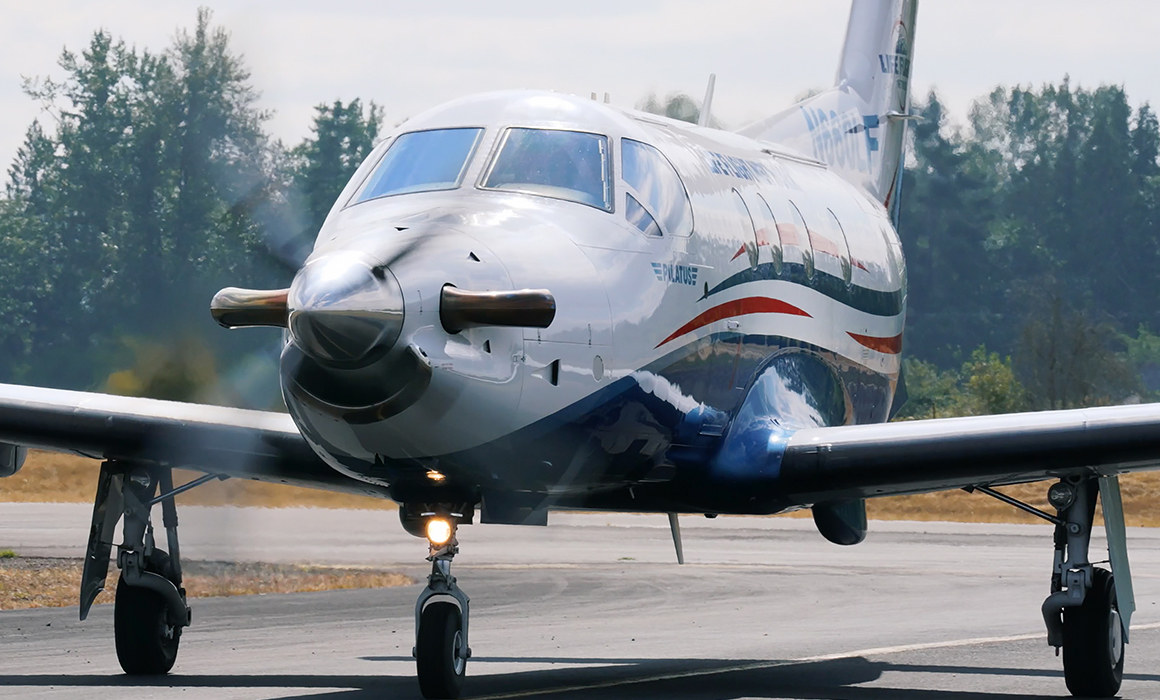
The FAA confirmed the report on the record, a federal controller cleared an air ambulance to manoeuvre around whatever it was, and three separate flight crews west of Eugene watched it for twenty minutes. A civilian analyst then synchronised the medevac pilot's own video with his aircraft's ADS-B track and found a Starlink flare sitting in exactly that spot at exactly that second.
What did witnesses see at Airspace west of Eugene?
The evening of Saturday 7 December 2024 was clear and dark over the Willamette Valley. At roughly 8:39 p.m. Pacific time, the crew of United Airlines flight 1596, an Airbus A319 inbound from Denver to Eugene, keyed the microphone on a Seattle Air Route Traffic Control Center sector frequency and asked the controller a very ordinary question first: was there any military activity ahead of them. The controller answered that he was not seeing anything. The United pilot then said what turned the night into a news story. He reported that the lights were straight west of Eugene, that the crew was seeing three or four targets, that they were at all altitudes, up and down, and that it was, in his word, "pretty crazy".
That transmission did not stand alone. Over the following minutes the same sector took reports from more than one aircraft. The controller relayed another sighting at around 30,000 feet in the Eugene area and admitted on frequency that he was not sure what it was. In the compiled recording of the sector, the controller can be heard summarising multiple altitude reports running from roughly 14,000 feet up to about 55,000 feet, and relaying an account of an object that shot up, passed in front of an aircraft and climbed away. A Horizon Air crew was also among those reporting. Fifty-five thousand feet is above the service ceiling of every airliner in the Pacific Northwest that night, which is precisely why the number stuck in the coverage.
The most detailed report came from a Life Flight Network air ambulance, a Pilatus PC-12 registered N661LF, which had launched from the operator's Aurora, Oregon base and was routing toward North Bend on the coast. Its pilot told the controller that another one had just shown up at about his one o'clock position, roughly 1,000 feet high, zipping towards the aircraft and then back out towards the ocean. He described it as red in colour and moving at extreme speeds, and added that he did not even know how to describe how it was moving. Newsweek, working from the same audio, transcribed him saying that it was a red circular shape and that it kept zipping out towards the ocean and then coming back in about 20 miles.
The controller's reply is the line that carried the story around the world. Addressing the medevac by its abbreviated callsign, he transmitted that the aircraft was cleared to manoeuvre as necessary, left and right, to avoid the UFO out there. That is an operational instruction issued in real time by a federal air traffic controller, not a retrospective interpretation by a journalist or a researcher.
The medevac pilot has since been named. Joe Buley told KATU in Portland that the encounter began as the aircraft was climbing near 7,000 feet. In his own words, they got down near the Corvallis area and started seeing the weird lights, and what he saw was an orange-ish red orb that was moving quite a ways away, at least 20 miles away from them. He described strobing lights and fast, erratic movement to the controller. By his account the object was in view for around twenty minutes, and all three people aboard his aircraft, the pilot and two medical crew, saw it.
What is the official explanation?
The Federal Aviation Administration went on the record, and its statement is the single most important document on this page. Asked about the reports, the agency said in full: "A pilot reported seeing unidentified lights while flying in Seattle Air Route Traffic Control Center airspace on Saturday, Dec. 7." That is the whole of it. The FAA confirmed that a report exists, confirmed the airspace, confirmed the date, and offered no explanation of any kind. The agency separately declined to authenticate the air traffic control audio circulating online, which is standard practice and not a denial of the recording.
The audio itself is the second body of evidence, and the archive is careful about what it can and cannot verify here. The transmissions were captured from LiveATC.net, the volunteer receiver network that streams and archives air traffic control frequencies. The most complete public copy the archive was able to verify directly is a compilation uploaded to YouTube by the channel AvoFlight on 10 December 2024, titled with the phrases "Buzzed an Aircraft" and "It's on TCAS", running 13 minutes and 48 seconds and viewed roughly 470,000 times. Its description states that the material is from 8 December 2024 Zulu time over Oregon on Seattle ARTCC, that it covers ZSE sectors 06 and 35, sectors 36 and 42 and the Guard frequency, that the audio was compiled by a contributor credited as craftykoala, and that the audio source is liveatc.net. Newsweek described the underlying capture as a 44-minute recording. The archive was refused access to the raw file on LiveATC's own archive server, so every transmission quoted above reaches the public through a compilation or through a press transcription of that compilation rather than through a file this archive pulled itself. Where the wording differs slightly between outlets, that is the reason.
Life Flight Network issued its own statement on Friday 13 December 2024, and it is unusually careful. The operator said: "On Saturday evening, December 7th, during a routine flight near Eugene, Oregon, one of our crews observed an unusual moving light in the sky. We can confirm that it was one of our pilots on the ATC recording that has been widely distributed over the last couple of days. While the nature of the light remains unidentified, at no time did it pose any safety risk to our aircraft or crew. Neither Life Flight Network nor our crew are speculating about the origin or nature of the light, and our focus remains on the safe and efficient operation of our services." An air medical operator confirming the recording, declining to speculate, and stating that the light remained unidentified is a corporate on-record acknowledgement, and it is rare.
Beyond the FAA and the operator, the official record goes quiet, and the silence is itself a finding. The All-domain Anomaly Resolution Office, the Department of War body that Congress requires under section 3373 of Title 50 of the United States Code to report annually on unidentified anomalous phenomena, published a Fiscal Year 2025 Consolidated Annual Report with an information cut off of 30 May 2025 and a reporting period running from 2 June 2024 to 30 May 2025. That window contains 7 December 2024. The archive downloaded and text-mined that report. It records 1,870 cases in AARO holdings, 319 new reports received in the period, 274 of them in the air domain, 44 in the space domain and one maritime. It states that forty-two of the space-domain reports originated from civilian pilot reports routed through the FAA, that FAA reports from civilian aviators made up 21 percent of AARO's incoming reporting, and that during the period AARO "onboarded a new capability that enabled analysts to resolve 238 reported UAP as satellite flaring". It defines flaring as "a well-documented phenomenon where reflected sunlight from satellite surfaces becomes visible when viewed from specific angles" producing "intense, bright orbs of light many times brighter than surrounding stars". It also notes that civilian pilot altitude estimates tended to range from 45,000 to 60,000 feet and that AARO resolved many of those reports as satellite flaring.
The words Oregon, Eugene and Starlink appear nowhere in that report. Neither does December. AARO has never publicly addressed this specific event by name, and no Department of Defense or Department of War release has either. The Oregon reports fall squarely inside the statistical category AARO says it closed out in bulk, but no agency has ever said so about this night.
Two further official notes. First, the National UFO Reporting Center's public database does hold material on this event, and NUFORC's chief technology officer Christian Stepien spoke to the Sinclair stations about it, but the archive could not open the NUFORC record itself: nuforc.org sits behind a bot challenge that returns HTTP 403 to every fetch the archive is permitted to make, and browser automation is outside this archive's research rules. No NUFORC report text is quoted here for that reason. Second, this event happened in the middle of the national drone panic of late 2024, and on 16 December 2024 the FAA, FBI, DHS and Department of Defense issued a joint statement on that panic saying they had not identified anything anomalous. That statement is about the Northeast, not Oregon, and it is discussed below because the two events are constantly conflated.
What did the witnesses think it was?
The witnesses here are professional aviators, which matters and which also has to be handled carefully. It matters because the first thing the United crew did was ask the controller whether there was military traffic ahead, which is the reaction of people trying to fit an unfamiliar sight into a known category rather than people reaching for something exotic. It has to be handled carefully because being a good pilot confers no special ability to judge the range, size or speed of an unresolved point of light at night, and pilots themselves say so.
Joe Buley, the Life Flight Network pilot of N661LF, is the only witness who has spoken publicly under his own name. His account to KATU is measured. He put the object at least 20 miles away, described it as an orange-ish red orb, and reported strobing and fast erratic movement. He did not claim to know what it was. When the Starlink flare explanation was put to him directly during the Metabunk investigation, he did not accept it and he did not dismiss it either. His reply, quoted in that thread, was that it was a good theory, but that he did not know how all three of them could see an illusion like that for over 20 minutes. That is the strongest single piece of witness pushback in the case, and the archive treats it as exactly what it is: a first-hand observer stating a duration and a multiple-observer count that he believes the explanation has to account for.
Buley also volunteered a significant concession, and it deserves as much weight as his objection. Pressed on whether the object had actually appeared on his aircraft's traffic collision avoidance system, which is what the popular coverage claimed and what the YouTube compilation's title implied, he said that he did not think he ever saw it moving on TCAS, because he was trying to fly, talk to air traffic control, watch the object and communicate with his medical crew all at once. A witness who walks back the single most technically loaded claim attributed to him is a careful witness, not a compromised one.
Life Flight Network's institutional position is the second witness voice, and it is deliberately narrow. The operator confirmed its crew and its recording, confirmed the light was unidentified, confirmed there was no safety risk, and then refused to speculate about origin or nature. Employers of air ambulance pilots have every commercial incentive to say nothing at all, so the confirmation is worth more than the refusal costs.
The United Airlines and Horizon Air crews have never been publicly identified. United declined to comment to Newsweek, as did LiveATC.net. No cockpit imagery from either airline has surfaced. The imagery that does exist, a still photograph attributed to the crew of UAL1596 and video attributed to the PC-12, was passed privately to civilian investigators after a Metabunk contributor made contact with a controller and with people who had received the files, and it has been discussed publicly only through that channel. That is a real limitation on the evidentiary chain, and the archive notes it plainly rather than treating the imagery as independently published.
Finally, the controllers are witnesses of a particular kind. They did not see anything. What they did was accept the reports as an operational reality and act on them, telling a medical flight it could deviate laterally at its discretion. Whatever the lights were, at least one federal controller treated them for a few minutes as traffic worth avoiding.
The dispute
THE DISPUTE, STATED PLAINLY. The counter-explanation is that every light reported over western Oregon on the evening of 7 December 2024 was sunlight glinting off Starlink satellites near the observers' horizon, a phenomenon known as satellite flaring or, in the aviation reporting of 2022 onward, the racetrack effect. The mechanism was documented by Mick West in Skeptical Inquirer in the March and April 2023 issue: satellites at roughly 530 kilometres remain sunlit while the observer is in darkness, and at shallow horizon angles and long ranges they produce specular reflections that brighten and fade in sequence, which observers read as a single object approaching, receding, circling or holding station.
WHO ADVANCED IT AND WITH WHAT METHOD. The specific application to this event was made by the Metabunk contributor posting as flarkey, in a thread opened on 9 December 2024, using the open-source Sitrec simulation tool built around published satellite ephemerides. He compared the still photograph attributed to the crew of United 1596 with a Sitrec reconstruction and reported that it matched exactly. He then obtained the video attributed to the Life Flight Network PC-12, took the timestamp from its embedded metadata, pulled the aircraft's ADS-B track, synchronised the two in Sitrec, and reported that the red orb appeared at the same spot in the sky and at the same time as a predicted Starlink flare. He reconstructed the aircraft's route from a KML file and found it inside the flare visibility zone with the flares falling on the pilot's reported side. His stated conclusion is that the object was a satellite flare, that the red colour came from atmospheric attenuation and scattering, and that the brightening and fading created the illusion of approach and retreat. A second contributor identified two of the other lights in the enhanced footage as the stars Altair and Vega. Separately and independently, Douglas Buettner, deputy chief scientist of the Acquisition Innovation Research Center at the Stevens Institute of Technology and lead author of a study of the 2022 racetrack sightings, told Oregon news outlets that the lights appear to be Starlink satellites, most likely, and said two other people he consulted found the footage consistent with Starlink. AARO's own Fiscal Year 2025 report, whose reporting period contains this night, records that the office resolved 238 UAP reports as satellite flaring and that civilian pilot altitude estimates in the 45,000 to 60,000 foot band were frequently resolved that way, though AARO has never mentioned Oregon or this event.
WHY IT DOES NOT FULLY CLOSE THE CASE. Three gaps keep this at the barely disputed level rather than the strongly disputed level. No individual satellite, launch or pass is named or traced by designation anywhere in the analysis, so there is no specific real-world object identified in the way this archive requires for its highest disputed tier. The reconstruction exists as a sequence of forum posts with screenshots rather than as a reproducible published record, and the archive could not rerun it. And the identification covers two pieces of imagery, while the event itself is 44 minutes of radio traffic involving a United Airbus, a Horizon Air crew and a Pilatus PC-12, with reports spanning roughly 14,000 to 55,000 feet. The named witness, Life Flight Network pilot Joe Buley, put the objection precisely when the explanation was shown to him: he called it a good theory but said he did not know how all three people aboard his aircraft could see an illusion like that for over 20 minutes. The forum answer, that multiple sequential flares were perceived as one continuous object, is reasonable but was not demonstrated pass by pass with times.
WHAT THE DISPUTE DOES SETTLE. It removes the two claims that made this event spectacular. The apparent extreme speed and the apparent approach and retreat are fully accounted for by a light source brightening and fading at fixed angular position, so no object needs to have accelerated or reversed. And the one instrumented claim in the whole case, that the object appeared on the aircraft's traffic collision avoidance system, was withdrawn by the pilot himself, who said he did not think he ever saw it moving on TCAS because he was flying, talking to air traffic control, watching the object and briefing his medical crew at the same time. A satellite carries no transponder and would not appear on TCAS in any event. What survives the dispute is narrow but real: the FAA confirmed a pilot report on the record and never explained it, a federal controller cleared a medical flight to deviate around it while it was happening, and no agency has ever said what it was.
Is the Night Airline Pilots Were Told to Manoeuvre Around Something Over Oregon (7 December 2024) real? The two-pass assessment
PASS ONE. How could this be entirely ordinary?
The strongest prosaic candidate, and the one the archive judges very nearly decisive, is Starlink satellite flaring. The mechanism is well established and was described in the sceptical literature more than a year before this event: Mick West, writing in Skeptical Inquirer in the March and April 2023 issue about the 2022 racetrack flap, set out how Starlink satellites at roughly 530 kilometres altitude remain sunlit long after the ground observer is in darkness, and how at shallow angles near the horizon and at ranges out to thousands of kilometres they throw specular reflections that brighten and fade like a light being swung. West's article credits the identification of that pattern to a Metabunk contributor posting as flarkey, who correlated pilot videos against published satellite trajectories using publicly available tools and found matches wherever time and location could be pinned down.
The same investigator worked this case, and worked it with the actual pilot material. On the Metabunk thread opened on 9 December 2024, flarkey posted a comparison of the photograph attributed to UAL1596 against the open-source Sitrec simulation tool, writing that the white object in the centre of the picture is the flare and that the photo matches exactly with Sitrec. He then obtained the PC-12 video with its embedded metadata, pulled the aircraft's ADS-B track, and synchronised the two in Sitrec, writing that there is almost a perfect match with Starlink flares and that the video shows the red orb appearing at exactly the same spot and at the same time as would be expected of a Starlink flare. His conclusion, quoted verbatim: "We can only conclude that it was a satellite flare that they saw and the red color was caused by atmospheric attenuation and scattering. The increase in brightness and then the fade away to zero created the illusion that it was getting closer to the PC-12 and then going back over the ocean." He also reconstructed the PC-12's route from a KML file and found the aircraft inside the flare visibility zone, with the flares falling to the pilot's right, which is the side he reported. A second contributor enhanced the footage and identified two of the other lights in frame as the stars Altair and Vega.
That is not the only named analysis. Douglas Buettner, deputy chief scientist of the Acquisition Innovation Research Center at the Stevens Institute of Technology and lead author of a study of the earlier racetrack sightings, told Oregon outlets that the lights appear to be Starlink satellites, most likely, explaining that the sun hits the satellite just right and is reflected back into the observer's eye, and that two other people he asked also found the footage consistent with Starlink. Buettner was careful to say clearer video and more data would be needed to rule out alternatives. Christian Stepien of NUFORC advanced the same general explanation in the first news cycle, though his remarks were about satellite sightings in general rather than an analysis of this event, and the archive does not treat them as evidence.
There is also an institutional backdrop that fits with uncomfortable precision. AARO's own FY2025 report, covering the exact window this event sits in, says the office resolved 238 reported UAP as satellite flaring, that 42 of its space-domain reports came from civilian pilots via the FAA, and that civilian pilot altitude estimates in that range of 45,000 to 60,000 feet were frequently resolved as flaring. The Oregon reports of objects at 30,000 to 55,000 feet are exactly that shape of report.
The archive did the launch arithmetic rather than assuming it. The only orbital launch in the immediate window was Starlink 12-5, which lifted from pad 40 at Cape Canaveral at 05:12:30 UTC on 8 December 2024. That is 9:12 p.m. Pacific on 7 December, roughly half an hour after the United transmission and on an easterly trajectory from Florida, so it cannot be the cause. A Vandenberg Falcon 9 had put twenty more Starlink up on the evening of 4 December, three days earlier. The archive stresses that the flare identification does not depend on either launch: horizon flaring comes from the constellation already on orbit, not from a fresh undispersed train, and no analyst in this case argued a train.
The other candidates fare worse. Meteors and re-entries: a check of the American Meteor Society fireball database for December 2024 found no reported fireball event over Oregon, Washington or the wider Pacific Northwest on 7 or 8 December, and the archive notes that this check covered the database listing rather than an exhaustive multi-page audit. Drones: hobby and commercial drones do not operate at 14,000 to 55,000 feet, and the controller told the crews he saw no military activity. Other aircraft mistaking each other: at least three aircraft were reporting in the same block of airspace, and it is legitimate to ask whether some of the "targets" were each other, but airliners and air ambulances carry navigation and anti-collision lights that professional crews recognise instantly, and this does not account for objects reported far above their altitudes. Perception: the honest core of the sceptical case is that an unresolved light at night, seen from a moving cockpit with no horizon reference and no range cue, cannot be sized, ranged or speed-judged at all. Contributors to the Metabunk thread raised size-distance bias and the autokinetic effect, in which a stationary point of light in a featureless dark field appears to drift. Buley's own estimate of "at least 20 miles" is exactly the kind of number that has no measurement behind it. And the TCAS claim, which would have been the one hard sensor datum in the entire case, was walked back by the pilot himself.
PASS TWO. If the lights were not ordinary, what is left standing?
Four things. First, the FAA confirmed the report on the record and has never offered an explanation, which is not the same as an agency saying nothing happened. Second, air traffic control issued an avoidance clearance in real time, an operational action taken while the event was in progress rather than an interpretation applied afterwards. Third, at least three separate flight crews on three separate aircraft reported the phenomenon in the same window, and on the PC-12 three people aboard one aircraft saw it. Fourth, the duration. Buley put the observation at around twenty minutes with lateral and vertical movement, and his objection stands unrebutted in the material the archive could reach: a single flare event does not run twenty minutes, and the answer offered on the forum, that multiple sequential passes were read as one continuous object, is plausible but was not demonstrated pass by pass with times.
Weighing against the case honestly: no radar return has ever been published, and the controller's own transmissions indicate he was working pilot reports rather than primary targets. No imagery has been publicly released by United, Horizon or Life Flight Network. The "three or four targets" phrasing describes lights seen out of a window, not radar contacts. And the one apparently instrumented claim, the TCAS return, was retracted by the witness.
TIER. The archive tiers this "Barely Disputed". A named civilian analyst has advanced a specific, method-shown counter-explanation and has applied it to this event's own imagery using the aircraft's own ADS-B track and the video's own metadata, and an independently named scientist reached the same conclusion. That is a genuine, serious identification, and it is the reason the case does not sit at "Unknown". It stops short of the archive's "Strongly Disputed" bar because no individual satellite is named, no launch or pass is traced by designation, the Sitrec reconstruction lives in a forum thread and has not been published in a form the archive can independently reproduce, the identification addresses two pieces of imagery rather than the full 44 minutes of reports from three aircraft, and the primary named witness has raised a duration objection that the reconstruction has not answered on the record. There is no confession, no recovered prop, no fabrication demonstrated, and no positively designated object. Under this archive's rules, when the identification is strong but the specific object is not named, the tier is barely disputed and not strongly disputed.
One rule is applied consistently here. That AARO, the FAA and the Department of War have collectively said nothing specific about this night is not treated as evidence against the case, and neither would an official debunk have been. What moves this case is the independent civilian work, which is exactly as it should be.
Sources
- kval.com/news/local/at-least-one-report-of-ufo-sighting-over-eugene-by-commercial-pilot-faa-confirms
- nbc16.com/news/local/faa-confirms-at-least-one-report-of-ufo-sighting-over-eugene-by-commercial-pilot
- katu.com/news/local/life-flight-pilot-reports-seeing-ufo-near-eugene
- www.newsweek.com/pilots-instructed-maneuver-around-oregon-ufo-alleged-audio-leak-1999176
- www.adn.com/nation-world/2024/12/13/you-are-cleared-to-avoid-the-ufo-pilots-report-unidentified-lights-over-oregon/
- www.kptv.com/2024/12/13/oregon-pilots-report-several-ufos-over-eugene/
- www.metabunk.org/threads/oregon-ufo-lights-seen-by-pilots-starlink.13825/
- www.youtube.com/watch?v=qAKWau8Yv3s
- documents2.theblackvault.com/documents/osd/AARO_FY2025_Consolidated_Annual_Report_on_UAP.pdf
- skepticalinquirer.org/2023/02/the-great-starlink-racetrack-ufo-flap-of-2022/
- spaceflightnow.com/2024/12/07/live-coverage-spacex-to-launch-23-starlink-satellites-on-falcon-9-rocket-from-cape-canaveral-6/
- www.faa.gov/newsroom/dhs-fbi-faa-dod-joint-statement-ongoing-response-reported-drone-sightings
- www.liveatc.net/recordings.php
- www.lifeflight.org/services/fixed-wing/
More cases from this region: UFO sightings in United States