The Senator Russell Soviet Disc Sighting
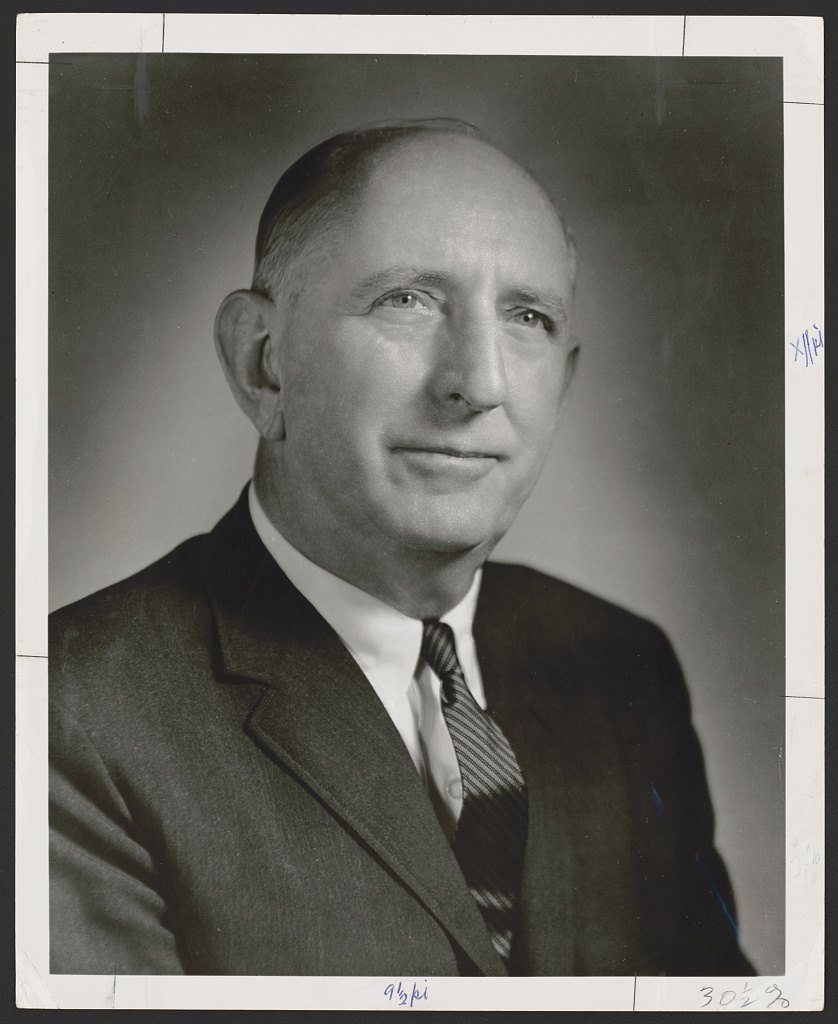
On the evening of 4 October 1955, a small American party was riding a Soviet train south through the Trans-Caucasus, travelling between Baku and Tiflis (Tbilisi) at the specific insistence of Senator Richard Brevard Russell of Georgia, then chairman of the Senate Armed Services Committee, who tried to journey by rail wherever possible so he could see Soviet country and infrastructure for himself. This case file covers what witnesses reported, the official narrative, and a two-pass assessment with its evidence tier.
What did witnesses see at Trans-Caucasus railway between Baku and Tbilisi (Tiflis)?
On the evening of 4 October 1955, a small American party was riding a Soviet train south through the Trans-Caucasus, travelling between Baku and Tiflis (Tbilisi) at the specific insistence of Senator Richard Brevard Russell of Georgia, then chairman of the Senate Armed Services Committee, who tried to journey by rail wherever possible so he could see Soviet country and infrastructure for himself. About an hour and a half out of Baku, near dusk, Russell was resting in a darkened compartment when he saw a greenish-yellow ball of light rise rapidly outside the window. He rushed into the next compartment, where the rest of the party sat with the lights on, and said he had just seen what he thought was a flying saucer.
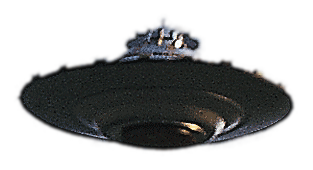
The others turned out their lights and looked, and at first saw nothing, so they were skeptical. Then a second luminous object rose rapidly into the sky and the rest of the party was convinced. Russell's military aide, Lieutenant Colonel E. U. Hathaway of the Army, reached the window in time to watch the second object climb. The party's interpreter, Reuben Efron, a Washington attorney, also saw it. According to the Air Intelligence Information Report compiled days later in Prague, the witnesses described disc-shaped craft: each object ascended near dusk with its outer surface revolving slowly to the right, carrying two lights that stayed stationary on top, with sparks or flame seen coming from the craft as one of them passed over the observers' train. The discs rose almost vertically and relatively slowly to roughly 6,000 feet, then their speed increased sharply as they leveled into horizontal flight, both heading north. On the ground one to two miles south of the rail line, the observers reported seeing one or two searchlights pointing almost vertical, suggesting some kind of installation near where the objects had lifted off.
There is a notable wrinkle inside the official record itself. In his later interview, Russell told the CIA that he personally never saw the shape of the object, only the fiery yellowish ball, and that he saw no separate fixed lights, which he acknowledged was contrary to what the other observers stated. He also said the searchlight he saw was about half a mile to a mile away, aimed at a low trajectory almost at the train, and did not appear to be following the object. So the senator who raised the alarm described luminous balls, while his aides described domed, revolving discs. All of them, the Air Force reported, came away firmly believing they had watched flying-disc or saucer-type aircraft taking off.
What is the official explanation?
The American handling of the report was fast and high-level, which is itself the strongest evidence that officials took it seriously. After the party crossed out of the USSR, the U.S. air attache in Prague debriefed them and prepared a nine-page Air Intelligence Information Report dated about 13 to 14 October 1955, with witness statements, descriptions of Soviet airfields, aircraft and radar that Russell had observed, and a hand-drawn illustration of the discs. The account was urgent enough that it was carried in the CIA Daily, the bulletin circulated to the most senior officials in Washington, and the Air Force routed a top-secret cable to USAF headquarters. The original report documents were stamped Top Secret and were not declassified until 1985.
On 27 October 1955, Herbert Scoville Jr., Assistant Director of the CIA Office of Scientific Intelligence, and OSI consultant Dr. Francis Clauser interviewed Russell directly. Scoville's Memorandum for the Record, declassified through a later FOIA request, records the senator's account and then Scoville's own judgment. He wrote: "The testimony of Senator Russell does not in my opinion support the theory that the Russians have developed saucer-like or unconventional aircraft. It is quite possible that the objects seen were the exhausts of normal jet aircraft in a steep climb." He added that the absence of anything seen on the ground "might indicate that the aircraft were in a dive followed by a sharp pull-up" so that nothing was visible until the exhausts came into view, but he also conceded in the same document, "However, it is possible that the aircraft were indeed of the short or almost vertical take-off variety." Scoville noted that the train route was chosen by Russell himself, which "tends to refute the theory that the train trip was arranged in order to stage the operation for Senator Russell's benefit," and that Russell was not present when the Prague dispatch was written, so he had not verified its contents.
The official CIA history of the subject, Gerald Haines's "CIA's Role in the Study of UFOs, 1947-90," frames the episode in the context of Cold War anxiety that the Soviets might be ahead in exotic aircraft. Haines writes that "a flying saucer sighting by US Senator Richard Russell and his party while traveling on a train in the USSR in October 1955" added to that concern, but that "after extensive interviews of Russell and his group... CIA officials concluded that Russell's sighting did not support the theory that the Soviets had developed saucerlike or unconventional aircraft," quoting Scoville's line that the objects "probably were normal jet aircraft in a steep climb." Wilton E. Lexow, head of the CIA's Applied Sciences Division, was skeptical too, and Haines records that Lexow "questioned why the Soviets were continuing to develop conventional-type aircraft if they had a flying saucer." Notably, the matter was treated as a foreign-intelligence question about Soviet capability, not handed to Project Blue Book, which was apparently never told about it.
What did the witnesses think it was?
The witnesses were not casual observers. Richard Russell was one of the most powerful men in the United States Senate and chaired the Armed Services Committee, a man steeped in military hardware who had every reason to know an aircraft when he saw one and every incentive not to embarrass himself with a wild claim during a Cold War fact-finding trip. Lieutenant Colonel E. U. Hathaway was a serving Army officer, and Reuben Efron was an attorney and Russia hand acting as interpreter. By the Air Force's account, all of them came away firmly believing they had watched disc or saucer aircraft rise from Soviet ground.
What they believed they saw, in the aides' telling, was structured craft rather than just lights: domed discs whose outer rim revolved slowly clockwise, glowing pinkish-white at the edge so that the rotating glow gave the impression of a pinwheel, climbing without sound and without visible wings, engines or propellers. Efron reported that the object gave the impression of gliding, with no noise and no exhaust sound that he could detect. Hathaway, according to the reproduced account, summed up the group's predicament to investigators with the line, "I doubt if you're going to believe this, but we all saw it." Russell himself was more guarded under CIA questioning. He described a whirling fiery ball on a single smooth trajectory, said he could not judge its size or distance because there were no reference points, and admitted he never resolved a shape and saw none of the fixed lights the others described.
That internal disagreement matters, and it cuts both ways. A coordinated hoax or a shared delusion would be expected to produce matching stories, not a chairman who saw a glowing ball and aides who saw domed revolving discs. The fact that Russell openly told the CIA his account contradicted his companions, rather than smoothing it over, reads as honest reporting rather than a worked-up tale. There was also a Soviet response in the moment: a few minutes after the sightings, a train guard entered the compartment and pulled down the window shades, an act the witnesses read as an attempt to stop them seeing more, although Russell cautioned it was dark and he noted nothing unusual in the guard's manner.
The dispute
The dispute is narrow and official. Herbert Scoville Jr., Assistant Director of the CIA Office of Scientific Intelligence, advanced the counter-explanation in his Memorandum for the Record of his 27 October 1955 interview with Senator Russell. He wrote that the senator's testimony did not support the theory of Soviet saucer-like aircraft and that "it is quite possible that the objects seen were the exhausts of normal jet aircraft in a steep climb," reasoning that the absence of anything seen on the ground "might indicate that the aircraft were in a dive followed by a sharp pull-up" so that nothing was visible until the exhausts appeared. Gerald Haines's official CIA history repeats this as the Agency's conclusion, quoting Scoville that the objects "probably were normal jet aircraft in a steep climb," and adds the skepticism of Wilton E. Lexow of the Applied Sciences Division, who questioned why the Soviets would keep developing conventional aircraft if they had a flying saucer.
The reason this stays at Barely Disputed rather than anything stronger is that Scoville offered a category, not a culprit. No specific Soviet airfield along the Baku to Tiflis line was identified, no aircraft type was named, and no sortie or flight log was ever traced to the time and place. The jet-exhaust idea is a reconstruction consistent with some of the testimony, particularly Russell's own description of a featureless fiery ball, but it does not engage with the aides' very different report of a domed disc with a slowly revolving glowing rim climbing silently, nor with the searchlights observers placed one to two miles south of the line. An official assertion that names a plausible mechanism without showing the actual object is exactly the kind of weak, method-light counter-explanation that leaves a case standing.
Scoville himself undercut the certainty of his own debunk in the same document by conceding, "However, it is possible that the aircraft were indeed of the short or almost vertical take-off variety," which concedes the objects could have been unconventional after all. The witnesses' internal disagreement, with Russell seeing only a ball while Hathaway and Efron described structured discs, is genuine and is the strongest point in favor of a mundane distant light, but it argues against a fabricated story just as much as it argues against a saucer. With no confession, no identified aircraft, and no traced launch, the conventional explanation is reasonable but unproven, and the case largely holds.
Is the Senator Russell Soviet Disc Sighting real? The two-pass assessment
Pass one, how this could be entirely ordinary. The official counter-explanation is on the record and is not crazy. Herbert Scoville of CIA OSI proposed that the lights were the exhausts of normal jet aircraft in a steep, almost vertical climb, possibly diving and then pulling up sharply so that nothing was visible until the glowing exhaust came into view. The party was riding a railway through the militarized Trans-Caucasus near the Iranian frontier, the searchlights one to two miles off the line point to a nearby airfield, and night jet operations on afterburner climbing out of such a field would show exactly the rising fiery ball Russell described, accelerating away to the north once leveled. The Soviets were also flight-testing capable jets in this period, and a steeply climbing fighter on reheat is a far more economical explanation than a saucer. The internal contradiction in the testimony, with the senator seeing only a ball and no fixed lights, fits a distant point-source light source better than it fits a resolved mechanical disc.
Pass two, if real, what is it. Even the debunk did not actually close the question. In the same memo where Scoville favored jet exhausts, he conceded, "However, it is possible that the aircraft were indeed of the short or almost vertical take-off variety," which in 1955 was itself an unconventional, near-science-fiction capability. The trained aides, including a serving Army colonel, did not describe an exhaust plume; they described a domed disc with a slowly revolving glowing rim climbing silently. No specific Soviet airfield, no identified aircraft type and no traced flight was ever produced to anchor the jet theory, and Lexow's own objection, that it made no sense for the Soviets to keep building conventional aircraft if they had a saucer, was aimed at the Soviet-superweapon reading, not at proving the objects mundane. If the discs were genuinely as the aides reported, the realistic candidates are a Soviet experimental craft of a type never confirmed, or a genuine unknown observed from a moving train at night.
Weighing the two passes, the official explanation here is an assertion without a demonstrated method. Scoville named a plausible cause, jet exhausts, but identified no airfield, no aircraft, no sortie, and his own document hedges toward vertical-takeoff craft. That is the textbook profile of a case that is contested but largely standing: powerful, sober witnesses, a contemporaneous Top Secret report and a direct CIA interview, an unresolved discrepancy between the senator's lights and the aides' discs, and a counter-explanation that is reasonable but unproven. There is no confession, no recovered prop, and no positively identified real-world object. That places this case at Barely Disputed. It is not Verified Unexplained, because a credible conventional reconstruction exists in the official file, and it is not Strongly Disputed, because nothing identifies the specific aircraft or cause that would actually retire it.
Sources
- documents2.theblackvault.com/documents/cia/EOM_2020_00228_FINAL.pdf
- sgp.fas.org/library/ciaufo.html
- sclfind.libs.uga.edu/sclfind/view?docId=ead/RBRL251JC.xml
- www.theblackvault.com/documentarchive/declassified-top-secret-cia-memo-reveals-senators-saucer-like-craft-sighting-in-1955/
- www.cia.gov/readingroom/document/0005516000
- www.enigmalabs.io/library/d91d6eb7-37f6-485a-9fbe-f208ce218a16
- www.loc.gov/item/2015645667/
More cases from this region: UFO sightings in Azerbaijan (then USSR)