The Wardle Incident
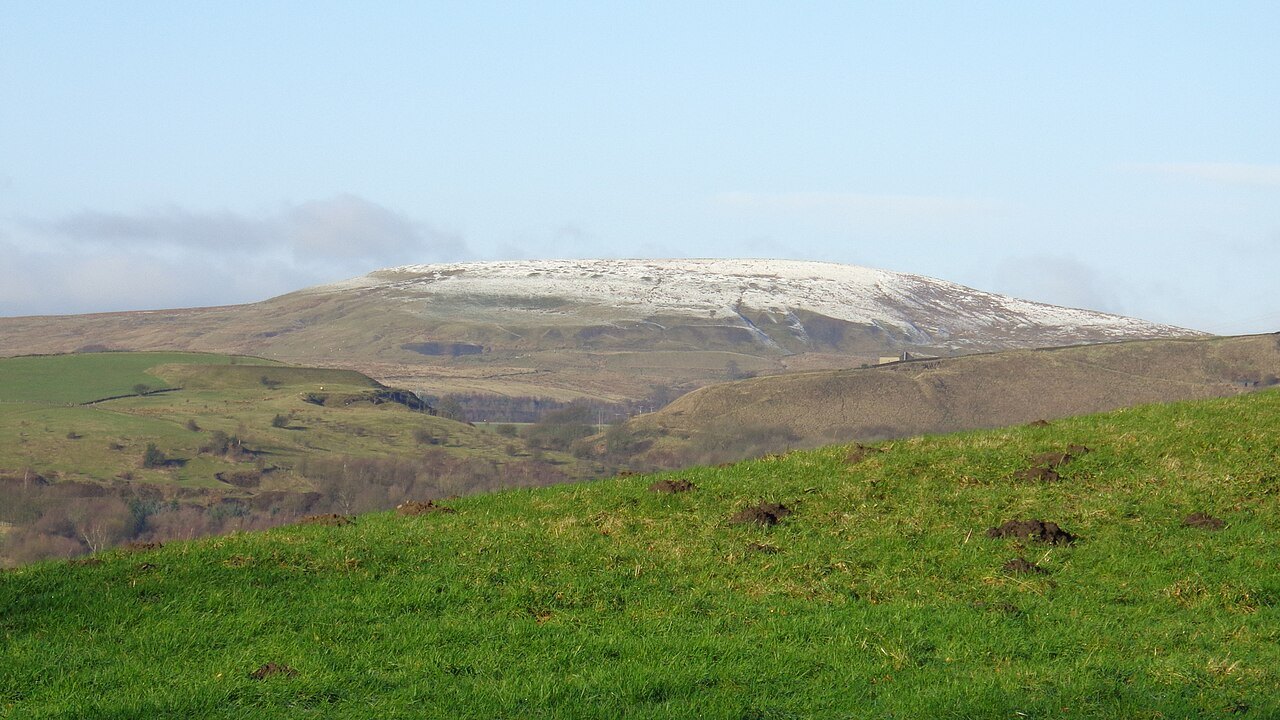
On the clear, frosty night of Friday 15 February 1957, at about 10 pm, nineteen-year-old Gwynneth Fitton was walking home along an unlit country lane near Wardle, a village high on the Pennine Moors above Rochdale in Lancashire. This case file covers what witnesses reported, the official narrative, and a two-pass assessment with its evidence tier.
What did witnesses see at Wardle?
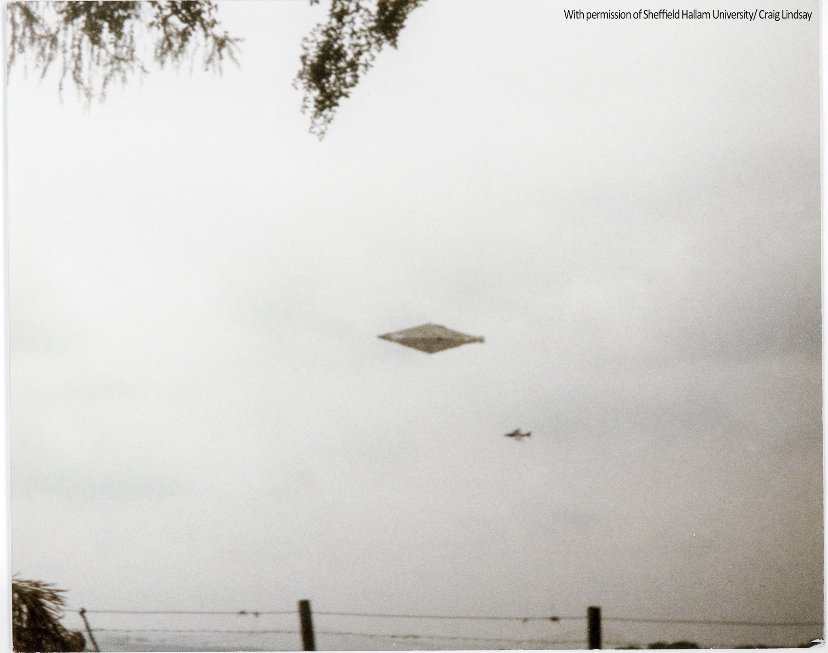
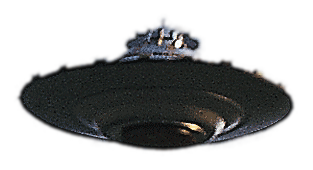
On the clear, frosty night of Friday 15 February 1957, at about 10 pm, nineteen-year-old Gwynneth Fitton was walking home along an unlit country lane near Wardle, a village high on the Pennine Moors above Rochdale in Lancashire. She noticed a bright light moving between two hills off to her side. As it came closer it resolved into a distinct shape. She described it as circular with a dome on top, and suspended below it was a light that switched from white to red at intervals. The object moved toward her and then stopped dead at rooftop height, hanging silently in the air.
Frightened, Gwynneth ran the rest of the way home and pulled her mother, Dorothy Fitton, outside to look. According to the account Dorothy gave, when she caught sight of the thing in the sky she cried out "Good God, they're here!" Both women then watched it hover without any sound before it moved off and disappeared swiftly across the moors. There was no engine noise, no exhaust, nothing they could connect to an aircraft of the period.
Within a few days the local paper, the Rochdale Observer, ran the story under the headline "Was Wardle Visited by a Flying Saucer?" The junior reporter who covered it, Alan Fitzsimmons, wrote that none of the witnesses had been believers in flying saucers beforehand, but that their disbelief had been badly shaken. After the article appeared, more people came forward to say they had seen the same object in the sky on the same night, and the Air Ministry investigator who later visited the area ended up interviewing five separate witnesses to the apparition.
A further strand was the physical material. In the weeks that followed, debris was found scattered on the moors near Wardle: a small silver cylinder that looked like part of a transmitter from an Air Ministry weather balloon, several aluminium rods, a piece of wire mesh, and a parachute. The Rochdale Observer noted that the cylinder was perfectly dry and unmarked even though there had been considerable snowfall across the two weeks since the sighting, which to the paper did not fit the idea that it had been lying out on open moorland the whole time.
What is the official explanation?
The case is unusual because the official response is fully documented in the public record rather than buried. The local Member of Parliament, Mr Leavey, put a formal question to the government. On 20 March 1957 he "asked the Secretary of State for Air whether he is aware that an abnormal, brightly illuminated airborne object was seen near Wardle in Lancashire at about 10 p.m. on Friday, 15th February, 1957; and what reports he has received from the radar warning system about this" (HC Deb 20 March 1957 vol 567 cc373-4).
The Secretary of State for Air, Mr C. I. Orr-Ewing, answered in full: "Yes, Sir. This object, which was described in the Press as a flying saucer, did not emanate from outer space, but from a laundry in Rochdale. It consisted of two small hydrogen-filled balloons illuminated by a flash-light bulb, and devised by a mechanic employed at the laundry. I understand he planned to construct from these experiments a small radio-controlled airship. There would be no reason for the radar system to report the appearance of a small, slow-moving object of this type." That answer is the single hardest primary document in the case, and it is the source of the famous line that the saucer came not from outer space but from a laundry in Rochdale.
Behind that statement sat a real investigation. In April 1957 the Air Ministry sent what the file calls "an Air Ministry special investigator with much experience in this field," in fact an intelligence officer from DDI(Tech), the branch then responsible for handling UFO reports. According to the files later released to the UK National Archives and worked through by researcher Dr David Clarke, the officer interviewed five witnesses, told them to keep his visit quiet, called on the mechanic, studied the weather records and the prevailing winds at the time of the sighting, then went back to London to write a lengthy report. The Wardle apparition subsequently appears in a 1957 DDI(Tech) summary list of explained UFO reports under the heading "private experiments (Wardle incident)."
The minister's confidence was, on the record, probabilistic rather than absolute. In a follow-up the Air Ministry conceded that the official position was that "the probability is that the explanation we have given is the right one," which is the language of a best-fit conclusion, not a closed forensic identification. There is no surviving radar trace, no recovered intact device tied by serial number to the laundry experiment, and no contemporaneous photograph of the object itself in the official file.
What did the witnesses think it was?
The named witnesses are Gwynneth Fitton, then nineteen, and her mother Dorothy Fitton, with at least three more local people who came forward after the Rochdale Observer story and were among the five interviewed by the DDI(Tech) officer. What matters about them is that none were flying-saucer enthusiasts before the night in question. Reporter Alan Fitzsimmons made a point of recording that the witnesses had been sceptics, which is why he wrote that their disbelief had been "badly shaken." They believed they had seen a structured, domed, silently hovering craft with a colour-changing light, close enough and bright enough to alarm them, not a vague distant glow.
The man at the centre of the official explanation, Neil Robinson, was a thirty-five-year-old mechanic and radio ham who worked at a laundry in Rochdale. After reading about the sighting in the paper he came forward and claimed responsibility. He described releasing two five-penny balloons filled with hydrogen and lit by a small bulb powered by a pen-torch battery, on four separate occasions in remote spots, and said of it "it was just an experiment in tracing air currents," tied to a longer-term plan to build a small radio-controlled airship. On its face this is a confession, and it is the spine of the government's reply to Parliament.
The complication is that Robinson's own circle did not describe him, or the device, the way the tidy laundryman story did. His cousin Geoff Butterworth called him "an exceptionally clever man, skilled in electronics," not a man messing about with penny balloons. Another associate, Ivan Corlett, went further years later: "It wasn't an ordinary balloon like it said in the papers, that was a red herring. It was something else." Corlett still agreed it had been a deliberate hoax launched over the moors, but insisted the thing in the sky was more elaborate than two toy balloons and a torch. That is corroborating testimony for a man-made object, but it actively undercuts the specific mechanism the Air Ministry put on the record.
The reporter himself added a darker postscript. In 1992 Alan Fitzsimmons claimed that after his coverage the Ministry of Defence visited the Observer office and "read the Official Secrets Act to us with the warning to discontinue reporting." That claim has to be weighed carefully, because former colleagues at the paper said they had no recollection of any such visit, and motivated late testimony from a single source is exactly the kind of account that should not be allowed to carry a case on its own.
The dispute
The dispute is straightforward to state. The British government, through Secretary of State for Air C. I. Orr-Ewing, told the House of Commons on 20 March 1957 that the Wardle object "did not emanate from outer space, but from a laundry in Rochdale" and "consisted of two small hydrogen-filled balloons illuminated by a flash-light bulb." The man behind it, mechanic and radio ham Neil Robinson, came forward and confessed, describing two five-penny balloons lit by a pen-torch bulb and released as "an experiment in tracing air currents." An Air Ministry DDI(Tech) intelligence officer investigated in April 1957, interviewed five witnesses, studied the weather records, and the case was logged in a 1957 DDI(Tech) list of explained reports as "private experiments (Wardle incident)." On paper, that is a confessed hoax with an official identification.
What keeps this at the barely-disputed level rather than strongly disputed is that the specific mechanism in the confession is weak and is contradicted by the people best placed to know. The Rochdale Observer, investigating at the time, found that a balloon of the type described was only about twelve inches across and could not believe so tiny a light could appear brighter than a car's headlamp, and it could not even establish how Robinson generated the hydrogen. Robinson's own relatives undercut the laundry-balloon story: his cousin Geoff Butterworth described him as "an exceptionally clever man, skilled in electronics," and associate Ivan Corlett later said outright "it wasn't an ordinary balloon like it said in the papers, that was a red herring. It was something else," while still agreeing it had been a deliberate launch over the moors.
The physical debris is the other loose end. The silver cylinder recovered on the moors looked like part of an Air Ministry weather-balloon transmitter, and the Observer noted it was perfectly dry and unmarked despite two weeks of heavy snow, which does not fit material that had simply been lying out on the moors since the sighting. That raises two unresolved possibilities, neither of them extraterrestrial: that Robinson flew something more elaborate than toy balloons, or that the convenient debris was added to dress the official story. The case is not closed because the exact real-world object has not been positively and forensically identified, only assigned on a balance of probability, and the government itself conceded "the probability is that the explanation we have given is the right one." Late and motivated testimony, such as reporter Alan Fitzsimmons's 1992 claim that the Ministry of Defence read the Official Secrets Act to the paper, is treated with caution here because former colleagues did not recall it and a single motivated source cannot carry a case. The honest reading is a man-made hoax of contested construction, not a demonstrated two-balloon prank, which is why the case largely stands and is tiered Barely Disputed.
Is the Wardle Incident real? The two-pass assessment
Pass one, how this is entirely ordinary. There is a named local man, Neil Robinson, who came forward of his own accord and confessed to launching illuminated hydrogen balloons over the Wardle moors, and his confession was accepted by an Air Ministry intelligence officer who interviewed the witnesses and checked the winds. The Secretary of State for Air then stated the balloon explanation to Parliament on 20 March 1957. Physical debris consistent with a home-built ballooning rig, aluminium rods, wire mesh, a parachute and a small cylinder, was recovered on the moors. A slow, low, silent, colour-changing light that stops and drifts off with the wind is a very good fit for a lit balloon seen at night by people primed by the saucer scares of the era. On its own this looks like a solved hoax.
Pass two, what does not sit cleanly inside that explanation. The mechanism the government put on the record is two five-penny balloons with a pen-torch bulb, and that is the part the contemporary investigators on the spot did not believe. The Rochdale Observer pointed out that a comparable balloon was only about twelve inches across and could not credibly produce a light witnesses described as brighter than a car's headlamp, and the paper could not even establish how Robinson made the hydrogen. The recovered cylinder looked like part of an Air Ministry weather-balloon transmitter and was oddly dry and unmarked despite two weeks of snow, which raises the possibility that Robinson was flying something more capable than toy balloons, or that material was added after the fact. Robinson's own relatives describe an accomplished electronics man and say the object was "something else," not the laundry-balloon caricature. None of that points to anything from outer space, but it does mean the precise official cause was asserted on a balance of probability and is partly contradicted by the people closest to the event.
Weighing the two passes. This is not an unexplained-object case in the strong sense, because a confessed human source exists. But it is also not a cleanly closed one, because the specific stated method is weak and is disputed by the contemporary press and by Robinson's own circle, and the official finding was framed as a probability rather than a demonstrated identification. Under the tier rules an official explanation and a confession both exist, yet the exact mechanism is contested and the case largely stands as a man-made event of uncertain construction rather than a proven two-balloon prank. That is the definition of Barely Disputed, and that is the tier assigned here.
Sources
- api.parliament.uk/historic-hansard/commons/1957/mar/20/airborne-object-wardle
- www.ufoinsight.com/ufos/cover-ups/backyard-experiment-ufo-incident
- www.tall-white-aliens.com/the-wardle-incident/
- www.thinkaboutitdocs.com/1957-the-wardle-incident/
More cases from this region: UFO sightings in United Kingdom