The Elizabeth Klarer Drakensberg Photograph (1956)
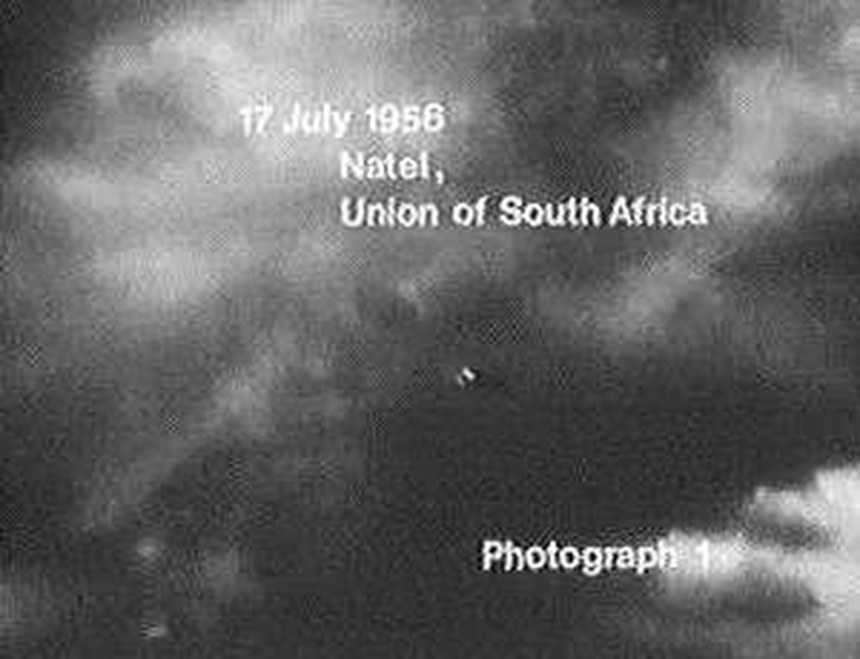
On the afternoon of 17 July 1956, at about four o'clock, Elizabeth Klarer was in the foothills of the Drakensberg near Rosetta in what was then Natal, South Africa, in rolling Zulu country under a sky heavy with thunderstorm cloud. This case file covers what witnesses reported, the official narrative, and a two-pass assessment with its evidence tier.
What did witnesses see at Near Rosetta?
On the afternoon of 17 July 1956, at about four o'clock, Elizabeth Klarer was in the foothills of the Drakensberg near Rosetta in what was then Natal, South Africa, in rolling Zulu country under a sky heavy with thunderstorm cloud. By her account she had driven out specifically to revisit the spot where she said her earlier contact had happened, and she had two companions with her. She noticed a flash of light between the storm clouds, stopped the car, got out with a cheap Box Brownie camera, and saw a metallic disc moving slowly in the dark cloud. She shot a short sequence, seven exposures in all, before the disc accelerated and shot away. Four of the seven frames are the ones that have circulated ever since.
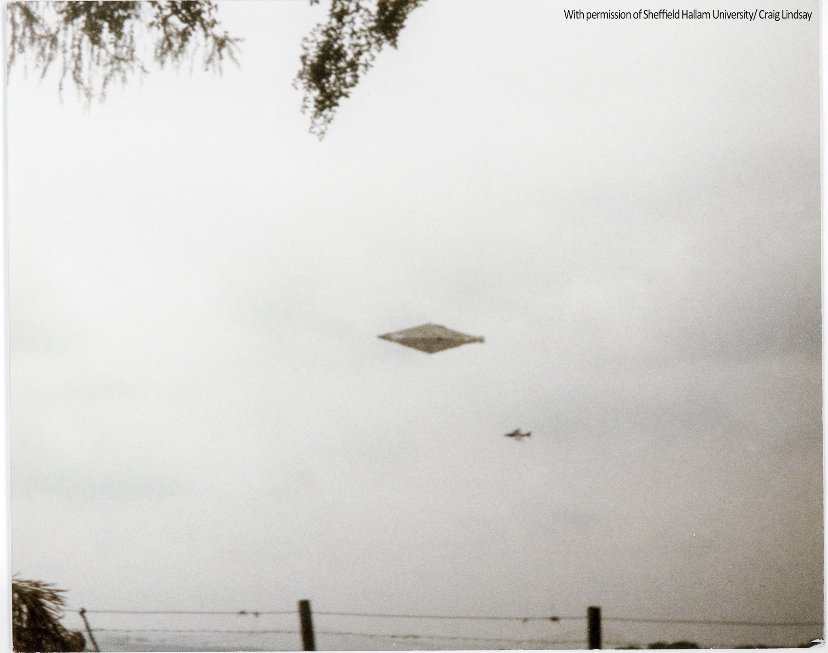
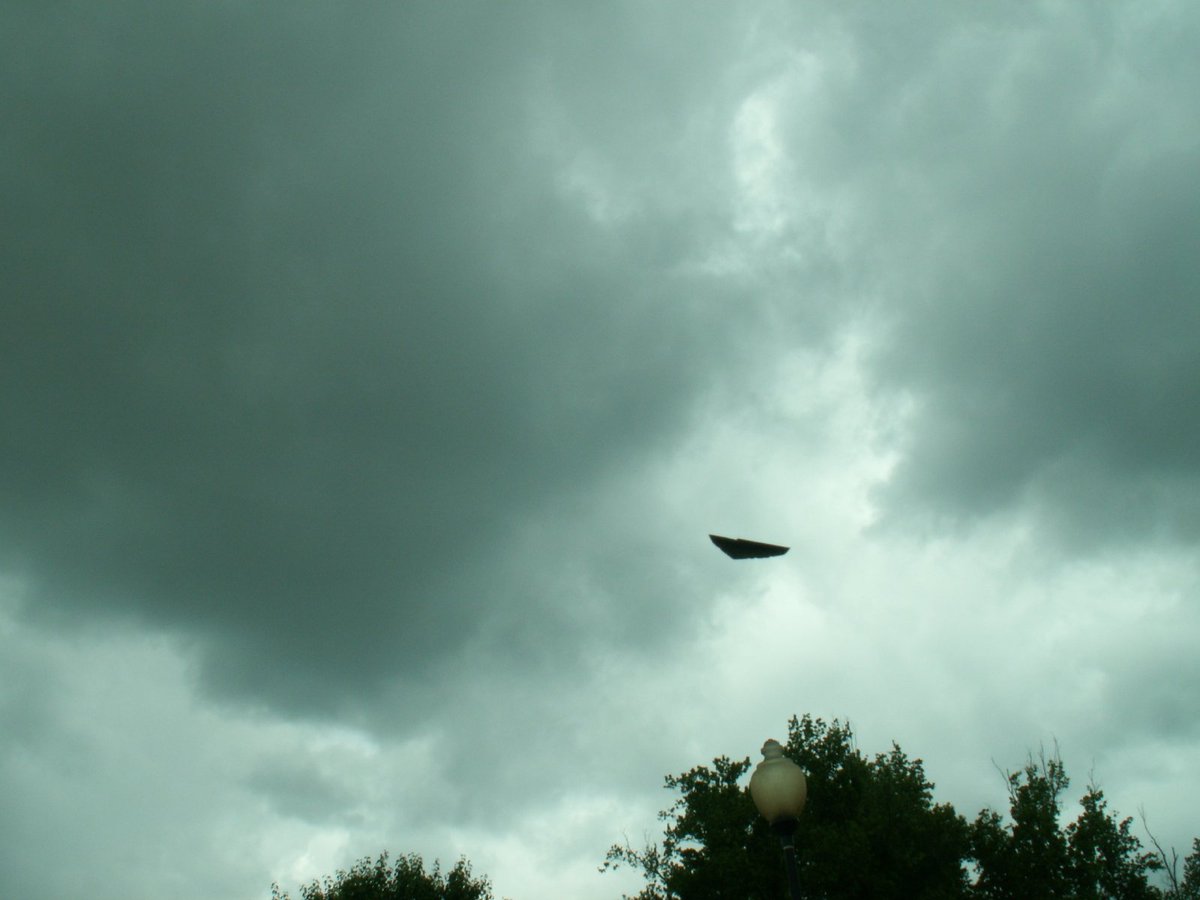
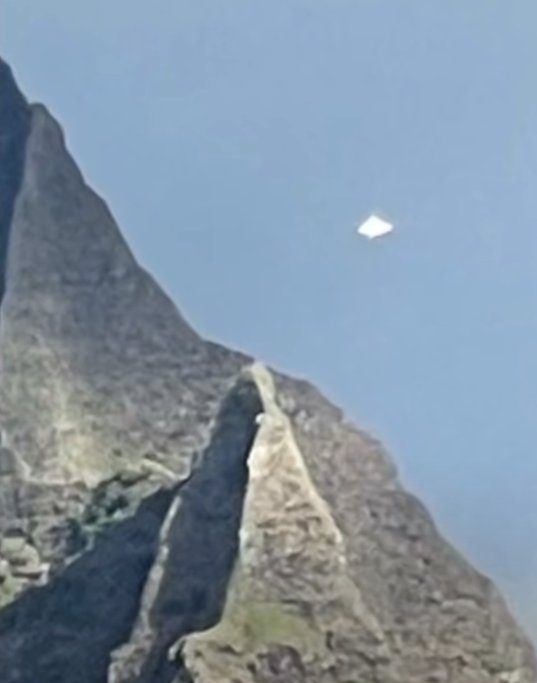
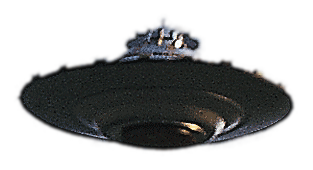
What the surviving frames actually show is modest and that is part of why the case endured. There is a smooth, dark-rimmed disc with a low dome, hanging against a bank of cumulus and storm cloud, with no visible struts, wires, exhaust, or undercarriage. Catalogued by the French researcher Patrick Gross on ufologie.org, the lead frame carries the plain caption "The first of a series of pictures of a UFO photographed over the region of Natal in South Africa on July 17 1956," with a close-up frame noted as a blow-up of the same picture. The object is roughly circular, presents a sharp silhouette, and its position shifts across the frames while the surrounding cloud structure barely changes, which observers have taken to mean the exposures were made within a few seconds of one another rather than over minutes.
Klarer described the craft as a scout disc and tied it directly to her wider story: she said it belonged to a being she called Akon, a fair-haired man she claimed was an astrophysicist from a world she named Meton in the Proxima/Alpha Centauri system. She maintained that the 17 July photographs were not a chance catch but a deliberate showing, the craft allowing itself to be recorded. She stood by the images without wavering for the rest of her life, eventually setting her account down in full in her 1980 autobiography Beyond the Light Barrier, and she swore to the authenticity of the photographs in a notarized affidavit. She died on 9 February 1994 still holding to every part of the story.
What is the official explanation?
There is no government investigation file that anchors this case the way Project Blue Book or a national air-force board anchors the famous American and European sightings. South Africa in 1956 had no civilian UFO bureau, and the photographs were never the subject of a published official military or meteorological report that can be quoted today. What stands in for an official record here is the work of the country's own UFO investigators, who treated the Klarer claim seriously enough to spend years on it precisely because she was not a fringe figure.
The most important of these is Cynthia Hind, long regarded as southern Africa's leading UFO researcher and the regional MUFON representative, who devoted substantial space to Klarer in her 1982 book UFOs: African Encounters. Hind located and interviewed people connected to the case and worked the Rosetta ground in person. Her position, as it comes down through her writing, was carefully split: she found the witness texture and the photographs harder to wave away than outsiders assumed, while keeping clear distance from Klarer's far larger contactee narrative, which had no independent corroboration. That two-level verdict, photographs taken seriously, space romance held at arm's length, is the closest thing the case has to an authoritative finding.
The skeptical side of the contemporary South African record runs through Edgar Sievers, a Pretoria ufologist who had already published Flying Saucer Over Southern Africa in 1955 and who ran the magazine Approach in the late 1950s, copies of which survive in the AFU archive in Sweden. Sievers is the man who actually pressed on the weak points. He reported that members of Klarer's family said she had left the homestead alone, which cuts against her claim of two companions, and he argued that the disc in the pictures looked like nothing so much as a car hubcap. Crucially, though, he stopped short of closing it: he conceded that no known hubcap sufficiently matched the disc shown in the images. So even the case's most serious in-country critic logged a suspicion he could not nail down, not a solved hoax. Beyond Hind and Sievers, the international UFO research community of the day largely set the case aside, not because anyone demonstrated a fake, but because the surrounding contactee story was too much to swallow.
What did the witnesses think it was?
Elizabeth Klarer was born Elizabeth Woollatt on 1 July 1910 at Mooi River in Natal, into the established European settler community of the province, and she is consistently described in contemporary reporting as a woman with a meteorological background, identified as a diploma meteorologist, and married into the South African Air Force. That standing matters to how the case was received. She was not an anonymous attention-seeker but a respected, educated woman whose claims cost her socially, and several who knew her in the Rosetta district described her as level-headed rather than fanciful. She insisted the 17 July 1956 disc was real, that she had photographed it deliberately, and she never softened or embellished the core of the account across nearly four decades of questioning.
What she believed went enormously further than the photograph. Klarer's account, set out fully in Beyond the Light Barrier, is one of the most elaborate contactee narratives on record. She said her relationship with the sky long predated 1956, that on 6 April 1956 a saucer landed and she was taken aboard, and that she came to know and love Akon, the man from Meton. She claimed she bore his child, that she spent four months on his world completing the pregnancy, and that the craft she photographed near Rosetta belonged to that same visitor. She framed Akon's people as benign watchers warning humanity off nuclear self-destruction, and she carried that message to UFO gatherings, including international congresses, in the 1970s.
The corroboration problem sits exactly here. The two companions Klarer placed at the scene never came forward publicly to confirm the sighting, and her own family, as relayed by Sievers, said she had set out alone. So the single hardest piece of physical evidence, the Box Brownie frames, rests almost entirely on the testimony of one person whose larger story is uncorroborated. Cynthia Hind's field work is the nearest thing to outside support, and even Hind kept the photographs and the love-across-the-stars saga in separate boxes. The witness here is sincere, consistent, and socially credible, and at the same time she is effectively the only witness, which is the weight the photograph has to carry.
The dispute
The substance of the dispute comes almost entirely from one man, Edgar Sievers, a Pretoria ufologist who was no debunker by trade. He had published Flying Saucer Over Southern Africa in 1955 and edited the magazine Approach in the late 1950s, surviving copies of which are held in the AFU archive in Sweden, so he was an insider taking the subject seriously. Sievers advanced two specific challenges. First, he reported that members of Elizabeth Klarer's own family said she had left the homestead alone on the day, which directly contradicts her claim that two companions were present and saw the disc, collapsing the case back to a single uncorroborated witness. Second, he said the disc in the photographs looked suspiciously like a car hubcap, the most common prop for a one-person saucer hoax of that era.
The reason this is logged as Barely Disputed and not Strongly Disputed is that Sievers himself did not close his own argument. As reported in independent write-ups of his analysis, he conceded that no known hubcap sufficiently matched the disc shown in Klarer's images. That is a critical concession. The case's most motivated and best-placed skeptic looked for the specific real-world object that would end the case and admitted he could not find it. A hubcap that resembles the disc was never produced, no model or prop was ever recovered, and Klarer never recanted. Under the tiering rules a contested hubcap hypothesis that the skeptic himself cannot pin to an actual object is a weak, partial counter-explanation, not a positive identification.
There is a second, softer strand of dispute that has nothing to do with the photograph's optics and everything to do with the company it keeps. Klarer wrapped the 17 July 1956 frames inside an extraordinary contactee narrative: a romance with Akon from Meton in the Proxima Centauri system, a four-month stay on his world, and a son she said she bore there. None of that has any independent corroboration, and many researchers, including the sympathetic Cynthia Hind, declined to credit it even while taking the photographs more seriously. That implausible surrounding story rightly drags down confidence in the whole account, but it is an argument from context, not a demonstration that these specific images are fake. Weighing both strands, a hubcap suspicion the skeptic could not substantiate and an uncorroborated space-romance that taints credibility without proving forgery, the photograph itself stands as contested-but-unresolved, which is the definition of barely disputed.
Is the Elizabeth Klarer Drakensberg Photograph (1956) real? The two-pass assessment
Pass one, the ordinary readings. The mundane hypotheses are real and were raised at the time. Edgar Sievers thought the disc resembled a thrown car hubcap, a classic small-object-near-the-lens hoax that a single person can stage with a Box Brownie. His report that the family saw Klarer leave alone undercuts her claim of two corroborating witnesses, which would make this a solo, unwitnessed shoot, exactly the setup a hubcap or a small model tossed in front of the camera would need. A flat dark disc against storm cloud, no visible support, a position that shifts between frames while the clouds barely move, all of that is consistent with something small thrown or held close to the camera over a few seconds. The deeper problem for the case is not the photograph at all but the story bolted to it: a four-month stay on a planet of Proxima Centauri and a half-alien son are claims with zero independent support, and they make a charitable reading of the picture much harder to sustain.
Pass two, if the photograph is what she said. If the frames genuinely record a structured disc in the Natal sky in 1956, then this is an early, pre-CGI, multi-frame sequence of a domed craft taken by a meteorologically literate witness, with cloud continuity suggesting a fast burst rather than a leisurely staging, and with the lead in-country skeptic himself unable to match the shape to any real hubcap. That last point is decisive for the tier. Sievers had the motive, the access, and the toolkit to debunk this, and what he produced was a suspicion he openly could not close, not a demonstration. Cynthia Hind, the most serious investigator who actually walked the ground, kept the photographs in the unexplained column even as she rejected the romance.
The verdict is Barely Disputed. There is a named counter-explanation from a credible period investigator, the hubcap-and-no-witnesses argument, and that is enough to put the case in the disputed column rather than treat the photo as clean. But the threshold for Strongly Disputed is not met, and not close. There is no confession, no recovered prop, no recovered model, no positively identified hubcap or aircraft, no demonstrated fabrication of these specific frames. The strongest skeptic on the case conceded he could not match the object to a real-world thing, and the strongest investigator left it unexplained. The grandiose contactee narrative pulls hard on one's overall credence, but per the rule that a witness is not wholesale-discredited and that an unproven natural reconstruction is not a solved case, the imagery itself remains formally unresolved. Barely Disputed, leaning unexplained on the photograph and deeply skeptical on everything around it.
Sources
- ufologie.patrickgross.org/htm/picamasa.htm
- ufologie.patrickgross.org/pics/picamasa01.jpg
- www.encyclopedia.com/science/encyclopedias-almanacs-transcripts-and-maps/klarer-elizabeth-1910-1994
- archive.org/details/beyond-the-light-barrier
- www.thinkaboutitdocs.com/1956-the-drakensberg-photos/
- theufodatabase.com/ufos/rosetta-kwazulu-natal-south-africa-ufo-july-1956
More cases from this region: UFO sightings in South Africa