The Emtsa Truck Drivers' Landed Craft
On a freezing night at the start of November 1989, two professional long-haul drivers, Oleg Kirzhakov and Nikolai Baranchikov, were running their truck south from the Arkhangelsk area toward Moscow. This case file covers what witnesses reported, the official narrative, and a two-pass assessment with its evidence tier.
What did witnesses see at Emtsa railway station?
On a freezing night at the start of November 1989, two professional long-haul drivers, Oleg Kirzhakov and Nikolai Baranchikov, were running their truck south from the Arkhangelsk area toward Moscow. In the Russian retellings of the account the vehicle is a KamAZ, and the men were returning from a work assignment. Near the Emtsa railway station the main road was blocked by heaps of sand and gravel where it was under repair, so Kirzhakov turned the truck onto a rough dirt track to get around the obstruction. On one bend of that detour the headlights swept across something very large standing off to the right of the road, which the men at first took for a piece of parked construction machinery.
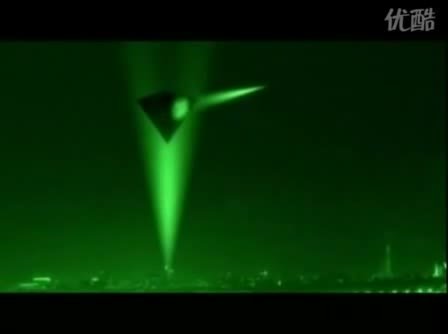
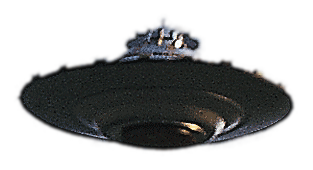
As the truck rolled closer the shape resolved into an enormous dark disc with a dome on top. Kirzhakov put the figure at roughly 120 to 140 feet across, about 40 metres. There were dark holes set around the rim that he first thought were portholes, and beneath the body were two leg-like supports. The far edge of the craft was raised and was resting on a stand of birch trees, two of which had been snapped. The object sat silent and unlit. Kirzhakov got out and walked toward it, asking Nikolai to stay in the cab and watch. He described the air thickening as he advanced, a growing resistance, until his body "seemed to melt" and movement became difficult. He reported close detail on the round openings in the hull, about 300mm wide, each showing a grid of fine light-grey lines set back 300 to 350mm with the inner axis tilted about 30 degrees, and a smooth metallic tube around 50mm across.
By his account an opening admitted him and he went inside, down a short corridor into a large round hall perhaps 60 feet across with a domed ceiling that gave off a soft blue light. He described five further entrances around the perimeter, a control console with flat square keys marked with geometric symbols, panels of moving lights, and a long couch. In the Russian version of his testimony a luminous screen displayed the words "open fire is needed", and Kirzhakov went back out, fetched matches and spirit, soaked dry roadside leaves and lit them, after which the occupants took his matchbox. He said the dome's interior showed a field of stars with one growing brighter, which the beings indicated was their home. The presences themselves he described as dark, shapeless "masses" like swaying sacks or bags with vague edges. Communication came telepathically and was echoed as text on a small red dotted screen about 150mm square held at arm's length in front of his face. When he asked about future contact the answer was, in the published English, "If you are in danger we will find you within 15 seconds." At the end the rim rotated one way and the dome the other, the whole thing brightened into a glowing ball, lifted, and shot off silently to the northeast. The encounter lasted about twenty minutes, and afterward his hands and legs shook so badly that he could not at first work the truck's controls.
What is the official explanation?
There is no official narrative for this case, and that absence is the single most important fact about it. Unlike the Voronezh landings of September and October 1989, which the Soviet news agency TASS carried and which drew formal local comment, the Emtsa roadside encounter generated no contemporary report from any Soviet authority, no militia file, no aviation or cosmonautics statement, and no published 1989 press item that can be traced today. This is striking because the location sits in the Arkhangelsk Region near Plesetsk, home to a major missile and space launch complex, yet nothing in the surviving record shows that any military or civil body recorded, investigated, or even heard of the event at the time.
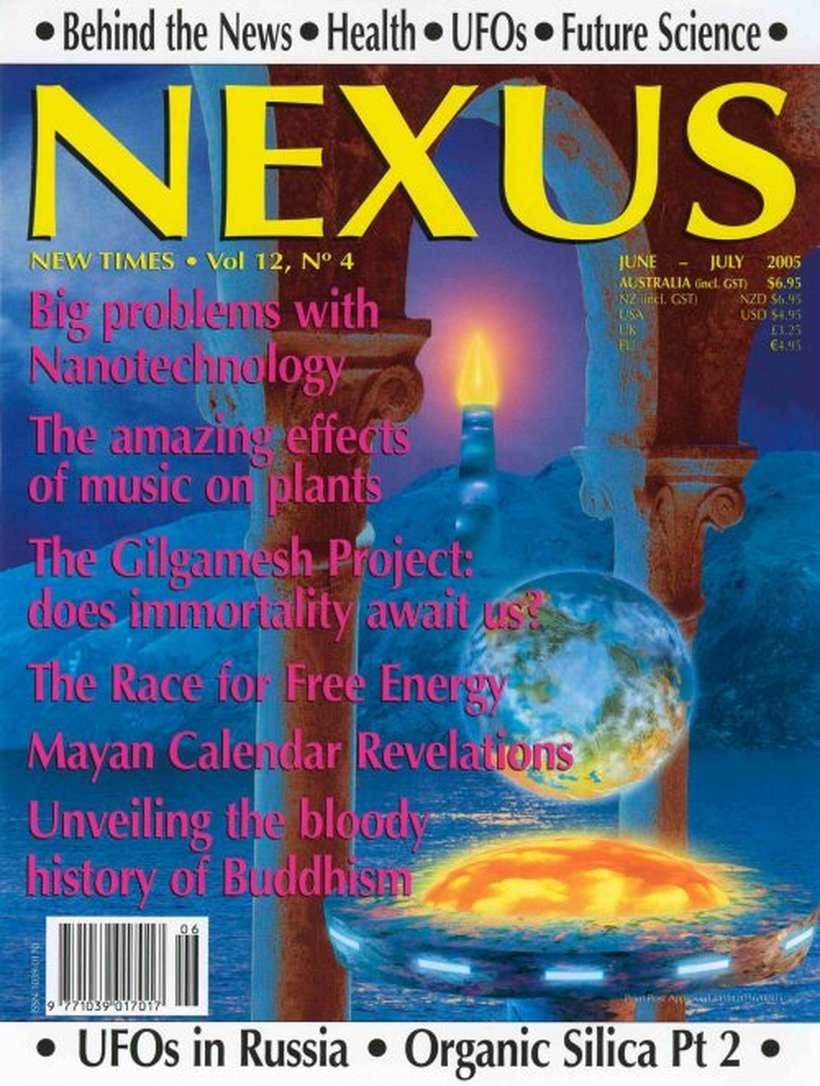
The case instead entered the literature through a single channel. Dr Valery Mikhailovich Uvarov, who presented himself as head of a Department of UFO Research, Palaeosciences and Palaeotechnology and who attached the label "Department N13" of a National Security Academy in St Petersburg, published Kirzhakov's first-person account under the title "An Alien Detour" in Nexus Magazine, Volume 12, Number 4, dated June to July 2005, beginning on page 57. The magazine's own product listing still describes it plainly: "Two Russian truck drivers on their way to Moscow are unexpectedly made to take a detour and come across a spacecraft, which one of the drivers is invited to enter." Uvarov's text does not describe any forensic follow-up. It records no soil sampling at the alleged landing spot, no examination of the two broken birches, no radiation or magnetic readings, and no independent interview of the second driver beyond what Kirzhakov himself relays. The "Department N13" and "National Security Academy" framing reads as institutional dressing rather than a documented state inquiry, and no archival record corroborating such a body's involvement in this case has surfaced. In short, the official layer here is not a debunk and not an endorsement. It is a blank, and every later English and Russian retelling traces back through Uvarov's 2005 publication to Kirzhakov's own words.
What did the witnesses think it was?
The case is essentially the testimony of one man. Oleg Kirzhakov is the experiencer who says he approached, entered, and communicated with the craft. He maintained the account for years and gave filmed interviews long after the event, presenting it as a literal encounter with a non-human vehicle and its occupants, and describing the dark "masses" and the telepathic exchange with consistency. His belief, as relayed by Uvarov, was unambiguous: this was a real landed spacecraft, the beings were intelligent and not of Earth, and the closing message that they could find him within fifteen seconds if he were ever in danger was a genuine promise of protection.
The second driver, Nikolai Baranchikov, is the only other named witness, and his role is limited and second-hand within the same source. By Kirzhakov's own telling, he asked Nikolai to remain in the truck and watch. Nikolai is described as observing the events from the cab, later asking Kirzhakov why he had been moving his hands, and as having a frightened face pressed against the windshield when the lights returned. That is genuine partial corroboration of something happening at the roadside and of Kirzhakov behaving strangely outside the truck, but it is not independent confirmation of the interior, the beings, or the messages, because Nikolai never claims to have gone inside or to have seen the occupants. Uvarov's account adds that two more cars with their headlights on arrived near the end of the encounter, but it gives no names, no statements, and no follow-up from those drivers, so they remain uncorroborated. The result is a layered chain in which the dramatic core rests on a single first-person narrator, with one named companion who saw the outside only and who reaches us through that same narrator.
The dispute
The dispute is not an official debunk but a sourcing and corroboration problem, and it is real. The entire dramatic content of this case, the entry into the craft, the interior hall and console, the dark sack-like beings, the telepathic messages, the luminous text screen and the star map, depends on the single testimony of Oleg Kirzhakov. It reaches the public not through any 1989 document, militia report, or contemporary newspaper, but through one article, "An Alien Detour", written by Valery Uvarov and published in Nexus Magazine, Volume 12, Number 4, in mid-2005, roughly sixteen years after the night in question. No physical evidence is offered in that account or anywhere since: no photograph, no measured landing trace, no radiation or magnetic data, and no forensic look at the two birches the craft supposedly crushed.
The second driver does not close this gap. Nikolai Baranchikov, by Kirzhakov's own narration, stayed in the truck and watched from the cab. He is reported as seeing lights and as later asking Kirzhakov why he had been moving his hands, which corroborates that Kirzhakov was outside doing something unusual, but Baranchikov never claims to have entered the object or seen any occupant. The two additional cars said to have arrived near the end are named only in passing, with no statements and no identified drivers, so they add nothing testable. The chain therefore runs from one experiencer, partly mirrored by one companion who saw only the exterior, to one researcher's later write-up.
A further weakness is the framing. Uvarov attached an official-sounding "Department N13" of a "National Security Academy" to the story, which lends it the flavour of a state-backed inquiry, yet the account itself describes no investigation, no sampling, and no independent interviewing, and no archival record of such a department handling this case has surfaced. That label functions as authority without a shown method behind it.
Why this stays at Barely Disputed rather than Strongly Disputed. There is no confession, no recovered hoax prop, no witness recantation, and no positive identification of a specific real-world object, aircraft, ship, balloon, or rocket launch that the sighting can be pinned to. The counter-explanation, that the interior account is unverifiable single-witness narrative possibly shaped by fatigue, an altered state, or embellishment, is plausible and even likely, but it is reconstructed rather than demonstrated. Under the project's rules a strong, unproven natural or psychological reconstruction is not enough to push a case to the stronger tier, so the case is logged honestly as weakly contested and largely standing on the witness's own word.
Is the Emtsa Truck Drivers' Landed Craft real? The two-pass assessment
Pass one, the ordinary readings. The most economical explanation is that the spectacular interior portion is unverifiable single-witness testimony. Everything dramatic, the corridor, the blue hall, the square-keyed console, the swaying sack-like beings, the red text screen, the star map, the "open fire is needed" instruction, and the fifteen-second promise, comes from one man, Oleg Kirzhakov, and reaches us only through Valery Uvarov's 2005 magazine article rather than any contemporary record. The melting sensation, the difficulty moving, the trembling afterward, and the telepathic exchange are all consistent with an altered or hallucinatory state experienced by a fatigued night driver who stepped out alone in the cold on an unfamiliar detour. A mundane skeleton can also be built for what the second man saw: a large dark mass beside a road under repair, taken at distance for parked machinery, plus genuinely odd behaviour by Kirzhakov outside the cab. Baranchikov's question about why Kirzhakov was moving his hands actually fits someone gesturing at nothing, and the two later cars are named only in passing with no testimony attached. There is no physical evidence in the record at all: no photograph, no soil or radiation reading, no examined landing scar, and no study of the two broken birches. The "Department N13" and "National Security Academy" labels add authority but no documented investigation.
Pass two, if real. Taken at face value the report describes a landed disc roughly 40 metres across with rotating rim and counter-rotating dome, leg supports crushing birch trees, gridded hull openings, and non-humanoid amorphous occupants who communicated by telepathy mirrored on a screen and then departed as a silent ball of light to the northeast. That would place it among the high-strangeness Soviet landing-and-contact cases of the 1989 flap, alongside Voronezh, and the proximity to the Plesetsk launch complex would make the lack of any state record genuinely curious.
Verdict. There is no confession, no recovered prop, no recantation, and no positive identification of a specific aircraft, balloon, drone, or ship that would close this as a hoax or misidentification. What there is instead is a profile heavily weighted toward unverifiable single-experiencer testimony funneled through one later publication, with only thin outside-the-craft corroboration from a companion who never went in. That weakens the case substantially but does not amount to method-shown discredit-grade evidence against it. The honest standing is a counter-explanation that is strong in principle, the single-witness embellishment reading, but unproven in fact. That is the definition of Barely Disputed, and the case is tiered accordingly.
Sources
- www.bibliotecapleyades.net/vida_alien/esp_vida_alien_30.htm
- nexusmagazine.com/product/an-alien-detour/
- nexusmagazine.com/product/volume-12-number-4-downloadable/
- web.archive.org/web/20260313110250/https://www.ufocasebook.com/truckdrivers1989.html
More cases from this region: UFO sightings in Russia