The USS Tiru Encounter (1966)
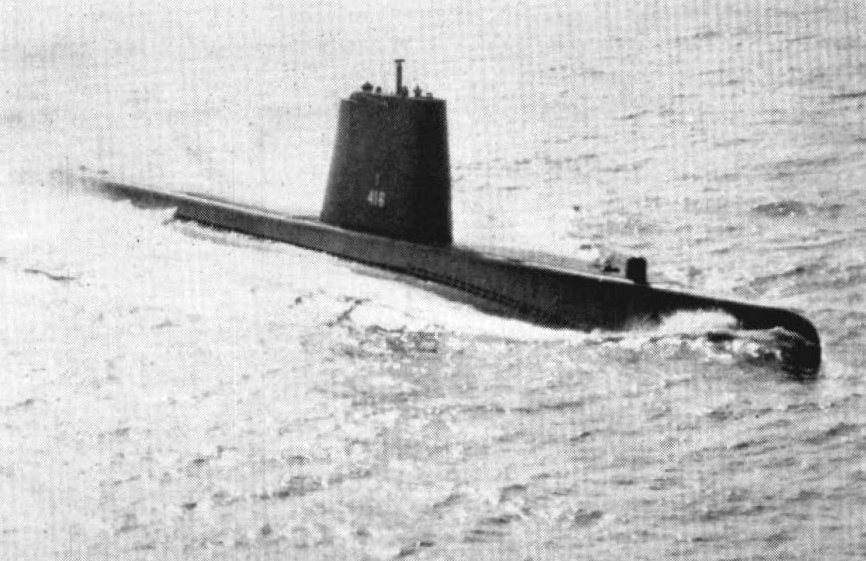
The account is a single first-person narrative attributed to Milton William "Bill" Cooper, who said he was the port lookout aboard the diesel-electric submarine USS Tiru (SS-416). This case file covers what witnesses reported, the official narrative, and a two-pass assessment with its evidence tier.
What did witnesses see at Hood Canal / Dabob Bay area?
The account is a single first-person narrative attributed to Milton William "Bill" Cooper, who said he was the port lookout aboard the diesel-electric submarine USS Tiru (SS-416). He placed the event in 1966 "during the month of the Rose Festival in the Pacific Northwest," on a run that took the Tiru from Pearl Harbor up to Seattle, where it moored at a civilian pier and served as a "showboat" while thousands of people toured it. After that public duty, Cooper wrote, the boat moved to "a back bay area" for torpedo trials: "I believe the area was called Dabob bay [pronounced day-bob] but I am not sure of the spelling."
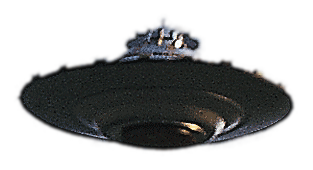
Cooper described the sighting in concrete naval terms. The contact, he said, was first noted at "2 miles bearing 315 degrees relative." What rose into view was, in his words, "a metal craft larger than a football field." He compared its shape to "a saucer with a bowl inverted in the saucer and it was huge," and said it had "windows or lenses placed around its perimeter" and "machinery on and around the outside of it." The object's motion was the strangest part: it "actually tumbled end over end," dropping from the clouds into the ocean and then rising back out again, repeatedly. When it struck the water, "huge geysers of water rose into the air."
The named crew in the account are sparse but specific. The Officer of the Deck was "Ensign Ball." The starboard lookout was a sailor Cooper said was an American Indian seaman nicknamed "Geronimo." The Chief Quartermaster (QMC) reportedly photographed the object: "The QMC took pictures as it rose up into the clouds." The commanding officer, whose name Cooper said he could not recall, then "went below and sent a radio msg." Cooper said the object was tracked at once by visual observation, by radar, and by sonar, the classic three-sensor signature that gives a case weight when it can be corroborated.
The aftermath, as Cooper told it, was a clamp-down. The captain assembled the witnesses and "told all witnesses that they were never to discuss what they had seen with anyone under any circumstances," stating that "the incident was classified information." In later, expanded retellings Cooper added that on return to Pearl Harbor the crew was met and debriefed by a commander from Naval Intelligence and warned of severe legal and financial penalties for talking. No other Tiru crewman has ever come forward, in any traceable record, to confirm any part of this.
What is the official explanation?
There is no official UFO file on the USS Tiru incident. It was never reported through Project Blue Book, never logged by the Navy as an unidentified contact, and never investigated by any government body, for the simple reason that no report of it existed until 1988. What the official record does contain is the ship's movement history, and that record matters because it is the only part of Cooper's story that can be checked against primary documents, and it checks out on the setting.
The Dictionary of American Naval Fighting Ships entry for Tiru (SS-416), maintained by the Naval History and Heritage Command, states that she "conducted sea trials until 14 June 1966 when she departed Hawaii for the Naval Torpedo Station at Keyport, Wash., for an alignment and testing of her weapon system," then "departed the west coast on 9 July, bound for Hawaiian waters," reaching Pearl Harbor "nine days later." The USS Tiru veterans' association chronological history is more granular and independently confirms the same movements: "14 Jun 66: TIRU departed Hawaii, for the Naval Torpedo Station at Keyport, Washington, for an alignment and testing of her weapon system. Visited Seattle, Washington for the 4th of July celebrations, hosting over 1500 visitors," followed by "18 Jul 66: Arrived Pearl Harbor." Keyport sits on Hood Canal beside Dabob Bay, which is in fact a real U.S. Navy torpedo and acoustic test range. So the boat, the year, the Puget Sound torpedo work, the "showboat" public visit, and even the obscure place name Cooper hedged on are all genuine. The geographic and operational backbone of the story is not invented.
The break with the official record comes at the only point that counts. That same detailed veterans' chronology, compiled by men who served aboard the boat, contains no mention anywhere of a UFO, an unidentified contact, a strange surface or sonar return, photographs, geysers, or a Naval Intelligence debrief. An object "larger than a football field" tumbling in and out of the sea two miles off the bow, tracked simultaneously on radar, sonar and by eye, would be the single most extraordinary event in the boat's entire commissioned life. It is absent from the boat's own history. There is no deck log entry, no message traffic, no photograph, and no second witness on the public record, which for a multiple-sensor military sighting is a glaring void rather than a neutral silence.
Cooper's broader claim, that he served in Naval Intelligence and personally read classified UFO briefing documents, was examined at the time and found to be false. Don Ecker, then Director of Research for UFO Magazine, ran a two-part investigation of Cooper around 1989 to 1990, obtained his service record, and reported that it showed an enlisted sailor in ordinary navigation and deck ratings with no intelligence billet and no access to the kind of compartmented material Cooper described. That finding does not by itself prove nothing happened off the Tiru in 1966, but it removes the "insider" authority Cooper leaned on, and it explains why no official apparatus ever treated the Tiru story as a case.
What did the witnesses think it was?
The entire case rests on one man, and that man is the heart of the problem. The witness is Milton William "Bill" Cooper (1943 to 2001), who in 1991 published Behold a Pale Horse and became one of the most influential American conspiracy authors of the late twentieth century. In 1966 he was, by his own and by the documentary record, an enlisted sailor, and he genuinely did serve aboard the Tiru. He believed, or at least publicly insisted, that what he and the lookout watch saw that day was a structured extraterrestrial craft, and he folded the Tiru sighting into a far larger narrative of secret government treaties with aliens, MJ-12, Project Aquarius and an entity he called "EBE."
Cooper first told the Tiru story publicly on the ParaNet bulletin board in the summer of 1988, and ParaNet's operator Jim Speiser initially welcomed it warmly, calling it a rare "multiple military witness" report and saying the network was "deeply indebted to, and a little honored by" the account. That early enthusiasm did not survive contact with Cooper's other claims. John Lear, a fellow figure in that same UFO scene, later confronted Cooper directly over plagiarism, stating flatly that Cooper could not have read "the Krill Papers" while in the Navy in 1973 because Lear and John Grace had only written them themselves a few months earlier in the late 1980s. In other words, Cooper presented freshly invented underground material as classified intelligence he had personally read years before it existed. That is documented fabrication, dated and named, by a hostile but specific source.
No corroborating witness has ever surfaced. Not "Ensign Ball," not "Geronimo," not the unnamed quartermaster who supposedly photographed the object, not the captain, not any of the other men aboard who would have been on watch. The photographs Cooper said were taken have never appeared. The radio message the captain supposedly sent has never been produced or traced. For a case whose strength is supposed to be that a whole trained crew saw it on three sensors at once, the total absence of any second voice across the more than half a century since is the loudest fact in the file. It is fair to weigh Lear and Ecker as motivated critics, rivals in a feuding subculture, but their specific, checkable findings stand on their own, and nothing on the supporting side has ever been verified.
The dispute
The dispute is straightforward to state. The setting of the story is real and documented, but the sighting itself exists only in the testimony of a single witness who is independently shown to have fabricated and plagiarized his other "insider" UFO claims, and it has never been corroborated by any second person, any photograph, any log entry, or any contemporaneous record. The counter-case is advanced principally by John Lear and by Don Ecker, both active in the same late-1980s UFO milieu, and by later reviewers including Kevin Randle who treat Cooper's output as unreliable.
The strongest single piece of evidence against Cooper's reliability is the Krill Papers episode. John Lear stated on the record that Cooper claimed to have read the Krill Papers while serving in the Navy in 1973, when Lear and John Grace had in fact only authored that material themselves in the late 1980s. That is a clean, dated demonstration that Cooper would present recently invented text as classified material he had personally encountered years earlier. Alongside it, Don Ecker's 1989 to 1990 two-part investigation for UFO Magazine, based on Cooper's obtained service record, found no Naval Intelligence assignment and no access to the briefing documents Cooper described. Together these establish a documented pattern of self-mythologising and fabrication around the very theme, secret military knowledge of UFOs, that the Tiru story belongs to.
What keeps this in the "barely" tier rather than something harsher is the specific standard for a strong dispute. There is no confession that the Tiru sighting in particular was invented, no recovered hoax prop, and no positive identification of a specific real-world object, balloon, aircraft, or test vehicle that the crew actually saw. The discredit-grade evidence is about Cooper's general credibility and his classified-document claims, not a method-shown debunk of this one sighting. The ship's documented presence in exactly the place and season Cooper describes, including the obscure Dabob Bay torpedo range, means the narrative is not a free invention pinned to a boat that was elsewhere; the boat was there. So the honest reading is a case that very probably did not happen as told, resting on a witness with a proven record of fabrication and zero corroboration, but which has not been closed by a confession or a hard identification. It is flagged for discredit review on the strength of the witness record, while remaining formally disputed.
Is the USS Tiru Encounter (1966) real? The two-pass assessment
Pass one, the entirely ordinary readings. The first and most economical explanation is that the event as described never occurred and is a single-witness fabrication or heavily embellished memory. The case has no contemporaneous record at all; it surfaces for the first time on a UFO bulletin board in the summer of 1988, twenty-two years after the fact, told by one man. That one man, Bill Cooper, is independently documented to have fabricated his UFO credentials. John Lear stated on record that Cooper claimed to have read the Krill Papers in the Navy in 1973 when Lear and John Grace had only just written them in the late 1980s, and Don Ecker's investigation found Cooper's service record showed no Naval Intelligence role at all. The supposed corroboration, photographs by the quartermaster, a captain's radio message, radar and sonar tracks, a Naval Intelligence debrief, would all leave traces, and not one of them has ever been produced or found, including in the Tiru crew's own detailed chronological history, which records the same June 1966 cruise but says nothing about any object. If something genuinely was seen, the next most ordinary candidates are mundane: a known surface or air contact misremembered and dramatised over two decades, a fishing or test target, or atmospheric and sea-state effects near a busy torpedo range, none of which require the "tumbling football field." On the ordinary side, the case is weak precisely because its only pillar is a witness with a proven habit of invention.
Pass two, if it is real. Taken at face value, this would be a high-quality naval USO event: a structured metallic object far larger than the submarine, with peripheral windows or lenses, tracked at once on three independent sensors, repeatedly transiting the air-water boundary with violent water displacement, two miles off a U.S. Navy submarine during torpedo trials, followed by a classification clamp-down. That is a textbook "trans-medium" report of the kind now taken seriously in the modern UAP conversation, and the genuinely verified setting gives it more footing than most lone-witness tales: the Tiru really was at Keyport and Seattle and the Dabob Bay range in June and July 1966, exactly as Cooper said. A clamp-down and an intelligence debrief, if they happened, would be consistent with the Cold War handling of an unexplained trans-medium object near a sensitive weapons range.
Weighing the two passes, the ordinary reading dominates, but the specific bar for a strong dispute is not met. There is no confession about this sighting, no recovered prop, and no positive identification of a particular real object the crew saw; what exists is a devastating credibility record around the witness and a complete absence of corroboration. Under the project's standard that a contested credibility argument without a hard identification is "barely," this lands as Barely Disputed: the documented setting keeps it from being a free invention, while the witness's proven fabrications and the zero-corroboration void keep it from standing as a real unexplained event. It is flagged proposedDiscredit for human review on the strength of that witness record.
Sources
- usstiru.org/history/chrono/history.htm
- www.thinkaboutitdocs.com/1966-uss-tiru-encounters-ufo/
- extraterrestrialandufo.blogspot.com/2021/07/1966-uss-tiru-encounters-ufo.html
- www.tall-white-aliens.com/uss-tiru-encounters-ufo/
- www.dailygrail.com/2021/04/behold-a-pail-of-horsesht-the-truth-behind-william-coopers-influential-conspiracy-theories/
- www.uapedia.ai/wiki/bill-cooper-the-pale-horse-rider-of-uap-culture/
- kevinrandle.blogspot.com/2010/09/bill-cooper-part-2.html
More cases from this region: UFO sightings in United States