The Wanaque Reservoir Incident
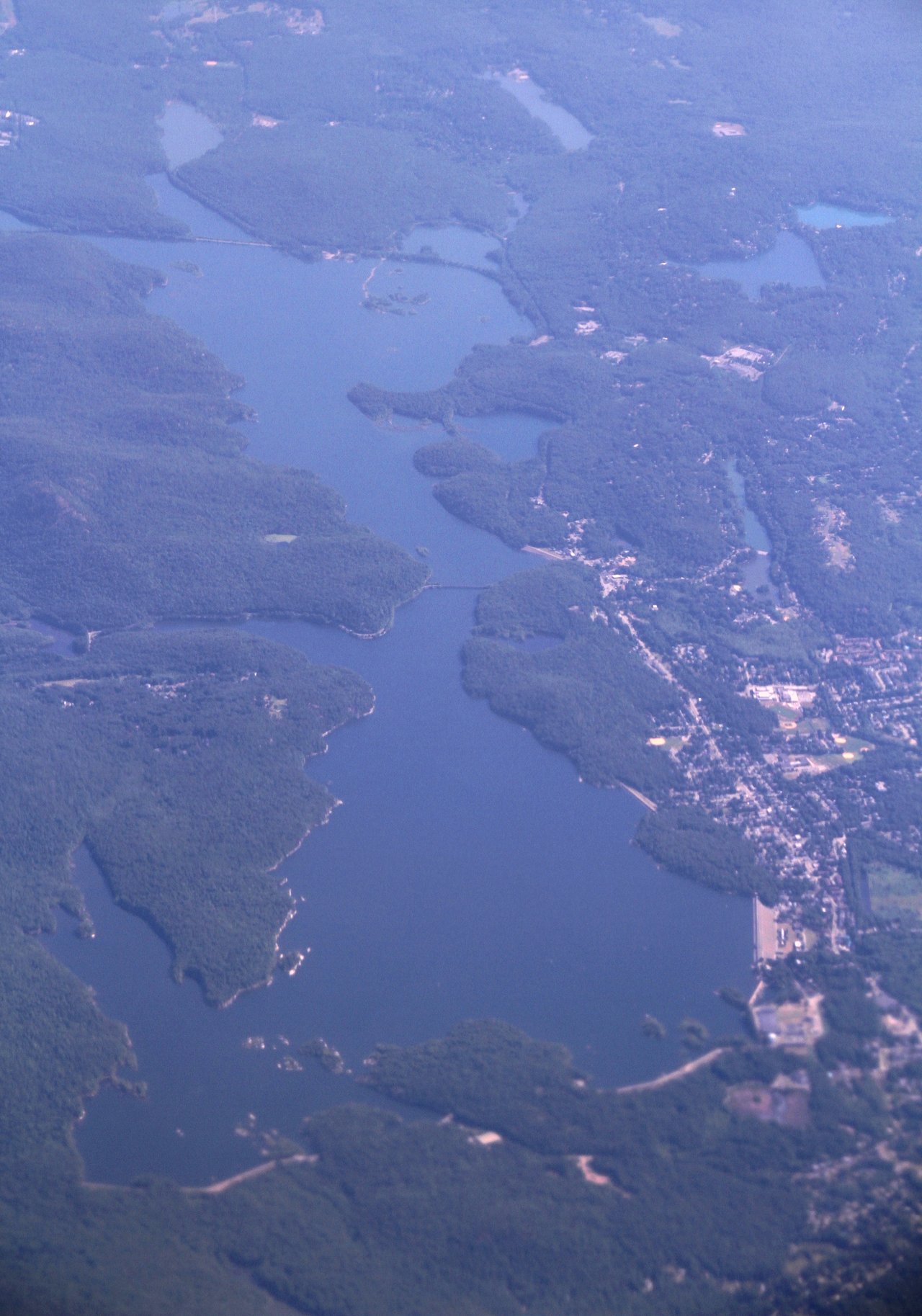
On the evening of Tuesday 11 January 1966, beginning around 6:20 pm and running to roughly 8:58 pm, a bright object was reported over the frozen Wanaque Reservoir, New Jersey's largest body of fresh water, with most of the activity centered on the Raymond Dam. This case file covers what witnesses reported, the official narrative, and a two-pass assessment with its evidence tier.
What did witnesses see at Wanaque Reservoir and Raymond Dam?
On the evening of Tuesday 11 January 1966, beginning around 6:20 pm and running to roughly 8:58 pm, a bright object was reported over the frozen Wanaque Reservoir, New Jersey's largest body of fresh water, with most of the activity centered on the Raymond Dam. The first alert reached Wanaque patrolman Joseph Cisco over the police radio as a report of a glowing light, possibly a fire, followed by relays that people in Oakland, Ringwood, Paterson, Totowa and Butler were calling in a flying object. Cisco drove to high ground and saw a brilliant white light, by his account bigger than any star, that he compared to the size of a softball or volleyball, hanging over the reservoir.
Witnesses described a very white, exceedingly bright light that did not flicker or twinkle and that at times shifted through red, blue and green. Several said it looked like ten bright stars clumped together. It hovered, glided low and oddly across the ice in a deliberate pattern, then at moments shot off at speed in complete silence before stopping and rising straight up. Estimates of altitude ran from a couple of hundred feet to around a thousand. The detail that fixed the case in local memory was the report that the object sent a beam of light down toward the ice. Reservoir employee Fred Steines described "a bolt of light" that "shot down from it as if attracted to the water, like a beam emitted from a portal." Over the police radio came the cry, "Something landed in front of the dam. Something's burning a hole in the ice! Something with a bright light on it, going up and down."
The list of named witnesses is unusually heavy with officials. Mayor Harry T. Wolfe watched with his fourteen-year-old son Billy, who said it was "just a continuous light that changed from white to red to green and back to white, but it didn't flicker." Councilmen Warren Hagstrom, Arthur Barton and John Shuttle were present. Hagstrom said, "We thought it was a helicopter, but we didn't hear a motor," and added, "We got goose bumps all over when we saw where the hole was." Civil Defense director Bentley Spencer and CD member Richard Vrooman were there. Reservoir police officer George Dykman said, "What the heck is it? Never seen anything like it in my life." Teenagers Michael Sloat, 16, and Peter Melegrae, 15, were among the civilian witnesses, along with a Newark College of Engineering student.
Sightings continued the following nights and again in the autumn. On 12 January patrolman Jack Wardlaw watched a bright white disc in the Stonetown section and said, "It shot laterally right and left. It stopped. It moved up straight. And then it moved down and disappeared. Don't ask me what it was, but I do know it wasn't any helicopter, plane, or comet." Reservoir guard Charles Theodora, a former Wanaque policeman, climbed the dam with Sergeant David Sisco and reported a cylinder-shaped object "moving back and forth like a rocking chair motion." Theodora, by his own account a former skeptic, said, "I didn't believe in UFOs, I thought they were a lot of bull. And then I saw it. It was a breathtaking sight, something I'll never forget." In October 1966 the activity resumed. On the night of 10 October, Pompton Lakes police sergeant Robert Gordon and others reported a saucer-shaped object, and reservoir police sergeant Ben Thompson, a six-year night-duty veteran, gave a long account of a blinding light over Windbeam Mountain that he said zig-zagged, hovered and stirred up water below it. On about 15 October, police chief John Casazza and a companion reported an elliptical object that looked, in Casazza's words, "flatter on the bottom and more roundish at the top," and in length "three times larger than the Moon."
What is the official explanation?
There is no single tidy official verdict on Wanaque, and that absence is itself part of the story. The local Civil Defense apparatus treated the first night seriously enough that, in the aftermath, radar was installed atop the reservoir dam. On the military side the answers were contradictory and kept changing. Stewart Air Force Base near Newburgh, New York at first floated a helicopter carrying a powerful beacon, then an officer there denied any such mission had flown. McGuire Air Force Base suggested a weather balloon released near Kennedy International Airport, then dropped that explanation. The Pentagon at one point offered a rare close alignment of the planets Venus and Jupiter. None of these was ever shown to fit the close-range, two-and-a-half-hour, maneuvering object that dozens of witnesses described, and the bases that were named as the source of overflying aircraft denied responsibility when pressed.
The most useful contemporary official-style document is the investigation by Lloyd Mallan for Science and Mechanics, published in 1967 as a three-part series and as the booklet "What Happened at Wanaque, N.J. (An Objective Look at UFOs)." Mallan was a hard-nosed reporter, not a believer, and he set out to puncture the story. He telephoned a long list of agencies and installations, including the U.S. Navy, the FAA, the U.S. Coast Guard and Wright-Patterson Air Force Base, to find who had sent the jets and helicopters that Pompton Lakes sergeant Robert Gordon said appeared over the reservoir roughly fifteen minutes after the main event. By his account every one of them denied knowledge of any such flights. Mallan's own booklet records that Project Blue Book had no file of interviews with the Wanaque Reservoir police, the borough police or the officials tied to the sightings.
That last point matters. Despite later loose claims that Wanaque was a Blue Book case, the 11 January 1966 mass sighting does not appear to have been formally opened as a numbered Project Blue Book file, and there is therefore no Blue Book evaluation such as "Identified," "Insufficient Data" or "Unidentified" attached to it. The civilian groups did the documentary work the Air Force did not. NICAP carried the case in its bulletin U.F.O. Investigator, Vol. III, No. 6 (January to February 1966), and NICAP staffer Gordon Lore travelled to the Wanaque police station to interview witnesses on film. The Aerial Phenomena Research Organization covered it in the APRO Bulletin, where the January to February 1967 issue carried the well-known statement by Pentagon spokesman Colonel George P. Freeman that men in uniforms or carrying government credentials had been silencing UFO witnesses and that these men were "not connected to the Air Force in any way." In 1979 the New Jersey investigative group Vestigia put forward a geophysical theory, arguing the lights came from electrical energy released by seismic strain on the nearby Ramapo Fault acting on quartz-bearing rock, a piezoelectric or earthlight idea that was never demonstrated to have produced the specific Wanaque object.
What did the witnesses think it was?
The witnesses, who included a sitting mayor, three councilmen, the Civil Defense director, multiple sworn police officers from two departments, reservoir guards and a police chief, were close to unanimous that what they saw was not a conventional aircraft, planet or weather effect. Patrolman Jack Wardlaw flatly ruled out the mundane candidates: "I do know it wasn't any helicopter, plane, or comet." Sergeant David Sisco said it "glided, then streaked faster than a jet, and when it rose, it went straight up." Charles Theodora, who came in as a self-described skeptic, walked away convinced he had seen something genuinely anomalous. Mayor Wolfe summed the night up as "terribly strange."
The strongest claimed corroboration is the alleged physical trace, the holes burned or melted in the reservoir ice directly beneath where the beam came down. Councilman Hagstrom's "goose bumps" line was specifically about seeing where one of the holes was. A witness interviewed decades later returned to the same detail, saying the beam "was the thing that got to me, it made the light cut the ice out." Reservoir police sergeant Ben Thompson, recounting the October activity, described an object so bright it blinded him and said it visibly disturbed the water and brush below as it maneuvered.
Witnesses also reported intimidation afterward. One man interviewed many years later said that in the days after the sighting "people came around to not say anything." That theme of pressure to keep quiet is consistent with the contemporary APRO reporting of credential-bearing visitors warning witnesses off, the so-called Men in Black phenomenon that ran through several 1966 cases, and with Colonel Freeman's on-record acknowledgment that such men existed and were not Air Force personnel. None of this proves an extraterrestrial origin, but the volume, the seniority and the consistency of the witnesses, and the fact that the people most responsible for the public safety of the town were among those who could not explain it, are why the case is still called the Roswell of the Ramapos.
The dispute
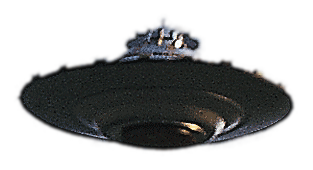
The dispute splits cleanly into two layers, and they must not be confused. The first layer is the famous photographs. A series of five black-and-white images, showing a disc-shaped object firing a bright searchlight beam down onto the ice, became the iconic visual of Wanaque after being published in Dell's magazine Flying Saucers UFO Reports around 1967. UFO photo analyst Vicente-Juan Ballester Olmos, one of the most rigorous image investigators in the field, published a detailed study, "The Wanaque Reservoir 1966 UFO Pictures," and concluded bluntly that "the photograph is a fake, the series is a fake." His method was documentary and photographic: no original negatives were ever produced, the surviving prints are reproductions of earlier prints rather than camera originals, the images lack camera data and witness chain, and the geometry and tonal range of the "beam" point to darkroom superimposition rather than a real luminous projection recorded in-camera. He further tied the series to August C. Roberts, a photographer with a documented record of UFO photo hoaxing, and found that the same or essentially identical images had circulated earlier as having been taken in Pennsylvania in 1961, only to be relabeled later as Wanaque, New Jersey, January 1966. The competing local claim, reported decades on, that a named local man shot the photos at the reservoir during the flap, does not resolve the contradiction, because the very same pictures already had a Pennsylvania 1961 provenance attached. On the photographs alone, the case for fabrication is method-shown and persuasive.
The second layer is the eyewitness event itself, and here the dispute is much weaker. The faked beam photographs do not retroactively discredit the multi-witness sighting, because the sighting was reported, radioed and written up by police, officials and newspapers before those photographs entered circulation, and the photos were an anonymous later submission, not the basis of the original reports. The genuine counter-explanations aimed at the sighting are the shifting official guesses, helicopter, weather balloon, a Venus and Jupiter conjunction, and the 1979 Vestigia piezoelectric earthlight theory. Each of these is an assertion or an unproven reconstruction rather than a demonstrated identification of the specific object. The military bases named as the source of the helicopters and jets denied the flights when Lloyd Mallan called them, the balloon and planet explanations were floated and then dropped, and the earthlight model was never shown to have produced the maneuvering, beam-projecting object the witnesses described over more than two hours.
So the honest position is split. The single most famous piece of evidence, the photo series, is a demonstrated hoax with a named likely source and a fatal date-and-place contradiction, and that is real, independent, civilian, method-shown debunk evidence. But it discredits an image, not the event. The underlying mass sighting still rests on a large body of senior, named, mutually corroborating witnesses and a claimed physical trace, with no method-shown identification of the actual object and no formal Blue Book closure. That combination, a clearly debunked centerpiece image sitting on top of a sighting that otherwise still stands, is why this is filed as Barely Disputed rather than anything stronger.
Is the Wanaque Reservoir Incident real? The two-pass assessment
Pass one, how this could be entirely ordinary. The flap ran across winter and autumn nights over open water ringed by hills, which is prime conditions for misperceived astronomical and aircraft lights. A brilliant non-flickering white point that some compared to clumped stars is consistent with a bright planet or star low on the horizon, and the Pentagon did at one stage point to a Venus and Jupiter alignment. Helicopters with landing or searchlights were operating in the region, Stewart Air Force Base initially owned and then disowned a beacon-equipped helicopter, and a hovering, slow aircraft with a downward light can read as a beam to ground observers. The "holes in the ice" need not be exotic, as a large reservoir constantly has thin spots, refreezing patches and pre-existing openings, and a hole noticed under a bright light at night invites a causal story that the light made it. The witness pool, while senior, was also primed by a fast-spreading radio and telephone alert that something was over the dam, which is exactly how a flap feeds on itself. And the strongest visual evidence, the beam photographs, is not weak ambiguous evidence at all, it is a demonstrated fabrication, shown by Ballester Olmos to be a Roberts-linked hoax recycled from a Pennsylvania 1961 attribution. A skeptic can assemble a fully ordinary Wanaque out of planets, helicopters, ordinary ice and one deliberate photo hoax.
Pass two, if real, what is it. Set the hoaxed photos aside, because they were never the event. What remains is a long-duration, multi-night, multi-location series of sightings reported independently by a mayor, councilmen, a Civil Defense director, sworn officers from at least two police departments, reservoir guards and a police chief, several of whom explicitly and angrily rejected the helicopter, plane, balloon and astronomical explanations after watching the object maneuver at relatively close range for more than two hours. The object reportedly hovered, made right-angle and vertical moves, departed at high speed in total silence, projected a beam, and on Thompson's October account visibly disturbed water and brush beneath it. Contemporary investigation strengthened rather than dissolved the mystery, with Mallan finding that no agency would claim the overflying jets and helicopters and that Blue Book held no file on the core witnesses, and with APRO and NICAP documenting the sightings and the post-event pressure on witnesses, up to Colonel Freeman's on-record admission that credential-bearing men not connected to the Air Force were silencing observers. If genuine, Wanaque is a classic 1966-era structured-craft-and-beam event, an unidentified object behaving under apparent control over a strategic water supply, never identified and never officially closed.
Weighing both passes, the tier is Barely Disputed. The case carries one piece of genuine, independent, method-shown debunk evidence, but it lands squarely and only on the famous photographs, which were a later anonymous and very likely fraudulent add-on, not the substance of the sighting. The actual mass event survives on a deep bench of named, senior, corroborating witnesses, a claimed physical trace, contradictory and abandoned official explanations, and the absence of any demonstrated identification of the real object. A debunked photograph plus unproven natural-explanation guesses is not enough to close a multi-witness, officer-corroborated sighting, so the case largely stands, with the photo fakery honestly flagged.
Sources
- www.nicap.org/660111wanaque_dir.htm
- www.academia.edu/35633047/THE_WANAQUE_RESERVOIR_1966_UFO_PICTURES
- docs.preterhuman.net/What_Happened_At_Wanaque,_N.J._(An_Objective_Look_At_UFOs)
- www.theufochronicles.com/2011/06/witness-to-wanaque-greastest-mass-ufo.html
- www.ufoexplorations.com/witness-to-wanaque-great-mass-ufo
- www.thinkaboutitdocs.com/1966-wanaque-reservoir-incident/
- weirdnj.com/stories/unexplained-phenomena/wanaque-reservoir-ufo/
- www.youtube.com/watch?v=5cjnWYqo47Y
More cases from this region: UFO sightings in United States