The Ariel School Encounter
On the morning of Friday 16 September 1994, at roughly 10:15, around 62 pupils of Ariel School, a private primary school in Ruwa about 20 km east of Harare, were on their mid-morning break. This case file covers what witnesses reported, the official narrative, and a two-pass assessment with its evidence tier.
What did witnesses see at Ariel School?
On the morning of Friday 16 September 1994, at roughly 10:15, around 62 pupils of Ariel School, a private primary school in Ruwa about 20 km east of Harare, were on their mid-morning break. The teachers were inside in a staff meeting, so there were no adult witnesses on the playground. Of the roughly 250 children outside, about a quarter reported seeing something beyond the playing field, and around 38 of the 62 who came forward said they saw one or more humanoid figures. The event lasted about fifteen minutes.
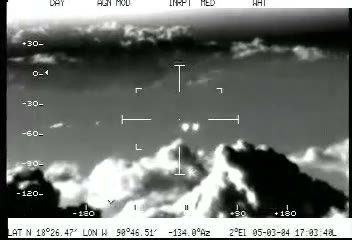
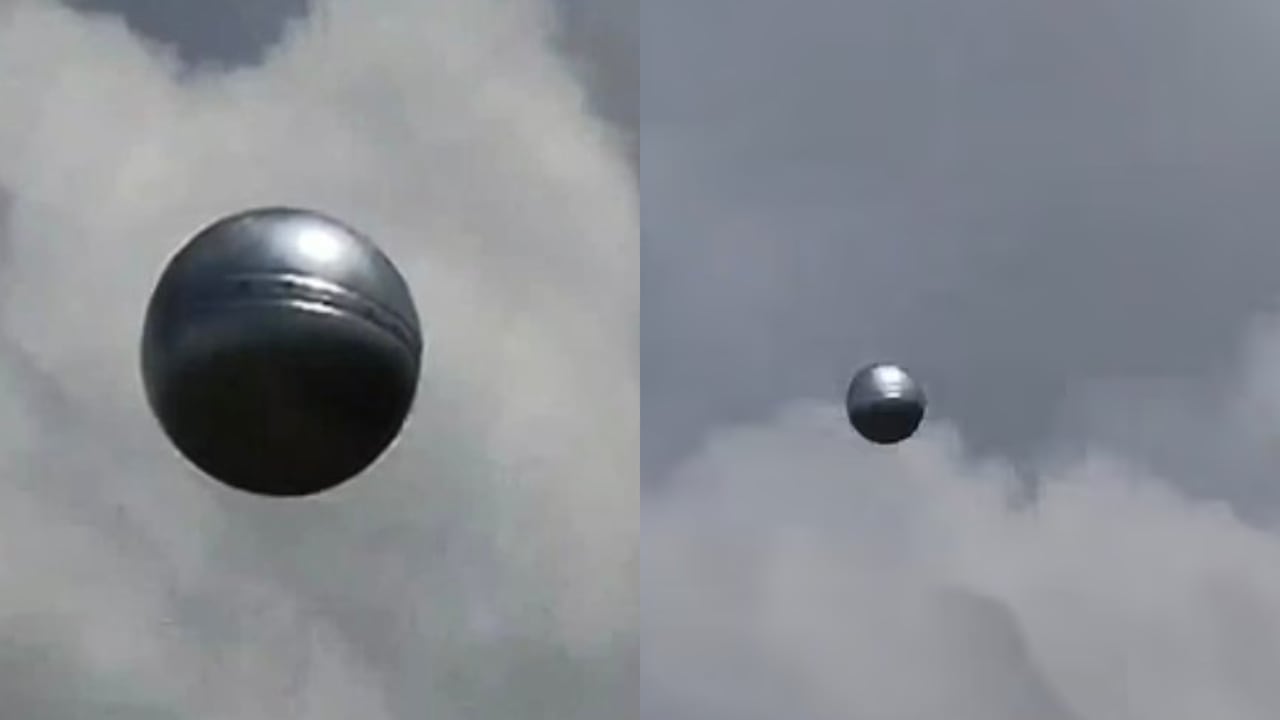
The earliest account, from Cynthia Hind's UFO Afrinews report, runs like this. The children saw three silver balls in the sky over the school. These disappeared with a flash of light and reappeared somewhere else. This happened three times. The objects then moved down toward the school, with one of them landing or hovering over a patch of rough ground made up of trees, thorn bushes, brown-grey cut grass and bamboo shoots, an out-of-bounds strip about 100 metres from the edge of the playing field. One eyewitness Hind named, Barry D., said he had seen three objects flying over with flashing red lights, which vanished and reappeared almost immediately about three times before landing near some gum trees. Barry said the main object was about the size of his thumbnail held at arm's length.
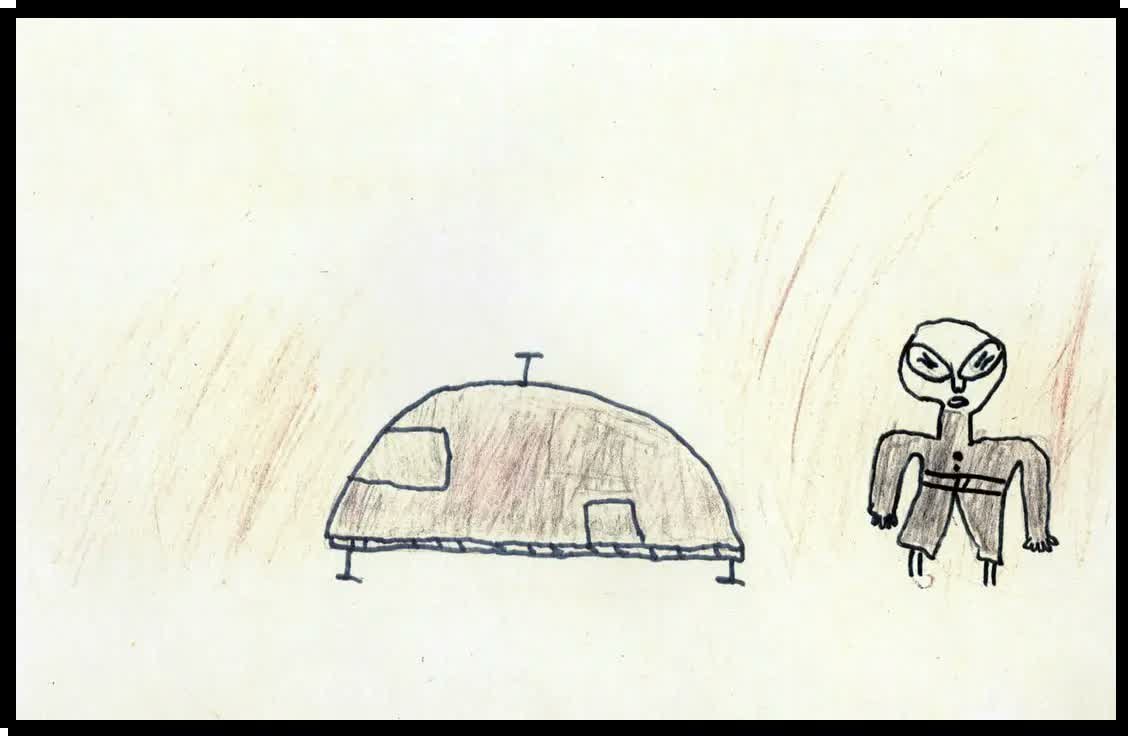
The consensus, in Hind's words, was that an object came down about 100 metres away, then a small man roughly one metre tall appeared on top of it. He walked a little way across the rough ground, became aware of the children, and disappeared, then he or someone like him reappeared at the back of the object before it took off very rapidly. Hind recorded that, according to one observant eleven-year-old girl, the little man was dressed in a tight-fitting black suit that was shiny, with a long scrawny neck and "huge eyes like rugby balls," a pale face and long black hair below his shoulders.
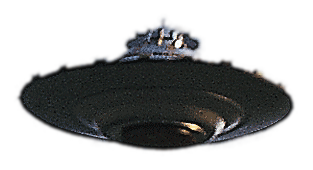
The children's own words, recorded on camera within days, are more varied than the legend suggests. A girl named Candace told a reporter, "We got closer and closer, and we saw this silver thing just shining. We thought that it was just a house with glass reflecting in the sun and shining. Then we thought, no, it can't be that, because there's no houses up there on the rocks." Another child told the BBC, "It looked like it was glinting in the trees. It looked like a disc. Like a round disc." Another said, "I saw something silver on the ground amongst the trees. And a person in black, and that's all I saw." Candace described a black figure "running in slow motion," and her friend Claire said, "One poked its head up and looked at me out of the grass." Munyaradzi said, "I looked like straight in the grass, just some like alien thing. He had big eyes." Salma Siddick, who said she was about a metre from one of the figures, described it as "definitely not a human. He had a big head and big black eyes and was dressed in a black bodysuit, tight-fitting," with arms and legs like a human's but a head much too big. Emily B. told Hind, "They kind of turned around and stared and then went back into a kind of like ship," and later told Mack the figures "seemed to have stiff necks, they didn't seem to move their necks like we can," and that one "ran normally like us, but bouncy as if a human would run on the moon." Nathaniel said, "One of them was running in the trees and the other was running across the ship," and Marle described "one person sitting on top of the ship guarding it, and another one running up and down like he was confused. And he was actually looking at us."
Emily Trim, one of the most consistent adult witnesses, recalled hearing "this high pitched frequency" and seeing "a flash in the sky" before the craft landed just outside the boundary logs. She said two beings presented themselves in front of her and her friend Lisl, and she experienced what she called telepathic communication, with "photographic images" fluttering in her mind, including an environmental warning about humans harming the world.
What is the official explanation?
There was never any government or military investigation. Zimbabwe had no official UFO body, and the children's teachers initially dismissed their account when the break ended. The "official" record of the case is entirely the work of civilian investigators, which makes the case unusual: it rests on testimony gathered in the field rather than on any state document.
The first investigator was Cynthia Hind, a Zimbabwe-based UFO researcher who edited the periodical UFO Afrinews and was the African representative for the Mutual UFO Network. She learned of the event from a ZBC radio report passed on by BBC correspondent Tim Leach, spoke to some children by telephone the day after, then visited the school on 20 September 1994. With the headmaster Colin Mackie's agreement, she asked the children to draw what they had seen before discussing it, and she interviewed a group she described as "10 or 12 of the older children" (Hind, MUFON UFO Journal No. 320, 1994, p. 7). She concluded the children had seen something real, noting that pupils from very different backgrounds produced similar drawings and descriptions even while interpreting the figures through their own cultural lenses, some thinking the small dark beings were tokoloshe or zvikwambo from Shona and Ndebele folklore. She wrote the case up across several outlets: UFO Afrinews issues 11 and 12 (1995), the MUFON UFO Journal (1994), the proceedings of the 8th BUFORA International UFO Congress at Sheffield (1995), and her book UFOs Over Africa (Horus House Press, 1996, chapter 15). Photographer Gunter Hofer accompanied the early investigation and later said he found "two oval shapes" and "a wedge-shaped marking" flattening the rock-hard, drought-baked grass at a spot where some children said an object had been on the Thursday, the day before.
Tim Leach, a hardened BBC war correspondent then based in Zimbabwe, filmed interviews with pupils and staff. He introduced his own footage as "a continuation of a possible UFO story," because he had already been chasing reports of lights seen across Southern Africa on the night of Wednesday 14 September. Leach said later that the case unsettled him deeply, a line widely quoted as "I could handle war zones, but I could not handle this." He died in 2011.
The most famous outside investigator was Dr John E. Mack, professor of psychiatry at Harvard Medical School and a 1977 Pulitzer Prize winner. Mack had published Abduction: Human Encounters with Aliens in April 1994 and was under formal review by a Harvard committee for his methods at the time. He arrived in Johannesburg on 18 November 1994, did public talks on alien abduction, then travelled to Ariel School and interviewed a small number of pupils individually and in pairs on 30 November, about two and a half months after the event. Mack characterised the wordless communication the children described as "telepathy" (Passport to the Cosmos, Crown, 1999, p. 43). Crucially, he never published a formal report on Ariel and gave it only passing mention in two books; the independent researcher Gideon Reid notes Mack "found no evidence of alien abduction," the real focus of his African trip. In 2023 Mack's recorded interviews and 104 pages of transcripts were donated to Rice University's Archives of the Impossible but had not been opened to researchers.
What did the witnesses think it was?
The witnesses, then aged roughly six to twelve, overwhelmingly believed they had seen a real craft and real beings, not a game or a story. Headmaster Colin Mackie, who did not see anything himself, has been careful and measured: "There were no adults who saw it, it was only children at the school, and all the children in the playground, something like 250 of them, and out of that only sort of 60 claim to have seen it." A teacher who collected the writing-book accounts said the children "all wrote completely different stories but they had seen the same thing," and that this is what convinced her despite her own skepticism.
As adults, several core witnesses have held to their accounts across decades. Salma Siddick, who placed herself about a metre from a figure, recalled it "moved but had no facial expression," and notably said she did not receive any telepathic message even at that range. Her friend Emma, standing beside her and later interviewed by Mack, said she did. Emily Trim, who died in November 2024, gave detailed first-person accounts for years, describing beings that were "reflective," with "large black eyes," "elongated heads," thin necks and limbs, that "were hovering, they weren't actually touching the ground," and an iridescent reptile-like skin, and she connected the experience to an environmental warning she felt impressed on her mind. Francis Chirimuuta, Lisl Field and others appear in the 2022 documentary Ariel Phenomenon maintaining their accounts. Tapfu and Kudzanai, two brothers, explicitly rejected the suggestion that it had been a misidentified rock, with Tapfu insisting, "It definitely was not a rock."
Against this stands one sharply contrary witness. A former pupil identified as Dallyn (also rendered Dallyn Vice) told the Netflix series Encounters (2023) that he had pointed at "a rock shining in the sun," called it a spaceship, and within thirty minutes the whole playground was in hysterics, saying in effect, "No, I didn't see the UFO, I made up the whole thing." Yet the same person had been recorded for the Ariel Phenomenon documentary years earlier describing himself as "witness to an event that I cannot fully explain," and other accounts place him apart from the main group of close witnesses. His two statements contradict each other, his confession has never been independently corroborated, and the great majority of named witnesses reject the rock explanation. A single estranged or shifting account does not wholesale discredit dozens of others, and it is weighed here as one disputed data point rather than a closing of the case.
The dispute
The strongest counter-explanation is the puppet hypothesis advanced by independent London-based researcher Gideon Reid in the peer-reviewed journal Scepticisme Scientifique (Comité Para, 2024), building on earlier skeptical work by Brian Dunning (Skeptoid, 2020), Gilles Fernandez (2016) and Chris Wiser's 2022 transcription project. Reid's method is to take the children's freely recalled details seriously and look for a prosaic stimulus that fits all of them. He documents that travelling development-theatre and puppetry groups were active in rural Zimbabwe in 1993 to 1994, including the African Research and Educational Puppetry programme and its Puppets Against AIDS tour, which used grey-faced, large-eyed "mobilisation puppets" up to two metres tall with fixed expressions, stiff necks turned on one plane, and a bobbing gait, transported in white Volkswagen T3 vans. He shows that the children's own descriptions, stiff-necked figures with a fixed staring gaze, bouncing "like a human would run on the moon," poking heads above grass, appearing directionless, match puppet construction and movement, and he places real puppet photographs beside the children's drawings of figures, a brick-patterned puppet booth and a tall "grey giant," noting the resemblance. He also weaves in the confirmed Cosmos 2290 rocket re-entry of 14 September 1994, identified by the Kettering Group from primary archives, as the priming event that made a regional population, and a BBC correspondent, expect alien craft.
Reid further documents real flaws in the investigation that inflate the case. Hind interviewed the children in chaotic groups in front of cameras, teachers and onlookers, where conformity is easy, and at one point fed a child the phrase "diving suit." The famous telepathic environmental message appears in no child interview before late November and was Mack's own characterisation, inferred from only about three of the twelve children he saw, after two and a half months of media exposure and during a trip where Mack, who had just written about nuclear war and environmentalism, was himself under Harvard review. Remarks by Lisel and another child that the figure might have been a gardener were dropped from the record. On this reading the children genuinely saw something they could not explain, then had it reshaped into grey-alien lore by biased adults.
What keeps this at Barely Disputed rather than Strongly Disputed is that Reid himself does not claim the case is closed. His paper states plainly that it is "sceptical that the Ariel School mystery is good evidence of alien visitation but argues that it is good evidence that a stimulus did exist," that the puppet idea is "not an open-and-shut case," and that "definitive answers... might never exist." No puppet troupe has ever been placed at Ariel on 16 September 1994, no performer has claimed responsibility, and Reid concedes some elements, such as the reports of objects and lights in the sky, do not map cleanly onto a daytime puppet show. The separate "it was a shining rock" claim from the former pupil Dallyn is uncorroborated and contradicted by his own earlier on-camera statement that he witnessed something he could not explain, so it cannot bear the weight of a debunk either. The skeptical case is serious, specific and method-shown, and it substantially undercuts the alien interpretation, but it remains an unproven hypothesis sitting against dozens of consistent contemporaneous child accounts and Gunter Hofer's photographs of ground impressions, so the case largely stands rather than collapsing.
Is the Ariel School Encounter real? The two-pass assessment
Pass one, how this could be entirely ordinary. The setting is unusually favourable to a mundane explanation that nonetheless produced a genuine reaction. Two nights before, a confirmed Cosmos 2290 rocket re-entry lit up the sky across five countries and was openly identified by the Kettering Group and the BBC, and a BBC correspondent then broadcast an alien-mothership framing with an appeal for sightings, seeding a regional UFO panic. The children were primed. They were 100 to 200 metres from a brushy, tree-covered strip, with only some of them having a clear view, jostling for position, looking at a glinting light and partly hidden figures. The contemporaneous descriptions are far more varied than the legend admits, and several early remarks point at something prosaic, a "house with glass reflecting in the sun," a man who "almost looked like a real person," a possible gardener. Gideon Reid's peer-reviewed puppet hypothesis supplies a specific, period-correct, method-shown candidate stimulus: travelling development-theatre puppets, grey-faced, big-eyed, stiff-necked, bobbing through the grass, of exactly the type touring Zimbabwe in 1993 to 1994, with drawings that line up against real puppet photographs. The most famous element, the telepathic ecological message, demonstrably did not exist in the record until Mack's biased, late, leading interviews. And one former pupil has said outright it was a shining rock. A hoax-free combination of a real but misread stimulus plus poor, suggestive investigation can account for much of the case.
Pass two, if it is real. If the core witnesses are right, this is one of the largest and best-attested close encounters of the third kind on record: dozens of children, gathered within days, producing convergent drawings and descriptions of a landed silver disc and small dark-suited beings with oversized eyes, plus a photographer's record of oval and wedge-shaped ground impressions. The witnesses were too young to have a coherent motive to sustain a fabrication for thirty years, several have held firm into adulthood, and they came from diverse cultural backgrounds yet described the same physical form while interpreting it differently. Salma's account of standing a metre from a being and Emily Trim's detailed, consistent recollections are hard to reduce to a distant puppet seen through grass. If genuine, it would be an occupant case implying a structured craft and non-human entities operating in daylight beside a schoolyard.
Weighing the two: the skeptical case is strong, multi-stranded and, in Reid's paper, genuinely method-shown, but its key planks remain unproven. No puppet troupe has been placed at Ariel, no one has claimed the prank, the single confession is contradicted by the same witness's own earlier words and is uncorroborated, and the physical impressions and the volume of consistent contemporaneous child testimony are not dissolved by any one of these explanations. This is therefore a case with a serious, well-argued counter-explanation that largely undercuts the alien interpretation without settling the matter, which is the definition of Barely Disputed.
Sources
- www.ufoevidence.org/cases/case127.htm
- revue.comitepara.be/wp-content/uploads/2024/10/Scepticisme_Scientifique_12_2024_SI.pdf
- skeptoid.com/episodes/4760
- skepticalinquirer.org/2025/10/a-closer-look-at-emencounters-em-and-the-ariel-school-sighting/
- www.vice.com/en/article/encounters-netflix-zimbabwe-ufo-sighting/
- whyy.org/segments/documentary-explores-the-ufo-sighting-that-changed-the-course-of-62-childrens-lives/
- www.thezimbabwean.co/2022/05/never-before-seen-photos-reveal-extraordinary-wedge-shaped-impressions-and-oval-imprints-left-in-a-grass-field-by-ufos/
- gideonreid.co.uk/the-mysterious-events-at-ariel-school-zimbabwe-16-sept-1994/
- web.archive.org/web/20260421045857/https://www.jar-magazine.com/encounters/89-through-their-eyes-ariel-school-encounter
More cases from this region: UFO sightings in Zimbabwe