The Father Gill Sightings at Boianai
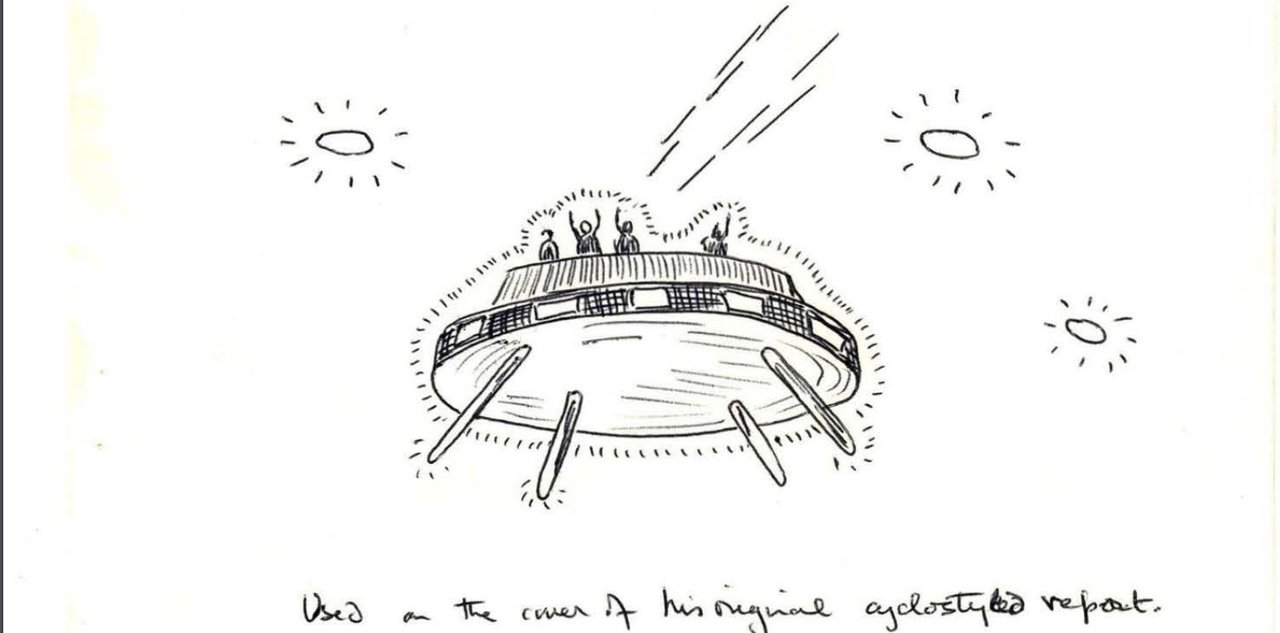
On the evening of Friday 26 June 1959, Rev. William Booth Gill, the Anglican missionary in charge of the station at Boianai on the north shore of Goodenough Bay, walked out of the mission house at about 6:45 p.m. and saw a brilliant white light in the western sky over the sea. This case file covers what witnesses reported, the official narrative, and a two-pass assessment with its evidence tier.
What did witnesses see at Boianai Anglican Mission?
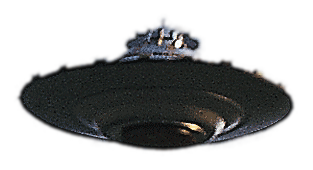
On the evening of Friday 26 June 1959, Rev. William Booth Gill, the Anglican missionary in charge of the station at Boianai on the north shore of Goodenough Bay, walked out of the mission house at about 6:45 p.m. and saw a brilliant white light in the western sky over the sea. He had noted Venus earlier and was specific about it later: "I saw Venus, but I also saw this sparkling object which to me was peculiar because it was very, very bright." As he watched, the bright point resolved into a large structured craft. He described it as circular with a wide base and a narrower upper deck, standing on what looked like four legs underneath, roughly the apparent size of five full moons at about thirty degrees elevation in the west-north-west. He estimated its apparent diameter as about five inches held at arm's length; the teacher Stephen Gill Moi said he could cover about half of it with a closed fist.
Gill called others out, and a crowd gathered that he and Cruttwell later put at thirty-eight people. On top of the disc, on what looked like a deck, human-shaped figures appeared. Gill's contemporaneous data sheet for 6:55 p.m. reads in clipped notes: "One object on top, move, man? Now 3 men, moving, glowing, doing something on deck. Gone." The figures came and went, sometimes one, sometimes two, three or four. Two of them "seemed to be doing something near the centre of the deck, were occasionally bending over and raising their arms as though adjusting or setting up something." A shaft of blue light shone upward from the centre of the deck at an angle of about forty-five degrees into the sky at intervals. The object changed colour as it moved, from brilliant white when distant to a dull yellow or pale orange when it came close, and smaller objects were seen as well. The main object was watched, on and off, until about 10:50 p.m.
The second evening, Saturday 27 June, was the famous one. The big craft reappeared just after 6:00 p.m., first spotted by a woman the records call "Annie Laurie," with Gill logging it at 6:02 p.m. Four figures were again on the deck. This time Gill tried to make contact. As he wrote, "I stretched my arm above my head and waved. To our surprise the figure did the same. Ananias waved both arms over his head; then the two outside figures did the same." The arm-waving from the deck was repeated and was witnessed by the crowd. Gill sent the boy Eric Kodawa for a torch and signalled a series of long dashes toward the object; "the U.F.O. apparently acknowledged by making several wavering motions back and forth." The figures dipped out of sight below the deck and reappeared. The witnesses called out and beckoned the craft to come down, but no sound ever came from the men or the machine. By about 7:00 p.m. the object looked smaller and cloud was moving in, so Gill and the mission party broke off and went in to the evening church service. Twenty-five of the witnesses, including five Papuan teachers and three medical assistants, signed a written account.
What is the official explanation?
There was no full scientific board of inquiry. The Royal Australian Air Force, which had jurisdiction because Papua was then an Australian territory, did not interview Gill until 29 December 1959, roughly six months after the events. The assessment was written by the senior interviewing officer, Squadron Leader F. A. Lang. His conclusion, frequently quoted from the RAAF file, hedged in both directions: "Although the Reverend Gill could be regarded as a reliable observer, it is felt that the June/July incidents could have been nothing more than natural phenomena coloured by past events and subconscious influences of UFO enthusiasts. An analysis of rough bearings and angles above the horizon does suggest that at least some of the lights observed were the planets Jupiter, Saturn and Mars." The wording is important. The RAAF did not produce a worked reconstruction showing that the large, structured object was a planet; it asserted that "at least some of the lights" matched planetary positions and let the rest stand under a general appeal to suggestion and excitement. That is an official assertion, not a method shown for the primary object.
The serious documentation came from the church and from civilian researchers. Gill's own immediate report began with the line that made the case famous: "Last night we at Boianai experienced about four hours of UFO activity, and there is no doubt whatsoever that they are handled by beings of some kind." His superior on the mission, Rev. Norman E. G. Cruttwell, collected the statements and the signed witness list into a forty-five-page typed report titled "Flying Saucers Over Papua: A Report on Papuan Unidentified Flying Objects," dated March 1960, later republished in Britain in Flying Saucer Review Special Issue No. 4 in August 1971. In the United States the case was taken up by Dr. J. Allen Hynek and the Center for UFO Studies. Hynek's associate Fred Beckman travelled to Papua and went to Boianai with Gill. Hynek described Gill as "a painstaking, methodical, and unexcitable person, just the sort to stand calmly by and take notes," and his analysis separated the lesser lights from the main object: the smaller UFOs could be bright stars or planets, but the primary craft, given its apparent size and its near-stationary presence over roughly three hours, could not be reduced to an astronomical body. The official Australian finding and the civilian finding therefore point in opposite directions, and neither side recovered a single physical trace.
What did the witnesses think it was?
William Booth Gill (1928 to 2007) was not a fringe enthusiast. He was an ordained Anglican priest running a remote mission, trained and literate, and his contemporaries described him as sober and careful. He kept a running log during the sightings rather than relying on memory, which is why the case comes with timed entries rather than a single dramatic story told afterward. His co-witnesses were named and were people of standing in the community: the teachers Stephen Gill Moi and Ananias Rarata, Mrs Nessie Moi, the lad Eric Kodawa, the teachers Ilma Violet and Dulcie Freda, plus medical assistants. Cruttwell's report carries twenty-five signatures. When later investigators tracked down surviving witnesses years afterward, the accounts held together rather than collapsing.
Gill's own beliefs are more careful than the legend suggests, and they cut against the idea that he was primed to see spacemen. He did not insist the figures were extraterrestrial. In his early letters he wondered whether the men on the deck might be ordinary earth-men, even American or Australian pilots in some craft he did not recognize, writing that he would "prefer to wait for some bright boy to catch one." What he would not retract was that he had seen a solid object handled by physical beings who responded to him. The waving is the crux of his testimony. He and Ananias raised their arms and the figures on the deck raised theirs back, repeatedly, in twilight bright enough to see by, and the torch signals drew answering motion from the craft. This is firsthand, two-way, and corroborated by the crowd standing with him.
On the single point the chief skeptic leaned on hardest, his eyesight, Gill answered directly. Donald Menzel argued the priest was a near-sighted man squinting at Venus without his glasses. Gill stated in a 1973 letter to Hynek that he wore properly corrected spectacles: "I automatically put them on whenever I want to see with clarity at a distance." Beckman, who had met him, confirmed it. Gill had also pointed out Venus separately, as a different object in the sky, the same night, which is hard to square with the claim that Venus was the thing he was waving at. He never recanted and never confessed a mistake, and he stayed consistent until his death in 2007.
The dispute
The dispute is entirely about whether the lights, and especially the large structured object with figures, were misidentified astronomical bodies seen through cloud, plus a measure of suggestion in an excited crowd. The official version came from the Royal Australian Air Force. Squadron Leader F. A. Lang, after interviewing Gill on 29 December 1959, wrote that the incidents "could have been nothing more than natural phenomena coloured by past events and subconscious influences of UFO enthusiasts," and that rough bearings suggested "at least some of the lights observed were the planets Jupiter, Saturn and Mars." Crucially, Lang allowed that Gill "could be regarded as a reliable observer" and did not produce a worked reconstruction tying the main craft to a planet. He covered the lesser lights and waved at the rest. That is an assertion of cause, not a method shown for the primary object.
The strongest civilian skeptic was the Harvard astronomer Donald H. Menzel, who argued the bright object was Venus near peak brightness and that the four figures were out-of-focus images of Gill's eyelashes, on the assumption that the priest was myopic and astigmatic and not wearing his glasses, with the blue shaft attributed to cloud. This collapses on its own premises. Gill stated in a 1973 letter to Hynek that he wore corrected spectacles and put them on automatically to see clearly at distance, a point confirmed by Hynek's associate Fred Beckman, who had been to Boianai with Gill. Gill also explicitly pointed out Venus as a separate object in the sky the same night, which is incompatible with Venus being the thing he watched and waved at. Allan Hendry of CUFOS offered a more disciplined Mercury-and-Venus reading, and Steuart Campbell argued for a sequence of planetary mirages, but neither accounts for the structured disc, the four figures, the answering waves, or the multi-hour duration witnessed by a crowd.
The most concrete alternative is Martin Kottmeyer's 1995 Magonia proposal that the object was a brilliantly lit squid-fishing boat, its rigging mistaken for the angled blue shaft and its working crew for the waving figures. It is the only theory that tries to name a real physical object, but Kottmeyer never identified a specific vessel, logbook or skipper, called it a "perceptual puzzle" rather than a solution, and ended by asking whether anyone has a better idea. It also struggles with the reported thirty-degree elevation of the object, well above where a surface boat would sit, and with the fact that no one in a coastal mission community recognized a fishing boat over two nights. Because none of these advances a confession, a recantation, recovered props, or a positively identified specific object or launch, the dispute is real but unproven. The counter-explanations are contested astronomical assertions and one unverified boat hypothesis, so the case lands at Barely Disputed and largely stands.
Is the Father Gill Sightings at Boianai real? The two-pass assessment
Pass one, the ordinary readings. Several skeptics have tried to dissolve the case into astronomy and atmosphere. Donald Menzel proposed that the bright object was Venus near maximum brilliance, and that the four "men" were out-of-focus images of Gill's own eyelashes produced by myopia and astigmatism, with the blue shaft an effect of cloud. The RAAF's Squadron Leader Lang attributed "at least some of the lights" to Jupiter, Saturn and Mars seen through broken cloud. Allan Hendry, the careful CUFOS investigator, floated a Mercury-then-Venus reading, noting that the main object's disappearance never outlasted the time Venus set. Steuart Campbell argued for a chain of mirages of Mercury, Mars and Venus. Martin Kottmeyer, writing in Magonia in November 1995, proposed something more concrete: a brilliantly lit squid-fishing boat with rigging, nets and portholes, the rigging mistaken for the blue shaft and the busy crew for the figures who "waved back." Each of these is an attempt to identify an ordinary cause.
Pass two, if it is real. The witnesses say they watched a structured, legged disc the apparent size of five moons, sitting near-stationary over the sea for hours across two nights, with human-shaped figures moving on a deck who returned their waves and answered a torch. That is a close encounter of the third kind with a named, sober, note-taking primary witness and roughly two dozen co-signing witnesses, including teachers and medical staff. If the testimony is taken at face value, this is one of the best-attested occupant cases on record, which is why a 1979 poll of ufologists ranked it among the strongest pieces of UFO evidence.
Now weigh the dispute against the discredit bar. Nobody confessed. No witness recanted; Gill held his account for nearly fifty years. No hoax props were recovered, and no specific real-world object was ever positively identified and tied to this sighting. Menzel's Venus theory founders on Gill wearing corrected glasses and pointing out Venus separately as a distinct object, and on the main craft's size and three-hour near-stationary presence, which Hynek judged could not be a planet. Kottmeyer's squid-boat is ingenious but is his own admitted "puzzle," with no identified vessel, no logbook, and no explanation for why the object stood at thirty degrees elevation rather than on the horizon where a boat would be. These are contested counter-explanations and an unsupported official assertion, not a demonstrated identification. That is the textbook profile of a case that is disputed but still standing. The official and civilian challenges are real enough to log, but weak enough that the case is not closed. Tier: Barely Disputed.
Sources
- ufologie.patrickgross.org/htm/papua59report.htm
- ufologie.patrickgross.org/htm/papua59.htm
- malcolmsanomalies.blogspot.com/2012/03/ufos-over-boiani-in-father-gills-own.html
- radiantufo.blogspot.com/2012/05/reverend-william-gill-papua-new-guinea.html
- magoniamagazine.blogspot.com/2013/12/gill-again-father-gill-case-reconsidered.html
- www.theblackvault.com/casefiles/father-gill-1959-papua-new-guinea-ufo-sighting/
- closeencounterproject.wordpress.com/papua-new-guinea-sighting/
- www.thinkaboutitdocs.com/father-gill-papua-new-guinea-sighting/
More cases from this region: UFO sightings in Papua New Guinea