The Gimhae Airport UFO Incident: Three Green Lights Shut a Busan Runway (19 May 2026)
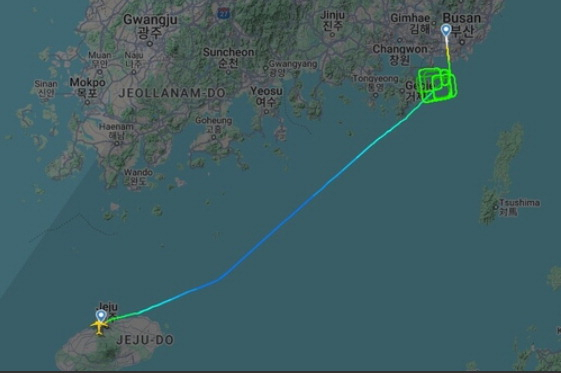
On the night of 19 May 2026 the South Korean Air Force stopped all traffic at Gimhae International Airport in Busan for 46 minutes after a serviceman reported an unidentified craft over the base. A Korean Air flight inbound from Nagoya held for an hour, diverted, and took ten hours to deliver its passengers to a city ninety minutes away. The police closed the case as a light mistaken for a drone. The Air Force declined to agree with them.
What did witnesses see at Gimhae International Airport?
Gimhae International Airport in Busan stopped all takeoffs and landings for 46 minutes on the night of Tuesday 19 May 2026. The reason was an unidentified object reported over the adjoining air force base about an hour earlier, which nobody was ever able to find.
The first report came in at around 20:00 local time. A serviceman stationed at the air base that shares the field with the civil airport said he had seen an unidentified flying object he took to be a drone. Gimhae is not an ordinary airport for this kind of report. It is a national security facility with a no-fly radius of 9.3 kilometres, it hosts a Republic of Korea Air Force base, and air traffic control authority over the field belongs to the Air Force rather than to a civil agency.
At 21:14 the ROKAF 5th Air Mobility Wing, which holds that control authority, suspended all takeoffs and landings. The suspension ran until 22:00, a window of 46 minutes, and was lifted only once no further sighting had been made. Korea Airports Corporation recorded the result as one diversion and six delays, four departures and two arrivals.
The diversion is the part of the night that is documented minute by minute, because it happened to a scheduled airliner full of people. Korean Air flight KE2134 from Nagoya was due into Gimhae at about 21:30. It held near Geoje Island, southwest of Busan, for roughly an hour, gave up, and diverted to Cheongju in the centre of the country. It refuelled there and turned back for Gimhae, but by then it was running into the airport curfew that closes the field at 23:00. Korean Air asked the Busan Regional Aviation Administration to extend the curfew and was refused. The aircraft went to Incheon instead, and its 150 or so passengers were put on chartered buses that reached Busan at about six the following morning. A flight of ninety minutes had taken ten hours.
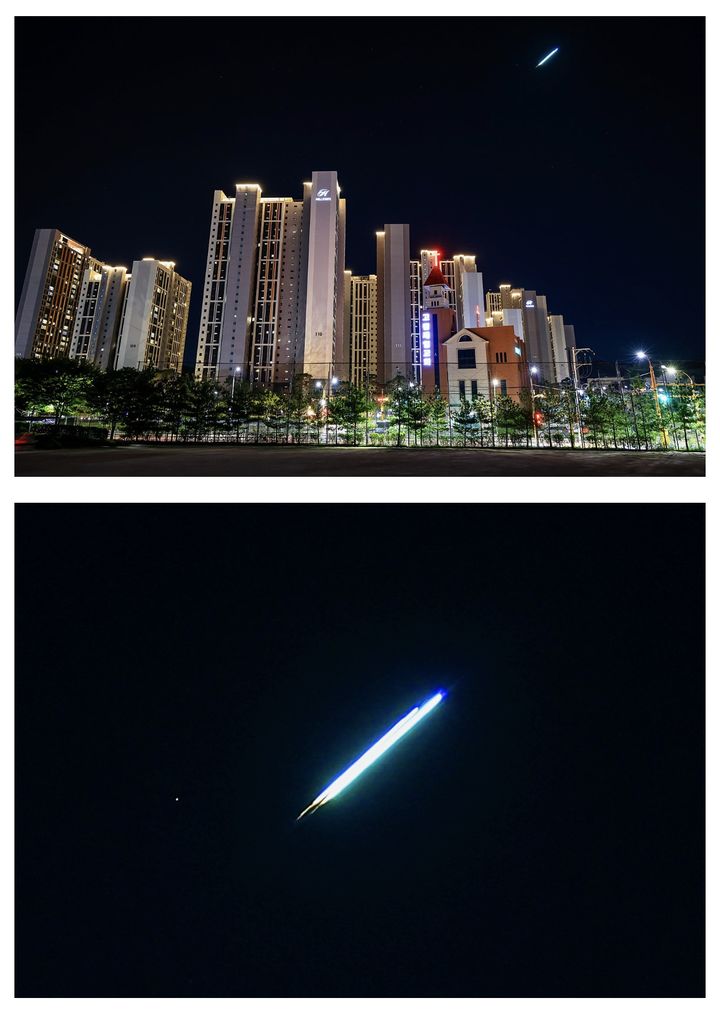
What the witnesses on the ground actually described did not reach the public for another two and a half months. On 1 August 2026 the SBS investigative programme Unanswered Questions, in its 1498th episode, broadcast an account from servicemen who were on the base that night. One said that at about nine in the evening he watched lights pass over his barracks: not one light but three, moving in formation, at roughly the height of a ten storey apartment building, and glowing green. A second witness played internal military radio traffic from the night, in which a real situation was declared, officers were deployed, and a counter terrorism special mission platoon was sent out. On that account the object evaded trained Air Force personnel for around two hours before disappearing.
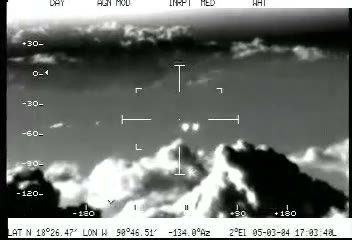
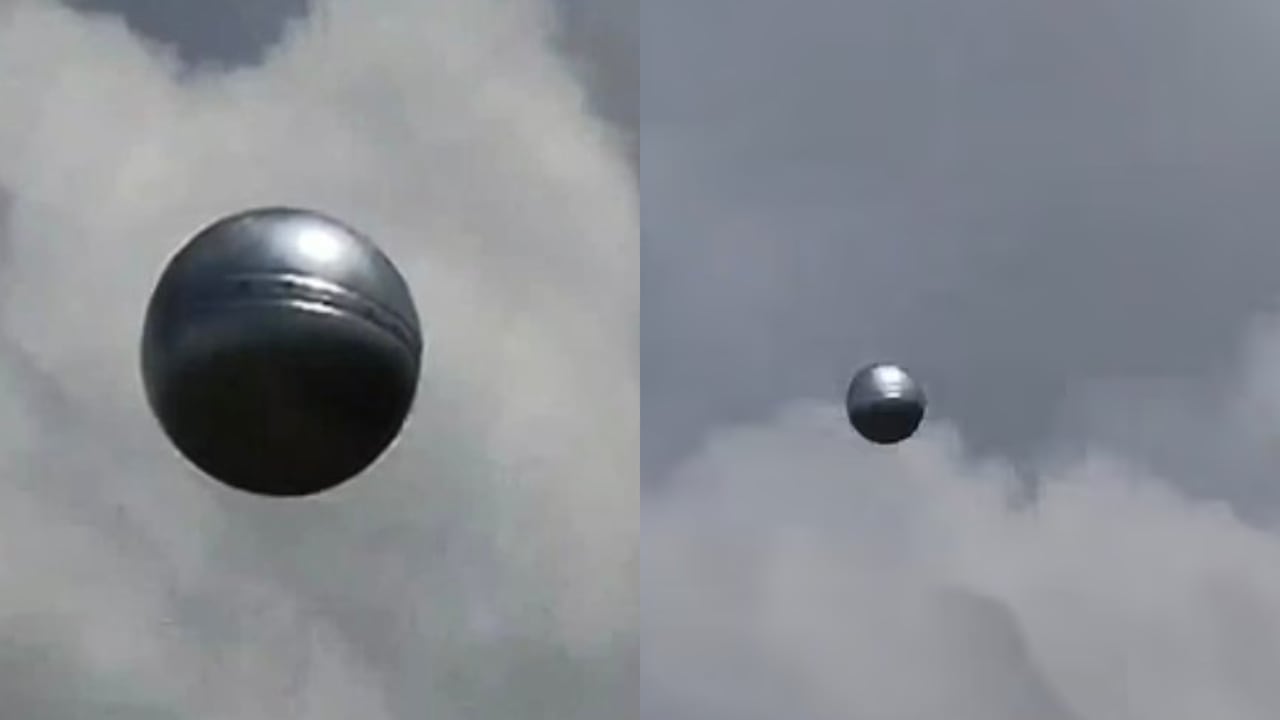
More footage and images of this sighting
What is the official explanation?
There are two official positions on this incident and they do not match. That disagreement is the case.
The police position came first and closed the file. Gangseo Police Station in Busan told Yonhap on 20 May that the matter was finished, and attributed the reasoning to the military: the Air Force, a station official said, had conveyed the opinion that there was no anti aircraft suspicion and that a simple light appeared to have been misreported as a drone. The same official added that investigators would keep checking the facts with the person who made the report.
The Air Force then declined to endorse that summary of its own view. Asked directly by the Busan Ilbo, the service said that the situation was over but that it had not concluded whether this had been a drone mistake. Its separate public statement is narrower still and claims nothing about what the object was: a unit serviceman reported witnessing an unidentified flying object suspected of being a drone, the Air Force patrolled with the police, and no illegal drone was detected.
Read carefully, the Air Force has only ever confirmed three things. Someone on the base saw something. A search was carried out. Nothing was found. The identification as a misperceived light belongs to the police account of what the military told them, and the military would not repeat it on the record.
No Korean agency has since issued a finding. There is no AARO equivalent in South Korea to refer such an event to, and the Ministry of National Defence has published nothing on it. The incident entered the public record instead through aviation safety reporting: when Korea Airports Corporation and related bodies supplied drone disruption figures to the National Assembly in August 2026, the Gimhae runway closure of 46 minutes in May appeared in the tally of illegal drone incidents, which quietly files it under an explanation the Air Force never confirmed.
What did the witnesses think it was?
The witnesses in this case are unusually well placed and unusually hard to check, for the same reason: they are serving military personnel, and they spoke anonymously.
The primary witness is the serviceman whose report triggered the shutdown. He is unnamed in every account. What is known about him is structural rather than personal, and it matters: he was on duty at an active air force base attached to a busy international airport, which means aircraft landing lights, navigation strobes and helicopter traffic are the visual background of his working life. That is the population least likely to call in an ordinary approach light, and it is also the population whose report an air wing will act on within the hour, which is what happened.
The second witness, who appeared on the SBS broadcast, adds the detail that makes the case a UAP case rather than a drone scare. Three lights, in formation, green, at about the height of a ten storey building. Three coordinated objects is a materially different claim from one drone, and it is the claim the official record never engages with at all.
The third witness contributed the strongest piece of evidence in the case and it is not testimony. He supplied internal military radio traffic from the night, which SBS broadcast. Radio traffic is a contemporaneous record made by the responders themselves, not a memory recalled months later, and what it captures is the base treating this as real: a real situation broadcast, command staff deployed, and a counter terrorism special mission platoon sent out. Whatever was or was not in the sky, the response was not the response to a light.
Against that, three limitations have to be stated plainly. No witness is named, so none can be questioned. No photograph or video of the objects themselves has been published by anyone, only the account of them. And the recording quoted on air has not been released in full or independently authenticated, so it rests on the programme and on the person who supplied it.
The passengers of KE2134 are witnesses to something else entirely and their evidence is the least disputed in the case. They did not see the object. They saw an international airport stop.
Is the Gimhae Airport UFO Incident: Three Green Lights Shut a Busan Runway (19 May 2026) real? The two-pass assessment
Pass one, how this could be entirely ordinary.
The official candidate is a light misread as a drone, and it deserves the first look because the police thought it was likely. The problem is that nothing in the environment supplies a good candidate light. The weather rules out the atmospheric ones: the METAR record for RKPK, which is Gimhae itself, reads CAVOK at 19:00, 20:00, 21:00, 22:00 and 23:00 local, with winds of 4 to 6 knots. CAVOK means no cloud below 5,000 feet and visibility of 10 kilometres or better, so there was no cloud deck to catch a beam, no haze, and nothing for a searchlight to paint. The Moon is out too. On 19 May 2026 it was a waxing crescent 8 percent illuminated, and while it did not set until 22:33 it was a thin sliver low in the west, which is neither bright enough to be mistaken for an intruder nor capable of being three objects.
A drone is the obvious remaining candidate and it may well be the answer, but it is worth being clear that it is an unproven one. Gimhae runs its own radar and electro optical and infrared cameras against drone incursions, and neither those systems nor the joint ground search with the police detected anything. The airport has no radio frequency based detection, which is the system that finds a drone by its control link, so the absence of a detection is weaker evidence than it sounds. The honest form of the drone hypothesis is that a drone would have been invisible to the equipment installed, which explains the null result without providing any positive evidence.
Aircraft are the last ordinary candidate and the least likely, given who the witness was and given that the field had been shut, though an aircraft on approach at another field can be misjudged for altitude at night.
Pass two, what this is if the accounts are accurate.
The claim to be weighed is three lights in formation, green, low, holding an area over a defended airfield for around two hours while trained personnel tried and failed to locate them. Formation flight of three objects is the detail that separates this from the ordinary drone incursions South Korea logs regularly. It implies either multiple coordinated craft or a single structure carrying three lights, and neither is a hobbyist. Two hours of persistence over a no fly zone with an air wing hunting is a long time for a consumer drone battery.
The context that has to be stated alongside it is that South Korea has a real and growing drone problem near its airports, which cuts both ways. Data supplied to the National Assembly shows 159 flights disrupted in the first half of 2026 alone by illegal drones at Gimpo and Jeju, against 72 in the whole of 2025, and 42 detections near military airfields between 2021 and 2024 producing just four arrests. So an unidentified object over a Korean airport is common, and a Korean airport failing to identify one is common too. That frequency argues for a mundane intruder. It also demonstrates that the detection systems routinely fail to resolve what they are looking at, which is precisely why an unexplained case here cannot be assumed to have been resolved offstage.
What would settle it: the full radio traffic released and authenticated, the 5th Air Mobility Wing radar tapes for 20:00 to 22:00 on 19 May 2026, or any imagery from the airport electro optical and infrared cameras. None of that has been published. Until it is, the case sits where the two official bodies left it, with the police calling it a misperceived light and the Air Force declining to say so.
Sources
- www.yna.co.kr/view/AKR20260520042902051
- n.news.naver.com/mnews/article/001/0016089616
- www.busan.com/view/busan/view.php?code=2026052018225085425
- n.news.naver.com/mnews/article/082/0001381748
- www.youtube.com/watch?v=D_bnyqdsgdA
- n.news.naver.com/mnews/article/079/0004174452
- n.news.naver.com/mnews/article/055/0001377284
- n.news.naver.com/mnews/article/020/0003744385
- n.news.naver.com/mnews/article/018/0006348369
- n.news.naver.com/mnews/article/022/0004149388
- mesonet.agron.iastate.edu/cgi-bin/request/asos.py?station=RKPK&data=metar&year1=2026&month1=5&day1=19&year2=2026&month2=5&day2=20&tz=Asia%2FSeoul&format=onlycomma&report_type=3&report_type=4
- aa.usno.navy.mil/api/rstt/oneday?date=2026-05-19&coords=35.1795,128.9382&tz=9
More cases from this region: UFO sightings in South Korea