The Gorman Dogfight
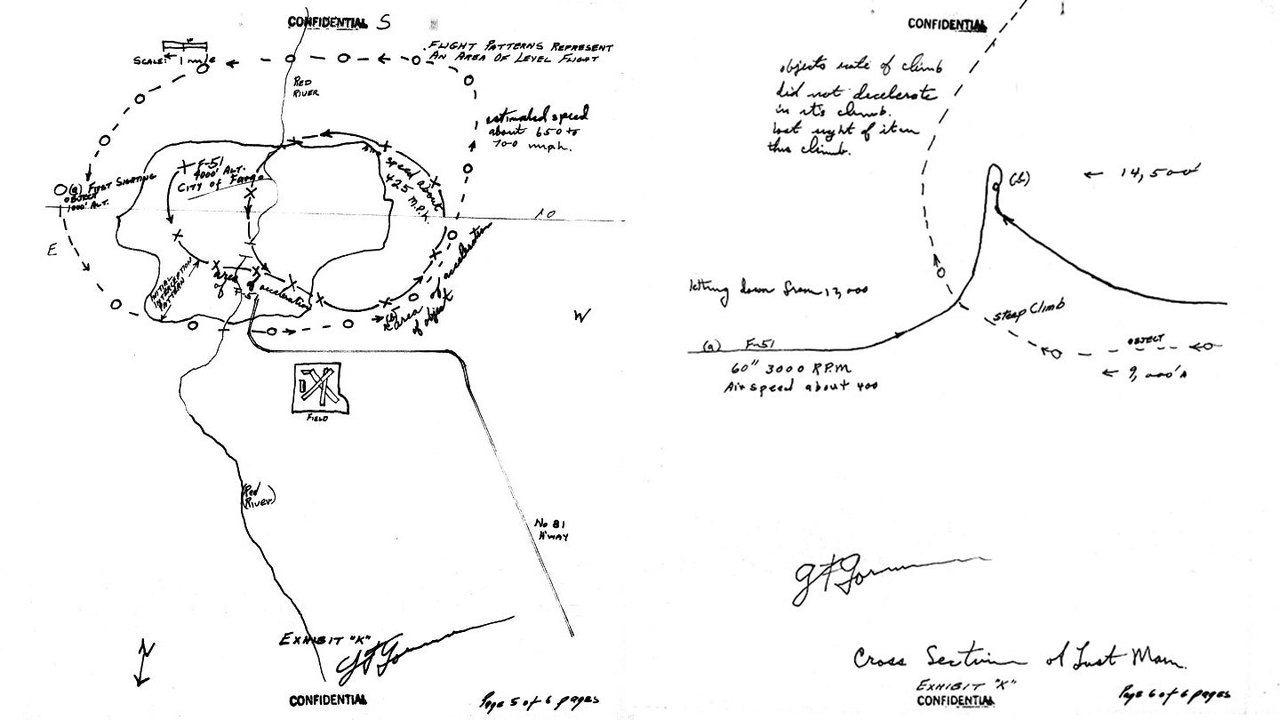
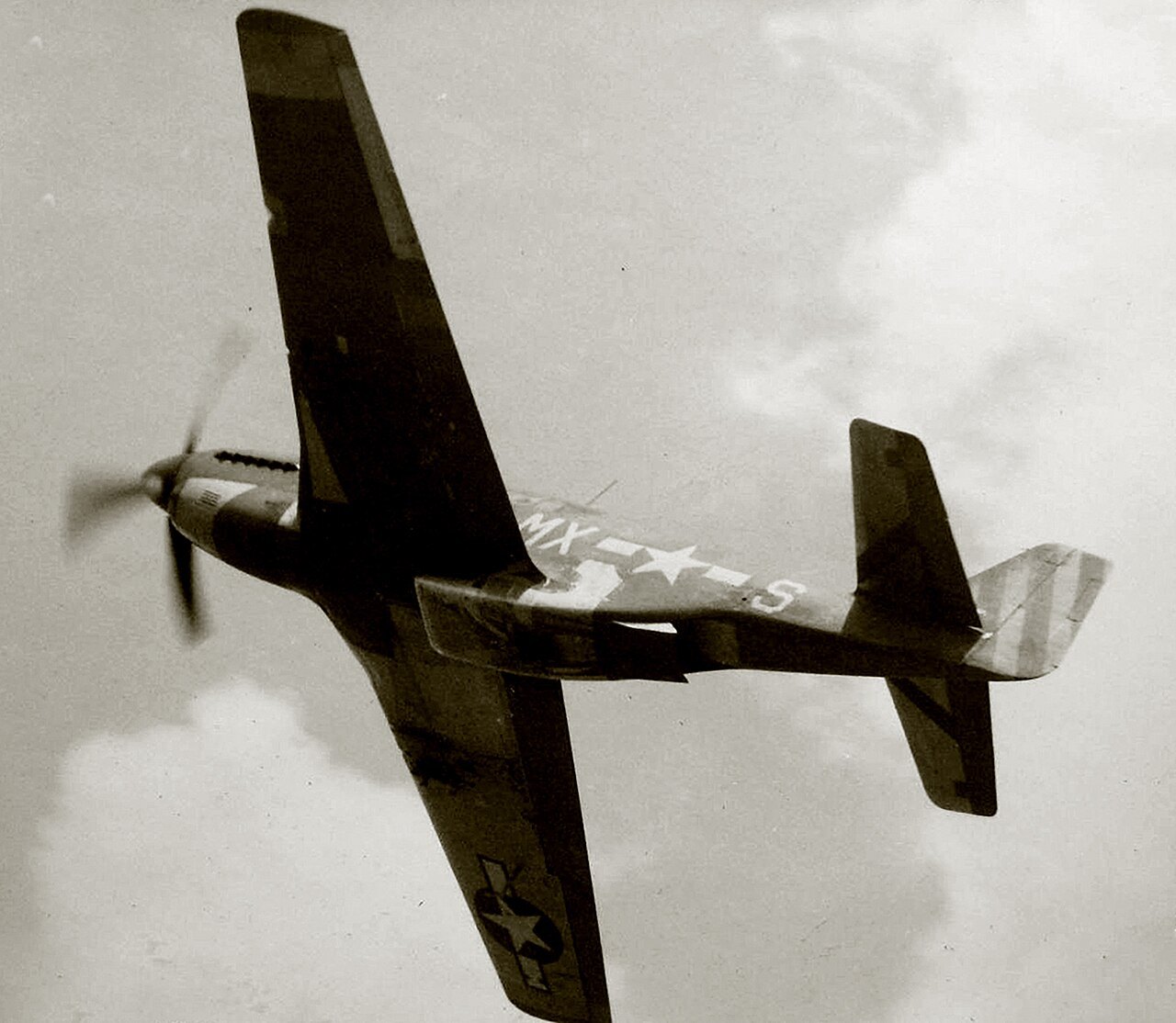
On the night of Friday 1 October 1948, Second Lieutenant George F. Gorman of the 178th Fighter Squadron, North Dakota Air National Guard, was returning to Fargo with a flight of F-51 Mustangs after a cross-country trip. This case file covers what witnesses reported, the official narrative, and a two-pass assessment with its evidence tier.
What did witnesses see at Over Hector Airport?
On the night of Friday 1 October 1948, Second Lieutenant George F. Gorman of the 178th Fighter Squadron, North Dakota Air National Guard, was returning to Fargo with a flight of F-51 Mustangs after a cross-country trip. The other pilots landed, but Gorman, aged 25, a wartime B-25 instructor who had trained French aviation cadets, stayed up around 9 p.m. to log night-flying time, circling Hector Airport in clear weather with about 13 miles of visibility. As he prepared to land, the Hector tower told him a Piper Cub was below him to the west. Gorman could see the Cub, but he then noticed a second light that the tower said it had no traffic for. That light is what the next 27 minutes were about.
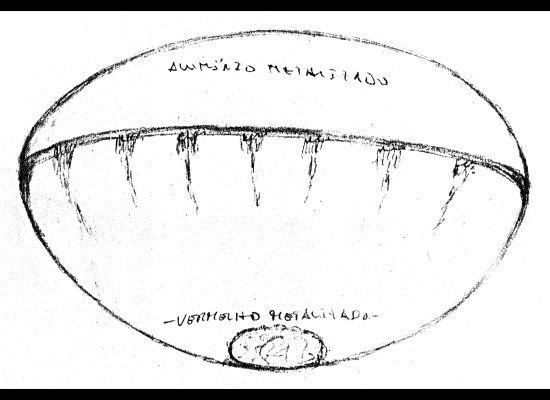
Gorman described the object as a clear white ball of light, sharply outlined with no fuzz at the edges, roughly 6 to 8 inches in apparent diameter, blinking on and off. When he turned toward it the blinking stopped and it became steady. He closed to within about 1,000 yards and the chase began in earnest. By his account the light would let him approach, then pull away at high speed, bank sharply, and come back at him. At one point it made a pass that brought it head-on at his canopy. Gorman said it came so close that he involuntarily ducked his head, and that he had to put the F-51 into a dive to avoid a collision as the object passed over him at a few hundred feet. It then turned and made another run.
The maneuvers climbed. Gorman pushed the Mustang to its limits, around 400 miles per hour, and could not stay with the object, which out-turned and out-climbed him and pulled away each time he closed. The contest topped out near 14,000 feet, where the heavily loaded F-51 stalled while the light continued upward and away, finally climbing out of sight and ending the encounter. Gorman landed badly shaken, later calling it the weirdest experience of his life. He was an experienced combat-trained pilot describing an object that behaved like nothing he had flown against.
Other people on the ground and in the air saw a light too. In the Hector tower, controllers Lloyd D. Jensen and H. E. Johnson watched the lighted object moving over the field. In the Piper Cub, the pilot, a local oculist named Dr. A. E. Cannon, and his passenger Einar Nielson reported a fast-moving light to the west, though they did not see the full sequence of close passes that Gorman reported from the cockpit. Two Civil Aeronautics Authority employees on the ground also reported a light crossing the field. None of them flew the dogfight, but several credible witnesses independently put a moving, lighted object in the Fargo sky that night.
What is the official explanation?
The case was handled as a serious intelligence matter from the start. Air Force officers attached to Project Sign, the first official UFO study run out of the Air Technical Intelligence Center at Wright-Patterson, reached Fargo within days, arriving on 4 October 1948 to interview Gorman, the two tower controllers, Dr. Cannon and his passenger. Gorman gave a sworn statement in which he wrote, "I am convinced that there was definite thought behind its maneuvers," and that the object "was governed by the laws of inertia because its acceleration was rapid but not immediate." He added that it "was not only able to out-turn and out-speed my aircraft, but was able to attain a far steeper climb and was able to maintain a constant rate of climb far in excess of my aircraft." Investigators ran a Geiger counter over the F-51 from spinner to rudder and found it slightly more radioactive than a comparison aircraft that had been parked for several days, a result later written off as ordinary cosmic-ray exposure at altitude rather than anything to do with the object.
For a time the case genuinely puzzled the analysts. It became one of the sightings that, in the words of Project Sign personnel, could not be readily explained and helped push some intelligence officers toward the so-called interplanetary hypothesis in the 1948 "Estimate of the Situation," the classified assessment that General Hoyt Vandenberg is reported to have rejected and ordered destroyed. The astronomer J. Allen Hynek, then the project's scientific consultant, was involved in the review.
The closing explanation came in writing months later. An analysis from the Air Weather Service, sent to ATIC in a letter dated 24 January 1949, concluded that Gorman had been chasing a lighted weather balloon. The reasoning was that a lighted balloon had been released from Fargo at roughly 8:50 p.m., about ten minutes before Gorman first saw the object, and that the bright planet Jupiter accounted for part of what was seen, with the apparent high-speed maneuvers explained as a product of Gorman's own flight movements and a parallax or relative-motion illusion against a near-stationary light. By early 1949 the case was officially carried as a lighted balloon by Project Sign and its successors Project Grudge and Project Blue Book.
Edward J. Ruppelt, who later ran Project Blue Book, wrote in his 1956 book The Report on Unidentified Flying Objects that the Gorman "dogfight" was one of three classic 1948 incidents that had convinced Air Force intelligence specialists that UFOs were real, and he recorded that the official finding was a lighted balloon backed by the January 1949 Air Weather Service analysis. The Project Grudge final report of 1949 set the broader official tone, attributing UFO reports generally to misidentification of conventional objects, mild mass hysteria, and hoaxers, the posture that critics later argued was a mandate to explain cases away rather than solve them.
What did the witnesses think it was?
Gorman never accepted the balloon. He was a combat-trained instructor pilot, not a casual observer, and his sworn statement is emphatic that the object was under intelligent control: it let him approach, then accelerated, banked, and made deliberate passes at him, including a head-on run that forced him to dive. He insisted it could out-turn, out-climb and outrun a Mustang flown at full throttle, which a free-floating balloon cannot do. He told friends, as reported in the Bismarck Tribune, that he was never convinced he had been dueling with a lighted balloon for 27 minutes. By several accounts he was warned by Air Materiel Command not to discuss the case further, and he largely went quiet about it for the rest of his life. He stayed in the service, retired as a lieutenant colonel, and died of cancer in Texas around 1980.
The strength of the case rests on its corroboration. This was not one excited man alone in the dark. Tower controllers Lloyd D. Jensen and H. E. Johnson, both experienced aviation professionals, watched a lighted object move over Hector Airport. Dr. A. E. Cannon, a local oculist flying his own Piper Cub, and his passenger Einar Nielson independently reported a fast-moving light to the west at the same time. Two CAA ground employees saw a light cross the field. Four to six additional witnesses on the ground and in the air placed a moving lighted object in the sky, even if only Gorman experienced the close-quarters maneuvers from the cockpit. The Air Force investigators themselves recorded that Gorman was a sincere and credible witness who was genuinely puzzled and made no attempt to inflate his story, which is unusual language for a file that ends in a debunk.
What the witnesses believed, in short, was that an unconventional object had outflown a front-line fighter over an American city. That belief came from trained observers with no obvious motive to fabricate, in clear weather, with multiple independent vantage points, which is why the case carried weight inside Project Sign before it was administratively closed.
The dispute
The dispute is the United States Air Force's conclusion that George Gorman chased a lighted weather balloon, with the planet Jupiter accounting for part of what he and the ground witnesses saw. This was advanced by the Air Weather Service in a written analysis sent to the Air Technical Intelligence Center in a letter dated 24 January 1949, and was adopted by Project Sign and carried forward by Project Grudge and Project Blue Book. The mechanism offered is that a lighted balloon was released from Fargo at about 8:50 p.m., roughly ten minutes before Gorman first noticed his object, and that the dramatic banking, passes and climbs were an illusion produced by Gorman maneuvering his own F-51 around a near-stationary light at night, where parallax and relative motion can make a fixed source appear to swoop and accelerate.
The explanation has real surface appeal. Night ranging of an isolated point of light is notoriously unreliable, a balloon and a bright planet were both plausibly present, and a pilot throwing a fighter around the sky can generate a lot of apparent target motion that is really his own. Edward Ruppelt, who later directed Blue Book, recorded the balloon finding in his 1956 book without challenging it, and the astronomer J. Allen Hynek was part of the project that reviewed the case.
What keeps this from closing the case is that it was never demonstrated, only asserted. No reconstruction has been published that takes the specific balloon's launch time, ascent rate and the night's measured winds and shows that its track actually crossed the path Gorman described. A free balloon does not make a head-on pass that forces a fighter to dive, does not out-climb a Mustang to the altitude where it stalls near 14,000 feet, and does not return for repeated runs. The parallax-illusion argument is offered in words but not quantified against this flight. The tower controllers Lloyd D. Jensen and H. E. Johnson, and Dr. A. E. Cannon and his passenger in a separate aircraft, independently reported a fast-moving light, which strains the idea that the motion was purely Gorman's own geometry against a stationary source. Critics including Donald Keyhoe and the atmospheric physicist James E. McDonald regarded the official solution as inadequate and the case as effectively unexplained, and Gorman himself, a trained military instructor pilot, never accepted it. Because the counter-explanation is an official finding without a shown method, and is contested by the primary witness and other observers, it weakens but does not close the case, which is why the case is rated Barely Disputed rather than more strongly disputed or discredited.
Is the Gorman Dogfight real? The two-pass assessment
Pass one, how this could be entirely ordinary. The official explanation is a lighted weather balloon plus the planet Jupiter, and it is not absurd. A lighted balloon was reportedly released from Fargo around 8:50 p.m., minutes before Gorman first saw his light, and at night a small bright source with no reference points is genuinely hard to range. Much of the apparent "maneuvering" of a near-stationary or slowly drifting light can be manufactured by the observer's own aircraft: as Gorman banked, climbed and dived around it, relative motion and parallax would make the light appear to swoop, climb and make passes. The blinking he described is consistent with a light going in and out of view, and a faint steady source low on the horizon could plausibly have been Jupiter. The Geiger-counter anomaly was minor and is adequately explained by cosmic radiation at altitude. On this reading the dogfight is a skilled but disoriented night-flying pilot chasing a balloon and a planet and reading intent into his own geometry.
The problem is that this remains an assertion, not a demonstration. No one has produced the specific balloon's launch log, fill, lighting, and reconstructed wind-borne track and shown that it actually intersected the maneuvers Gorman reported. A free balloon does not make a head-on pass that forces a fighter to dive, does not out-climb a Mustang to 14,000 feet, and does not return for repeated runs. The Air Weather Service letter of 24 January 1949 stated a conclusion; it did not show, on the night's winds, that the balloon could have produced that flight path, and it leans on a parallax illusion that is plausible in principle but never quantitatively fitted to this case. The tower controllers and the Piper Cub occupants independently saw a fast-moving light, which is awkward for a Jupiter component and at least consistent with a real moving object.
Pass two, if it was a real object, what was it. Then it was something compact, brilliantly self-lit, and capable of flight performance beyond a 1948 propeller fighter, able to accelerate hard, turn inside the F-51, climb past where the Mustang stalled, and break off at will. Whatever it was, it behaved as if it were under control, which is exactly what Gorman swore under oath. The case mattered enough that Project Sign analysts could not immediately dismiss it and used it among the sightings behind the 1948 Estimate of the Situation, an official apparatus reaction that counts as evidence the event was real enough to need closing, not as a strike against it.
This sits in the Barely Disputed tier. There is an official counter-explanation, the lighted balloon and Jupiter, advanced by the Air Weather Service and adopted by Project Sign, Grudge and Blue Book. But it is an unshown assertion: no analyst has matched the named balloon's actual track to the reported maneuvers, no confession, no recovered prop, no recantation, and the chief witness, a trained military pilot, plus several corroborating observers, contested it. A plausible-but-unproven natural reconstruction does not close a case. The dogfight largely stands on its sworn testimony and its corroboration, so the tier is Barely Disputed.
Sources
- en.wikisource.org/wiki/The_Report_on_Unidentified_Flying_Objects/Chapter_3
- www.wctrib.com/community/fargos-most-famous-ufo-sighting-was-in-the-skies-above-a-1948-bison-augustana-football-game
- www.history.com/articles/ufo-dogfight-gorman-us-plane-fargo
- ufoevidence.org/cases/case704.htm
- exonews.org/when-a-u-s-fighter-pilot-got-into-a-dogfight-with-a-ufo/
- www.archives.gov/research/military/air-force/ufos
- archive.org/details/ProjectSIGN/page/n7/mode/2up
More cases from this region: UFO sightings in United States